 Boxer
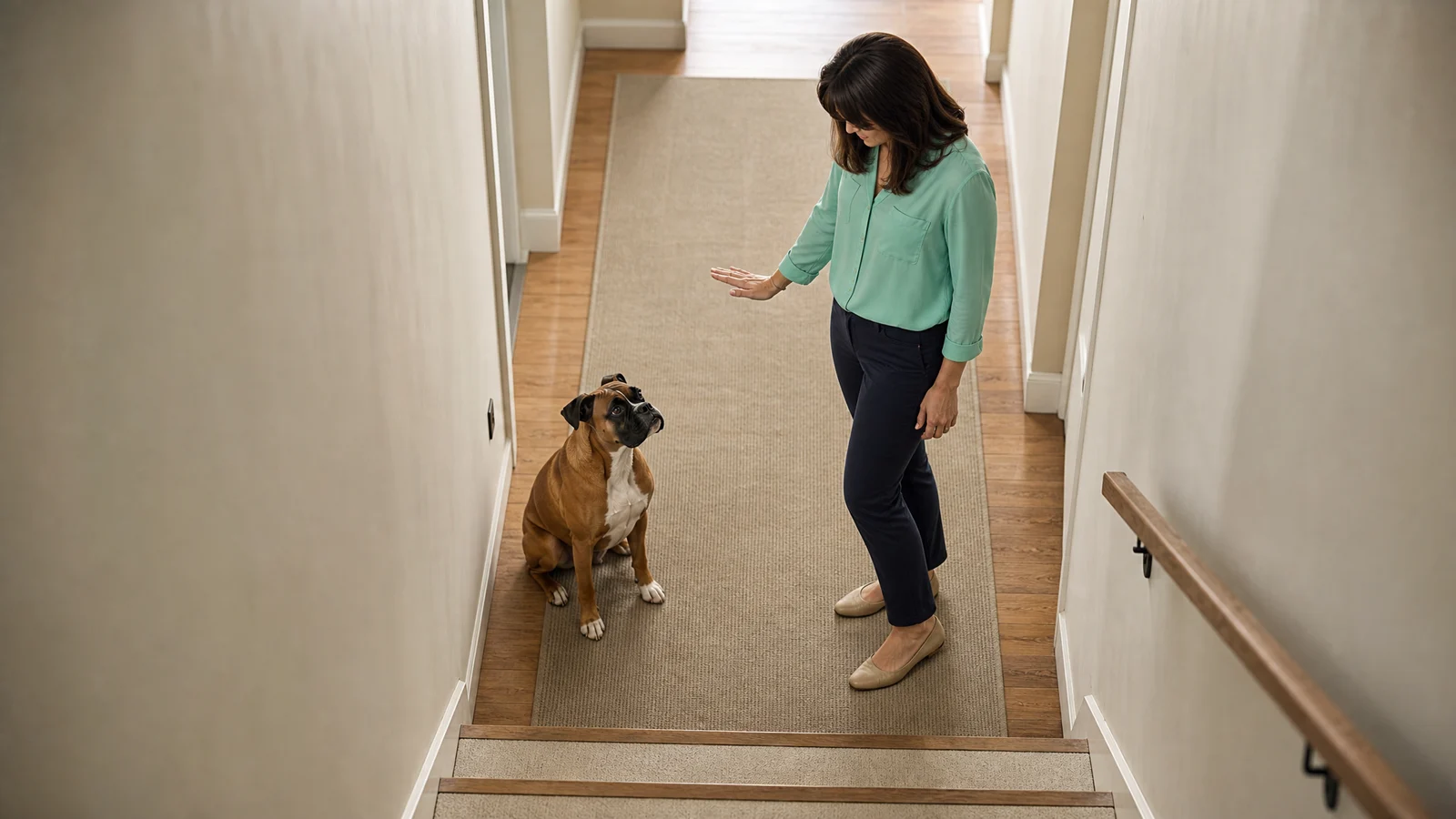
The moments you need a Boxer to stay put almost always find your hands full: a gate latch to fix, a grocery bag to set down, a wet leash to hang up. A dog who bounces first and thinks afterward makes those few seconds feel long.
A stay asks your dog to hold one position until you either come back or say the release word, and the way to teach it is to start so small that holding still is easy to win. A second or two counts as a real stay on day one.
That tiny start suits a clever, energetic breed that gets bored with repetition, because short and varied tries keep your Boxer interested while the holds slowly grow. Read on for the stages in order and the fixes for when they wobble.
Sorting Stay From Wait Before You Start
A tiny start only pays off once you know what you are building, and holding still comes in two sizes. Cornell's stay-versus-wait guidance separates them: a wait is a temporary hold-back followed by a release, in any position and without needing to be held for long, while a stay means holding a position until you return or release.
For a Boxer the split is practical. A dog this quick to launch needs a short wait at the gate and a real stay while you carry the bags in, and blending them into one vague word teaches your Boxer that the cue means something different every time. Give each job its own word, and give the stay a release word too, because a dog who is never told the stay is over has to decide for themselves, and a Boxer decides fast. Pick a short word you will say only for this.
Teaching a Boxer to Stay One Stage at a Time
With the words settled, the order of the lessons matters more than their length. Stay is a complex behavior because your dog has to hold position no matter what is going on around them, so it helps to split the work into distance, duration and distraction and train each one separately. Here are the stages in the order we teach them.
- Teach the release first. Ask for a sit or down, wait one second, offer a treat and say your release word, then invite your Boxer up with a happy move. Repeat until the word reliably gets them moving, because every later stage depends on your dog knowing how a stay ends.
- Add the cue and a flat hand. From the sit or down, say "stay" with your palm out, wait a second or two, then reward and release. Pay while your dog is still holding, never after they move, so the hold itself is what earns the treat.
- Stretch the time a few seconds at a time while you stand right beside them. Leave distance and distractions alone for now, and move on once the hold looks easy several times in a row.
- Take one step away, then come straight back, reward while they are still in place and release. Returning before you release matters, because releasing from across the room teaches that the distance itself means "come."
- Change one thing at a time. Add a step or a few seconds, never both at once, and ease off the other whenever one grows.
Our trainers keep every try short, since how trainable Boxers are comes with a quick mind that bores easily. If a stage wobbles, drop back one and pay more often rather than pushing on.
A Boxer Stay Command That Holds Past Distractions
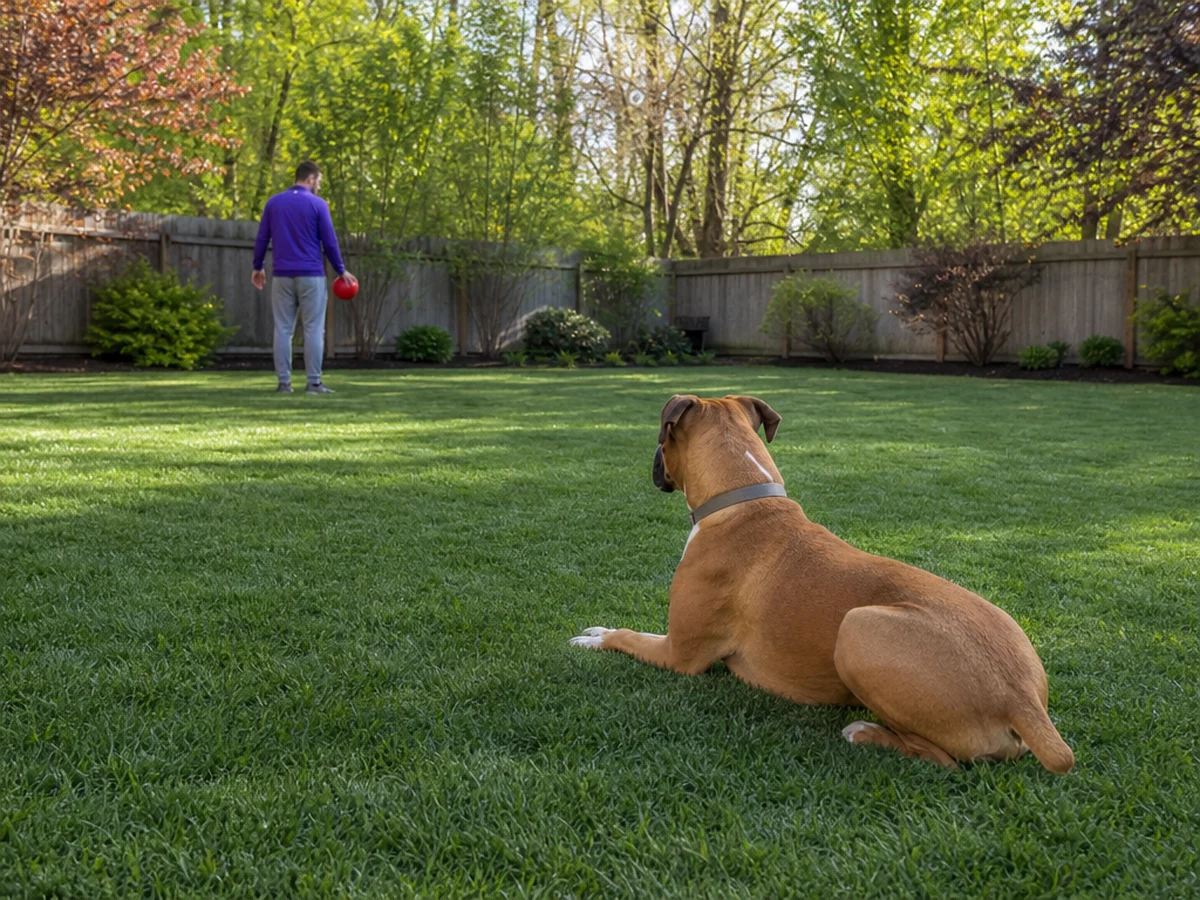
Once the early stages feel dull to your Boxer, which is how they should feel, the real world becomes the test, and it arrives as more space and more going on. Add one at a time and ease off the other, so a dropped spoon or a clap earns a shorter stay than your dog already manages.
Pace matters here too. Every step forward has to be small enough that your dog has a good chance of getting it right, so if your Boxer holds a stay for 15 seconds, do not ask for a minute next time. A slightly longer try pays off more often than a big jump that ends in a launch.
When a stay breaks anyway, look at your own side first. Calmly set your dog back where they were and try again with an easier version, because the likeliest cause is that you asked for too much, too soon. If a steady stay suddenly falls apart, mention it at your next regular veterinary checkup, since training is not always the cause.
Stay Answers for Everyday Life
A steady kitchen stay raises practical doubts about safety, age and body language, which is where the next three answers come in. Each answer builds on the stages above rather than adding new rules.
Is a stay enough at an open door?
Not by itself. While the skill is young, keep a leash, gate or closed door doing the real work and treat the stay as a second layer that you test with the door shut first. Even a well-trained Boxer should never rely on a stay alone near a busy street.
Can a Boxer puppy start learning stay?
Yes, in very small steps. Stay and leave it enter a puppy's lessons at 3 to 4 months in the VCA puppy timeline, as preparation for short walks. At that age a stay is a second or two beside you, and the release word matters more than the hold. Our Boxer obedience basics cover the sit and down it grows from.
Why does my Boxer follow when I step back?
To a dog this playful, a handler backing away can look like an invitation. Make the first steps smaller and slower, return before your dog's weight shifts, and practice a few turn-aways while the hold is still easy, paying in position each time.
Calm on Request From a Bouncy Dog
Everything above adds up to a side of your Boxer the bounce usually hides. Under all that energy sits a poised, alert dog, and holding still on request gives that side a place to show up, so every quiet second you pay for is practice at being that dog.
A visitor at the door is the hardest distraction, so work up to it with a calm family member first, and pair it with our guide to jumping up at guests, since a greeting is where a Boxer's stay gets tested hard.
The release word keeps the bounce happy too, because the leap is still coming, just on your invitation. A Boxer who can wait is ready for everything else on the training list, and the e-book we send readers who join our mailing list lays out the whole list lesson by lesson, clearly and at no charge.
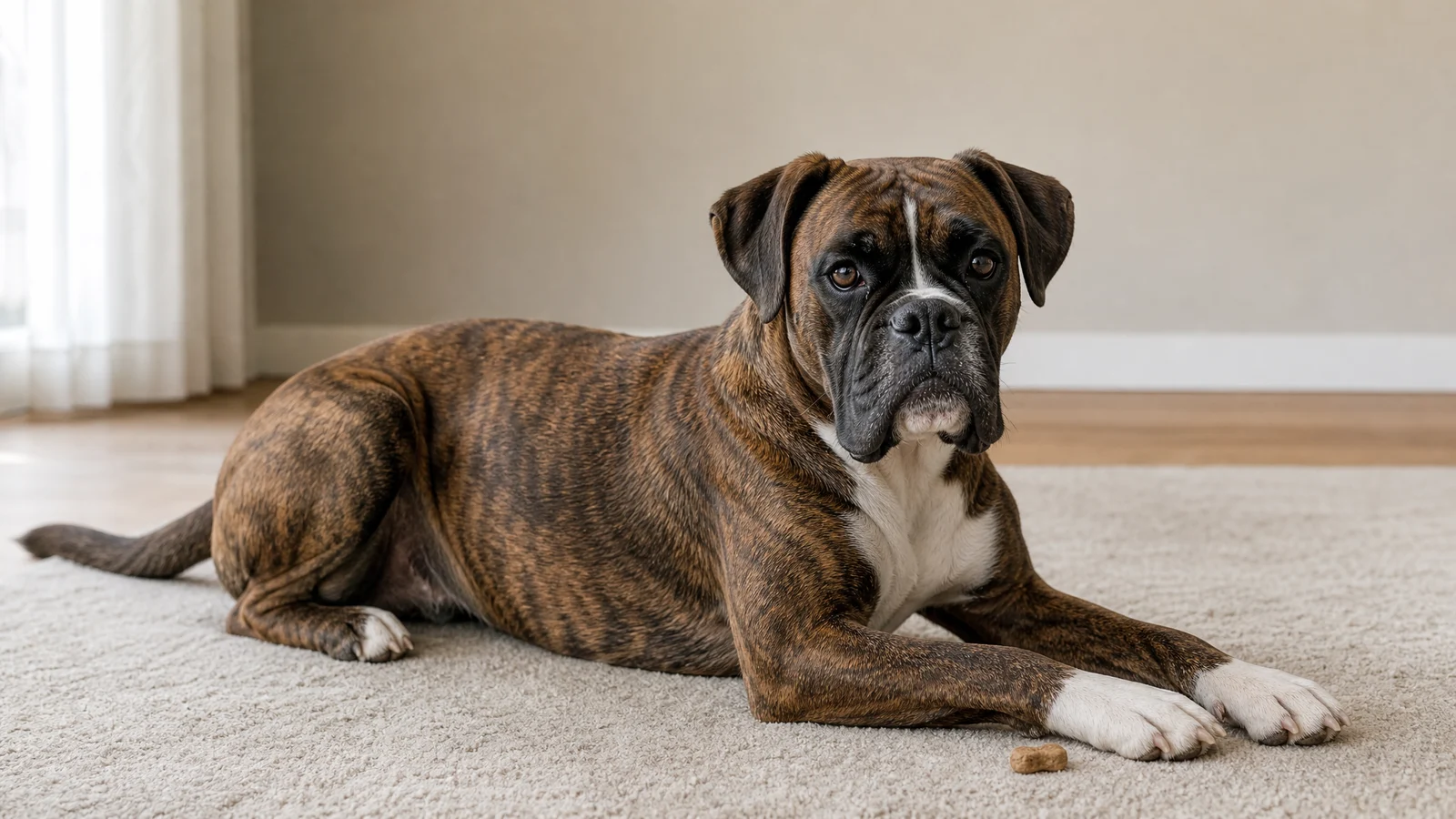 Training basicsHow to Teach a Boxer to Lie Down
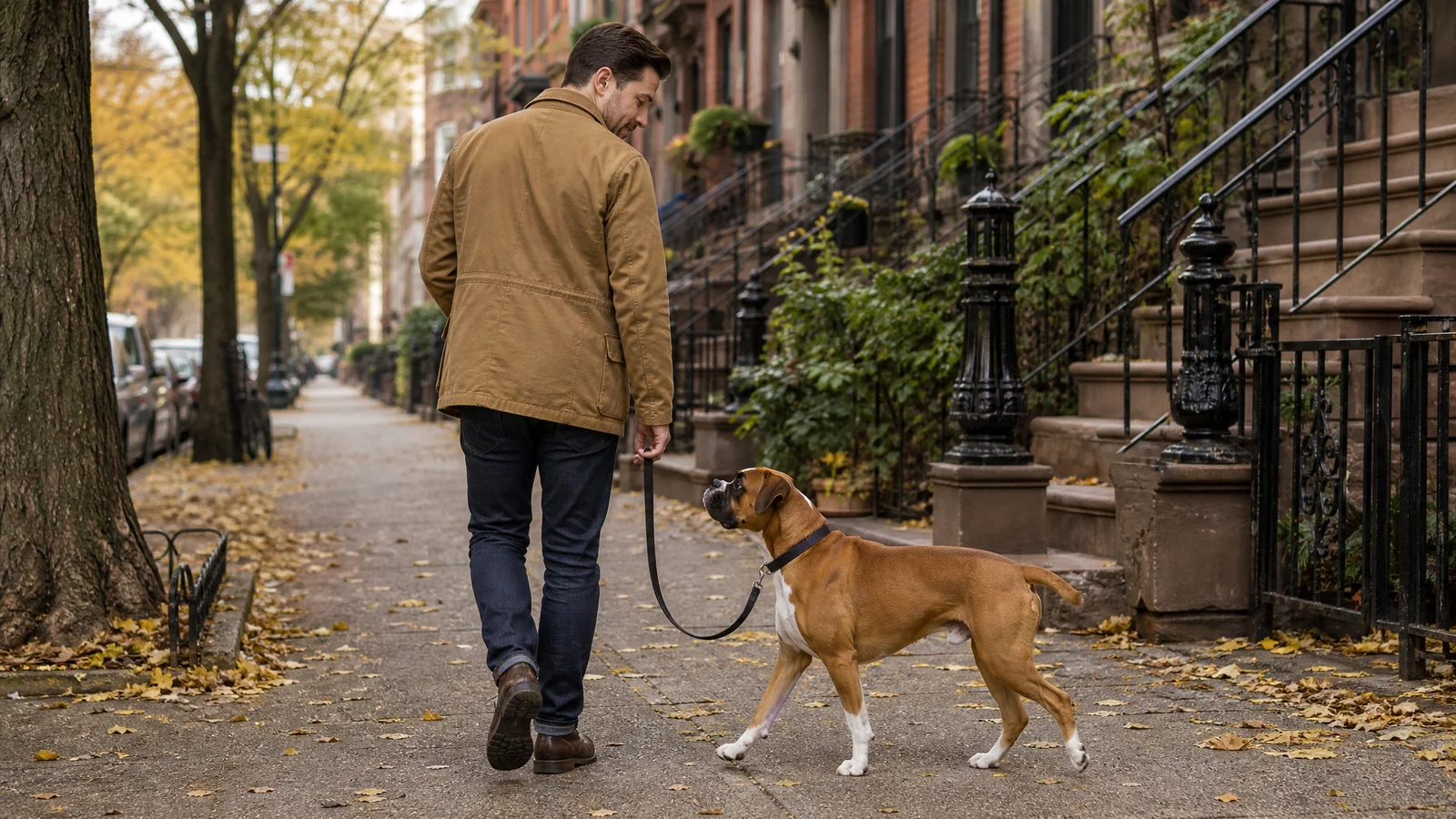 Training basicsHow to Teach a Boxer to Heel
 Training basicsHow to Teach a Boxer to Leave It
