 Boxer
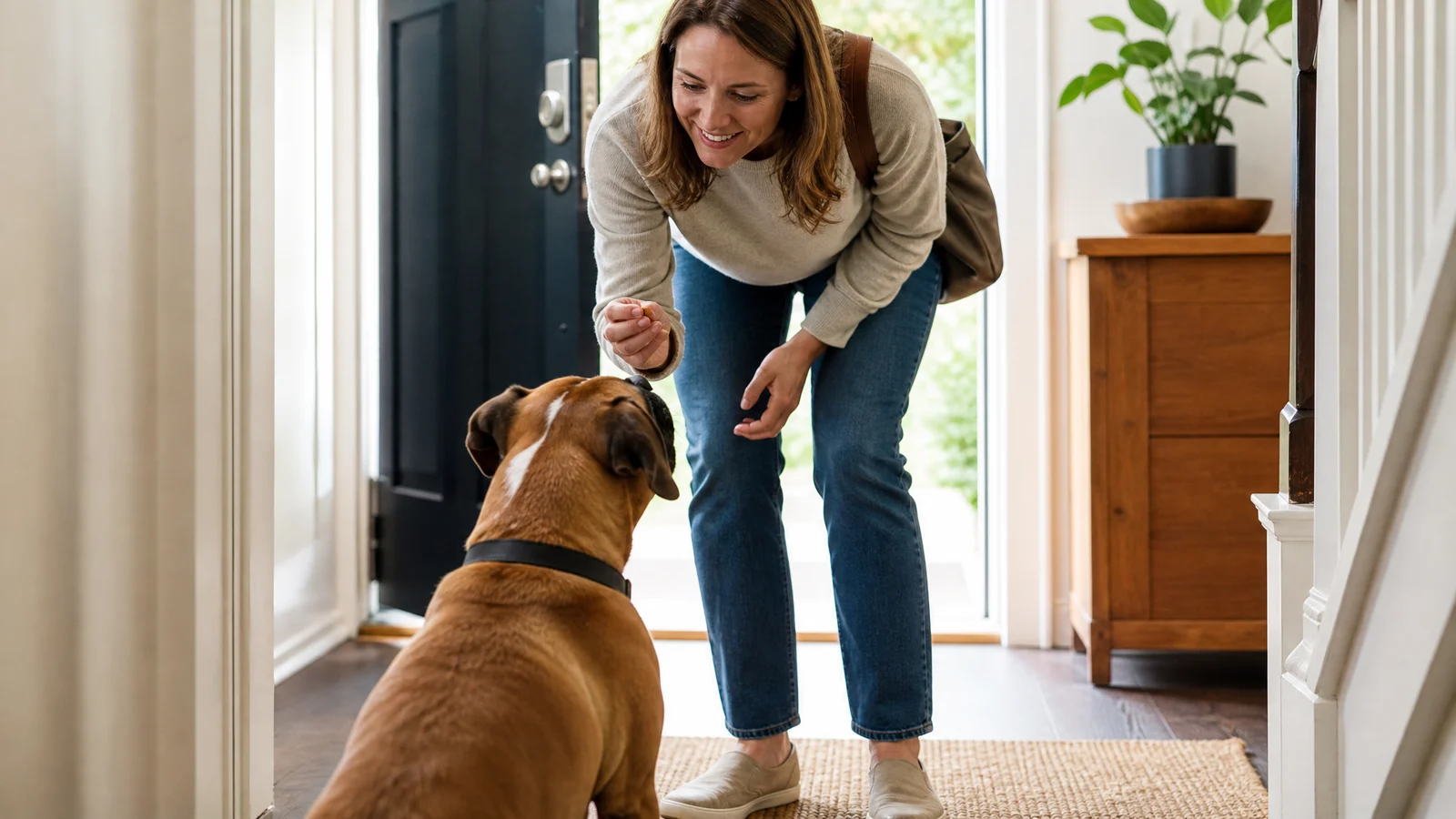
To train a Boxer not to jump, reward four paws on the floor every single time and withdraw your attention the instant the paws come up. Consistency is the whole method, because jumping fades only when it stops paying off.
The persistence has a source. Boxers descend from big-game chasers, dogs once used to run down, catch and hold bear, bison and wild boar, so a leap at your chest is close to a native greeting. Left alone, that leaping bowls over small children and frail adults. Handled well, it becomes a wiggle and a sit. Read on for why the habit runs so deep, three training stages, the front-door and guest problem, and a two-week practice schedule.
Why Boxer Behavior Problems Are Exuberance, Not Defiance
Start with the evidence. Because of the breed's heritage as a chaser of wild game, Boxers spend a good deal of time jumping and leaping about, and young dogs constantly need reminders to stay "down." Nothing in that describes a dog testing you. It describes an inherited habit, which is why labeling it stubbornness explains little and fixes less.
Common advice says a Boxer will simply grow out of it. Partly true, but slowly, and only if the habit stops being paid. Laughing, talking to the dog, touching them and even eye contact all count as attention that rewards jumping. A Boxer who still launches at adults years later has usually been paid for it for a long time.
The aim is not a flat, quiet dog. This is a playful, high-energy breed, and the enthusiasm is part of the appeal. What you want is a dog who has a better way to show it. Rewarding good behavior does not mean letting everything slide. Dogs thrive on structure, routine and guidelines, taught gently and without pain or intimidation, and clear rules about greetings are a kindness to a dog who would otherwise have to guess.
The stakes are real. A powerful, bouncy Boxer can overwhelm a very frail adult or a small child, even with perfectly friendly intentions. Treat this as a safety skill, not a party trick.
Four Paws on the Floor Ends Jumping Behavior Problems
Stage one happens in a quiet room with no visitors, no doorbell and a pocket of small treats. Stand still with your Boxer in front of you. The instant all four paws are down, say your marker word and drop a treat low, between the front paws, so the head goes down and not up toward your face.
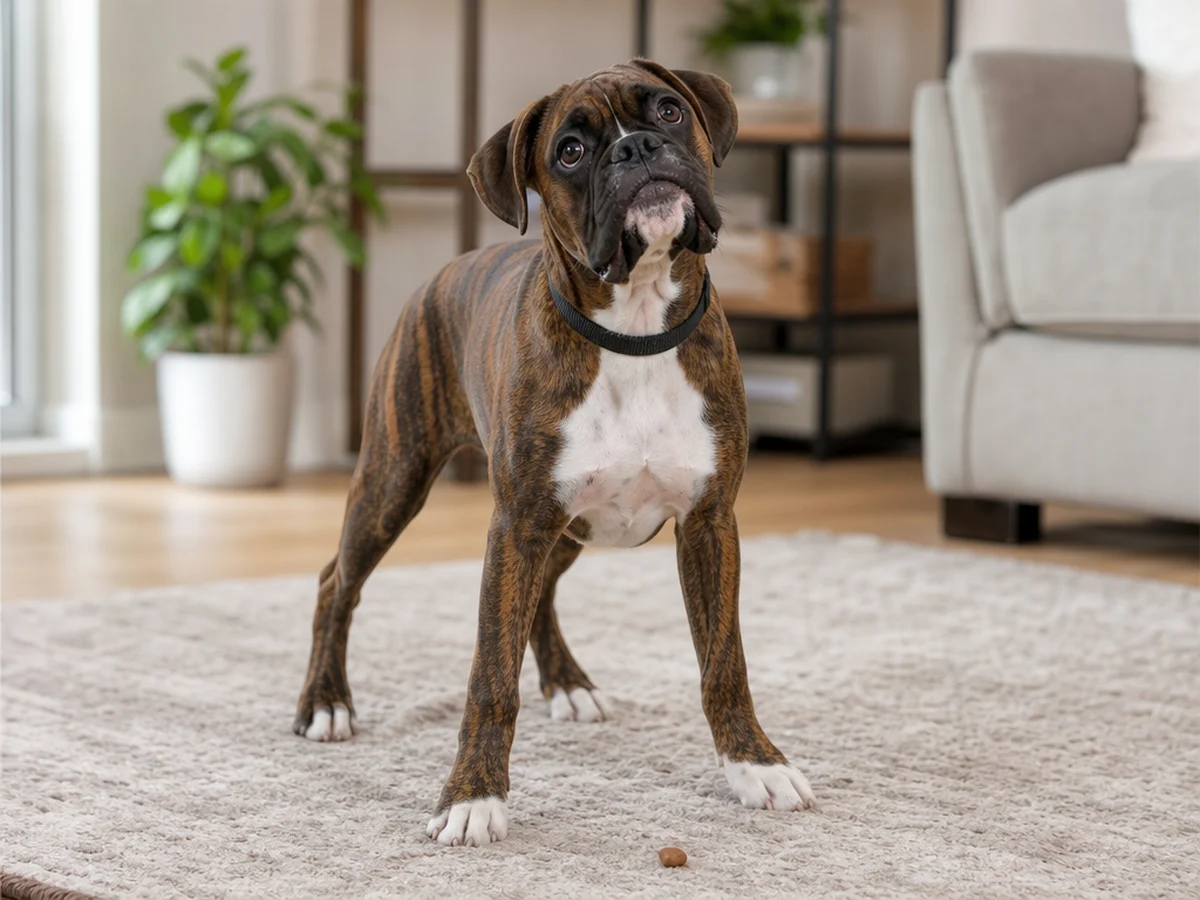
A behavior that gets rewarded happens more often, which is the plain logic of reward-based training. It works well here because standing and sitting are things your Boxer already does all day.
Build the habit in these steps:
- Reward standing or sitting while you stay still. Then add a step backward, a hand wave and some excited talk, and reward each time the paws stay down.
- Make the sit the greeting. Ask for it before petting, before the leash clips on and before any door opens, and pay for it every time at first.
- Teach what earns attention. Petting, a warm voice and eye contact arrive only while the paws are down, and they pause the moment the paws lift.
- Keep sessions short and varied. Boxers are clever and bore quickly with repetition, so change the room, the treat and your position, and sometimes pay with a quick game of tug.
Be skeptical of your own progress. A sit taught only in the kitchen is a kitchen sit. Your Boxer will show it off while calm and drop it at the front door, because the door is where the excitement lives. That is the next stage of the work, not a failure of this one.
This is general information, not medical advice. Check with your veterinarian about how many treats suit your dog's daily food and about exercise limits for puppies and older dogs.
Why Does Your Boxer Jump at the Door?
Jumping clusters around company. Boxers are often bouncy and bounding on walks and in play, then flop and snore once back indoors, so the leaping is not constant. It spikes when people arrive, and the excitement peaks before the greeting even happens. Find the peak moments and you can work on the real trigger instead of the symptom.
These are the usual peaks:
- The sound of a car, a key in the lock or footsteps on the porch can set off leaping before anyone is through the door.
- Your own return home, especially after hours away, winds a Boxer up further when your voice goes high and your movements go quick.
- Guests walking in trigger a mix of watchfulness and delight, since the breed is deliberate with strangers at first and then answers friendly overtures promptly.
- People or dogs coming into view on walks turn a loose leash tight with eagerness.
The watchful side of the breed adds fuel. Doorbells and strangers matter to a dog who takes the watchdog job seriously, and our piece on the Boxer's guarding instincts explains why that vigilance is normal. You do not need to remove it. You need the arrival to become a cue for something else.
The practical lever is arousal before the paws leave the floor. Come home quietly and wait a moment before greeting. Walk to the door at an ordinary pace, never a sprint. Exercise your Boxer well beforehand so the energy has already had an outlet, and plan visits instead of leaving them to chance, so the dog gets a calm rehearsal and not a surprise.
Turning Away Stops Jumping Behavior Problems When Paws Rise
Stage two begins at the first lift of the paws. Stop everything. Fold your arms, turn your side or back to your Boxer, say nothing and look away. The moment all four feet touch down, turn back, mark it and reward. The lesson is clean: paws up makes the fun disappear, paws down brings it back.
Be honest about what this needs. Ignoring teaches nothing by itself, because a dog told only what does not work has to guess what does. That is why stage one comes first. The turn-away has a ready alternative waiting, and a clever Boxer finds it fast.
Expect things to get worse before they improve. A dog paid for years will try harder when the payment stops, and that surge is a sign the plan is working. Stay boring and steady through it.
If your Boxer keeps going and starts grabbing clothing, use a mild reset. Calmly step out of the room or behind a gate for a short break, then return and ask for a sit. No drama is needed. Everyone in the household must follow the same rules, because one person who laughs and pets a leaping dog quietly undoes everyone else's work.
Can a Boxer Learn Calm Greetings From Guests?
Yes, but guests are the hardest test, and the reason is people more than the dog. A Boxer who has mastered the sit with you can still leap wildly around others, because visitors are more exciting and far less consistent than family. Many guests also reward jumping without thinking, by laughing, petting or saying the dog is fine.
Give guests a short script before they arrive. Most follow it gladly:
- Come in calmly and skip the squeaky voice, since a high, excited welcome winds a Boxer up fast.
- Ignore the dog completely until all four paws are on the floor, then greet them softly.
- If the paws come up, turn away and wait, exactly as you would.
- Offer a treat low to the ground only for a sit or for standing calmly.
A genuinely friendly, unhurried guest suits this breed, which is wary for a moment and then warms up. A calm visitor gets a calm dog far more reliably than one who barges in. Choose the first visitors on purpose, using friends who know the rules, and keep your Boxer on a leash or behind a gate until the first wave of excitement passes.
Proofing Greetings Against Behavior Problems With Visitors and Kids
Stage three is proofing: the same habit with different people, in different places, at a level of excitement that matches real life. Raise the difficulty one step at a time, and drop back a step the moment your Boxer cannot cope. Skipping ahead is the usual reason the habit collapses when it matters most.
Helpers and Planned Visitors
Recruit one calm friend first, then a few. Have them knock, ring or walk in while you run the greeting routine, and reward every sit. Then ask for harder versions, such as a helper arriving with bags or crouching to the dog's level. Each visit is a rehearsal for the day an unplanned guest turns up.
Children Who Run, Squeal and Reach
Running and squealing look like a chase to a dog bred to chase, so children are a big trigger. Keep early practice calm and supervised with the dog on a leash, and teach children to stand still, keep hands low and offer a treat for a sit. Our guide to gentle Boxer play with kids covers the play side. If a baby is coming, begin well ahead and pair baby sights with rewards so the new arrival predicts good things.
New Places and Public Greetings
Move the routine to the yard, the sidewalk and the veterinary waiting room. Regular vet visits are good practice anyway, since a room full of people and animals is a hard exam. Carry better treats, ask for a sit as a stranger approaches, and let people say hello only when the paws are down. Early puppy classes help here, because they build the skill around distractions from the start.
Two Weeks to a Boxer Who Stays Down
A small, daily practice does more than occasional long sessions. This is a suggested plan, not a promise that jumping vanishes, since young Boxers keep needing reminders, but it gives you clear steps to build on and a routine to keep. Work through these stretches in order:
- The first few days: play only the quiet-room game. The daily goal is a reliable sit, with a treat, every time you walk toward your Boxer.
- The rest of week one: add the turn-away. The daily goal is that every person at home responds to lifted paws the same way.
- The early days of week two: stage a planned arrival once a day, with a calm helper or by stepping out and back in yourself. The daily goal is a sit before the door fully opens.
- The last few days: try one guest, one child with a calm adult, and one outdoor greeting. The daily goal is a rewarded sit in a new setting.
Through all of it, meet the breed's real needs. A high-energy, clever dog who gets enough exercise and mental work has far less spare excitement to spill onto visitors, so daily walks, play and training games are part of the plan, not a bonus. Keep rewarding calm greetings long after the two weeks end. The leaping instinct is inherited, and steady reminders are the price of a Boxer who greets the world with all four paws down.
 BehaviorBoxer Bounce and Paw Swats: Rewarding Four Feet on the Floor
 Puppy trainingBoxer Puppies Who Bite: Teaching Soft Mouths During Rough Play
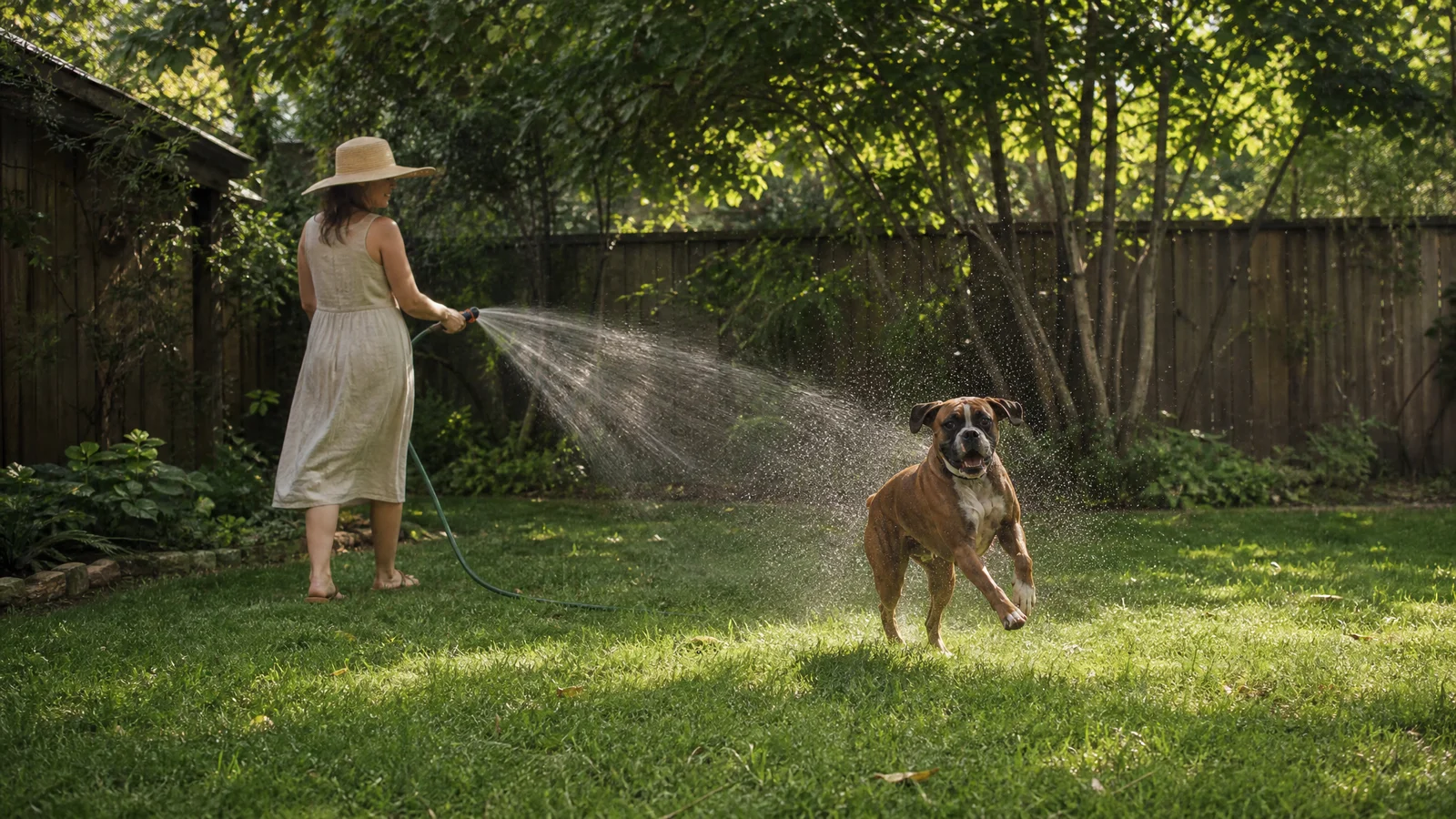 Exercise and jobsBoxer Summer Play: Keeping Exercise Safe and Fun in Hot Weather
