 Boxer
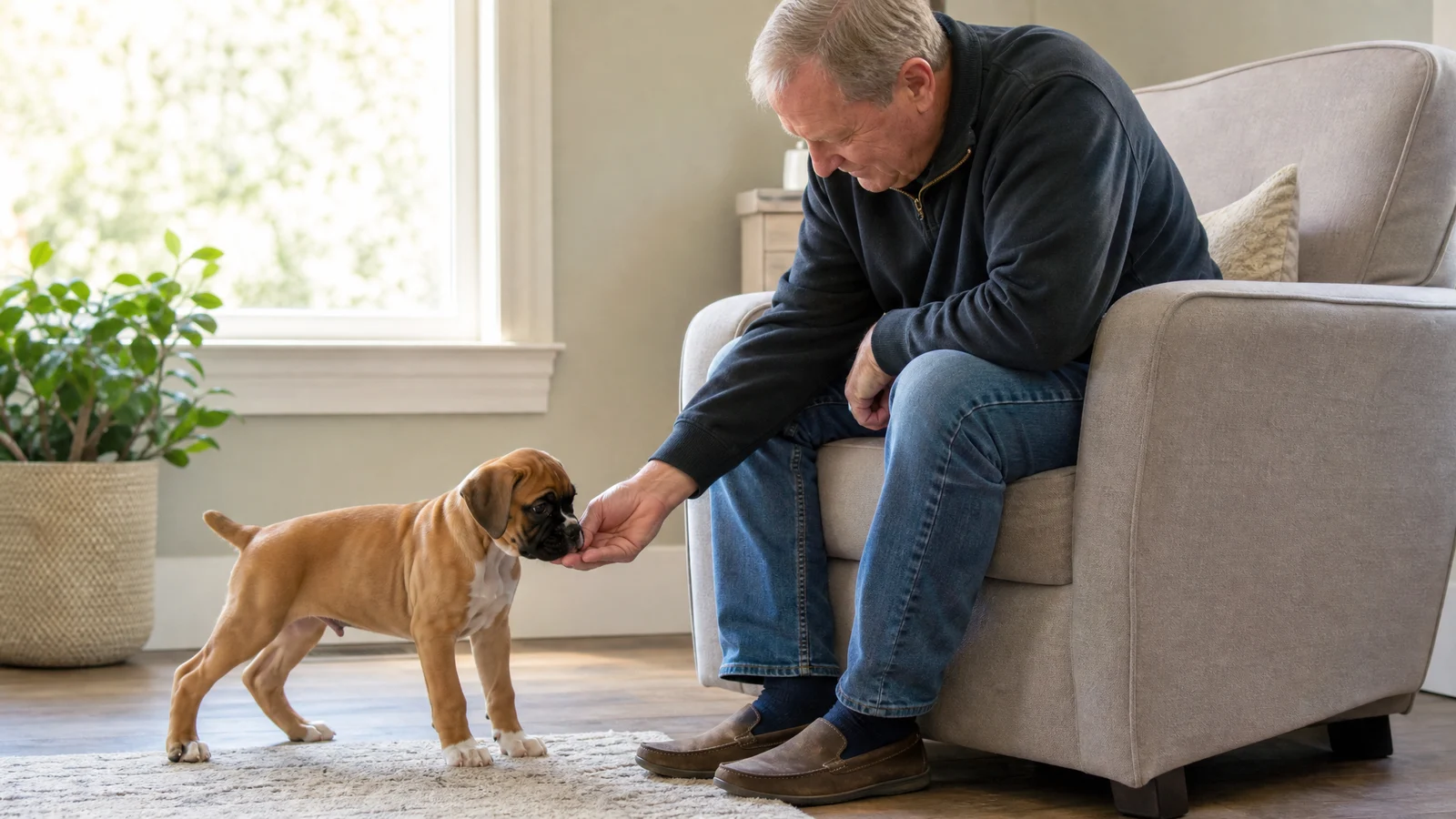
The clock on socializing a Boxer starts the day the puppy comes home, and the first weeks and months do more work than any effort that follows. What a young Boxer meets, and how those meetings feel, shapes the adult dog. We have focused on this breed's behavior for many years, and waiting for a Boxer to settle down rarely teaches the skills they need.
That timing frames every belief we test below. In this article, we'll go through why a Boxer does not outgrow rowdiness or wariness, how a top rating with children fits a powerful and bouncy dog, how to teach gentle play, why dog parks teach less than owners hope, and how to practice with strangers.
Done early and under supervision, this work gives you a dog who is exuberant outdoors and easygoing indoors. Done late, you live with a strong adult who never learned the rules.
Boxers Do Not Outgrow the Need for Socializing
The belief is that a rowdy or wary puppy becomes a well-mannered adult simply by getting older. The verdict is that age alone fixes very little. First, a definition: socializing means giving a young dog many positive or neutral experiences with people, dogs, places and sounds, so that ordinary life stops feeling like news.
Learning a language is a fair comparison. A child who hears it daily absorbs it almost effortlessly, while an adult can still learn it but must work much harder. Puppies have a similar window early in life, when new things are more interesting than frightening. For this breed the stakes are well recognized, since early socialization and puppy classes are vital in channeling the Boxer's energy and exuberance in a positive way.
What Early Practice Looks Like
Good practice is quieter than most people expect. It is a steady stream of small, pleasant encounters, built from habits like these:
- Pair every new person, dog or place with treats, praise or play, the core of reward-based training, so the new thing starts to predict good news.
- Let the puppy approach at their own speed and withdraw when uncomfortable, instead of carrying them into the middle of a greeting.
- Vary the cast of characters: children, adults in hats or sunglasses, delivery drivers, strollers, bikes and different floor surfaces.
- Keep each outing short and leave while the puppy is still doing well.
- Ask your veterinarian when public places and unfamiliar dogs are safe, and keep up regular checkups as your Boxer grows.
What Time Does to Wariness and Rowdiness
Wariness of strangers can appear in puppyhood and persist for years. The encouraging part is that it still eases with slow, patient introductions, so a wary puppy is not a lost cause. They simply need the window used well. The breed standard's disqualification of extreme shyness is a reminder of how far a fearful, under-exposed dog can drift from what the breed should be.
Rowdiness follows the same rule. Because of the breed's heritage as a chaser of wild game, Boxers spend a good deal of time jumping and leaping about, and young dogs constantly need reminders to stay down. Some owners find that jumping around company continues into adolescence despite repeated training.
Waiting does not remove the habit. Rehearsing the right behavior in the right situation does. Adaptability is only moderate in this breed, so plan to introduce new places and people deliberately long after puppyhood ends. Treat the first months as laying the foundation and adolescence as the period when you check that it holds.
A Child-Friendly Boxer Still Needs Supervision
The belief is that a breed with a famously good reputation around kids can be left to work things out alone. The facts support the reputation but not the hands-off conclusion. The official standard describes the Boxer's temperament with family and friends as fundamentally playful, yet patient and stoical with children, and the AKC rates the breed 5 of 5 for young children.
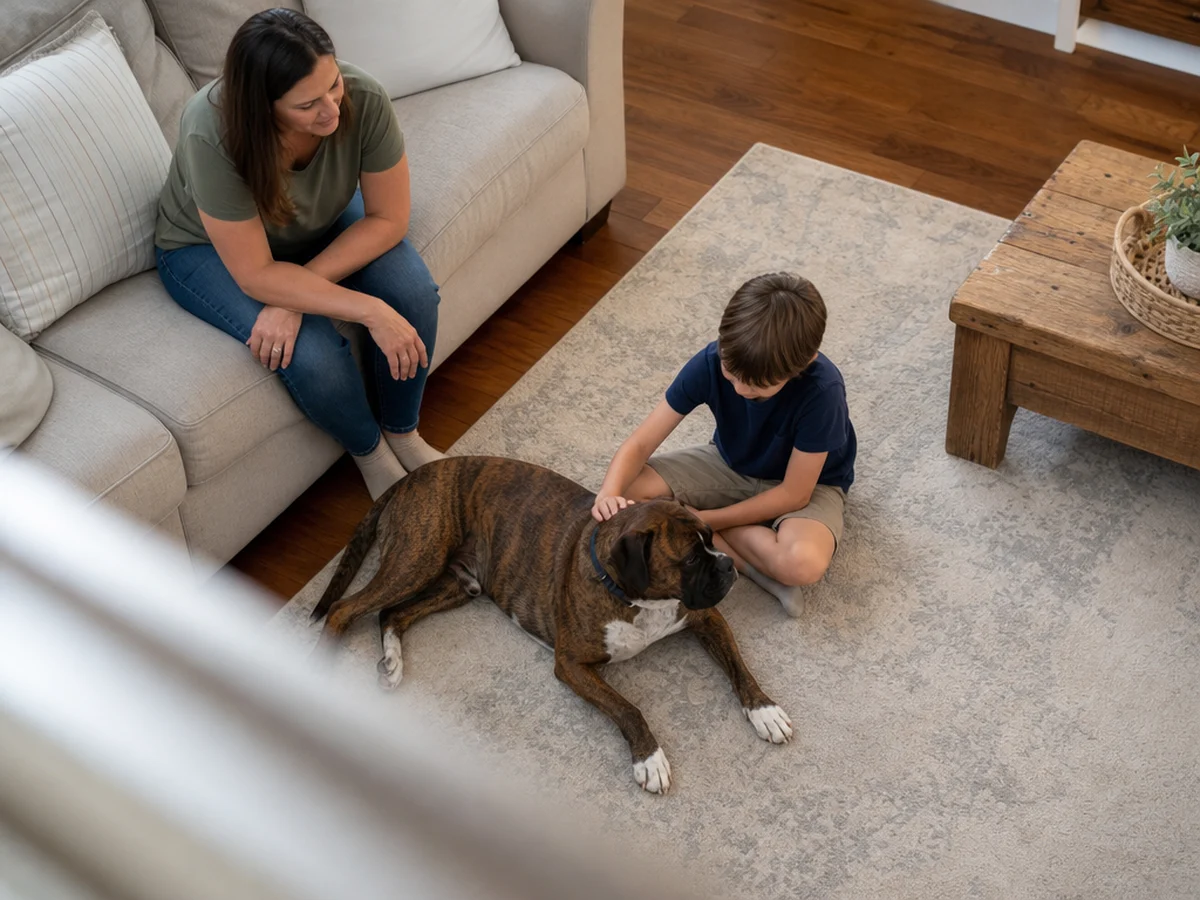
The same breed information carries a caution. Because the Boxer is powerful, active and playful, they may not suit a very frail adult or a small child who could be overwhelmed by a bouncy puppy. This is not about temper. A patient dog can still knock a toddler flat with one happy leap.
So the rating describes the dog's heart, and supervision covers their size and enthusiasm. Many owners also describe a helpful split: bouncy and running outdoors, then flopped and snoring once back inside. Teach that switch on purpose by rewarding calm in the house, so indoors becomes the place where settling pays.
House Rules for Dogs and Children
Most trouble comes from a few predictable moments. Write the rules down and apply them to every child who visits, not just your own.
- A grown-up stays within arm's reach whenever the dog and a child share space.
- Children pet gently on the shoulder or chest and never hug, climb on or grab the dog.
- Nobody bothers the dog during meals, chews or sleep.
- The dog has a crate or gated area where children do not go.
- Play stops while it is still fun, before anyone gets overexcited.
- Lip licking, yawning, turning away or walking off all mean the dog has had enough, and they are allowed to leave.
One more situation deserves attention. Some Boxers turn protective when strangers or unfamiliar dogs approach the children, especially dogs who have been wary since puppyhood. If you see this, add distance, reward calm behavior and show your Boxer that you have the situation handled. Children should never be asked to manage the dog's feelings for them.
Boxer Rough Play Is Not Harmless Fun
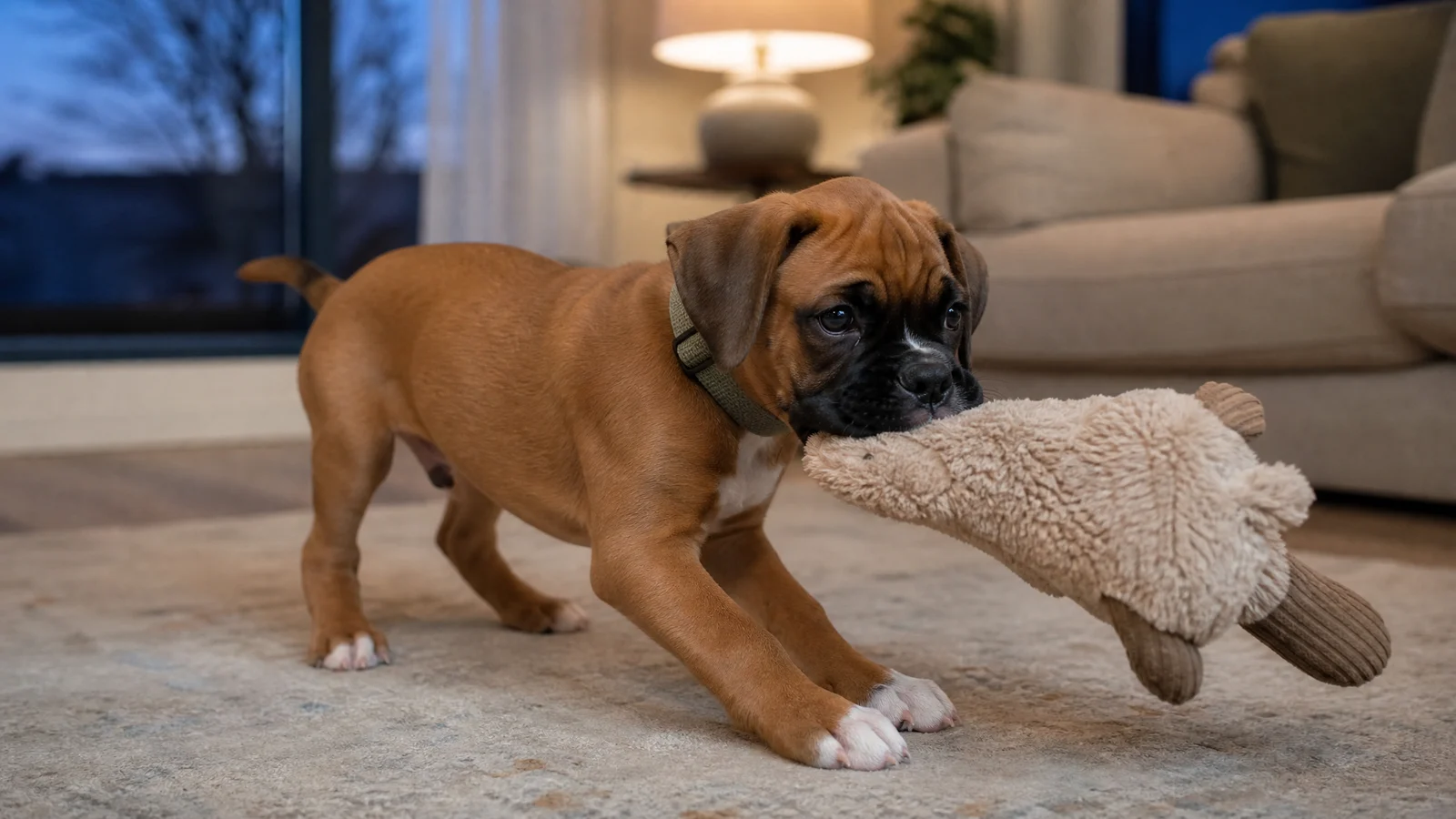
Many families believe that wrestling, chasing and mouthy tussling is simply how a Boxer plays and that the dog will learn limits alone. Play is wonderful for this breed, with playfulness rated 4 of 5, but unmanaged rough play teaches the wrong lessons. A dog who finds that grabbing hands and leaping on bodies makes the game livelier will do more of both.
Two terms help here. Mouthing is using teeth on skin or clothing in excitement, without intent to harm. Jumping up is the same excitement aimed at a person's chest or face. Both are normal in young dogs, and both need a clear, rewarding alternative.
The goal is for teeth and paws to become the signal that the game pauses, never a way to make it better. Dogs learn this faster when every family member plays by the same rules, so agree on them before the puppy arrives. The people on the receiving end are often smaller than the dog, which is why consistency matters so much.
Teaching Gentle Mouths and Paws
Use mild, reward-compatible consequences, and make the good option pay better than the bad one.
- When teeth touch skin, say a calm marker such as "oops," stop the game and turn away for a few moments, then restart and reward soft behavior.
- Keep a toy in your hand so there is always an acceptable thing to grab, and praise the dog for choosing it over fingers.
- Reward four paws on the floor every time, including during greetings, and teach a solid down as the default answer to excitement.
- If arousal keeps climbing, give a short time-out with a chew in a quiet space, then try again.
- Have the dog settle into a sit or down before the game resumes, so calm becomes the key that brings fun back.
Boxers are clever and can grow bored with repetition, so vary the games. Tug with rules, scatter feeding and short trick sessions all work, and they exercise the mind this breed needs. Mental stimulation needs are rated 4 of 5, which means a bored Boxer will invent their own entertainment, usually at someone's expense.
Adults should lead this training. Children join in only for gentle games, such as tossing treats on the grass for sniffing. For the full jumping routine, our guide to training a Boxer not to jump goes step by step.
Dog Parks Do Not Replace Socializing Your Boxer
The belief is that an open, off-leash park is the natural classroom for a social breed. The verdict is that parks are a gamble. Owners report mixed results: some say the park wears out their Boxer better than any walk, while others stay away after fights or aggression. Strong, fast, excitable dogs can also rehearse rude greetings in a crowd, and a rehearsed habit sticks.
The breed's profile backs the caution. Boxers score 3 of 5 with other dogs, which on that scale means "with supervision." They are not always tolerant of dogs of the same sex, while most Boxers of opposite sexes enjoy each other's company. A park gives you almost no say over who your dog meets.
Controlled Meetings Instead
Owners who want a dependable energy outlet tend to choose structured options. Daycare, including vet-run daycare, is widely described as a reliable way to take the edge off a Boxer. Playdates with compatible dogs, often similar-energy or larger ones, work well too, because you choose the partner and can watch every moment.
For a first meeting, pick neutral ground and a calm dog you know. Walk in parallel at a distance and close the gap slowly, keeping leashes loose. Allow a short sniff, call your dog away, reward them and repeat. Short, pleasant meetings beat long, exciting ones.
If a dog's body goes stiff or play turns one-sided, end it calmly and try again another day. The same slow pace suits any other animal in your home, including cats: separate spaces at first, small steps and an adult watching.
A Friendly Boxer Still Needs Socializing With Strangers
The belief is that a naturally friendly dog needs no practice. Boxers do look friendly, and openness to strangers is rated 4 of 5. Yet the breed standard calls the Boxer deliberate and wary with strangers, curious, and quick to respond to friendly overtures honestly rendered. That describes a dog who sizes people up first. Practice decides whether the sizing-up is relaxed or tense.
Protectiveness in this breed tends to show up in particular situations, such as when people seem nervous or suspicious or when strangers approach children, rather than as constant suspicion. Some young Boxers watch approaching strangers closely on walks without putting up any defense.
Reward that calm looking and you build confidence instead of a guard. Some owners see a dog who once growled or barked at every visitor grow quiet with repeated, pleasant visits, while others notice new barking at passersby as the dog matures. Both are cues to keep practicing at a comfortable distance.
Calm Greetings That Work
Slow introductions suit this breed. Ask the visitor to stand still, offer a hand to sniff and use gentle, high-pitched talk before reaching for a head pat. Some owners find a wary Boxer relaxes within minutes this way. Let the dog set the pace, because they get a say.
Jumping clusters around company, which points to excitement as the trigger rather than constant misbehavior. So rehearse with planned visitors, keep excitement low before they arrive, ask for a settle on a mat and reward four paws on the floor. Treat each visit as a short lesson and end it before the dog tires of it.
Next Questions About Socializing Your Boxer
Owners who get this far tend to ask a few things next, and each has its own article that builds on the habits above.
- Does a watchful, wary Boxer mean a guarding dog? Read our Boxer guard dog article to see how alertness really shows up at home.
- Why does your dog leap on every visitor? Our guide to keeping four paws down covers greeting routines in detail.
The thread through every belief we checked is the same. Boxers are powerful, playful and quick to get excited, so the best results come from starting early, keeping meetings short and supervised, and paying generously for calm. Use the first weeks and months well, keep going through adolescence, and you will live with a dog who is gentle with children, polite with other dogs and relaxed with strangers.
 BehaviorHow to Train a Boxer Dog Not to Jump
 BehaviorBoxer Bounce and Paw Swats: Rewarding Four Feet on the Floor
 Puppy trainingBoxer Puppies Who Bite: Teaching Soft Mouths During Rough Play
