 Boxer
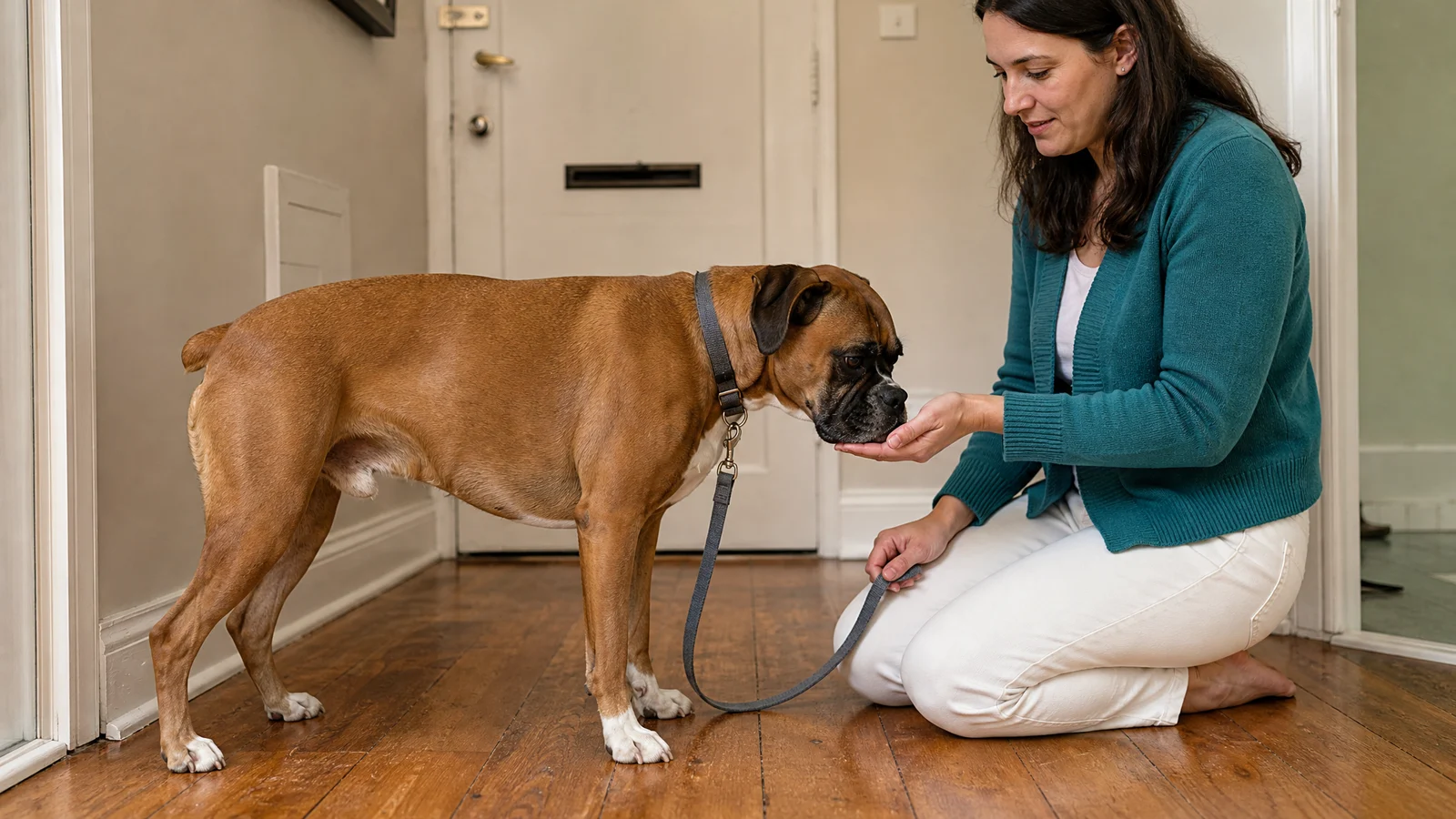
A new Boxer walks in without having read your house rules, and a dog this bright and bouncy will happily start writing a few of their own. Bringing home an adopted or older Boxer is less about teaching tricks than about deciding, early and kindly, what life with you looks like.
Most early trouble comes from an enthusiastic, clever dog meeting a house where nobody has explained anything yet, and reward-based habits can explain a great deal. A lot of what looks like baggage also turns out to be plain Boxer, which is easier to work with. Below, you'll find a way to tell the two apart and a plan for keeping the first weeks small enough for a new dog to follow.
Sorting Breed Habits From Past Habits as a New Boxer Owner
Before you decide a habit is baggage, check whether it is simply Boxer, because several common early annoyances come with the breed. Boxers jump and leap a good deal because of their heritage, so a newcomer who greets you chest-first at the door is being a Boxer rather than a bad dog.
They are also highly intelligent but can become bored with repetition, they tend to have a mind of their own, and they take the watchdog role seriously. That is a charming list until you ask for the same sit again and get a thoughtful look instead, which is why each habit needs its own plan:
- The bounce. Reward four paws on the floor every time they offer them, starting at the door, because a bounce that earns nothing and a floor that pays is how a Boxer learns the difference. Our guide to four paws on the floor has the full method.
- Quick boredom. Change the game before they change it for you, since a bright dog who is bored will invent something more interesting than your lesson, and you will like their idea less.
- The watchful door. A bark at a knock is a breed habit you can quiet with a mat and a treat, and our Boxer guard dog guide explains what the habit is and where it stops.
Sorting habits this way keeps you from punishing a Boxer for being a Boxer, and from chasing a backstory when a plan would do. You will not always be able to tell where a habit came from, and you do not need to, because the plan is the same either way: pay for what you want and prevent what you do not.
Adopting a Boxer Means Keeping Week One Smaller Than They Want
A Boxer who loves company will happily take more house and more visitors than a new dog can use, so the first week is yours to shrink. Start with less than feels generous: one resting spot, regular meals in the same place and a short list of faces. A dog with fewer choices makes fewer mistakes, and every mistake you prevent is one you never have to undo.
The Animal Humane Society suggests giving a new dog a week or more to settle, because the run of the whole house can overwhelm a dog who has spent time in a kennel. Once they seem relaxed, not hiding and willing to come to you for affection and food, open one more area on leash and let them sniff each room. You may need several guided tours, and if more access makes them more nervous, slow down, since some dogs feel safest in a relatively small area.
Leash tours do double duty. A leash on a bouncy dog keeps feet off the furniture, and if they reach for something off-limits you can steer them toward something allowed and pay them for taking it. That makes each tour the first place your four-paws-down work gets practiced in this house.
House-Training a Grown Dog You Just Adopted
Opening the house room by room also shows you which corner might become a toilet, and a grown Boxer's puddle is not a small one. Plan as though your new dog is not house-trained, even if they arrive with a clean reputation, because a new place can unsettle habits in any dog. Take them out often and pay the moment they finish outside, so the yard becomes the place where good things happen.
PetMD's veterinary guidance is encouraging here: older dogs can be potty trained, even if they've developed previous bathroom habits. Before training starts, have your veterinarian rule out medical conditions that may be causing accidents.
Potty training an older dog can take anywhere from a few weeks to a few months, so have everyone in the household follow the same schedule for meals and potty walks, and reward going outside rather than punishing accidents.
Our puppy potty guide holds the full routine. For a grown dog the main change is closer watching in the early days, because you do not yet know how they ask to go out, and a request nobody understood ends up on the floor.
Puzzles Instead of Drills for a Clever Adopted Dog
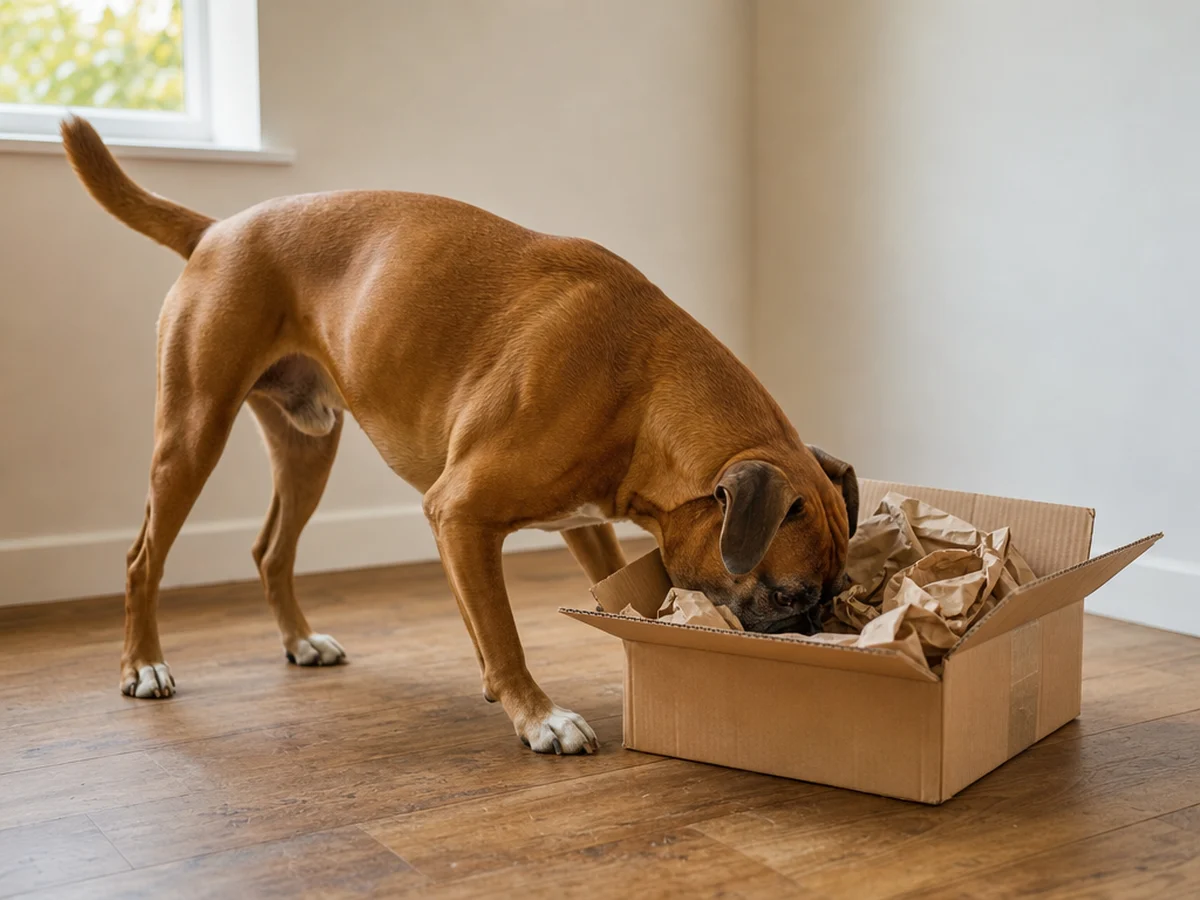
A Boxer who has the toilet question settled will soon start asking what else you have in mind for them, and a bright dog does not wait politely for the answer. Because Boxers can become bored with repetition and tend to have a mind of their own, a drill that repeats the same request invites them to make a better offer of their own. A puzzle gives that clever mind a job instead.
Pick the one thing your household needs most, such as settling on their own bed, and let them work it out. Reward any step toward the bed, then wait to see what they offer next and pay the answers that get closer. Each time they solve a little more, they learn that thinking is what pays, which is exactly the habit you want in a dog who will make plenty of decisions on their own anyway.
Boxers are also a late-maturing breed, so a young adopted dog may still be growing up and still need the patience a puppy gets. If yours is on the young side, our Boxer puppy training timeline shows what that growing up looks like, and our guide to training a smart Boxer covers how to keep the work varied.
Everyday Household Calls After Adopting a Dog
Puzzle sessions fill a few minutes a day, and the rest of the day runs on small household calls that no cue covers, so four of them are worth settling now, before a clever dog settles them for you.
Should a new Boxer be allowed on the furniture?
Decide before they arrive, and make it the same answer for everyone in the house. If the sofa is off-limits, give them a bed that beats it, with a chew that shows up there and nowhere else, and steer them back calmly each time they try the cushions. A rule that changes with whoever is home teaches a clever dog to check who is home first.
Should I change my Boxer's food right away?
Not if you know what they have been eating. Humane World for Animals advises keeping the diet consistent in that case and mixing the new food in gradually later so their stomach is not upset, and it recommends a veterinary visit within a week for a general health check and vaccinations. Regular vet visits after that are worth keeping on the calendar.
What if everyday objects frighten them?
A grown newcomer has no reason yet to believe the vacuum or the umbrella is harmless, so let them watch from whatever distance feels safe and pay with a treat each time they look without backing off. Never push their nose toward the scary thing. If the fear is not easing, a qualified trainer can help.
Is the dog park a good first outing?
Hold off for now. Dog parks and pet stores pack in strangers, noise and other dogs all at once, so begin with quiet leash walks near home and add busier outings as your dog settles in.
This page offers general information, not veterinary advice, so check with your veterinarian before changing your dog's food or if accidents or fears seem tied to their health.
Letting Play Introduce You to an Adopted Boxer
With the rules and routines in place, one thing still needs doing that no rule covers: getting to know each other. Boxers are fundamentally playful with family and friends, and a game is the quickest way to learn what your new dog finds funny, how they like to run at a toy and how they handle a little silliness. Keep early games easy and short, in a space you have already opened up, so play adds to the calm instead of competing with it.
A dog too worried to play yet is common after a move, and sitting nearby while they watch you handle a toy is a perfectly good start. Once the games arrive, they will tell you more about your new Boxer than any file ever could. A Boxer who joins your home at any age still has a full training education ahead, and our free Boxer e-book covers each need that follows, broad enough for the whole Boxer and simple enough to read in a spare evening.
 Training basicsHow to Teach a Boxer to Sit
 Training basicsHow to Teach a Boxer to Stay
 Training basicsHow to Teach a Boxer to Lie Down
