 Boxer
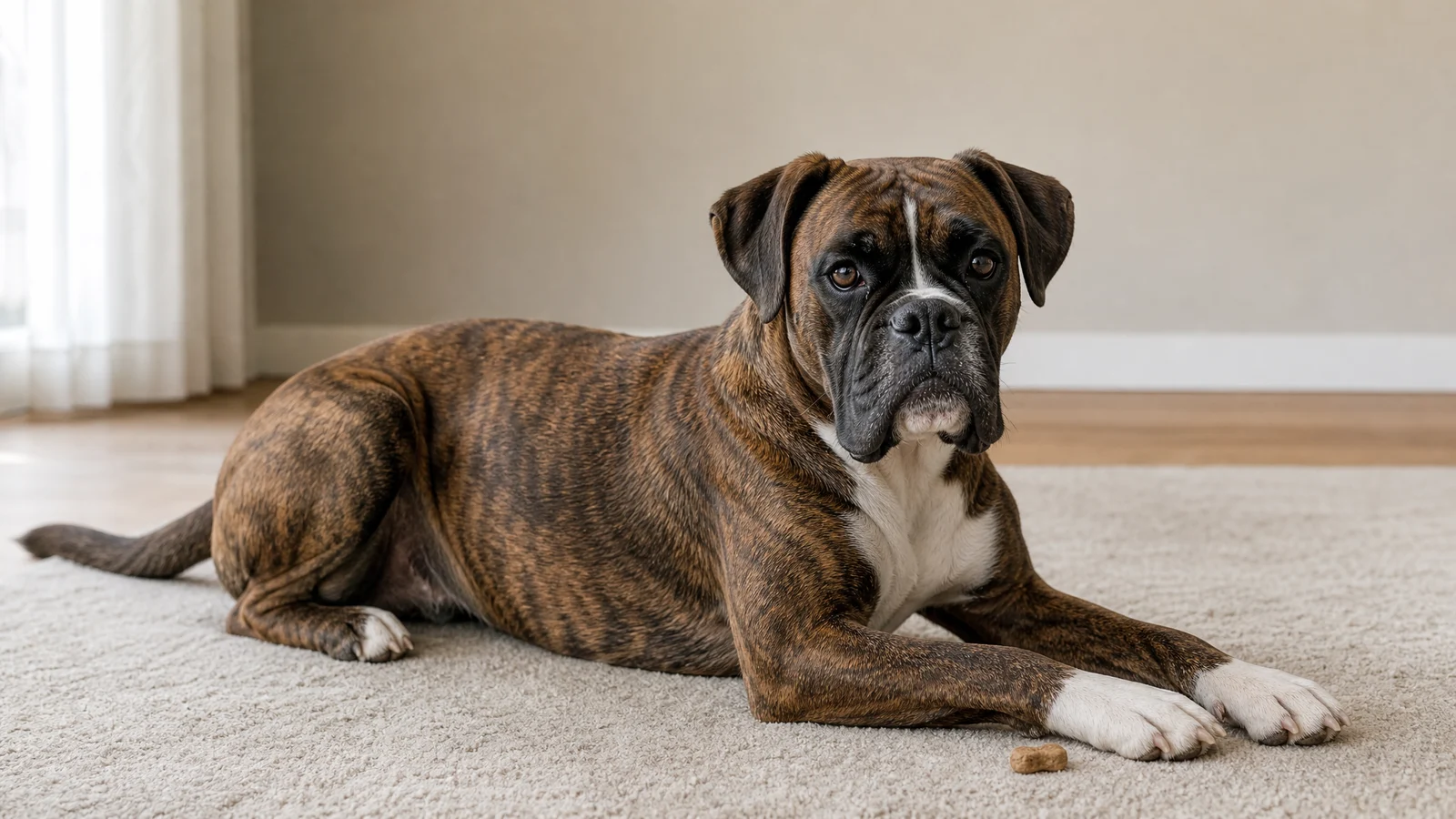
Ask a Boxer for a down in the middle of a greeting, and you find out quickly whether the cue was taught or only hoped for. Folding the whole body onto the floor is a bigger request than a sit for a dog built to spring, so this lesson runs in small stages, each with a plain sign that your dog is ready for the next.
The short version: lure from a sit, pay the instant the elbows touch the floor, swap the food for an empty hand, and add the word only once the movement is smooth. Read on for each stage, the stalls that tend to appear along the way, and the questions that come up afterward.
What to Settle Before Your First Down
Most failed downs trace back to the setup, not the dog. A Boxer bouncing around the kitchen has little reason to lower, so the room, floor and reward have to make it easy.
Start with the floor. Dry carpet or a rug gives front paws something to grip, while slick tile makes plenty of dogs think twice about lowering. Then gather the rest of what you need:
- Small, soft treats your dog can swallow in a second, so every repetition stays quick.
- One marker word, such as "yes", that you say the instant the elbows touch.
- A quiet room with the door closed, so nothing else competes for your dog's attention.
- Short sessions, because a Boxer is clever and can get bored with repetition.
With those in place, any later stall points at the method instead of the setup. If your Boxer seems stiff or uncomfortable lowering onto even a soft surface, pause and ask your vet, and keep regular vet visits on your calendar for the same reason.
Luring the Down in Three Stages
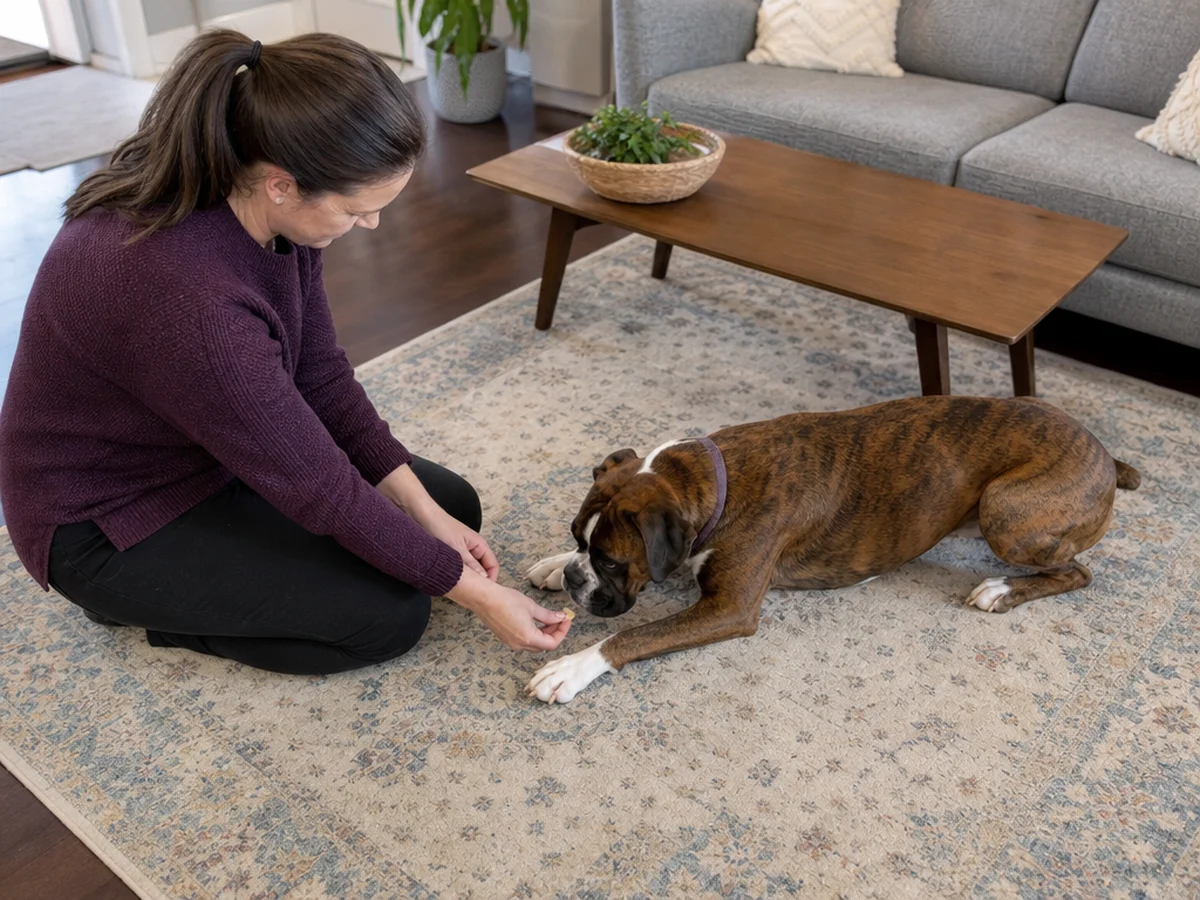
With the floor and treats sorted, the lesson itself is three short stages: a lure from a sit, payment on the floor and an empty hand. Splitting it up gives you a clear sign at each one about whether to move on, and the signs are plain things you can see, never a count of repetitions.
Lure From a Sit to the Floor
Stage one starts with a sit in front of you, in your quiet room, with treats ready. Then work through these steps:
- Hold a treat at your Boxer's nose so they stay locked on it.
- Lower your hand slowly and straight down toward the floor.
- Stop with the treat between their front paws, close to the ground.
- The moment their chest and elbows reach the floor, say your marker word and give them the treat.
From a sit, you can lure a down by slowly lowering your hand until the reward is close to the ground between the front paws. The slowness is the whole point, because a fast hand sends a bouncy dog stepping forward or popping up to chase it. Move on when your Boxer follows the lure all the way down smoothly several times in a row.
If they stand up to follow the treat, your hand is moving forward or too high, so aim it straight down and closer to their chest. If they back away, sit on the floor and lure them under a chair or your bent legs, which makes a low tunnel that invites the head down without a big hand movement.
Pay While Your Boxer Is Down
Stage two starts the first time your dog lowers the front end and leaves the hips hovering. Pay that, then ask for a little more next time, until the chest and elbows touch.
Then deliver the treat while your dog is still on the floor. Hand it over after they rise and your dog might think the reward is for standing up or walking toward you. A Boxer who pops up the second they touch down is why the marker word matters: it bridges the gap until the treat arrives.
Finish every repetition with a release word such as "okay" and toss a treat a step away, so your dog stands and resets. Move on when your Boxer lowers fully, takes the treat on the floor and waits for the release several times in a row.
Swap the Food for an Empty Hand
Stage three runs the same path with nothing in your lure hand and pay from your other hand as soon as the elbows land. Keep the movement identical, because the hand has become a signal and your dog reads it the way they read the food. If they hesitate, put a treat back in the lure hand for one repetition, then switch again.
Move on when the empty hand produces a smooth down several times running. If it falls apart, drop back one stage for a few rounds.
A Down Command for Boxers Who Follow the Empty Hand
A dog who follows an empty hand smoothly is finally ready to learn what to call it. Say "down" once, in a calm voice, then pause for a beat before your hand moves, so the word predicts the movement instead of trailing behind it. Saying it again and again only teaches your dog that the first one does not count.
Next, shrink the hand. Make the reach shorter each round, then a flick toward the floor, then a small wrist tilt, until the word alone gets the down. In our experience a Boxer's attention fades long before their energy does, so end a session while it is still going well. If the word alone gets nothing, go back to the last hand size that worked and pay there for a few rounds.
Move on when the word alone works smoothly several times in a row. From there, our Boxer obedience basics show how down fits alongside sit, stay and come.
Boxer Down Command Training in Busier Places
A down that works on the living-room rug is still a rug skill. Change one thing at a time: another room first, then a different surface, soft ones first. If your Boxer slips after a change, return to the easier setting. Next comes a mild distraction, such as a toy lying a few steps away or someone walking by at a distance. Once downs come reliably, reward the better ones faster rather than paying every time.
The place many owners want this most is the front door. For teaching a down instead of jumping, begin in a calm environment where success is likely, then progress to places with more distractions, so practice at the door with nobody coming in before you add a visitor. Young Boxers need plenty of reminders here, and our guide to teaching a Boxer not to jump covers the rest of the greeting.
Questions Owners Ask After the First Few Downs
Three small decisions can change how the lesson feels once your Boxer has the movement: which marker you use, who else joins in, and when you start. Each answer adjusts the method above instead of replacing any part of it.
Do I need a clicker for a down?
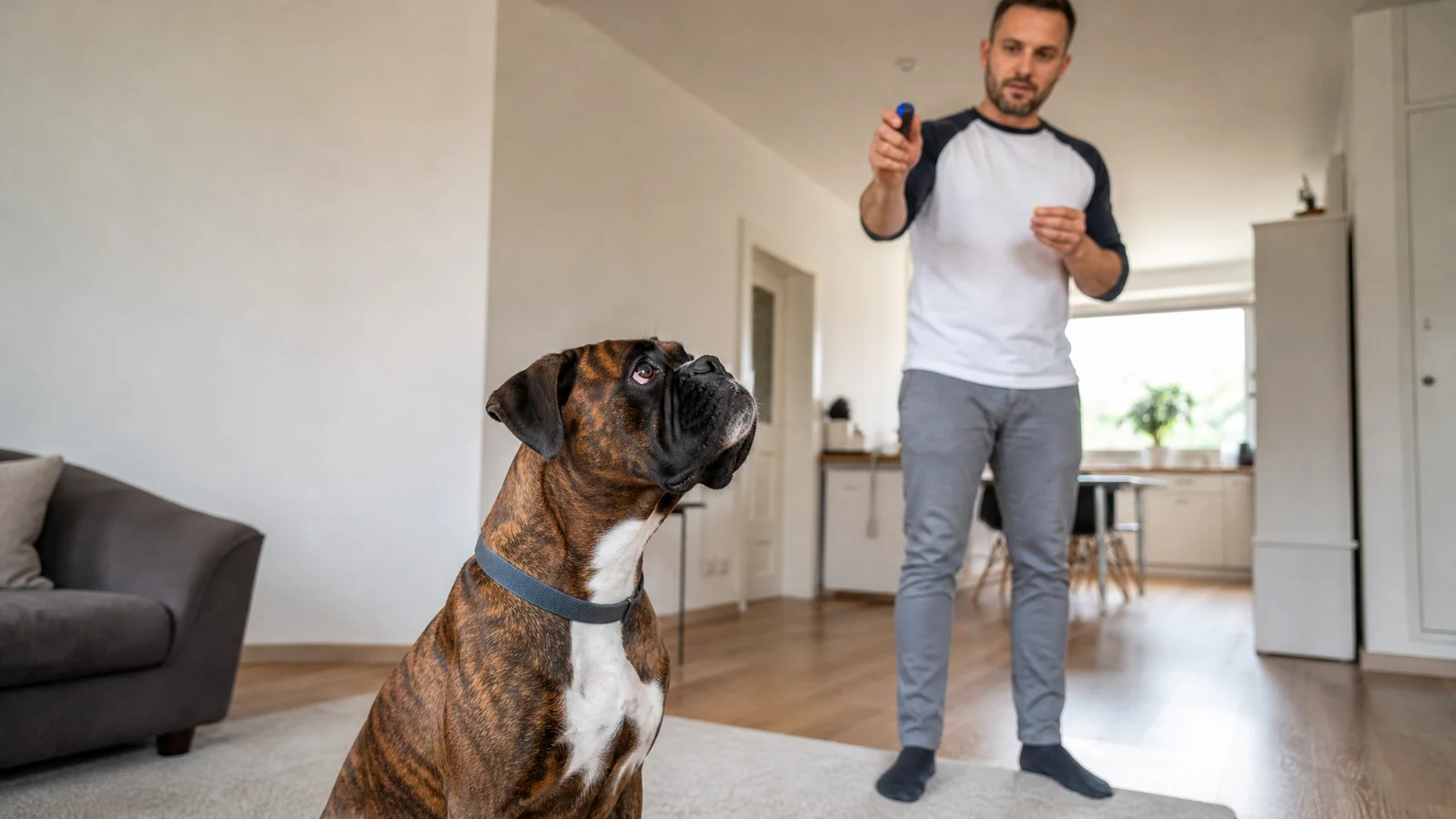
No. A short word such as "yes" works as long as you say it at the exact moment the elbows touch. A clicker sounds the same every time, so use whichever you can deliver without fumbling.
Can my children ask my Boxer to lie down?
Yes, once your Boxer drops smoothly for you, with an adult standing right beside the child. A strong, bouncy dog can overwhelm a small child by accident, so let the child use the same word and hand movement while you handle the treats.
What if my Boxer is too wound up?
After a walk or a short game, a Boxer can usually take a treat gently and follow a slow hand, and that is the moment to practice. If your dog is still grabbing at the food, stop for now and try again once they are calmer, because a down lured from frenzy mostly teaches the dog to hurry.
A Cue That Pays for Slowing Down
Behind every stage and answer above sits one idea: a Boxer's day pays for speed. The faster they reach the door, the toy or the visitor, the sooner something good happens, so they get plenty of practice at quick and very little at slow. A down turns that around, because the treat only arrives once the body has gone slowly and all the way to the floor.
That reversal is why each stage asks for so little at a time: you are adding a slow gear your dog did not have before. Our Boxer e-book covers the rest of your dog's training needs at that same unhurried pace, and nothing in it asks you to rush, at no charge to you.
 Training basicsHow to Teach a Boxer to Heel
 Training basicsHow to Teach a Boxer to Leave It
 Training basicsClicker Training a Boxer
