 Boxer
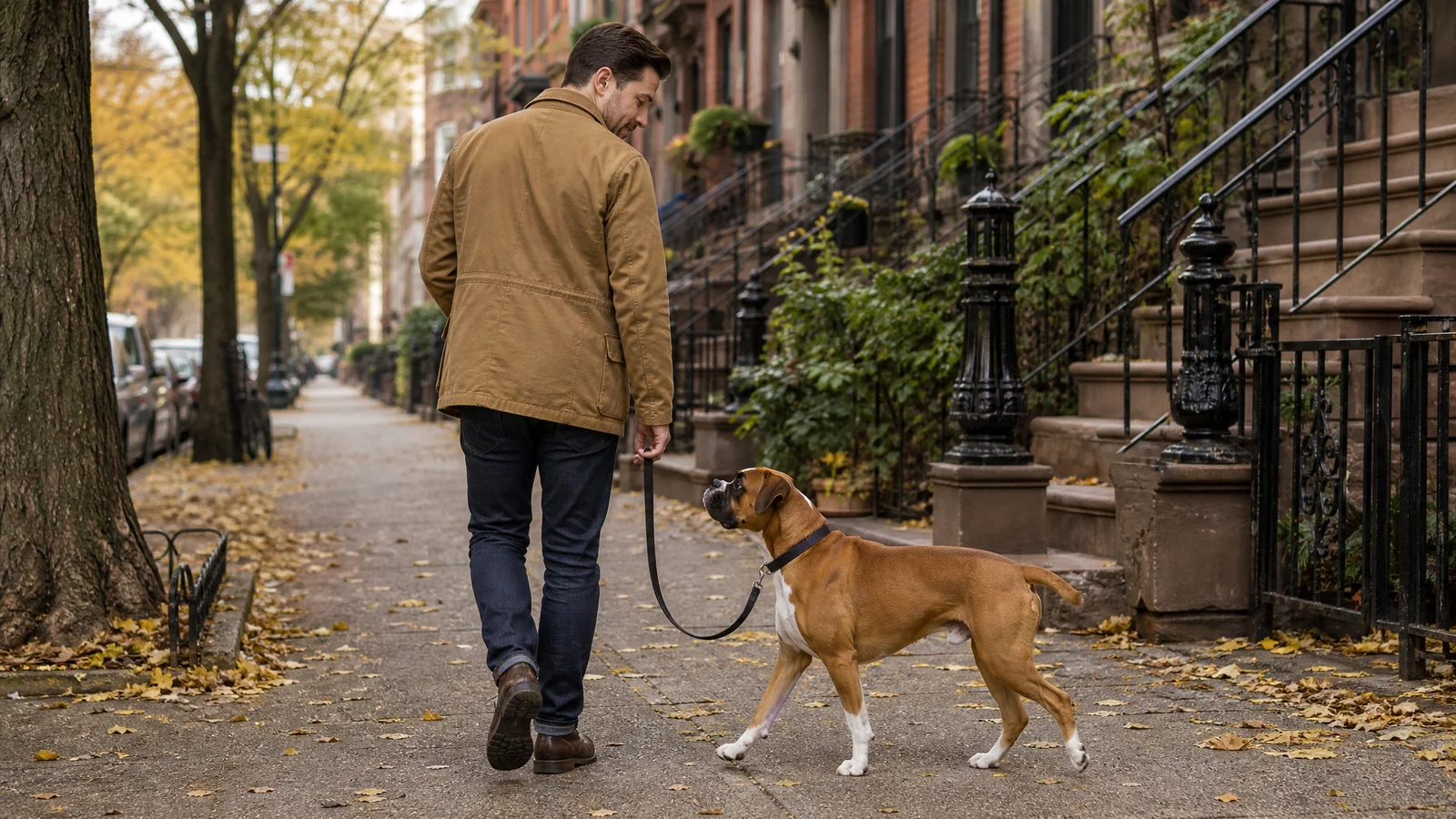
Your Boxer already knows where the best spot on a walk is, and it is usually ten feet ahead of you. Heel is the lesson that makes your left knee the better offer, for the stretches where you want a bouncy, powerful dog close and not hauling on the end of the leash. It is a short, precise skill rather than a way to walk the whole route, and a Boxer can learn it with food, patience and a plan that grows one small piece at a time.
Below, you'll find where the position sits and five stages from standing still to a real stretch of walking. You will also get fixes for surging and bouncing, and how to attach a cue.
Why the Heel Position Loses to a Boxer's Bounce
Think about what a walk offers your Boxer: scents, passersby, speed and a human who is moving far too slowly. Next to that, a patch of air beside your leg has to be worth more, which is why the pay in this lesson matters so much. Boxers run high on energy, playfulness and the need for something to think about, so a dull spot loses every time.
In competition obedience, heel means the dog walks on your left with their head even with your knee while the leash stays loose. At home, left or right is your call, but pick one side and keep it, because a dog who is never sure where to stand starts weaving in front of you. That fixed spot is also what separates heel from ordinary walking, which our Boxer loose-leash guide covers.
Teaching Heel in Five Stages
Once you have picked a side, the lesson becomes a ladder, and a Boxer climbs it fastest when every rung is small enough to win. Keep small, soft treats handy and start indoors.
Stay on each stage until your dog does it smoothly several times in a row, and treat the list below as a set of mini-lessons rather than one long session, since a bored Boxer learns less than a successful one:
- Park at your knee. Stand still with the leash in a loose loop and give a run of treats whenever your Boxer stands or sits beside your leg. Hold the food low at your knee, since your dog will aim for wherever it shows up. If they circle, feed the instant they stop beside you.
- Take one step. Step forward, invite your dog along in an upbeat voice, and deliver a treat at your knee as they catch up. Then stop and pay again. If they lunge ahead, you moved before they were ready, so go back to stage one for a few easy treats.
- Link a few steps. Add a second step, then a third, always paying beside your knee or hip. Stop while your Boxer is still keen.
- Thin out the treats. Once several steps in a row go well, pay every other step, then every third, then less often. If your dog drifts, you thinned too fast, so pay every step again for a moment.
- Take it to the yard. Repeat the first four stages somewhere with mild distractions, starting with a single step again. A new place resets the difficulty, so expect to rebuild a few rungs lower and climb faster the second time.
When a Stage Stalls
Every stall has the same fix: go back one rung, make the step smaller or the treat better, and rebuild. The two ways a bouncy dog can derail the middle stages get their own answers next.
Heel Turns for a Dog Who Surges or Bounces
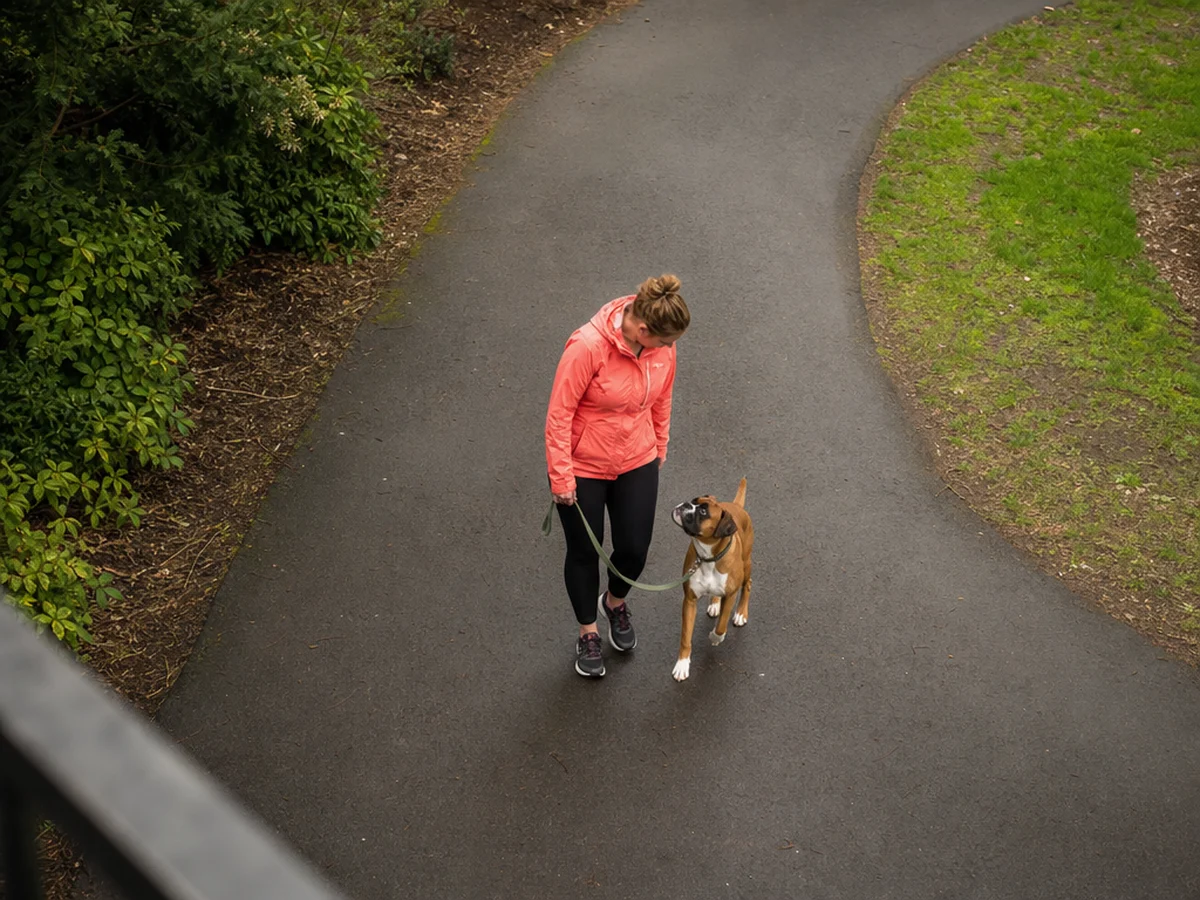
Around stages three and four, a Boxer's energy tends to show up as a surge past your knee, and a turn is the cleanest answer. When your dog rushes ahead, turn the other way, call them to you, and pay right at your leg before walking on. The change of direction does the correcting for you, so your voice stays cheerful and the leash never has to jerk.
A bounce is a different problem, because your dog is in the right place and simply cannot keep their feet quiet. Stop moving, wait for the wiggles to settle, and pay the second all four paws are planted beside you. Then ask for one step instead of three.
A dog who can only bounce is showing you the lesson is too exciting, so shorten the session, ask for less and pay more often. Greeting people is its own lesson, and our Boxer greeting guide covers it.
Boxer Heel Command Training and the Sniff Release
When your Boxer slides into the spot on their own, the habit is ready for a name. Pick one word and use it every time. Say it once as your dog arrives at your knee, and pay. When the word reliably brings them into place, say it a beat earlier, as they head toward the spot, and let the treat confirm the choice.
Heel also needs an ending. A separate sniffing cue can improve your heel, because the chance to sniff around is a great reward for good behavior. So give a release word, then let your dog follow their nose on a loose leash. That makes heel a short job with a paid finish, which suits a dog who needs something to think about.
Real streets are harder than your yard, so pay generously there. That is the logic behind the Animal Humane Society's walking tips: motivate your dog to walk past distractions or stay near you with treats they enjoy. Ask for heel only where you need it, then release. Keep regular vet visits on the calendar, and if a dog who used to heel happily starts hanging back or moving stiffly, mention it to your vet before blaming attitude.
Heel Situations Beyond the Training Spot
A few practical details decide whether heel survives the trip from the living room to a real sidewalk, and these three questions are worth sorting out before your first walk with a cue in place.
How much of a walk should be heel?
Only the stretches that need it, such as a busy crossing or a passing stroller. Ask for the knee spot, pay along the way, then release into a loose leash or a sniff. The rest of the walk can stay relaxed.
Which hand holds the treats?
Use the hand nearest your dog, held low at your knee or hip, so food arrives where you want them to stand. Let the leash hang in a loose loop in your other hand, which keeps it from tugging on the treat hand.
Can my kids walk my Boxer at heel?
A Boxer is strong enough to pull a child off balance, so keep real walks an adult job. Children can help with stages one and two indoors, handing over the treats while you hold the leash.
Sharing the Sidewalk With a Boxer Who Heels
All of these answers point back to one thing: a Boxer who loves company and has the body to act on it. That is wonderful at home, and a lot to take in for a neighbor who only wants to pass by.
Heel gives you a way to share the street with that much enthusiasm. When you ask for the knee spot, the walk stays orderly, and when you release it, the friendliness gets its turn. A dog who can do both is easier for everyone to love, and easier for you to take places.
Once heel feels easy, the remaining lessons on your Boxer's list get the same unhurried walk-through in our e-book, which readers can request from this site without paying a cent.
 Training basicsHow to Teach a Boxer to Leave It
 Training basicsClicker Training a Boxer
 Training basicsHow to Teach a Boxer to Come When Called
