 Boxer
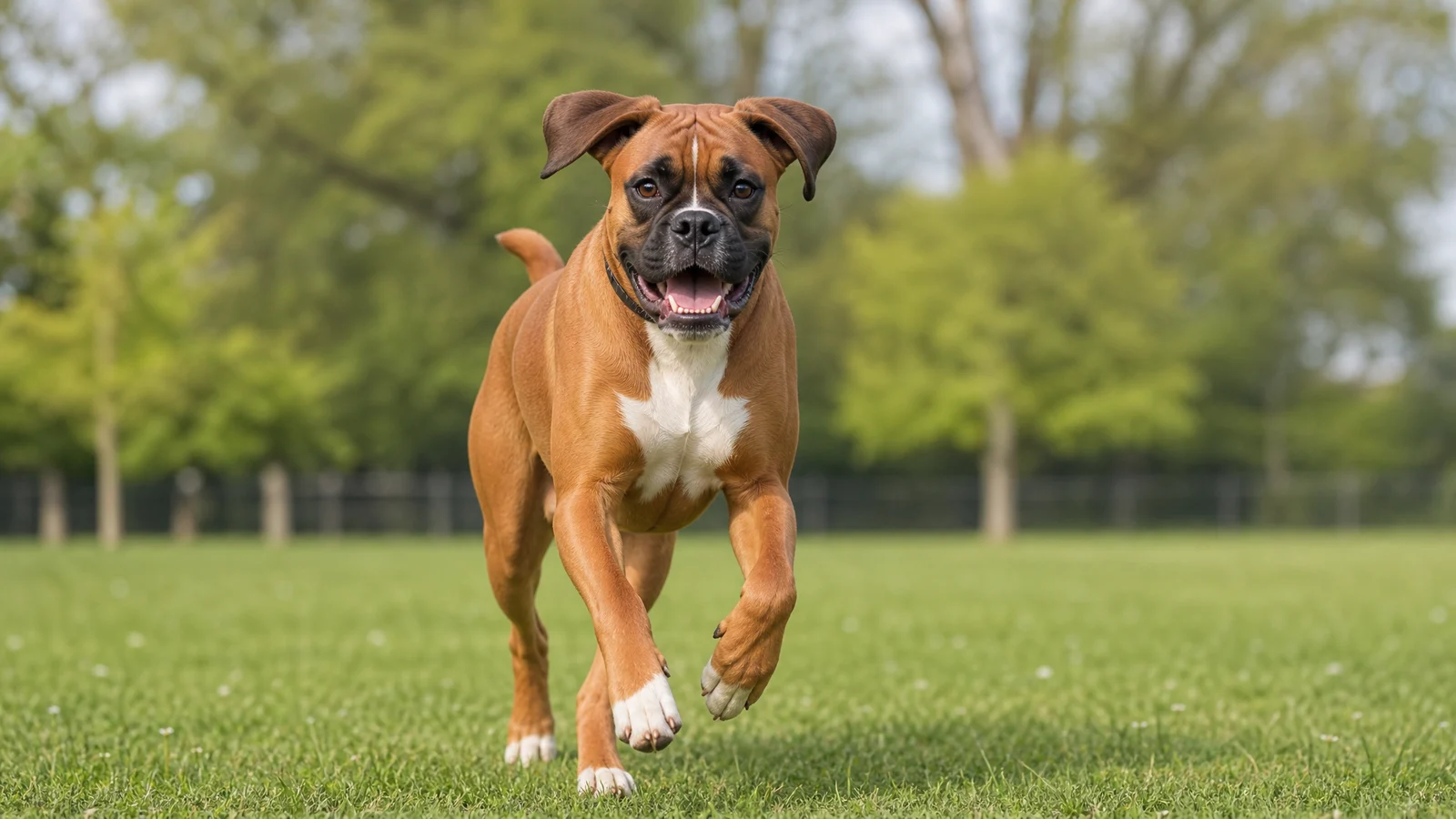
Every Boxer comes running for something. The trouble is that a visitor at the gate, a dog across the park or a game already in full swing can all look like better offers than your voice.
A recall that holds up is not a mood your dog happens to be in. It is a habit built from small, well-paid pieces, and with a smart, playful breed that tires of repetition, the building goes best when it stays light and a little different each day. You start with a hand on the collar, add a word and a few steps backward, stretch the distance, and only then ask for the call where something else is competing.
This guide follows that order, stage by stage. It ends with short answers for the moments that rarely go to plan.
How a Clever Boxer Decides Whether to Come
That list of offers is the whole puzzle. A Boxer is bright and playful enough to size up every call, weighing it against whatever is happening nearby and against what coming back has paid so far. A good recall is simply the answer your dog has learned to give when that sum favors you.
Love alone does not tip it, because dogs don't automatically come when called, regardless of how much they love and respect you. If a call goes unanswered, say it only once and then make yourself more interesting, with a cheerful voice, clapping or squatting, instead of repeating the word.
That gives the lesson three jobs. Your Boxer turns at the word, arrives within reach instead of sailing past, and stands still long enough for a hand to close on the collar.
A powerful, bouncy dog can manage the first two and still crash straight through you, which is why we teach all three from the first step and pay for the whole sequence, not just the sprint.
A Recall That Starts With a Hand on the Collar
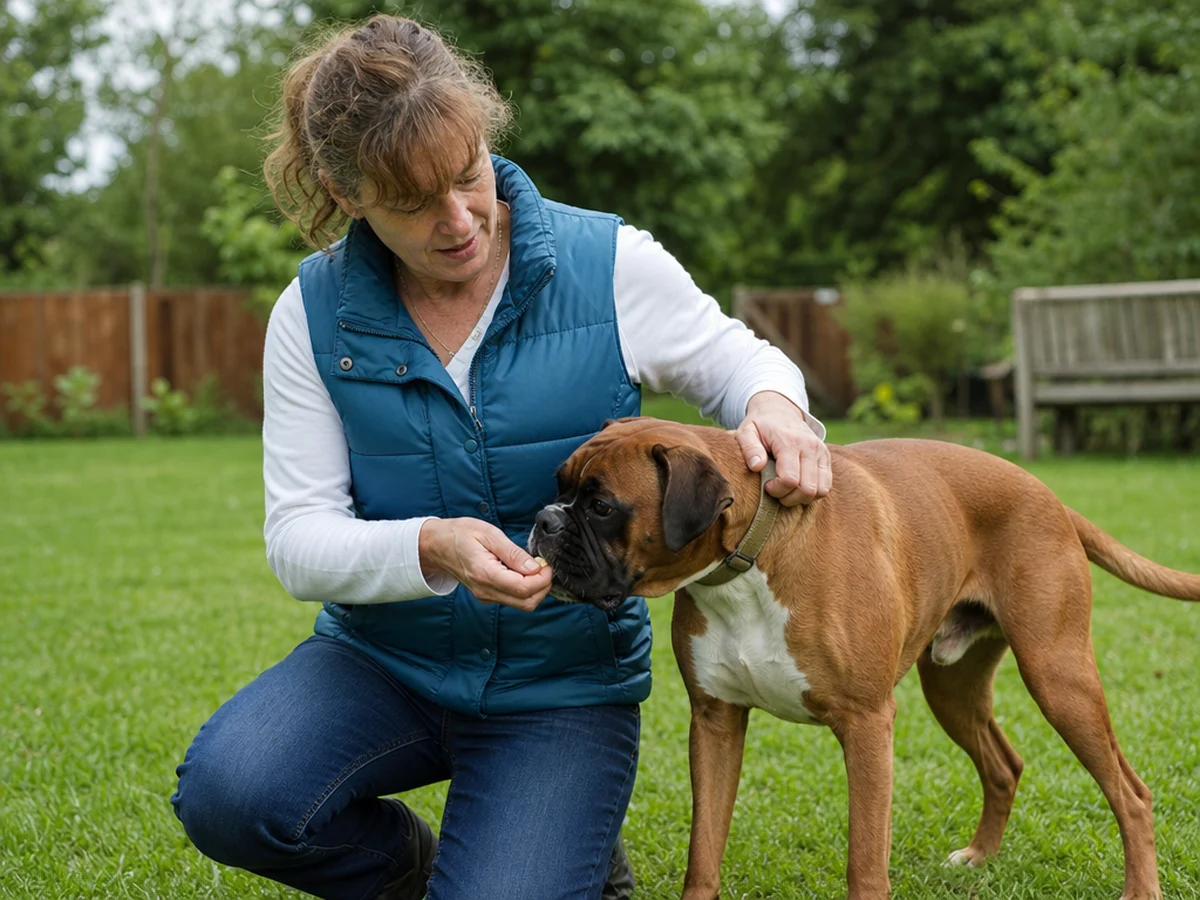
Those three jobs become three short steps, and each one is easy enough that your Boxer wins every time. Move up only when the current step feels smooth and a little dull, and read a stall as a sign to go back one step, not to push on.
Teach a Reaching Hand to Mean Treats
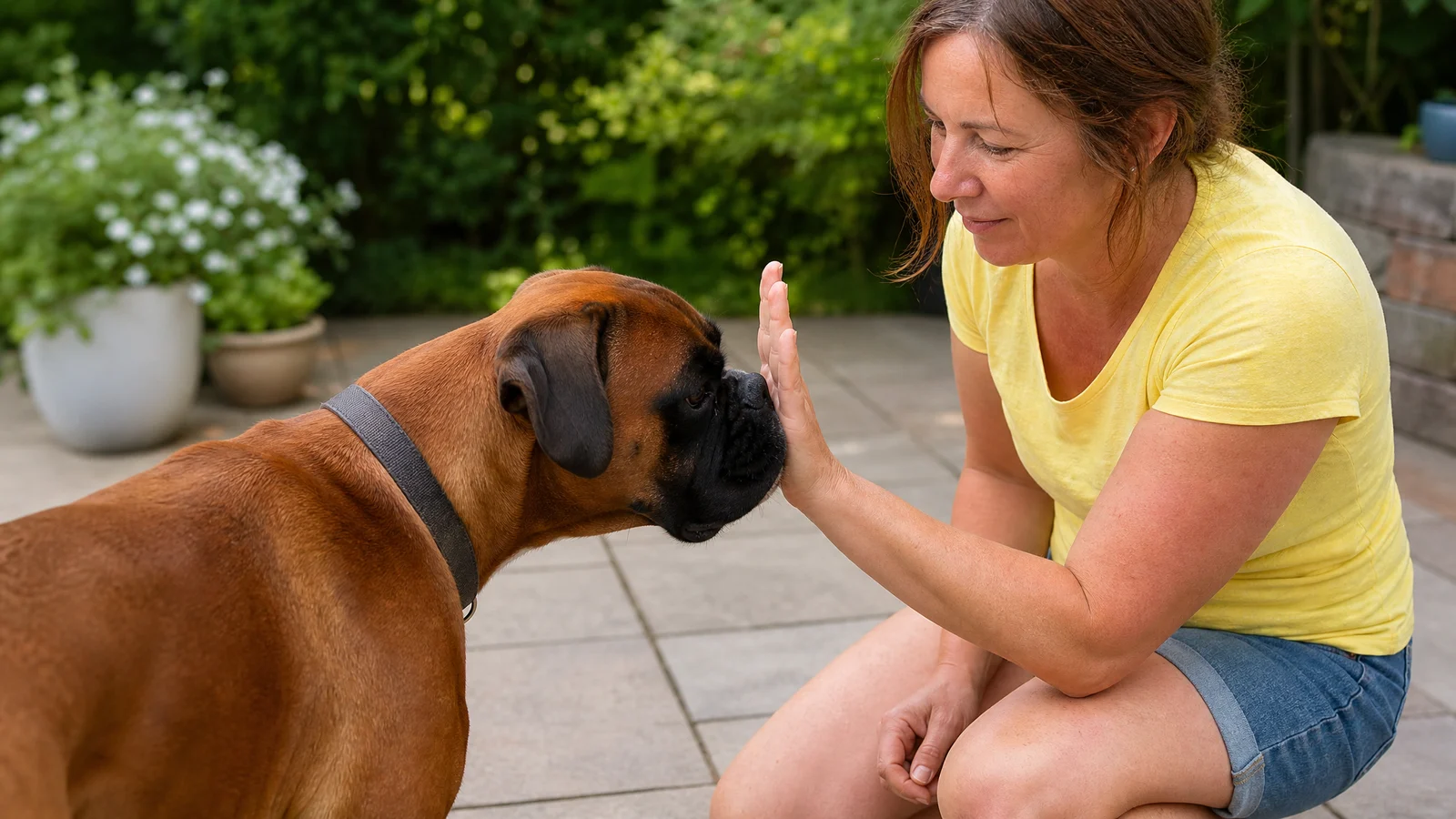
Start with your Boxer close and relaxed. Reach toward the collar, and if they stay put, pay with a treat from your other hand. Touch under the chin first, then the side of the neck, then over the top as they get comfortable. This comes first because a recall that ends with a dodged hand is only half a recall. If your Boxer swerves away, shrink the reach until they stay, and pay for that smaller version.
Back Away and Let Your Boxer Follow
Now turn the arrival into a game. Pick one cheerful word for the call and use it only for this lesson, then work through the steps in order.
- Say your Boxer's name and wait for a glance.
- Say the word once, in a bright voice, and back away while clapping or patting your legs.
- When they reach you, ask for a sit, touch the collar and then pay.
- Release them with a cheerful word to go back to whatever they were doing.
Move on when the whole chain, turn, arrival, sit and collar touch, goes smoothly several times in a row. If your Boxer streaks past you, start from farther away so there is room to slow down, and keep your treat low so the nose follows it toward the floor.
Stretch the Distance Room by Room
Next, add space. Call from the next room, then from the far end of the house, ideally while your Boxer is busy with something dull, and make the reward worth the trip.
For a game that suits a playful dog, tossing treats down a hallway sends them off with a reason to run away and a reason to run back: toss one, call, and throw a second when they reach you. If your dog is still learning recall, start with shorter distances and gradually increase the distance.
When your Boxer stalls halfway or wanders off, you added too much too soon. Shorten the gap, pay the next arrival well, and keep the call itself cheerful whatever happened on the way. Once a call from across the house brings a quick, happy arrival several times in a row, you are ready for the world outside.
Taking Recall to Places That Compete With You
Everything so far happened where nothing else was on offer, so the next job is practicing where something is. Change one thing at a time, such as the yard, then a quiet street, and go back a step in each new place, because a treat that wins in the kitchen can lose to the whole outdoors.
Keep a Long Line on Your Boxer
Until the call is dependable, keep your Boxer on leash in public places and in any space that isn't closed in, until you are certain they will come on command. A long, light line gives room to practice without giving up that safety. If a call fails on it, walk up the line to where your dog last answered and try again from there, and never haul them in.
Build the Distractions in Order
Build the distractions in order. Begin with something your Boxer barely cares about, such as a dull toy lying a few steps away, and call when they glance at you. Save people and other dogs for last, because for a sociable, playful breed they are usually the strongest pull of all.
Our Boxer zoomies guide covers recall games for those sudden bursts of speed, and the Boxer leash training page helps with the walks in between. Keep up regular vet visits as well, since training goes best with a dog who feels well.
Quick Fixes for Recall Moments Nobody Planned
All three snags below sit in the last seconds of a call, the stretch where a Boxer's size, speed and sociability can undo a good plan. Each answer sticks to what to change in that moment.
What if my Boxer barrels into me?
A fast dog barrels in when the arrival is where the sequence ends. Pay only for the sit, and your Boxer learns that the quickest route to the treat is to stop at your feet. If they still leap, practice the sit alone first with our Boxer greeting guide.
Should I leash my Boxer after every call?
Not every time. If each call ends the fun, a clever dog learns to arrive late or not at all. Pay, release, and let them return to what they were doing most of the time, and clip on only when you are really leaving.
Can I call my Boxer out of dog play?
Play is one of the hardest pulls to beat, so wait for a natural pause in the game at first. Call, pay, and then let the game resume, so that coming to you becomes part of the fun instead of its end.
The Welcome Your Boxer Runs Toward
The last seconds of a call are where the pay lands, and a Boxer is a people-loving dog, so the pay is not only the treat. Your face, your voice and your hands count too, and a glad greeting can be worth as much as the food. Welcome every arrival the way a friend at the door would, and the sprint toward you starts to feel like the best part of the walk.
Coming when called is just the start of what a Boxer needs to learn, and our e-book, free to readers of this site, covers the whole of it in a form that is easy to read and easy to use.
 BehaviorHow to Fix Boxer Separation Anxiety
 BehaviorHow to Stop a Boxer Pulling on the Leash
 Exercise and jobsEasy Tricks to Teach a Boxer
