 Boxer
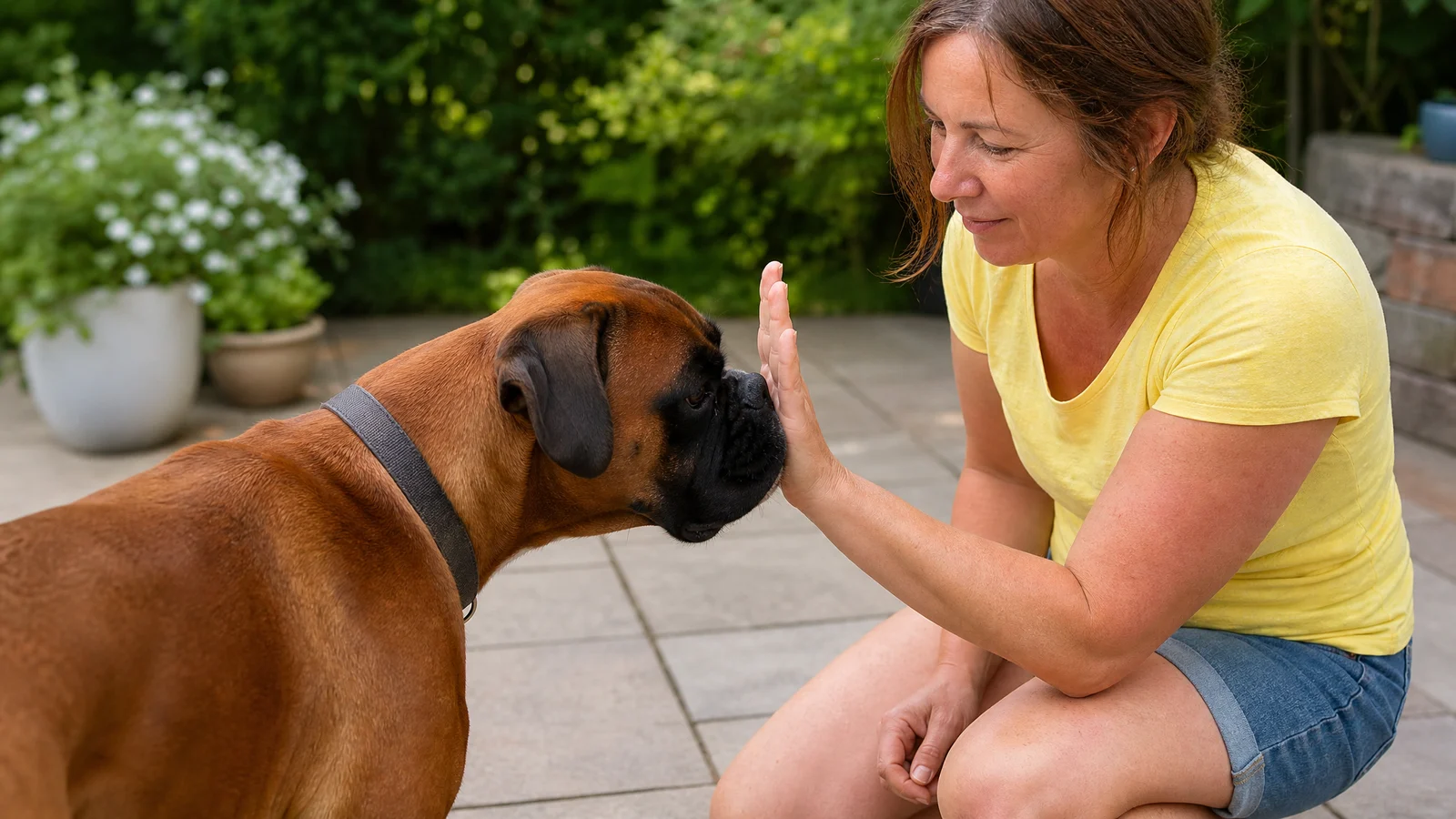
You can teach a Boxer something new tonight with a handful of tiny treats and a quiet corner of the house. A trick gives a dog who is highly intelligent, and who can become bored with repetition, a small puzzle with a clear finish, which is exactly the kind of lesson that keeps a clever mind interested.
Below, you'll find three tricks taught from the first treat to the finished cue: a nose touch, a bow and a nod for yes. Each one is broken into the in-between stages that quick lists skip, along with a fix for the snag you are most likely to meet. Start with whichever sounds like the most fun, or follow the order here if you would rather not choose. Either way, a few minutes at a time is plenty for a dog like this.
Beginner Boxer Tricks Begin With One Setup
All three tricks run on the same setup, so it pays to get it right once. Three things go into it, and all of them should be ready before you begin:
- Small, soft treats your Boxer will happily work for
- Several of them within reach, so you can pay the moment the right thing happens
- A marker that tells your dog the reward is on its way
Marker and Timing
Pair those treats with a marker, either a click or a short word like "good" that means the reward is on its way. Leave "yes" out of it, since that is the natural cue for the nod you will teach last. Timing is the part that matters: the reward has to come immediately, within seconds of the behavior, or your Boxer may not connect it with the right action.
Short Rounds and Where to Start
Then plan for short rounds. Boxers are highly intelligent but can become bored with repetition, so a handful of tries at one trick followed by a switch to another keeps the work fresh far better than grinding one move until the enthusiasm drains. As Boxer people, we like to slot tricks in between the basic cues from our Boxer obedience basics, so neither gets stale.
Touch comes first for a practical reason: all three tricks follow your hand, and touch is where a dog learns that following a hand pays. Tricks are also a small outlet for a big mind, so once these feel easy, look at Boxer sports and jobs for bigger ideas.
Touch Is the Trick to Teach First
With the setup ready, touch gets the first turn, and it is simpler than it sounds: your Boxer bumps their nose against your open palm. A dog's body follows their nose, so a Boxer who will chase a hand with that nose is a dog you can steer into a bow or a nod later. Keep your palm at nose height from the start, because a hand held high invites a bouncy dog to jump.
Getting the First Nose Bump
Start with your open palm facing your Boxer, about an inch or two from their nose. Dogs like to sniff whatever you offer, so most will lean in, and the instant the nose lands on your palm you mark and deliver the treat right in front of that open hand. Paying there shows your Boxer exactly where the nose belongs. Practice in a few quiet spots until the bump comes eagerly and smoothly several times in a row.
When Your Boxer Won't Touch the Hand
Some dogs sniff the air near your palm and stop short. Rub a little smelly treat on your palm for the first few tries, which makes a lean toward the hand almost certain. If the nose still hesitates, pay for smaller steps: a glance toward the hand, then a lean, then a closer approach, raising the bar one small step at a time until the nose lands on your palm.
Once the bump from a few inches away is dependable, say "touch" just before you present your hand, then mark and pay when the nose lands. Next, add distance a few inches at a time, working up to several feet. Try the hand higher or lower, and closer to your body and farther out.
Finally, add distractions, starting with another family member in the room before you try anything busier. Along the way, pay the keenest bumps and let the timid ones go unrewarded, so your Boxer learns that an eager touch is what earns the treat.
Take a Bow Without Collapsing Into a Down
Touch taught your Boxer to follow a hand, and the bow asks that hand to travel somewhere new: down and back between the front legs, so the chest dips while the hind end stays up. That path has several stages, and each one has a job.
Luring the Bow in Stages
Start with your Boxer standing in front of you, and move on only when each step feels easy to them. Treat the list as a ladder, where every rung brings the lure closer to the finished bow.
- Get your dog's attention with a treat in your hand, then slowly lower it between their front legs and back toward their chest. As your Boxer follows with their nose, the front end dips toward the floor, and you mark and pay the moment it does.
- Toss a second treat a step away so your dog stands up and walks to it instead of settling into a down. That toss also resets the picture for the next try.
- Repeat the lure across several short practice sessions until your Boxer follows it into a clear bow every time.
- Swap the treat for an empty hand on the same path, and pay from your other hand right after the bow so every success still ends in a reward.
- Say "bow" as your Boxer starts to follow the empty hand, then mark and pay. Once the word reliably brings the bow, shrink your hand movement until a small gesture does the job.
Practice also builds the strength and coordination to hold the bow longer, so ask for a quick dip first and let the hold grow on its own as your Boxer gets stronger and steadier.
If Your Boxer Folds Into a Down
Some Boxers lie flat the moment the treat gets low, which is a snag some dogs hit. Shorten the lure path and pay for a smaller dip first, then build back toward a deeper bow. If lying flat keeps happening, the AKC recommends trying a light touch from a hand or just a finger on the stomach, just below the loin, to cue that you're not asking for a down.
A bow is also a stretch, so keep practice on a rug or another non-slip floor, and skip it on any day your Boxer seems reluctant to dip. If the reluctance sticks around, mention it at your next regular vet visit rather than coaxing harder.
Fun Boxer Training Tricks Include a Nod for Yes
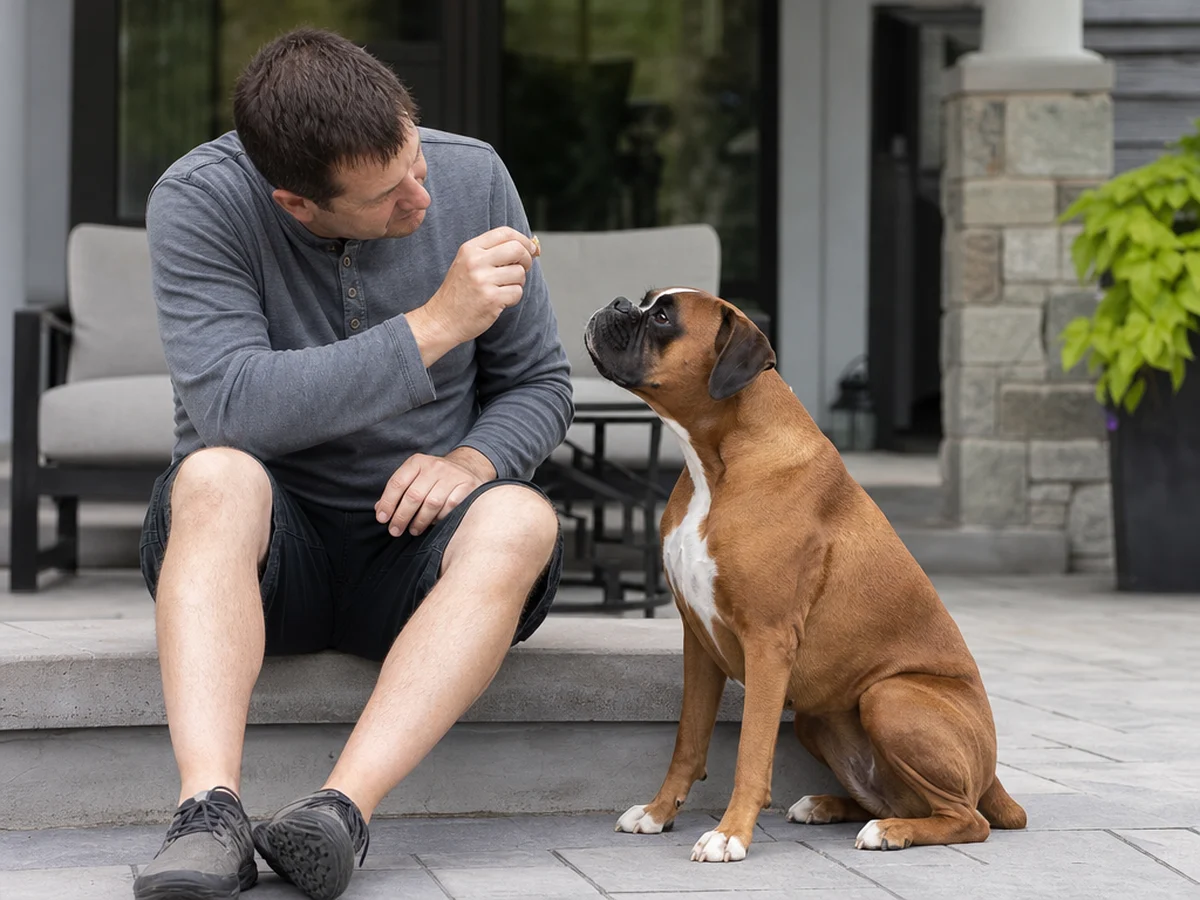
The last trick keeps the same hand-following but changes the path: instead of dropping toward the floor, your hand moves up and down, and your Boxer's head nods along as if answering a question. A closed fist is the signal here, so your open palm stays reserved for touch.
Teaching the Nod With a Closed Fist
Hold a high-value treat inside a closed fist, close to your dog's nose. Move the fist slowly up and down so your Boxer follows it with their head, and give the treat from your fist as the head dips and rises. Keep the movement small and smooth, because a slow hand is the whole trick at this stage.
When your Boxer follows the fist up and down without hesitation, try it with nothing inside. The first time the head nods, mark and pay from your other hand, which keeps the empty fist meaning "nod" instead of "treat is in here." After more practice the closed fist becomes the signal, and you can let the up-and-down motion shrink.
If you want a spoken cue as well, say "yes" just before the fist moves, which is why that word stayed out of your marker. Add it only once the empty fist works smoothly, so the word attaches to a nod your dog already offers.
When the Nod Turns Into a Leap
Boxers love to leap, so a fist held above nose height can turn the nod into a launch. We see it all the time: the hand rises, the dog follows it upward, and all four paws leave the floor. The fix comes in three parts:
- Lower and slow the hand
- Pay only for nods that stay at nose level
- Wait for four paws on the floor before you start again
Smaller Questions Once the Tricks Are Rolling
Once the first treats are eaten, the interesting problems start: a Boxer's bounce, a new room and the urge to teach just one more move. These three answers stay short, since each fix is small.
Why does my Boxer leap at my hand?
Boxers love to leap, and a raised hand looks like an invitation. Keep every lure at nose height, wait for a pause with four paws on the floor before you present your hand, and mark that pause. Our guide to four feet on the floor goes deeper on the habit.
Will my Boxer do these tricks outdoors?
Not at first, and that is normal. A new yard has plenty to sniff and chase, and your hand has to compete with all of it, so you will probably want to start training indoors and move outdoors once they have mastered the tricks.
Can my Boxer learn to shake their head no?
Yes, as the nod's twin. Close your fist with the pointer finger up, so the signal looks different from the nod, and move your hand slowly from side to side. Pay as your Boxer's head follows, and with practice the raised finger becomes the cue.
Giving Your Boxer a Small Vocabulary
Put the three together and your Boxer has the start of a small vocabulary. The nose bump says come close, the bow says hello and the nod says yes, which is a livelier way to spend an evening than drilling one cue, and it suits a dog who can get bored with repetition.
Every new word you add gives the old ones a fresh job, so a nod can follow a bow and a bow can follow a touch, and trick time turns into something closer to a conversation.
Three words take an evening to teach, but a whole language of everyday manners takes a plan, and our free Boxer e-book is that plan, covering every training need thoroughly in terms a beginner can follow.
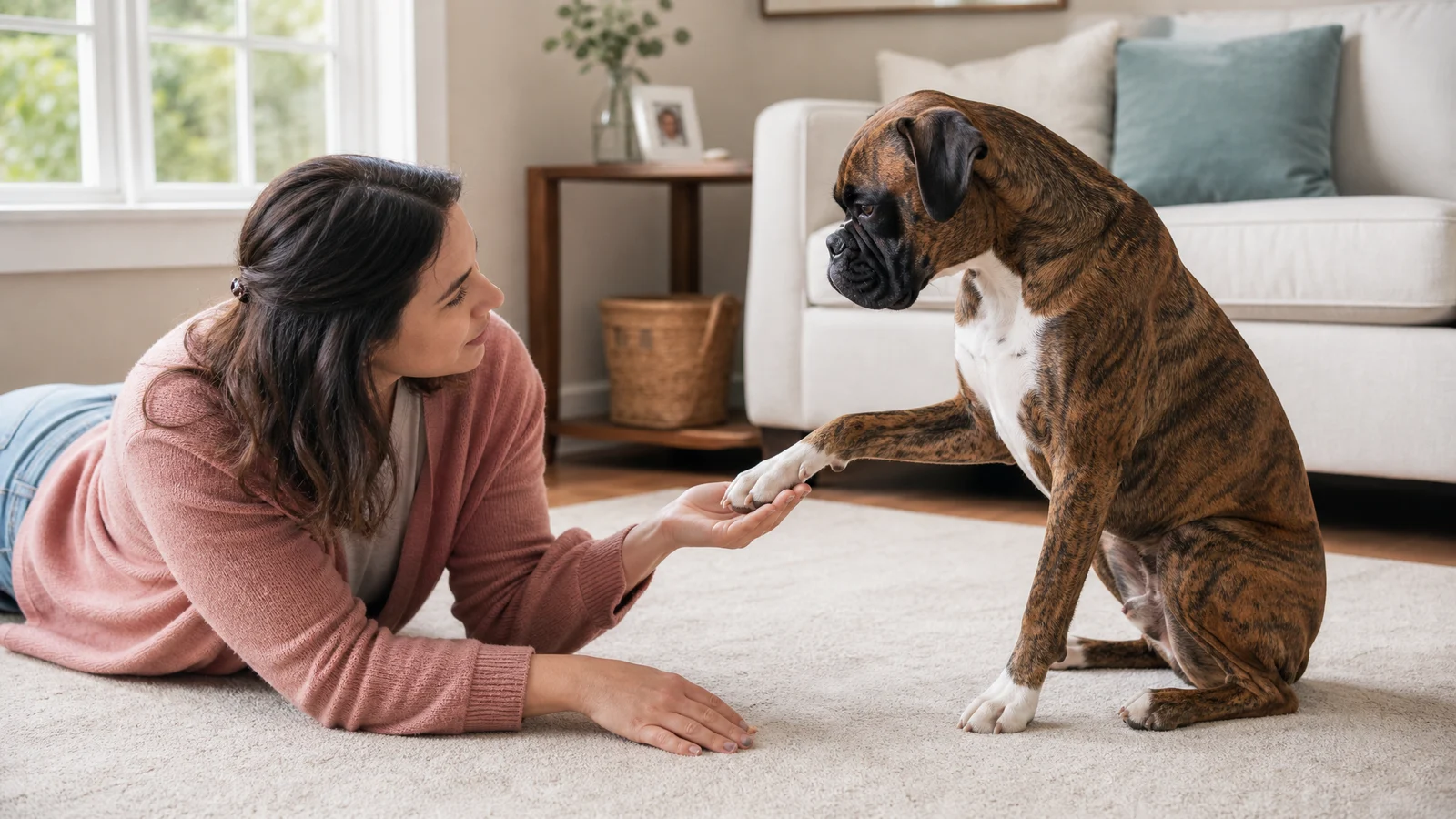 Exercise and jobsHow to Teach a Boxer to Shake and High Five
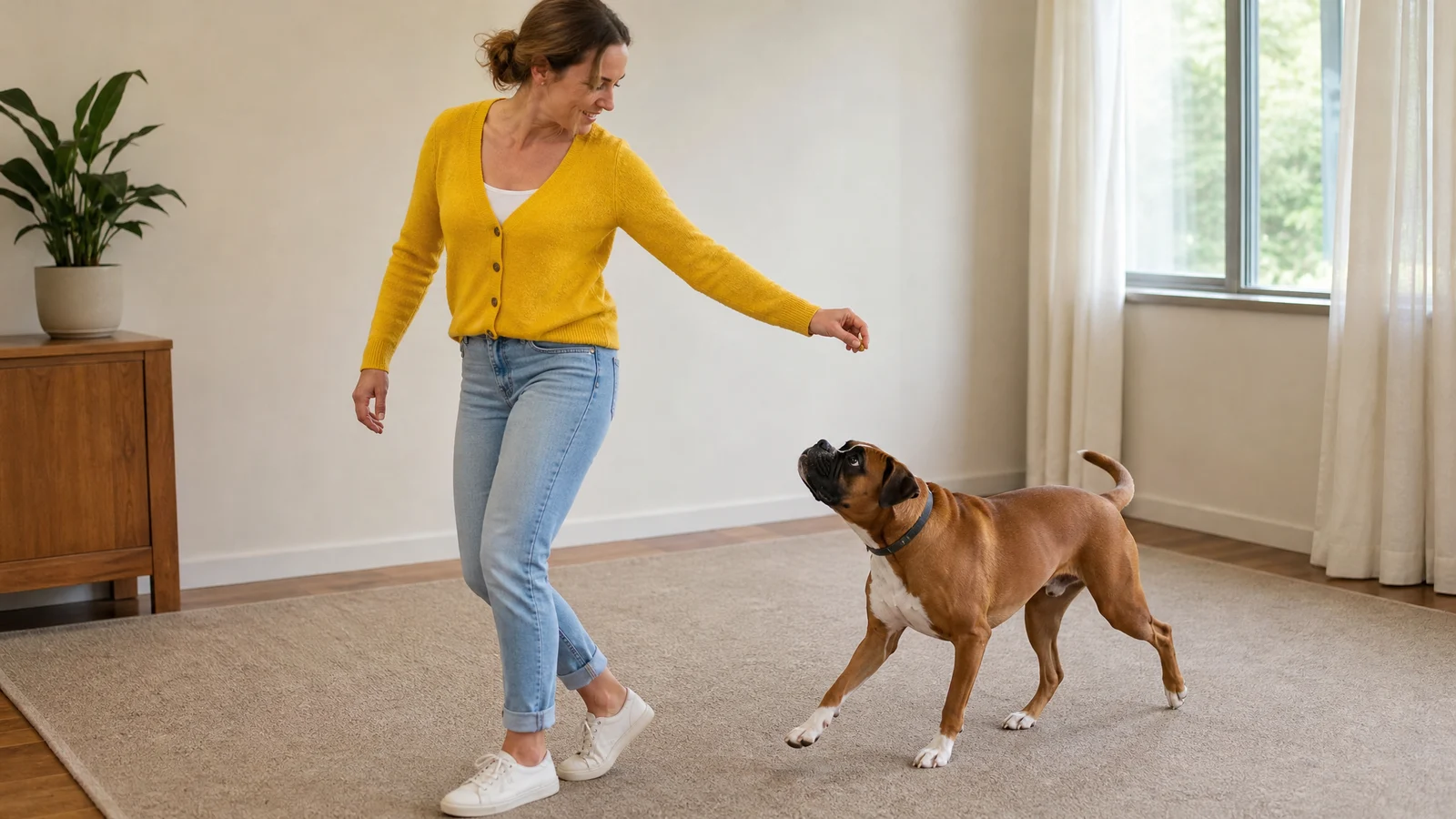 Exercise and jobsHow to Teach a Boxer to Spin
 Exercise and jobsHow to Teach a Boxer to Roll Over
