 Boxer
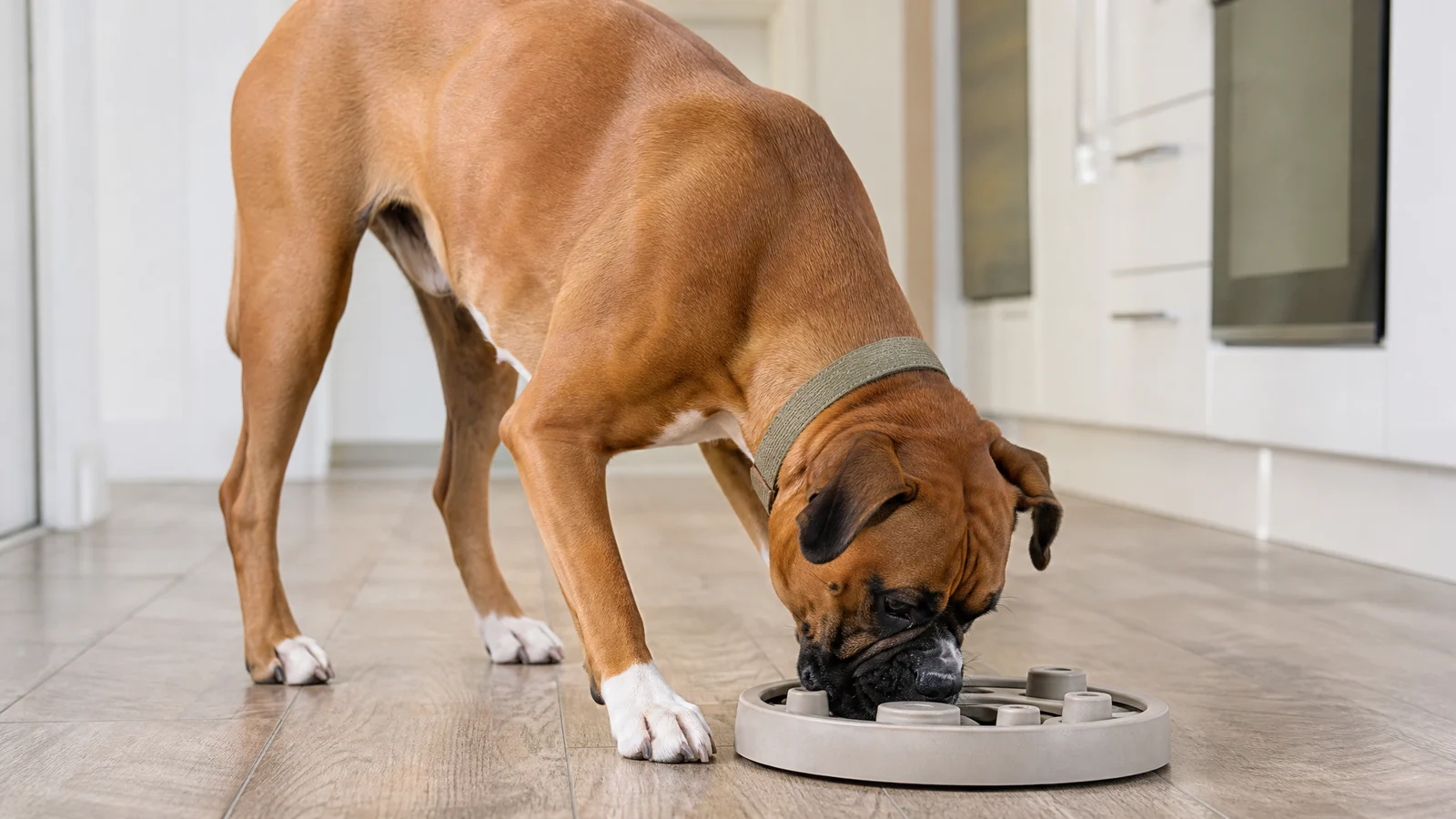
A Boxer can finish a lively outing with tired legs and still patrol the kitchen looking for a project. Physical exercise has used the body, but the breed's alert, problem-solving mind has not been invited to work. Add a clear task and the same dog may settle with the satisfied look of someone whose shift has ended.
We use job broadly here. It can mean following a scent, learning an obstacle pattern, carrying out a calm assistance foundation or solving a food puzzle at home. This guide compares those choices, shows how to match one to your Boxer, builds the foundation skills and lays out a varied two-week trial. The aim is willing focus, not operational work or a title for its own sake.
Why Boxer Dog Sports Need a Purpose
The Boxer's history explains why aimless repetition falls flat. The breed was developed as a working and companion dog, and their earlier history involved demanding physical work. That background is context, not a training assignment. Modern owners can use the same readiness to engage through safe sports, service foundations and structured enrichment.
The Working Group classification fits a dog described as intelligent, energetic and eager to help. The same source identifies service roles that include therapy, guide, hearing and seizure alert work. Those roles require specialized preparation, but they show that a Boxer's useful work can depend on steadiness and cooperation rather than sheer force.
Trainability and mental stimulation both rate high for this breed. That pairing matters. A Boxer can learn quickly, yet the breed can become bored when one exercise repeats without a new problem to solve. Good dog sports therefore combine movement with decisions, while a useful household job gives the dog a clear beginning, a clear success and a calm finish.
Purpose also changes how you judge a session. Speed is not the only win. A dog who can pause, look to you, try again after an error and settle afterward is learning a durable working pattern. Regular veterinary visits help you choose activity that suits the individual dog's current health and condition.
A Boxer Dog Sports Toolkit
No single activity is the official Boxer answer. The useful question is what kind of work brings out focused enthusiasm in the dog in front of you. The toolkit below separates four families by the behavior they reward, so you can compare the experience rather than chase a fashionable label.
| Activity family | Main behavior | Useful starting version |
|---|---|---|
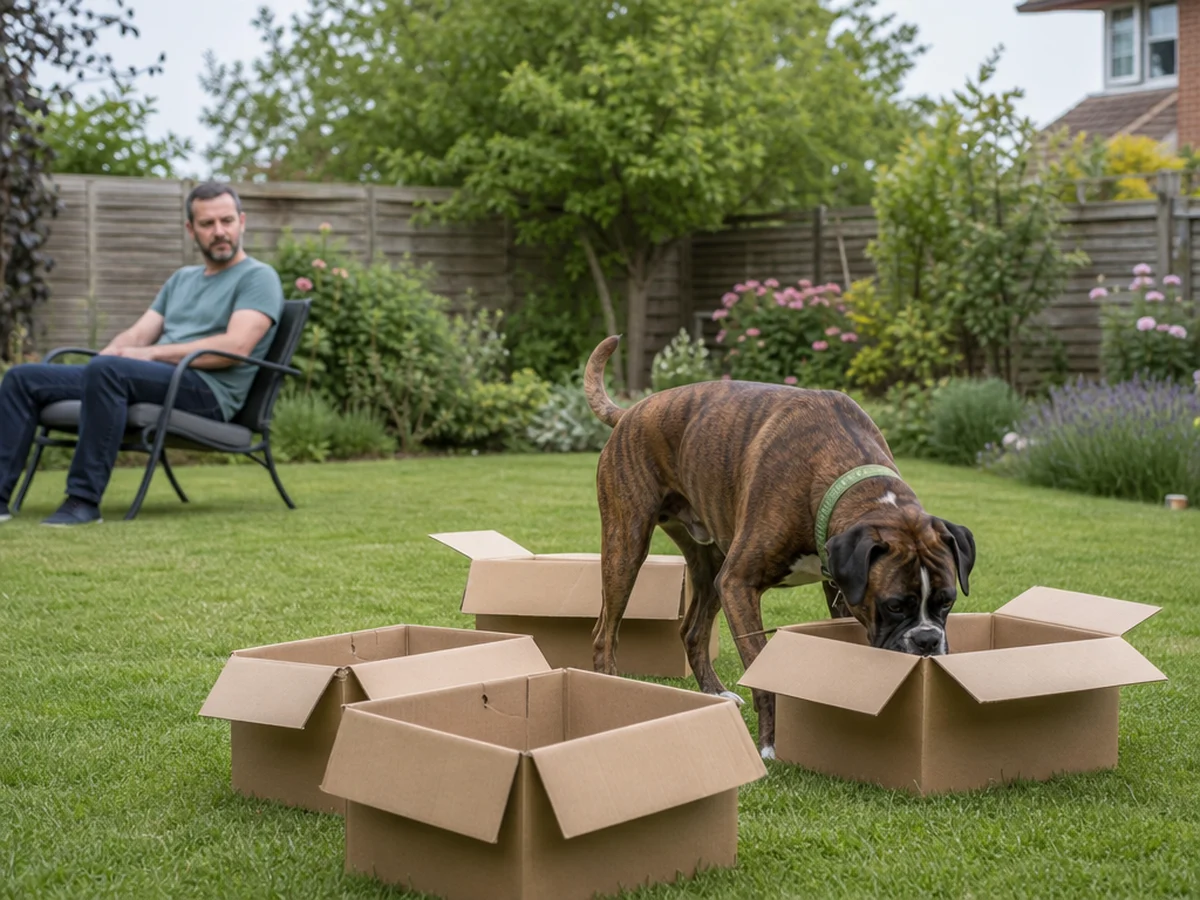
| Nose work | Independent searching followed by a clear find | Food hidden in open boxes or easy rooms |
| Agility-style foundations | Following cues through changing movement patterns | Going around an object, targeting a mat and changing direction |
| Service or therapy foundations | Calm attention, settling and reliable response | Mat work, polite greetings and ignoring ordinary distractions |
| Home enrichment jobs | Solving a practical puzzle with a finish point | Food puzzles, toy searches and finding named family members |
Nose work is unusually flexible because almost any dog can participate, including dogs who need a lower-impact activity. It lets an energetic Boxer move with purpose while requiring concentration. Begin with easy finds and let the dog's nose lead. Harder hiding places come only after the search remains confident.
Agility-style foundation work can use the Boxer's lively movement without requiring formal equipment. Teach a nose target to your hand, a pause on a mat, a loop around a stable object and a cheerful change of direction. These pieces build communication and body awareness. Formal obstacles, sport rules and suitable starting points belong with a qualified instructor who can see the dog.
Calm work deserves equal billing. A Boxer who waits beside you, settles in a new room or greets a person without bouncing is doing difficult work for this playful breed. Those foundations can support therapy or assistance pathways when the dog has the right temperament and receives appropriate professional preparation. They are also valuable household skills even when no formal role follows.
Match Dog Sports to Your Boxer
Choose from behavior, not reputation. A powerful appearance does not tell you whether a Boxer prefers searching, fast movement or close cooperation. Set up brief samples from different families and watch what happens after the first excitement fades. The best match is the activity in which the dog keeps thinking and can recover from a small mistake.
For Energetic, Outgoing Boxers
An outgoing dog who loves motion may enjoy chained movement tasks. Ask for a hand target, send them around an object, call them back and finish on a mat. Keep the pattern changing so the dog listens instead of memorizing a race route. Fetch or tug can be the reward after calm completion rather than the whole lesson.
Balance matters because exercise can build more stamina without improving self-control. General exercise guidance notes that working breeds may need substantial activity, but growing joints need protection. Fit the work to age and condition, and use the detailed plan in our Boxer exercise guide for the rest of the day.
For Thoughtful or Easily Distracted Boxers
A Boxer who pauses to inspect the room may prefer scent searches and choice-based puzzles. Start where the answer is obvious enough to keep confidence high. Mark the find, reward it and reset the search in a new place. The dog gets control over the investigation while you control difficulty and safety.
For a dog who notices every sound or person, calm station work can be the better job. Reward looking back to you, resting on a mat and returning to the task after a distraction. A short successful session in a quiet space is more useful than struggling through a busy setting. Confidence grows from solvable work.
Foundation Skills Before Dog Sports
Sports look different, but the same small set of skills keeps reappearing. Teach them away from excitement first. The point is not to drill obedience until the dog is dull. It is to give a quick-minded Boxer a shared language that makes new activities easier to explain.
- A marker word identifies the exact useful choice, whether that is touching a target, finding scent or returning attention to you.
- A hand target moves the dog without pushing or pulling and becomes a clean way to change position.
- A recall brings the dog out of motion and back into partnership before the next task begins.
- A mat settle supplies an off switch, so energetic work ends with calm instead of spilling through the house.
- A release cue tells the Boxer when the task is finished and when play or free exploration begins.
Build one skill at a time, then combine only two. Mark and reward the hand target, for example, then send the dog to the mat. Change the room or reward before adding a longer chain. The same principle shapes Boxer brain games, where variety protects attention while the dog works.
Food can do more than arrive from your hand. The enrichment guidance from the ASPCA treats every meal as a chance for mental work. Put part of the meal in a puzzle or simple search. The dog practices persistence, and the session has a natural ending when the food is found.
A Varied Sports Practice Plan
A starter plan should compare activities without crowding the week. Over two weeks, sample movement, scent and calm cooperation, with easy days between demanding ones. The sequence below is deliberately flexible. Repeat the activity that produces focused enjoyment, and shorten any session in which enthusiasm turns into frantic guessing.
- Begin with marker practice and a hand target in a quiet room, then finish with a short play reward.
- Set out an easy food search using open containers, and let the Boxer solve it without pointing to every answer.
- Combine a target, a loop around an object and a mat finish, rewarding each clean transition.
- Practice settling while ordinary household activity continues at a comfortable level.
- Move the favorite task to a new room or quiet outdoor space, while keeping the difficulty itself easy.
- End the trial by offering two familiar activities on separate days and noting which one produces the best focus and recovery.
Do not turn the plan into six consecutive days of work. Rest, free sniffing, ordinary walks and relaxed family time are part of a balanced life. A Boxer whose responses become sloppy may be tired, overexcited or confused. Make the problem easier, reward a clean success and finish before frustration takes over.
Progress appears in behavior rather than a calendar. Look for a quicker return to you, steadier work around mild distractions, fewer frantic guesses and an easier settle after the activity. Those signs say the job is organizing energy rather than simply adding more excitement.
Keep the Boxer's Job Worth Doing
The best job is not necessarily the fastest, hardest or most impressive. It is the one your Boxer approaches willingly, understands clearly and can leave calmly. Keep the core familiar while altering a single feature, perhaps the search location, movement order or reward.
Let the activity mature with the dog. A lively movement chain can give way to more scent work or calm station tasks when physical needs change. The Boxer's useful qualities are broader than athletic power. Alert attention, loyal cooperation and problem solving can remain valuable even when the pace becomes gentler.
Choice is useful evidence during the trial. Put out the mat used for calm work or the open containers used for scent searching, then watch which setup draws relaxed interest. The dog should still wait for your cue, but their preference can guide which activity receives more practice.
Keep a brief note after each session. Record whether the Boxer began eagerly, stayed able to think, recovered from errors and settled afterward. Those observations separate an activity that merely creates speed from one that organizes energy. They also show when a familiar task needs a fresh location rather than greater difficulty.
Choose one small job for the coming two weeks and protect its sense of discovery. Make the first answer easy, pay the dog well and stop with interest still alive. A Boxer who returns bright-eyed to the setup is telling you that the work fits. That willing return is the result worth keeping.
 Training basicsCrate Training a Boxer and Preventing Separation Anxiety
 Exercise and jobsBoxer Exercise Needs and Brain Games for a High-Energy Dog
 Training basicsHow to Potty Train a Boxer Puppy
