 Boxer
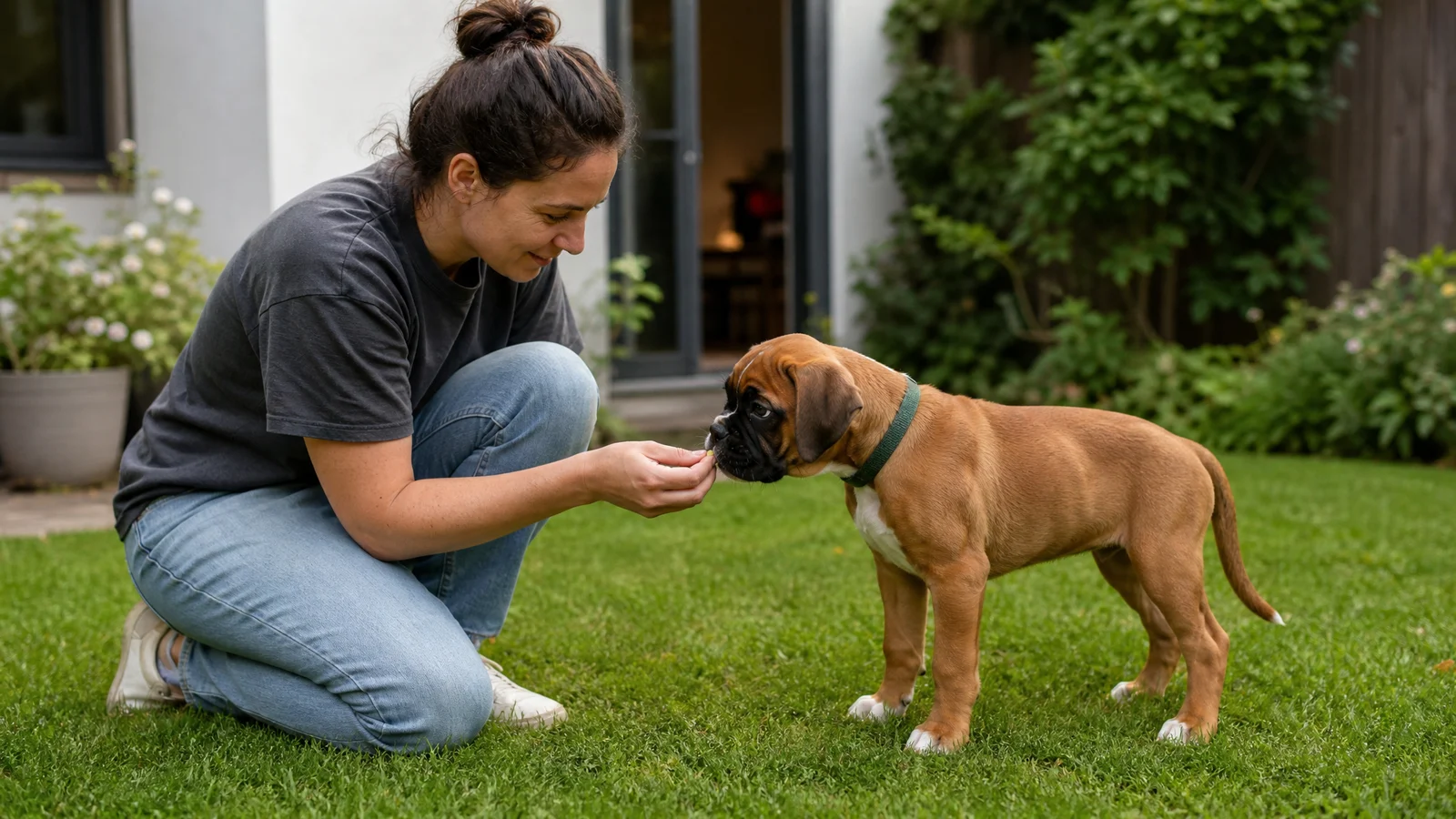
To potty train a Boxer puppy, use a single doorway, a fixed outdoor spot, a consistent cue and an on-site reward after the puppy finishes. The breed's intelligence helps them recognize a repeated pattern. Their playfulness can also pull attention away from the job, so the route must stay clear and the reward must arrive where the correct choice happened.
We do not promise a finish date that the brief cannot support. Instead, this guide follows the learning timeline: establish the first route, supervise daily transitions, record the events around accidents, expand freedom after success and look for reliable behavior across ordinary life. The household controls opportunity. The puppy learns by finding the same useful answer again and again.
The First Boxer Potty Training Route
Choose an outdoor spot you can reach quickly in ordinary weather and low light. Take the same door and path each time. Keep the trip quiet until the puppy eliminates, because a playful Boxer can turn the yard into a game before remembering why the trip began.
Say the cue once when the puppy is preparing to eliminate or has begun. The cue labels the behavior. It should not become background sound during a long wait. Mark the finish, reward at the outdoor spot and then offer sniffing or play. The puppy learns that finishing outside opens access to several good outcomes.
The potty training routine from Battersea places outdoor trips after waking, eating, drinking and play, as well as before bed and at regular intervals. Use those transitions as prompts, then adjust from the puppy's actual pattern rather than relying on a universal clock.
When the Puppy Finishes Outside
Reward immediately and remain outside long enough that success does not always end outdoor access. If every elimination produces an instant return indoors, a puppy may delay finishing to preserve the outing. Calm praise, a small food reward and a little supervised sniffing keep the sequence valuable.
Use the same marker and destination across the household. One person should not reward at the door while another waits until the kitchen. Clear timing suits a responsive breed and prevents the puppy from attaching the reward to the walk back inside. The reward-based framework supports teaching the action you want through markers and reinforcers rather than making accidents the center of the lesson.
When Nothing Happens
Return indoors without granting free roaming. Keep the puppy close, watch actively and offer the quiet route again after a brief pause. A long outdoor play session followed by an indoor accident usually means the yard was full of competing activity or access indoors expanded prematurely.
Do not repeat the cue throughout the wait. Let the destination and body signal do most of the work. When the puppy eventually finishes outside, mark and reward as usual. Finishing correctly outdoors still merits a clear reward.
Potty Training Through Daily Transitions
Early house training is organized around what just happened. Waking, eating, drinking, active play and moving between spaces can precede a need to eliminate. The schedule becomes accurate when it follows those events. A fixed timetable that ignores a vigorous play session is only neat on paper.
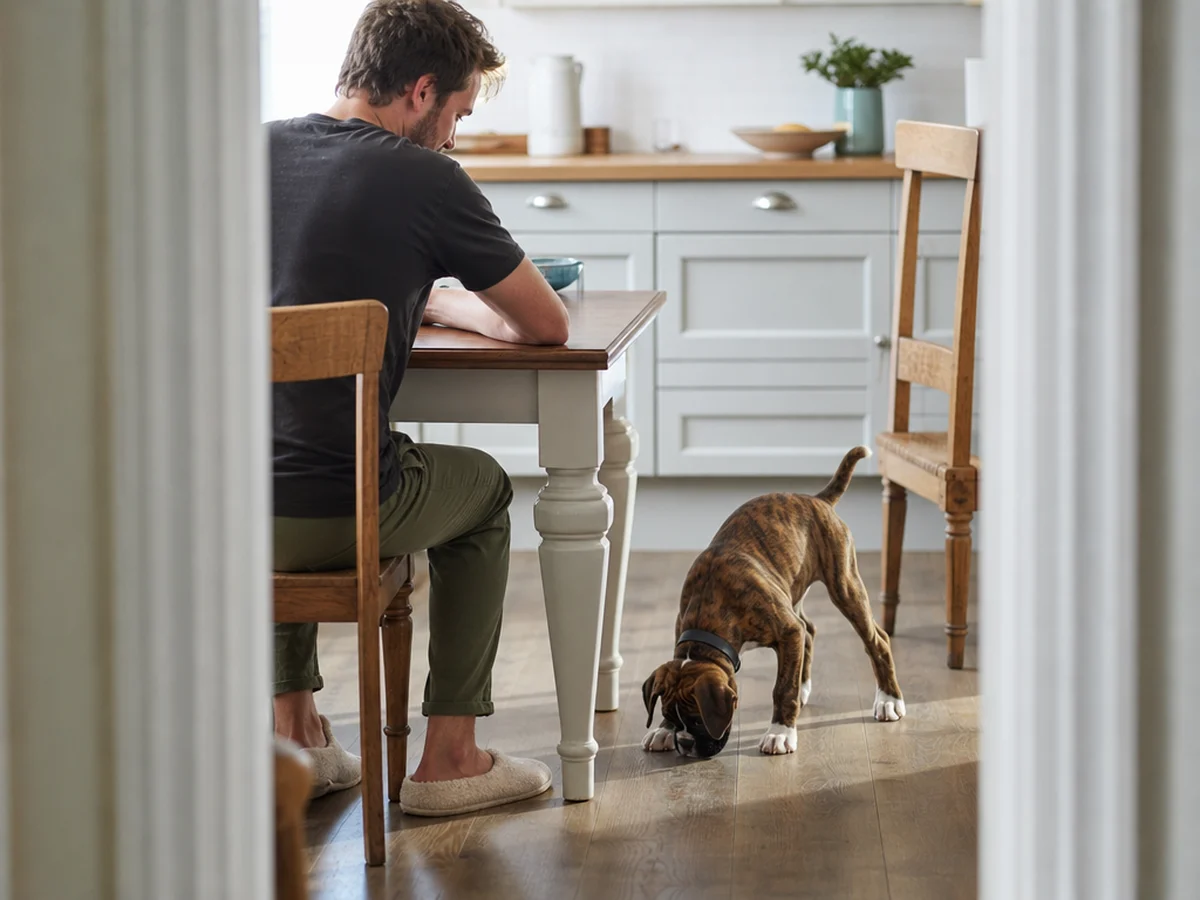
Active supervision means watching the puppy, not merely sharing the building. Share their space and watch for a sudden pause, focused floor sniffing, circling, wandering toward an edge or leaving the group. Respond to the first change. Waiting for a dramatic signal can leave too little time for the route outside.
- After waking, go directly to the chosen exit before greetings or indoor play begin.
- After food or water, keep the puppy within view and prepare for the next outdoor opportunity.
- After energetic play, interrupt the transition to wandering and take the familiar route.
- Before household attention shifts elsewhere, offer a trip rather than testing whether the puppy can wait.
- Before rest, use the outdoor sequence so the resting area begins clean and calm.
When direct supervision is impossible, use a puppy-safe resting area that prevents silent wandering. Management protects the next correct repetition. It does not teach the full skill by itself. Take the puppy out before rest and immediately after waking, and change the setup if the area repeatedly becomes a toilet.
A positively introduced crate can support managed rest, but it should match what the puppy can handle. Our Boxer crate training path separates comfortable confinement from alone-time learning. House training should never depend on waiting past the puppy's capacity.
Boxers are energetic and playful, so the busiest part of the day deserves the closest management. A puppy who races from room to room may pass early body signals before anyone notices. Pause the activity, offer the outdoor route and let successful elimination be followed by more play.
Boxer Potty Patterns in Writing
A simple event log turns accidents into information. Record successful trips as carefully as misses. After several ordinary days, the household can compare similar transitions and see which opportunities consistently arrive too late. The log evaluates the plan, not the puppy's character.
Use broad events instead of unsupported promises about bladder timing. The useful details are what happened before the event, what signal appeared and what the household did next.
| Event | Record | Next decision |
|---|---|---|
| Outdoor success | Previous activity, exit used and reward location | Repeat that sequence after the same transition |
| No result outside | Distractions and whether play replaced the task | Return to close supervision and offer another quiet trip |
| Indoor accident | Previous activity, place and earliest signal noticed | Offer the next trip earlier in that context |
| Move toward the exit | Pause, glance, pacing or direct door approach | Respond promptly so the early signal remains useful |
Read the Event, Not Intent
An accident does not show defiance. It shows that the puppy needed a better opportunity, closer supervision or an easier route. If you find the mess afterward, the teaching moment has passed. Clean it thoroughly, restrict access while the area dries and update the next decision in the log.
If you catch the puppy beginning, interrupt gently and guide them outside. Pay the puppy when they complete the job outdoors. Humane World's potty training guidance emphasizes rewarding at the finish and avoiding punishment, which can create fear without explaining the outdoor choice.
Odor can make the same location seem relevant again. Clean the area well and change access while retraining that context. Relocating a floor covering or blocking a side room can limit access, while the repeated outdoor sequence teaches the lasting alternative.
Compare Like With Like
A calm period after sleep does not prove readiness for roaming during energetic evening play. Compare the puppy's success through the situations that previously caused misses. Reliability must appear during transitions, activity and household distractions, not only during the easiest part of the day.
The Boxer is described as intelligent and tractable, which helps a consistent pattern become familiar. It also means accidental patterns can become familiar. Repeated access to a hidden corner can establish the wrong route. Change the environment before repetition makes that choice efficient.
Share the log with everyone who handles the puppy. A short note about food, play, sleep and the last outdoor result prevents missed handoffs. A shared routine is easier for the puppy to understand than several personal systems.
Expand Freedom After Potty Success
Freedom should expand by space and situation. Begin in the supervised room where the routine works best. After outdoor success, open one additional area while you can watch. Close it again before attention moves elsewhere. New space becomes a planned lesson rather than a hopeful test.
Use several signs together before expanding access. One dry stretch is encouraging, but it does not show that every transition is understood.
- The puppy follows the familiar route without turning the trip into a chase through the house.
- They finish outdoors while you are close enough to mark and reward at the destination.
- You recognize early signals before urgent circling or elimination begins.
- The current area stays clean through its usual mix of rest, food and energetic play.
- Other household members can repeat the same sequence without changing the cue or reward location.
If an accident follows expanded freedom, reduce the area and identify the missed transition. Do not reopen the whole house to see whether the puppy can prove the mistake was random. A smaller successful plan preserves learning while the household adjusts timing.
Visit a new room soon after outdoor success. Stay engaged with a toy, calm companionship or a brief training game. Do not let the puppy disappear behind furniture. Leave the new room while the puppy is still successful, before another high-risk transition arrives. Add that room again after the next outdoor success.
Pair this work with clear Boxer training in the rest of the day. Short, varied lessons, appropriate play and enough rest support attention. Potty training becomes harder when every waking minute is either frantic activity or unsupervised wandering.
Reliable Boxer Potty Training
Progress appears as a smoother chain. The puppy moves toward the familiar exit, follows the path without detours, finishes in the outdoor spot and looks to you for payment. The household notices signals earlier, and the log contains predictable transitions instead of unexplained misses.
Expect the plan to tighten when routine or access changes. Return to the last successful level of supervision after travel, a room change or a burst of accidents. That response is not starting over. It restores the conditions under which the puppy already knows how to succeed.
Keep regular veterinary visits while the puppy grows. Contact your veterinarian if elimination changes suddenly, becomes unusually frequent or remains difficult despite a careful routine. Training can organize opportunity, but it cannot resolve a health problem.
Preserve the cue by using it at the destination when elimination is likely or beginning. As the pattern strengthens, the exit, path and outdoor spot will carry much of the meaning. The cue simply names the action that will earn the reward.
Set up the next success before urgency. Open the same door, follow the same route, mark the useful finish and reward outside. A Boxer's quick mind then works in your favor. The puppy stops guessing because the household has made the correct path familiar, prompt and worth repeating.
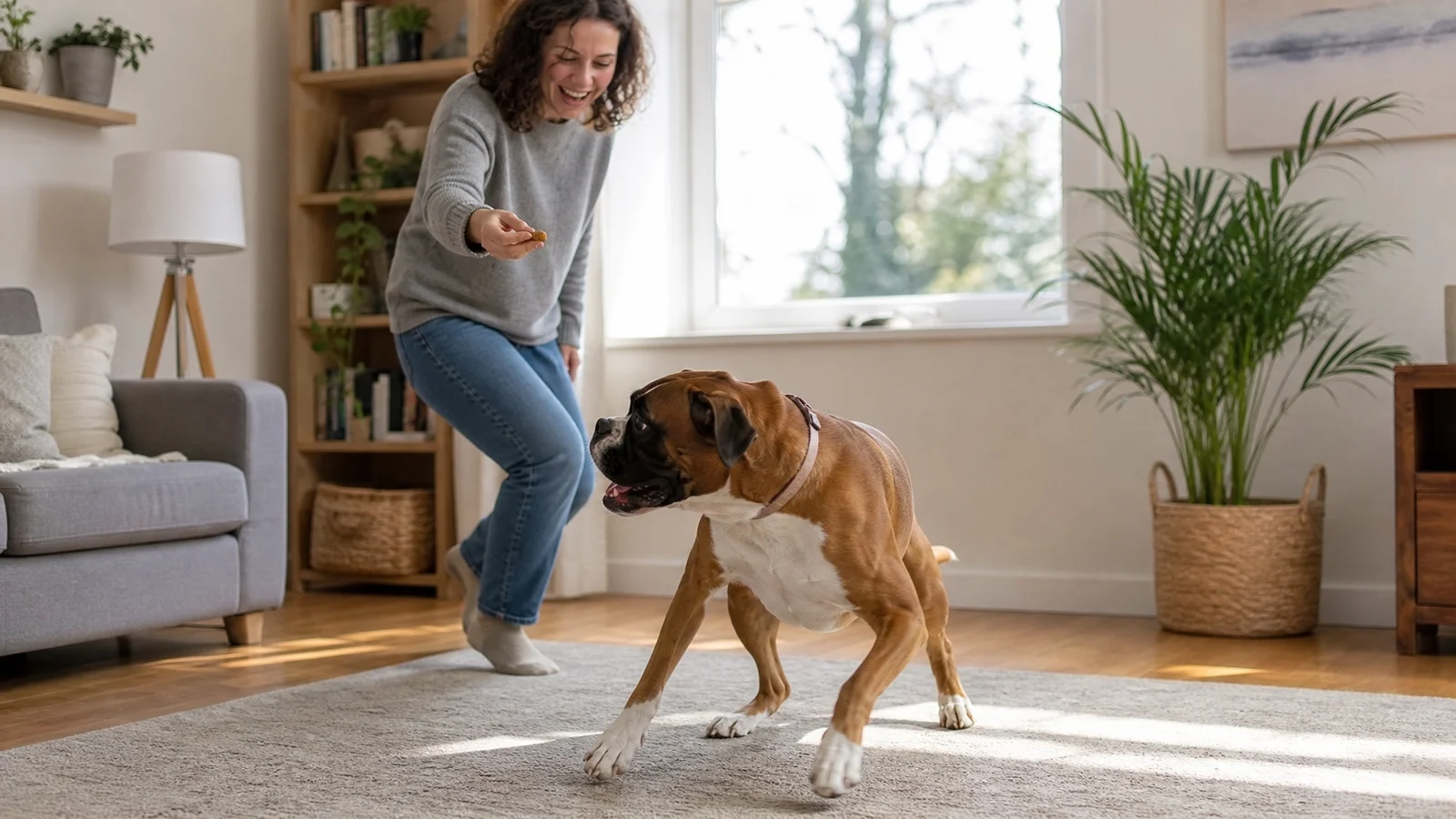 Training basicsBoxer Dog Training Built Around a Smart, Easily Bored Dog
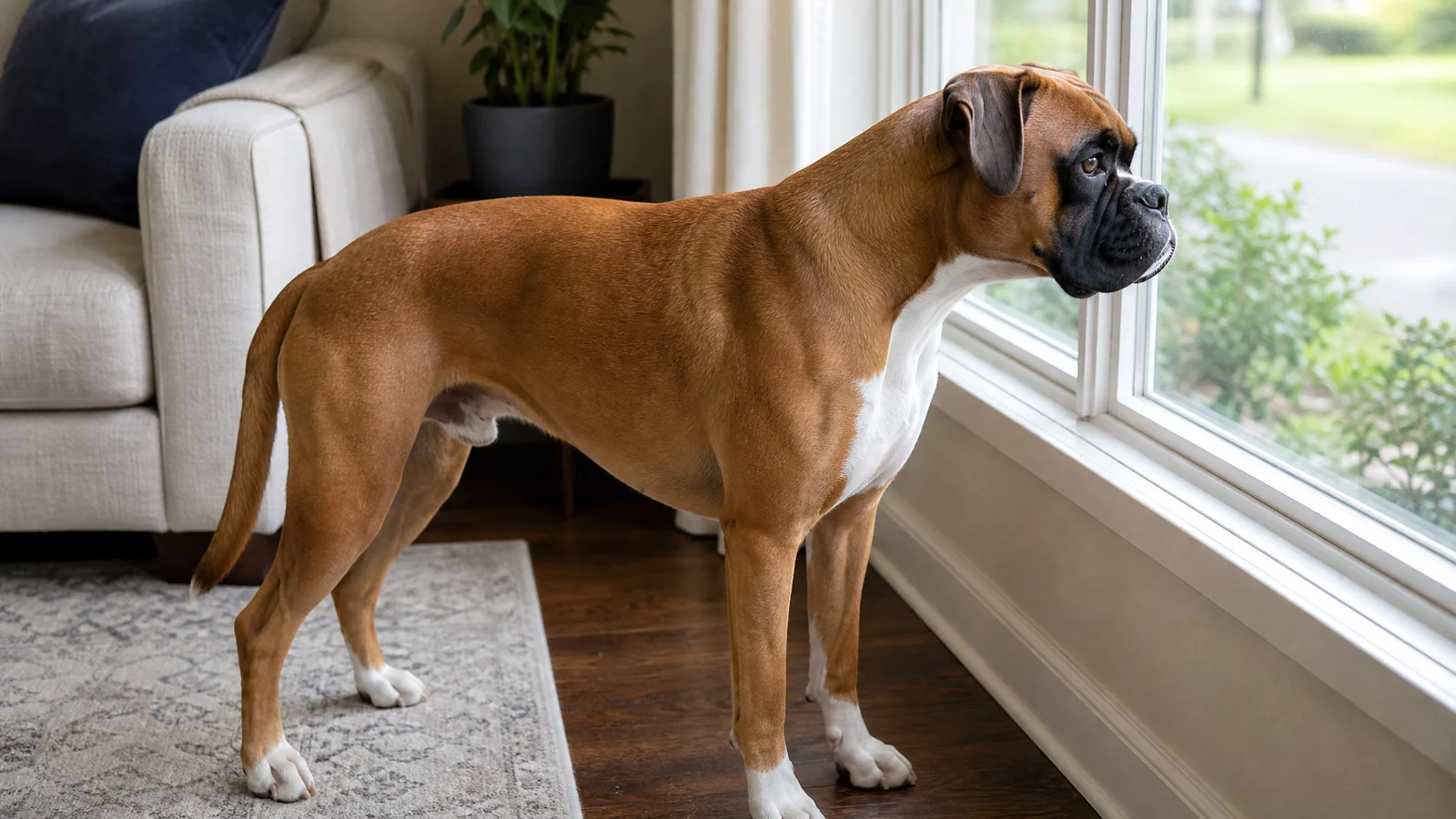 BehaviorIs a Boxer a Good Guard Dog?
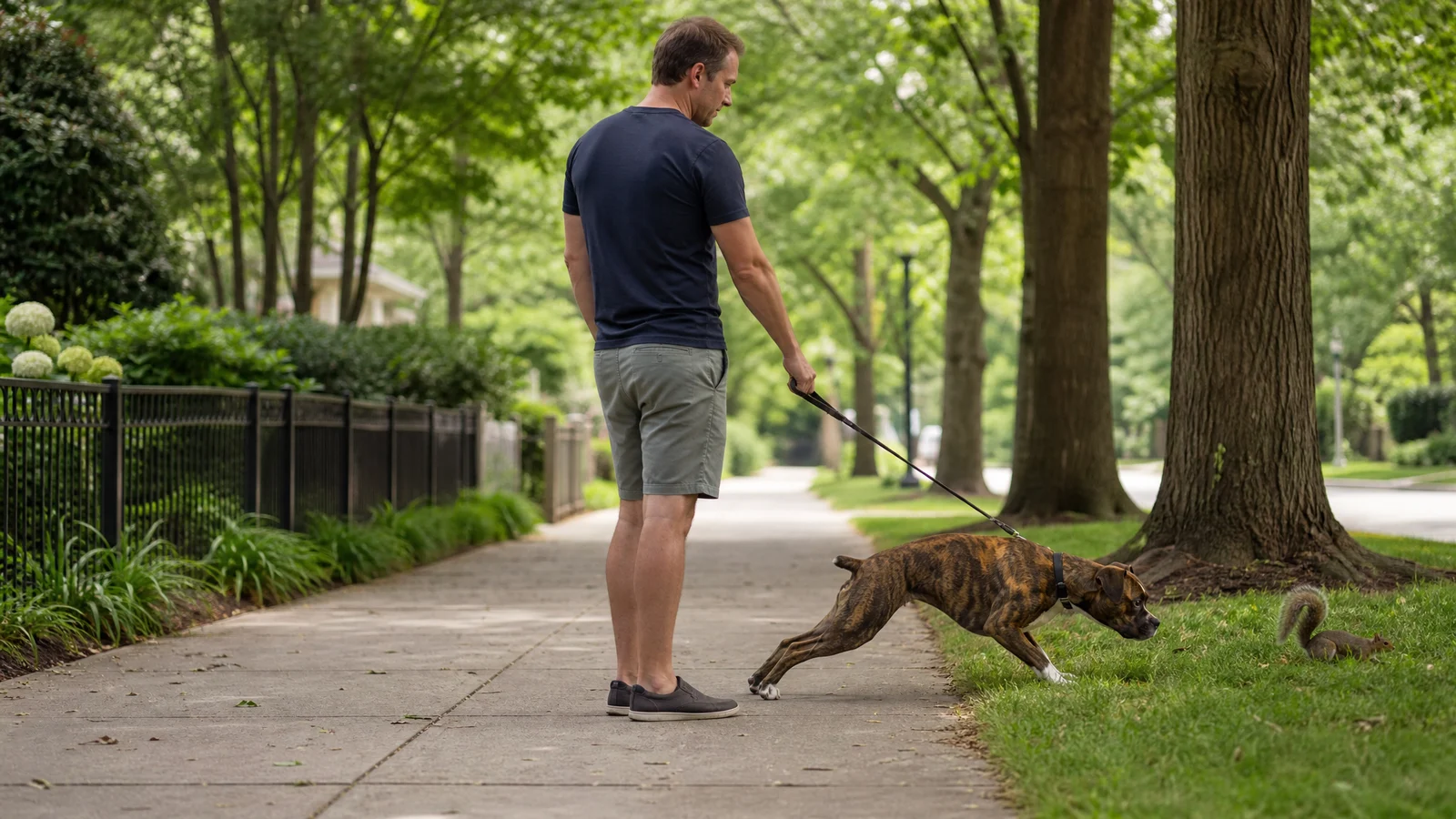 Training basicsLeash Training a Boxer: Pulling, Lunging and Loose-Leash Walking
