 Boxer
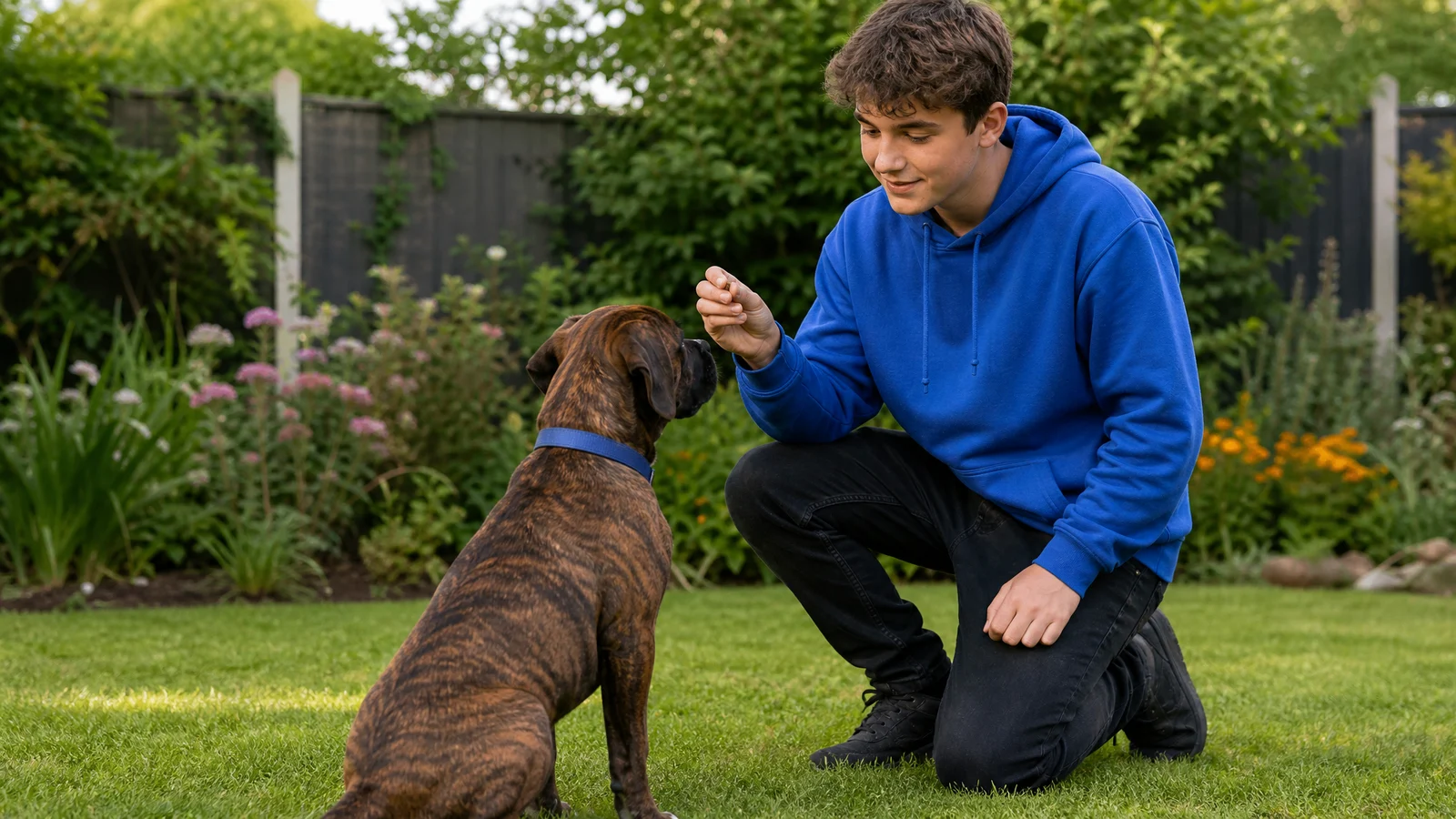
A Boxer's puppy training runs about two years, with different lessons at each stage. Slow maturity and a springy, exuberant temperament are the reason. Your dog keeps the body of a bouncing adolescent long after the brain starts to settle, so the finish line sits later than most owners expect.
Get it right and you gain an adult who greets guests with four paws down and keeps checking in with you. Get it wrong and a powerful dog spends two years rehearsing jumping and mouthing until the habits stick. We have trained Boxers for many years and specialize in their behavior and training, so this timeline follows what they really do as they grow.
We'll walk you through the first month home and the socialization window, then the teething months, the teenage reset, and the down reminders that carry into year two. We finish with the signs that tell you training is working and the signs that mean it's time to call a pro.
Boxer Puppy Training Map
The calendar is easier to use when you can see the changing priorities together. Treat these stages as a map rather than a deadline, because the same skill often needs an easier version again when your Boxer grows, starts teething, or meets a stronger distraction.
| Stage | Main Training Work |
|---|---|
| Weeks eight to twelve | Name response, handling, simple cues, and the potty routine |
| Early socialization | Calm exposure to people, places, surfaces, sounds, and puppy class |
| Teething and growth | Appropriate chewing, household rules, rest, and joint-friendly activity |
| Adolescence | Resetting cues around distractions and keeping rules consistent |
| Through year two | Proofing off, down, greetings, and calm behavior in new places |
Attention for a Boxer Puppy
The first month home is for building a few small habits you will lean on for two years. Your puppy is playful, people-focused and already bouncy, so skip long drills and run quick games all day. Our guide to the first days with an 8-week-old covers week one in more detail.
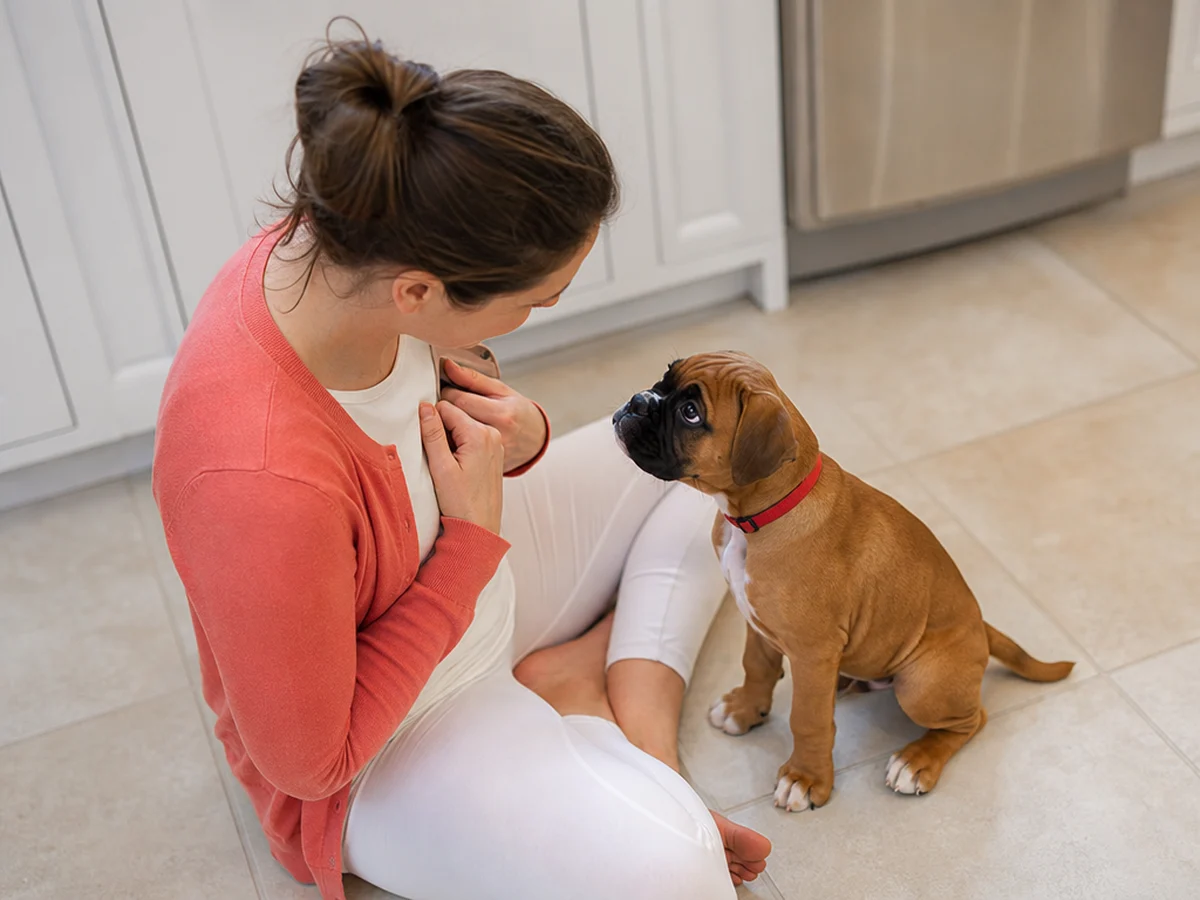
Name and Attention
Pick a cheerful tone and use the name a single time. When your puppy turns your way, mark it with yes and give a treat. Begin in a quiet hallway, then take the game to the kitchen and the yard.
Within days, your puppy swings around to find you whenever they hear it. That habit rescues you later in a noisy park.
Handling and Simple Cues
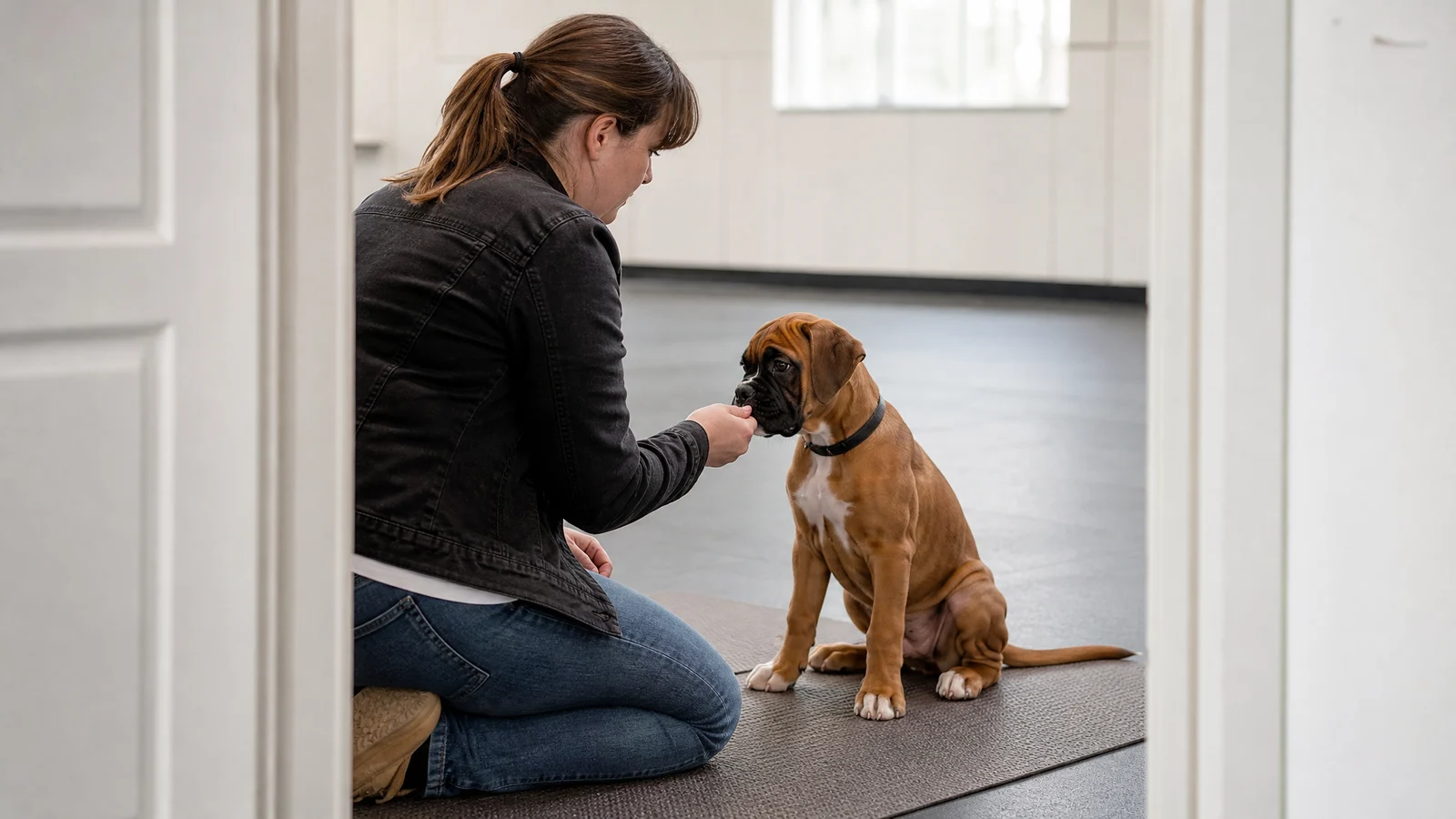
Touch a paw, fold back an ear, lift a lip, then treat. Slip a few of these into each day so nail trims and vet exams feel like old news. Slow down on any spot where your puppy stiffens.
Lure a sit by drifting a treat up and back over the nose. For a down, guide the treat from the sit toward the floor, right between the front paws. Mark the moment the rear or the elbows land, then pay.
Call your puppy only while they are already racing your way, and make the arrival a party. Pay for flopping onto a mat, too, so settling becomes something you reward often.
Short Sessions That Fit a Boxer
Boxers are highly intelligent, they tire of repetition, and they tend to have a mind of their own. A long row of identical sits teaches your puppy to wander off for something better. Run tiny sessions a handful of times a day, swap the room, the treat or the game between rounds, and quit while your puppy still wants more.
Keep the potty routine just as steady: out after sleeping, eating and play, with a treat the instant they finish. When you cannot supervise, a pen or crate prevents accidents, and freedom grows only as the accidents disappear.
Boxer Puppy Training Social Skills
The AKC calls early socialization and puppy training classes vital for channeling the breed's energy and exuberance in a positive way. A Boxer with plenty of calm, rewarded experiences grows into a friendly, springy adult. A Boxer with few can swing toward frantic greetings or toward suspicion of anything new.
Use the Window Early
Young Boxers absorb unfamiliar sights, sounds and people most easily between 3 and 14 weeks. Yours comes home at 8 weeks, so part of that window is already gone. Start in week one.
Build a list of tile, grass, stairs, the vacuum, umbrellas and a short car ride. Stand back, feed treats while your puppy looks, and let them choose how close to go. Ask your veterinarian which outings are safe right now, and keep regular vet visits on the calendar.
Strangers Come Slowly
The breed standard describes the Boxer as deliberate and wary with strangers, curious, and quick to answer friendly overtures honestly rendered. So brief your guests. Ask them to stay calm, turn slightly sideways, ignore the puppy at first, then offer a treat on a flat hand.
A rush of hands and squeals teaches the opposite lesson. Children get the same briefing, and because a bouncy Boxer can overwhelm a small child, an adult stays right beside them.
Choosing and Using Class
Pick a class that pays with treats, toys and praise, groups puppies by age and size, and lets you watch a session before you enroll. Our Boxer socialization and class guide lists what to look for.
Boxers do well with other dogs under supervision, though they are not always tolerant of dogs of their own sex. Favor short play rounds with breaks. The skill you are really buying is focus, because your puppy practices looking at you while others zoom around. Class adds to daily outings and never replaces them.
Puppy Training Body Changes
As adult teeth arrive, your puppy chews harder, shoots up and turns gangly. They also get stronger, so habits that were cute on a small puppy now cost you bruises and torn sleeves. Use this stretch to set the rules you will still want in a full-size dog, and give the mouth and the legs legitimate outlets.
Mouths and Chews
Keep a basket of chews and tug toys and rotate them so each stays interesting. When teeth meet skin, go still, stand up for a few seconds, then restart play with a toy in your hand and pay when it is taken. Tired puppies mouth hardest, so schedule naps before play turns wild. Our guide to teaching soft mouths goes further.
Teach trade as well. Offer a treat for whatever your puppy holds, then hand the item back half the time. Giving things up pays, so your puppy stops clamping down on prizes.
Protect Growing Joints
Growing joints do best with free play and walks on forgiving ground rather than repeated hard landings or long pounding runs. Spend extra energy on sniffing games, food puzzles and short training rounds, since mental work tires a Boxer too. Ask your vet how much exercise suits each stage.
Boxer Household Rules
One week your Boxer nails every sit. The next they surge to the end of the leash and act as if they never heard the word. That is adolescence, not failure. Your dog is bigger, bolder and more curious about everything else than about you, so your job is to stay steady while their brain catches up.
House Rules for a Growing Dog
Pick a short list and have everyone follow it every day. Boxers are problem solvers who hunt for loopholes, so a rule that bends for the kids on Saturday is not a rule.
- Sit for greetings, and turn away from jumping until all four paws land.
- Pause at doors and at the car before going through.
- Pay for the spot beside your leg on walks, and stop moving whenever the leash goes tight.
- Settle on a mat while the family eats.
Keep the Rules Boring and Steady
- Give the cue one time, wait a few seconds, then help with a lure or a step back to easier ground instead of repeating it louder.
- Carry your best treats or a favorite toy anywhere that is exciting.
- Use a long line or a fenced yard so your teen cannot rehearse running off.
- Practice in new places, such as the driveway, a quiet sidewalk and a friend's yard, so skills leave the living room.
- Vary the games, because a bored Boxer invents entertainment.
Barking and Watchdog Habits
Boxers take the watchdog job seriously, so expect more barking at visitors and at sights outside the window. Teach a go-to-your-mat routine for the doorbell and pay for calm looks at new people from a comfortable distance. Reward the quiet moment right after a bark, and seat guests far enough away for your dog to remain responsive.
Boxer Cues Through Year Two
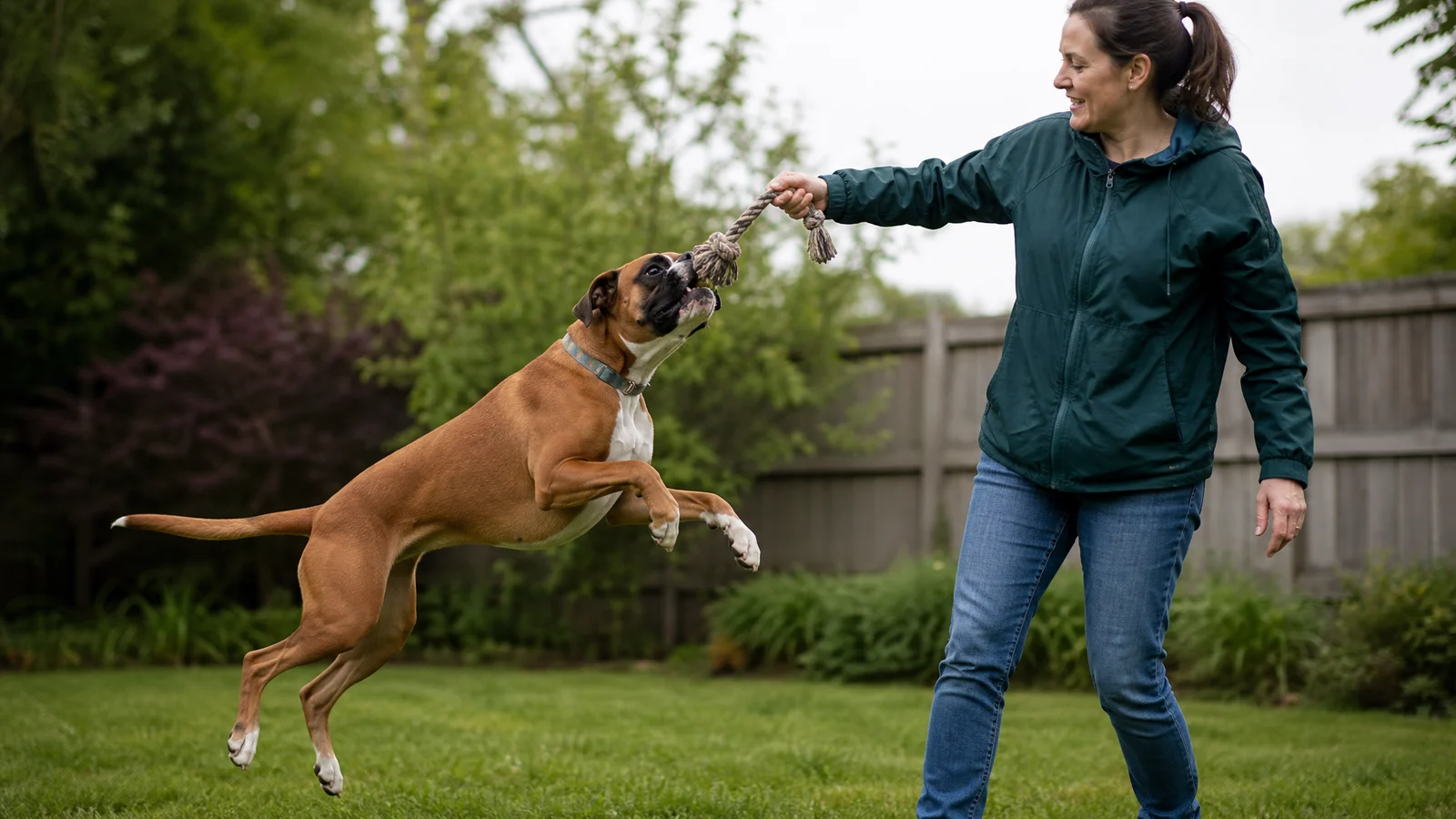
Because of the breed's heritage as a chaser of wild game, Boxers spend a good deal of time jumping and leaping about, and as young dogs they constantly need reminders to stay down. Plan for that well past the first birthday. A dog who bounces at the door late in year two is not being stubborn. They are an excitable athlete whose self-control is still maturing.
Reset the Cue
When a cue falls apart, break it into small steps again. Return to the easy version in a quiet room, pay generously, then raise one factor at a time: distance, duration or distraction.
Rewarding what you like makes it more likely again, so catch good choices and let the rest earn nothing. That timing makes each repetition clearer.
Off Versus Down
Give the two words two jobs. Off means paws leave a person or a surface. Down means lie on the floor and stay there. Lure each with food, pay on the floor, then pay again for staying put. Catch calm at the moment your dog is most tempted, such as when the front door opens.
Proofing Step by Step
Proofing means making a cue hold up when life gets exciting. Change only one thing at a time, and after a miss, go back to the previous easy version before trying again.
- Practice at home until the response is quick and easy.
- Add duration, paying every few seconds, then stretch the gaps.
- Add distance, first a step away, then across the room.
- Add a distraction, from a dropped toy to a knock at the door.
- Move to new places and new people.
Greetings Are the Real Test
Reward all four paws on the floor every time, from family, guests and strangers alike, and ask everyone to follow the same rule. Let life pay too, since the greeting, the walk and the ball throw all follow a good down.
Boxers get bored with repetition, so rotate rewards, keep rounds short and add nose work or trick training for variety. Steady, generous rewards help the habit survive into the second birthday, even when a delighted friend walks in.
Puppy Training Progress
Improvement with a Boxer rarely looks perfect. It looks like good habits that appear in more places and survive more excitement. Watch for these signs that you are on track:
- Your dog looks at you when they hear their name, even outdoors.
- Greetings get calmer, and the sit arrives before you ask.
- Mouthing is gentle and stops as soon as you go still.
- Cues work at the vet, in the yard and on the sidewalk, not just at home.
- After a wild stretch, your dog settles on a mat in reasonable time.
- Meetings with new people and dogs look curious and loose rather than stiff or frantic.
Ask a reward-based trainer or behavior consultant if you see growling, lunging or snapping, a stiff body and hard stare, resource guarding, worsening mouthing, or fear that stays high after you add distance and treats. Research on 92 companion dogs found fewer stress behaviors and a smaller cortisol change after sessions among those in reward-focused classes. Choose help that uses treats, toys and praise.
Call your veterinarian first about any sudden change in behavior, since pain and illness can look like a training problem, and book regular checkups as your dog grows. Boxers stay exuberant for two years or more, so meet that energy with daily exercise, brain games and steady, generous rewards, and the exuberance has a good place to go. Leave those out and your dog will invent outlets of their own.
 BehaviorCommon Boxer Behavior Problems and the Instinct Behind Each
 Puppy trainingYour 8-Week-Old Boxer Puppy: Where to Start Training
 Puppy trainingTraining a Boxer Puppy: Why Socialization and Puppy Class Matter
