 Boxer
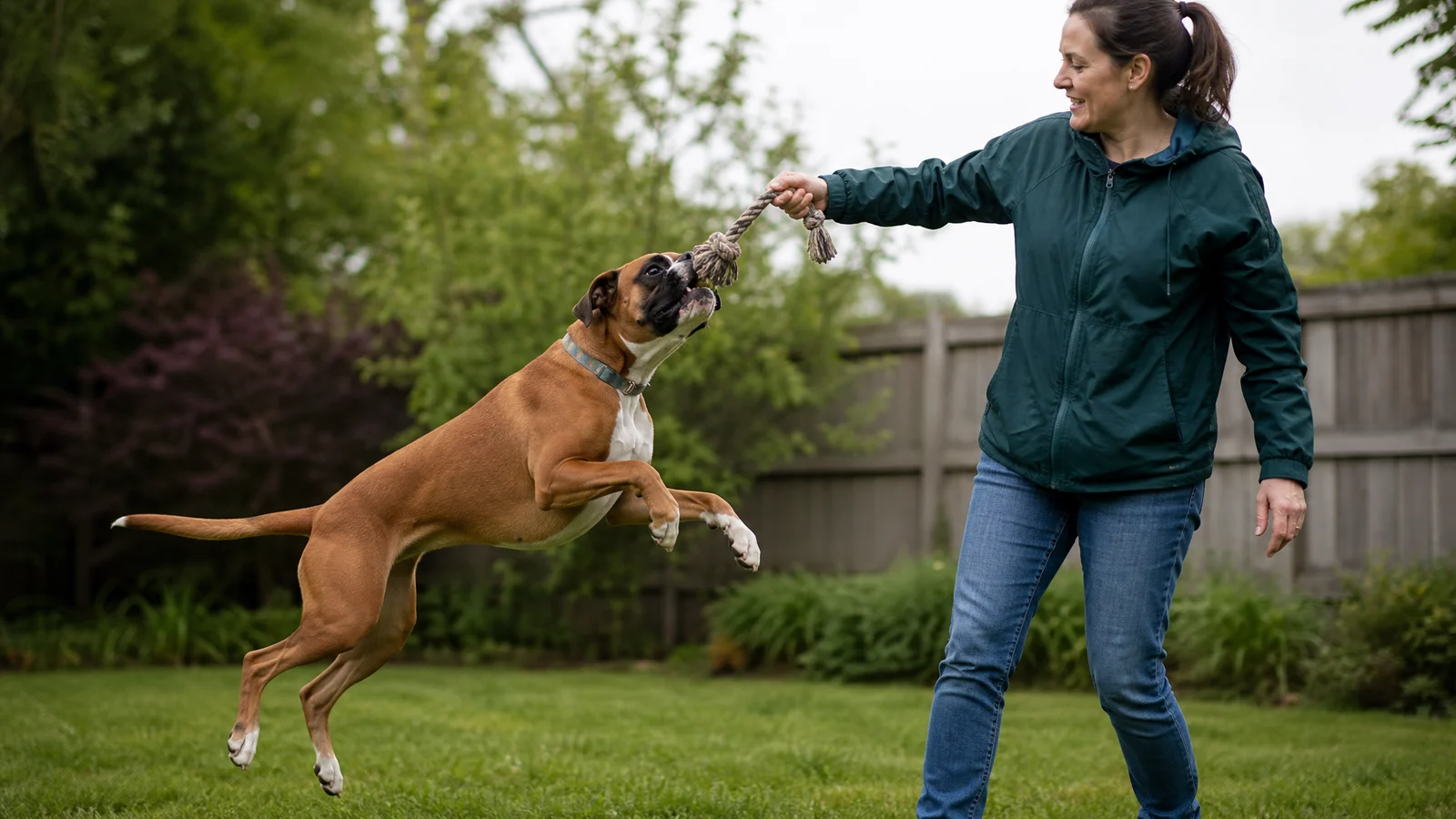
Standard training wisdom often says to interrupt or outlast unwanted behavior, but for a chase-and-grab breed there is a better route. Their mouthing, jumping and grabbing likely come from an inherited instinct, and an instinct you only try to stop has no place to go. You redirect it to an approved target and pay for the version you can live with.
Below, you'll find the history behind these habits, how Boxer play changes from puppyhood to adulthood, and separate plans for mouthing, jumping and chewing, including a numbered soft-mouth routine and a two-week schedule that closes the article.
This matters because a strong, quick dog without outlets invents their own, usually at the expense of sleeves, furniture and guests. Given the right ones, a Boxer returns an affectionate, funny and very trainable companion.
The Boxer's Chasing Heritage
In medieval times the Bullenbeisser was Germany's premier big-game hunter, used by noblemen to run down, catch and hold bear, bison and wild boar on vast ducal estates. Boxers carry that heritage forward even though nobody asks them to do that work today, and it is a reasonable explanation for the urge to chase, leap and grab.
Because of that chasing heritage, Boxers spend a good deal of time jumping and leaping about, and young dogs need constant reminders to stay down. The grab, the leap and the sudden sprint are not defiance. They are old working behaviors with nowhere approved to go.
The breed was also developed as a guard, working and companion dog, and that alertness shows at the front door. We cover where it helps and where it hurts in our look at the Boxer as a guard dog.
Use all this as a reading guide. If your Boxer runs at you and seizes a sleeve, that is chase and grab. If they launch at your chest, that is the leap. If they clamp onto an object and refuse to release, that is hold. Each one has a harmless version you can reward.
How Boxer Play Develops
Play is how all this drive gets expressed. The breed scores 4 of 5 on playfulness, 4 of 5 on energy, and 4 of 5 on how much mental work they want, so a day without active play and thinking games leaves a lot unspent. In puppyhood the surplus goes into mouths and paws, because that is how young dogs explore. The breed standard calls the temperament fundamentally playful with family, and that stays true of adults.
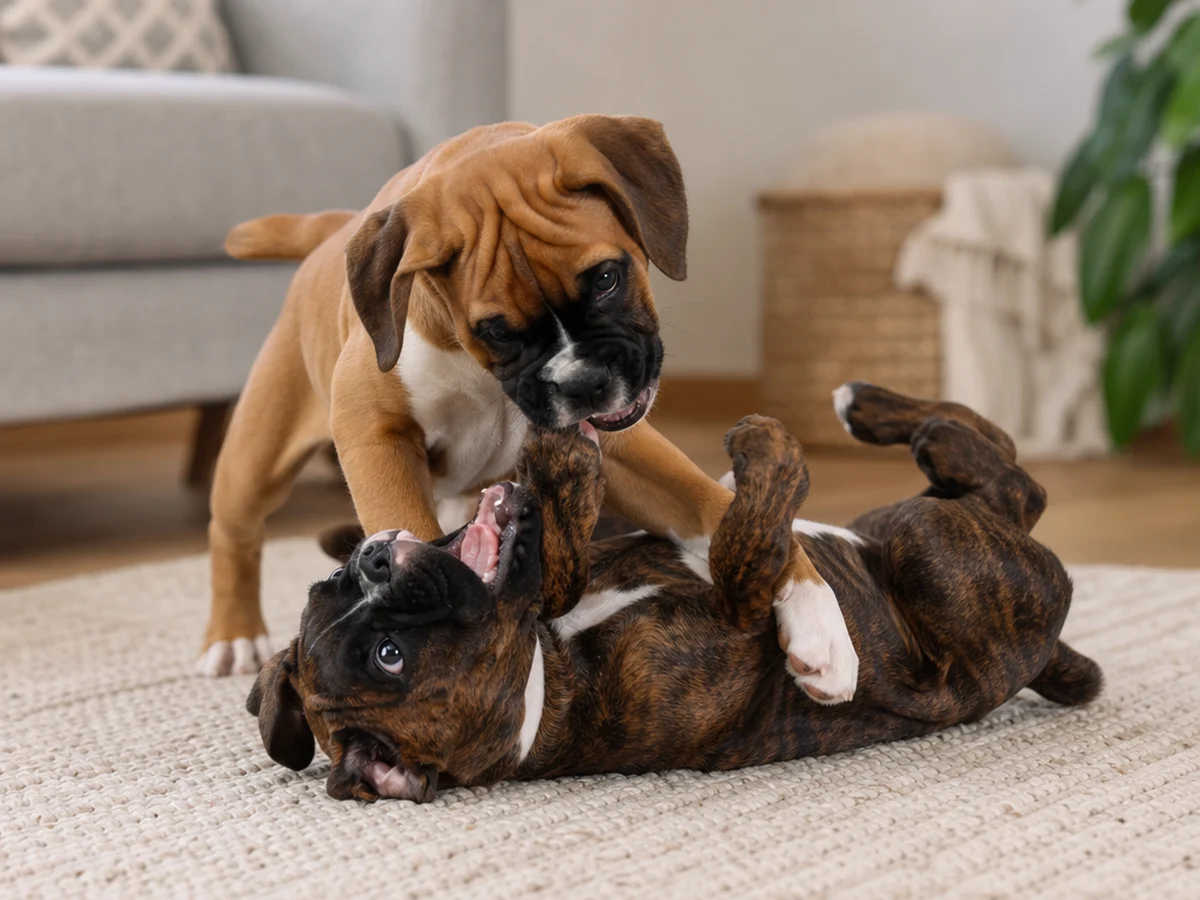
Early socialization and puppy classes are vital for channeling that exuberance. A young Boxer learns the rules of rough play from other dogs and from people who reward good choices, so start early and keep the work positive.
Boxers are highly intelligent, excellent problem solvers and quick to tire of repetition. If a drill that worked last week now earns a blank stare, change the game before you call it stubbornness. Short sessions with varied rewards hold attention far better than one cue repeated.
Then look at timing. If wild behavior clusters after a long stretch alone or a thin day of exercise, you have an outlet shortage, so add activity. If it clusters inside play itself, you have an arousal problem, so end games a little earlier and finish with a chew.
Size matters too. A powerful, bouncy Boxer can overwhelm a very frail adult or a small child, so supervise play and teach everyone to keep greetings calm.
Mouthiness as a Boxer Behavior Problem
Mouthiness is a common frustration, and the first fact to hold onto is that it is natural. Playful mouthing is normal behavior in puppies and young dogs. In a breed with a catch-and-hold heritage, that heritage is the likely reason the urge to grab feels so strong, so the goal is not a Boxer who never uses their mouth. The goal is one who uses it gently and on the right object.
Read the Trigger First
Before you train, work out when it happens. If mouthing spikes when you arrive home, arousal is driving it, so keep a tug toy in a basket beside the door and offer it as you walk in. If it happens mid-play, the game has become too wild, so slow it down.
If mouthing flares in the evening for no clear reason, suspect tiredness and offer a chew and a rest. If your dog stiffens or growls over food or a prized item, that is a different problem. Stop there and bring in a trainer who teaches with rewards and has solid experience with behavior cases.
Teaching a Soft Mouth
This routine teaches bite inhibition by paying for gentleness and ending the fun when pressure gets hard. Practice in short sessions during calm moments, not only when the dog is already wound up.
- Keep a toy in your hand during play so the dog always has a better target than your skin.
- The instant teeth touch skin, freeze, say a short marker word in a calm voice, and offer the toy.
- When the dog switches to the toy, praise warmly and restart play right away, so the toy keeps the game going.
- If teeth land on skin again, end the game and step out of the room for a brief time-out, then return calmly.
- Pay for soft mouths by marking and rewarding whenever the dog takes a treat gently.
- Add a give cue by trading the toy for a treat, so letting go becomes something that pays.
When Mouthing Won't Settle
If mouthing hasn't eased after steady practice, check three things in order. First, exercise and thinking work, since a dog with energy to spare keeps grabbing. Second, the rewards, which may not be valuable enough. Third, consistency, because one person who plays rough undoes everyone else's work.
With children, set clear rules, supervise every session, and send the dog to a rest area when play heats up. The pause protects both the child and the dog from an overexcited mistake.
Jumping and Greeting Behavior Problems
Jumping is the leaping heritage meeting a dog who loves people. Boxers rate 4 of 5 for affection with family and 4 of 5 for openness to strangers, so a greeting is often the most exciting event of their day. Sort it by who triggers it. If the dog jumps mainly on familiar people, it is joy and habit.
If the jumping comes with barking at newcomers, the dog may be unsure. The breed standard describes Boxers as wary with strangers at first but quick to answer friendly overtures, so ask guests to be genuinely friendly and calm rather than loud.
Then reward the picture you want. Teach a sit or a down, pay for it every time, and set it up before the greeting happens. Keep treats by the door, ask for the sit while visitors are still outside, and let the hello begin only when the feet are down. Young Boxers need repeated reminders, so expect to run this many times.
Turning away from a jumper is common advice, but it only tells the dog what fails. Pair it with a clear alternative: pause until all feet are down, then mark and reward. If the dog still launches, the greeting is too exciting for their current skill, so use a leash or gate. For paw swats and visitor practice, see our guide to four feet on the floor.
Chewing Behavior Problems and Energy Outlets
Chewing is where surplus energy and boredom show up as damage. If it happens mostly while you are out, suspect unspent energy and a brain with nothing to do, given how high the breed's mental stimulation needs run. If it happens while you are home, the dog is probably seeking an outlet or your attention.
Match the Outlet to the Urge
Choose the outlet by what the dog is trying to do, then offer it before they go looking. Early timing keeps the approved option easy to choose.
- Gnawing and jaw work call for sturdy chew items offered at set times, especially as the dog settles down for the evening.
- Chase-and-grab energy calls for fetch and tug with a toy and clear start and stop rules.
- Boredom calls for food puzzles and scatter-feeding, which turn problem solving into the day's job.
- Pent-up energy calls for sniff walks and varied outings, split across the day rather than packed into one long burst.
Trade Instead of Taking
When your Boxer grabs something forbidden, don't chase and snatch, because chasing is a game they were built to win. Instead, trade it for a toy, or for a tasty treat if the item is too exciting to give up. Once the trade runs smoothly, add a give cue and pay generously at first.
Rule Out Physical Causes
A sudden jump in chewing or mouthing can have a physical cause, such as sore gums while teething. Keep up regular vet visits, and mention any abrupt change in chewing so your vet can check the dog over.
Rewarding Away Boxer Behavior Problems
Everything above rests on one habit: pay for the behavior you want, often and early. Several survey studies found higher obedience with rewards, which suits an intelligent, people-loving breed. Boxers rate 4 of 5 for trainability, so they quickly learn what earns a payoff, including the things you wish they hadn't learned.
Catch good choices. When the dog picks up a toy instead of a sleeve, sits instead of jumping, or lies down on a mat, mark it with a word and deliver a treat, praise or a game. If you only notice the unwanted behavior, the dog learns that misbehaving is the surest way to earn you.
When you can't prevent the behavior, redirect to a safe toy and praise when the dog takes it. Redirection works because it gives the instinct a job instead of an argument.
Meet the needs before you train. A Boxer who has had exercise and a thinking task learns faster than one who has had neither. Keep the household consistent too: if one person allows jumping and another doesn't, the dog cannot know the rule. If progress stalls, hire a reward-based trainer.
A Two-Week Plan for Behavior Problems
Use this schedule to turn the ideas above into routine. Every block assumes daily exercise, one thinking task and short sessions with varied rewards. Move at the pace your dog sets, and repeat any block that still feels shaky.
- First weekend: stock toys and chews in every room, and jot down when mouthing, jumping and chewing happen and what came just before each.
- Early week one: add a morning outing and a food puzzle, and hand your dog a toy at every greeting.
- Late week one: practice the soft-mouth routine in calm moments and add the give cue by trading toys for treats.
- Second weekend: keep things easy with gentle play and a long chew, then review your notes for patterns.
- Early week two: rehearse greetings with a helper, using a leash or gate and rewarding sits and a calm, grounded hello.
- Late week two: set up a chew station, give a puzzle during alone time, and change the rewards so sessions stay fresh.
- Final day: try the same skills in a new place or with a new visitor, then decide which steps still need work.
A Boxer's chasing, gripping and leaping drive is not a flaw to remove, so give it approved outlets first, with real exercise, thinking work and the right toys. Then pay generously for every moment the dog chooses the outlet over your sleeve, your guests or your furniture.
If old habits return, look at exercise, rewards and consistency before you blame the dog. When chewing is the main trouble, our plan for Boxer destructive chewing goes deeper. Keep the work playful, because this breed responds to fun far better than to pressure.
 Puppy trainingYour 8-Week-Old Boxer Puppy: Where to Start Training
 Puppy trainingTraining a Boxer Puppy: Why Socialization and Puppy Class Matter
 Training basicsBoxer Obedience Training With Rewards: Sit, Down, Stay, Come
