 Boxer
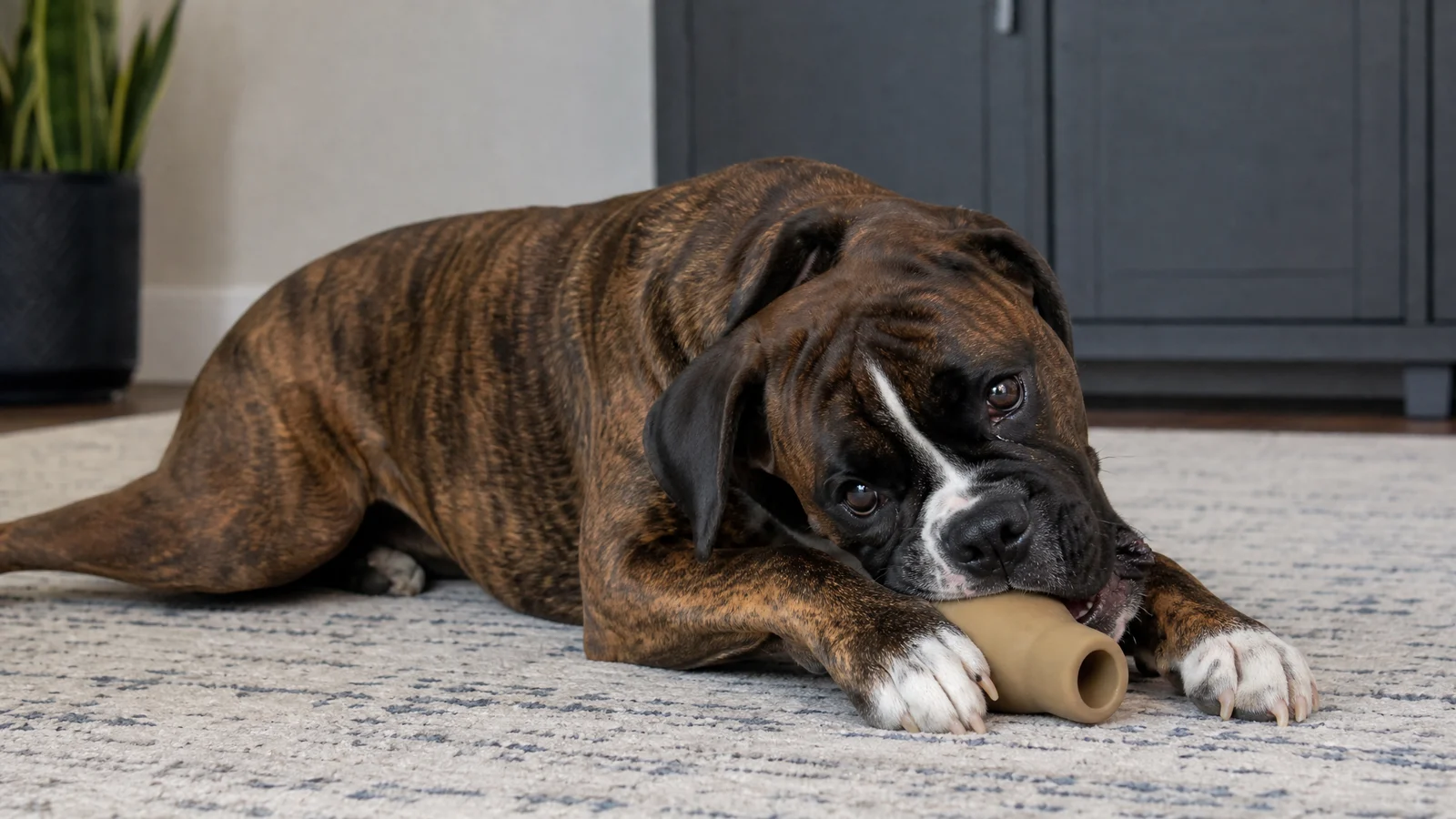
To stop destructive chewing in a Boxer, remove access to the wrong items and reward every moment your dog chews the right ones. Management ends the damage this week, and the skills you build alongside it are what make the change last.
The breed explains the method. A Boxer is strong, affectionate with their family, and carries more energy than a typical afternoon uses up, with mental stimulation needs to match. Some dogs with that profile turn to mouthing and chewing, so a couch cushion that smells like the family can end up closer than a chew toy. Boxer behavior and training have been our focus for many years, and management first with skills second is the order that holds up.
Below, you'll find a map of what gets chewed at home, the gaps in a Boxer's day, and room-by-room prevention, including the trade and settle skills, a practice plan, and a way to read a chewed item for trouble.
A Household Map of Destructive Chewing
Before you change anything, walk through your home the way your Boxer does and write down what has been chewed, what has been mouthed, and what has been carried off. Shoes, remotes, couch corners, baseboards, laundry, and children's toys tend to top the list. The pattern matters more than any single item, and things that smell strongly of the people your dog loves are usually chosen first.
Next, note who is home and when. A house with a quiet morning, a busy afternoon, and an empty midday hands a mouthy dog three very different opportunities, and the damage usually clusters in one of them. Children add another layer, because dropped toys and snacks at floor level look like invitations to a young Boxer.
Finally, sort the list into what is dangerous, what is valuable, and what is merely annoying. Cords, socks, and anything small enough to swallow leave your dog's reach today, while the valuable items can wait for the room-by-room plan below. Chewing is one of several habits that grow out of the breed's energy, and our article on the instinct behind each behavior problem shows how it fits with the rest.
Where a Boxer's Day Leaves Gaps for Destructive Chewing
Chewing rarely happens at random. It tends to appear in the gaps of the day, and the breed's profile shows why: energy and mental stimulation needs are both rated four out of five, so a short walk followed by a long afternoon leaves a great deal unspent.
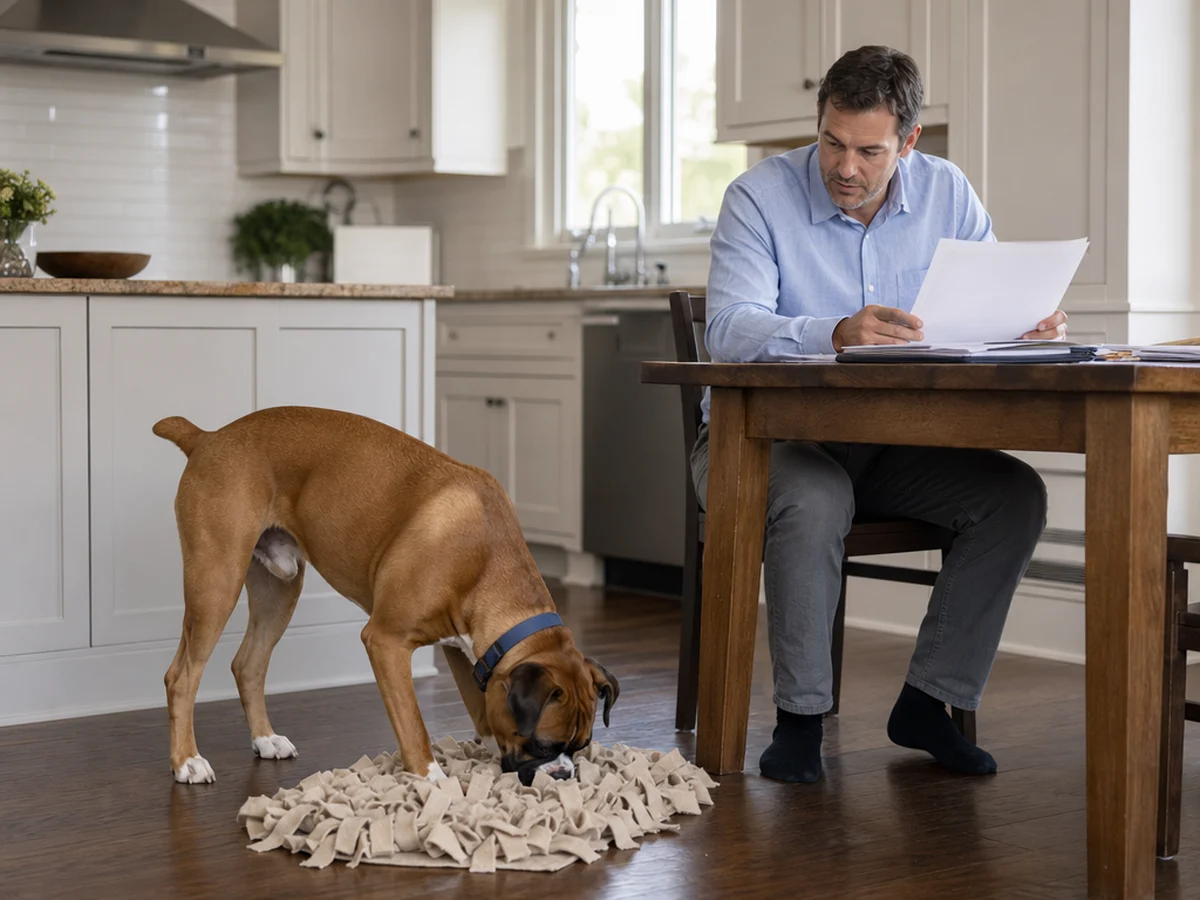
The first gap comes after a short or purely physical outing. A dog who has run but not thought still has a restless mind, and the body may be tired without the dog being ready to settle. A sniffing walk, a few minutes of training, or a food puzzle often does more than extra distance.
The second gap is alone time, when the house is quiet and the only entertainment is whatever smells like you. The third is the evening wind-down, when the household relaxes and your Boxer, still wound up, goes looking for something to do with their mouth. Many dogs pick the same hour every day, so a few days of notes will usually show you which gap is yours.
Boxers are intelligent and excellent problem solvers, but they can tire of repetition, so the same chew every day may lose its appeal. Keep a small rotation of safe options and bring out a different one each time. Then mark your schedule where chewing has happened, because those marks show exactly where an exercise session, a puzzle, or a chew station belongs.
Room-by-Room Prevention for Destructive Chewing
Prevention comes before training because every successful chew on a shoe teaches your dog that shoes are worth the effort. The aim is a home where the wrong choice is hard and the right choice is easy and close at hand. Here is how that looks in practice:
- In the living room, put shoes, remotes, and throw pillows out of reach, and leave two approved chews where your dog usually settles.
- In the kitchen and laundry area, close doors or use a gate so that trash, towels, and socks cannot be reached at all.
- In bedrooms and children's rooms, keep small toys in closed bins and teach children to put them away after play.
- In hallways and by the front door, move shoes and bags onto a high shelf, since the entry is where a bored dog often investigates first.
- Along baseboards and furniture corners that have already been gnawed, block access with a gate or a pen rather than hoping the habit fades.
Then decide when your dog is supervised and when they are confined. Supervised time means you can see the mouth and redirect it calmly, so your Boxer lies in the same room with a chew while you watch. A trade or a cheerful call to the chew station works better than a sharp reaction, which can turn the whole thing into an exciting game.
When you cannot watch, a gated area or a comfortable, voluntary crate setup keeps your dog safe and the house intact. Confinement should always come with something good to chew, and it should never feel like punishment. Short, pleasant stretches in that space, spread through the day, make it a place your dog chooses.
The Strong, Curious Mouth of a Boxer
The breed standard describes a powerful, energetic dog, and energetic, curious dogs in general often explore the world with their mouths. Dogs vary, but it is sensible to plan for a mouth that is both curious and capable. Thin plastic, soft stuffed toys, and anything that can be shredded and swallowed are poor matches for that jaw.
Age changes the picture. A teething puppy chews because their gums are sore, and a firm, textured chew can bring real relief. An adolescent chews out of energy and exploration, often with more force and less caution, while an adult more often chews from boredom, habit, or a need to settle. Each stage calls for the same plan, with the weight shifting between exercise, supervision, and settling practice.
Chasing and Snatching Habits
The AKC notes that the breed's heritage as a chaser of wild game shows up in a good deal of jumping and leaping, and that young dogs constantly need reminders to stay down. That exuberance means chewing and play often blur together, with a Boxer snatching an item to start a chase. Keep your response calm and unexciting, because a dramatic pursuit can reward the exact snatch you want to end.
Since this is a mouth you will be handling often, let your dog get used to having it touched and checked. Our guide to vet handling training for a Boxer walks through it, and it pays off the first time you need to look at a chewed tooth or gum.
Trade and Settle Skills That Replace Destructive Chewing
Training is easier when it uses what the breed already offers. A Boxer rated as trainable and playful will often learn quickly when the reward is good, and the evidence backs this approach. The veterinary behavior society's position on reward-based training holds that reward-based methods are the only ones to use across all dog training, including behavior problems. Three skills do most of the work.
Trade
Trade teaches your dog that giving something up produces something better. Begin with a low-value item and work through the steps below.
- Offer a treat at your dog's nose while they hold a boring item.
- As soon as the mouth opens and the item drops, mark it with your marker word, then hand over the treat.
- Hand the item back sometimes, so that giving things up never means losing them for good.
- Move on to more interesting items only once the first ones are easy.
Drop and Marker Timing
A marker word or clicker works only after it has been tied to food. The clicker basics advice is to pair the click with a treat that arrives within 3 seconds, practiced over several rounds somewhere quiet. Once the marker is clear, "drop" becomes simply a trade that you have given a name.
Mat and Settle With an Approved Chew
Teach your dog to go to a mat and reward them there, first for stepping on, then for lying down, then for staying. Next, introduce a safe chew on the mat so the mat predicts something good to do with the mouth. This one pairing is the heart of the plan, because it gives a high-energy dog a clear, rewarding place to put themselves.
Chew-Skill Practice From Easy Rooms to Hard
Skills fail when they are asked for too soon in too hard a place. Build them in steps and move forward only when your dog succeeds easily at the current one. This progression suits most households:
- Begin in a quiet room with no distractions, practicing trade and mat time for a few minutes at a time.
- Add time by rewarding longer stretches of calm chewing on the mat before the next treat.
- Add distance by walking away and returning to reward your dog for staying on the mat with the chew.
- Add distraction by practicing while someone moves around the room, a child plays nearby, or the doorbell rings.
- Finally, practice in the rooms where chewing used to happen, with the old temptation in sight but out of reach.
Keep sessions varied. A Boxer can grow bored with repetition, so swap the chew, move the mat to a new spot, and change the reward. Stop each practice round while your dog still wants more, and they will come back keen for the next one.
Criteria for Moving On
Advance to the next step once your dog gets it right most of the time at the current one, without help from you, and does it calmly. Calm matters as much as success, since a dog who performs the skill in a frenzy has not yet learned to settle.
If your dog starts to fail, drop back a step and make the task simpler. That is not a setback but the normal rhythm of learning, and it is faster than pressing on. Pay generously at every step, because for an affectionate, trainable breed the reward is what keeps the mat more interesting than the couch.
Reading One Chewed Item for Progress or Pain
Once the plan is running, a single chewed object can tell you a good deal. Pick one and look at it closely before you clean it up.
What the Marks Suggest
Torn fabric, shredded paper, and ragged edges suggest boredom or play, and they usually respond to management and more mental work. If you notice any change in how your dog chews or eats, have your veterinarian check them, and keep up regular vet visits as well.
Progress Versus Setback
Progress shows up in small ways. The damage moves from valuable items to cheap ones, your dog picks up an approved chew on their own, and the gap between incidents lengthens. A setback, such as a return to old targets after a change in routine, is information about the schedule and not a failure of the dog, so tighten management for a few days and rebuild.
When to Call for Help
Call your veterinarian right away if any piece of a chewed item may have been swallowed, if your dog vomits, stops eating, or seems painful, or if a dog with settled habits abruptly starts gnawing. Regular vet visits are worth keeping in any case.
If chewing continues despite good management, a qualified professional can help, and because the word "behaviorist" is not protected for everyone, board-certified veterinary behaviorists are worth seeking out when the problem is severe.
Tonight's Boxer Chew Station Is the First Move
Everything above comes down to a small, repeatable routine, and you can begin it this evening. Choose one spot where your dog already likes to lie, put a mat there, and place one safe chew beside it. Keep tempting household items out of reach in that room so the station is the most interesting thing in it.
Then invite your Boxer over, mark and reward when they settle, and hand over the chew. Stay close for the first few minutes and reward calm chewing with quiet praise or a treat, because the first time your dog chooses the station is the moment the habit starts to change.
Destructive chewing in a Boxer is the energy and curiosity of the breed looking for an outlet, so give it a good one. Set up the station tonight, reward the first chew there, and repeat it tomorrow.
 Puppy trainingBoxer Puppy Training Timeline: 8 Weeks to 2 Years
 BehaviorCommon Boxer Behavior Problems and the Instinct Behind Each
 Puppy trainingYour 8-Week-Old Boxer Puppy: Where to Start Training
