 Boxer
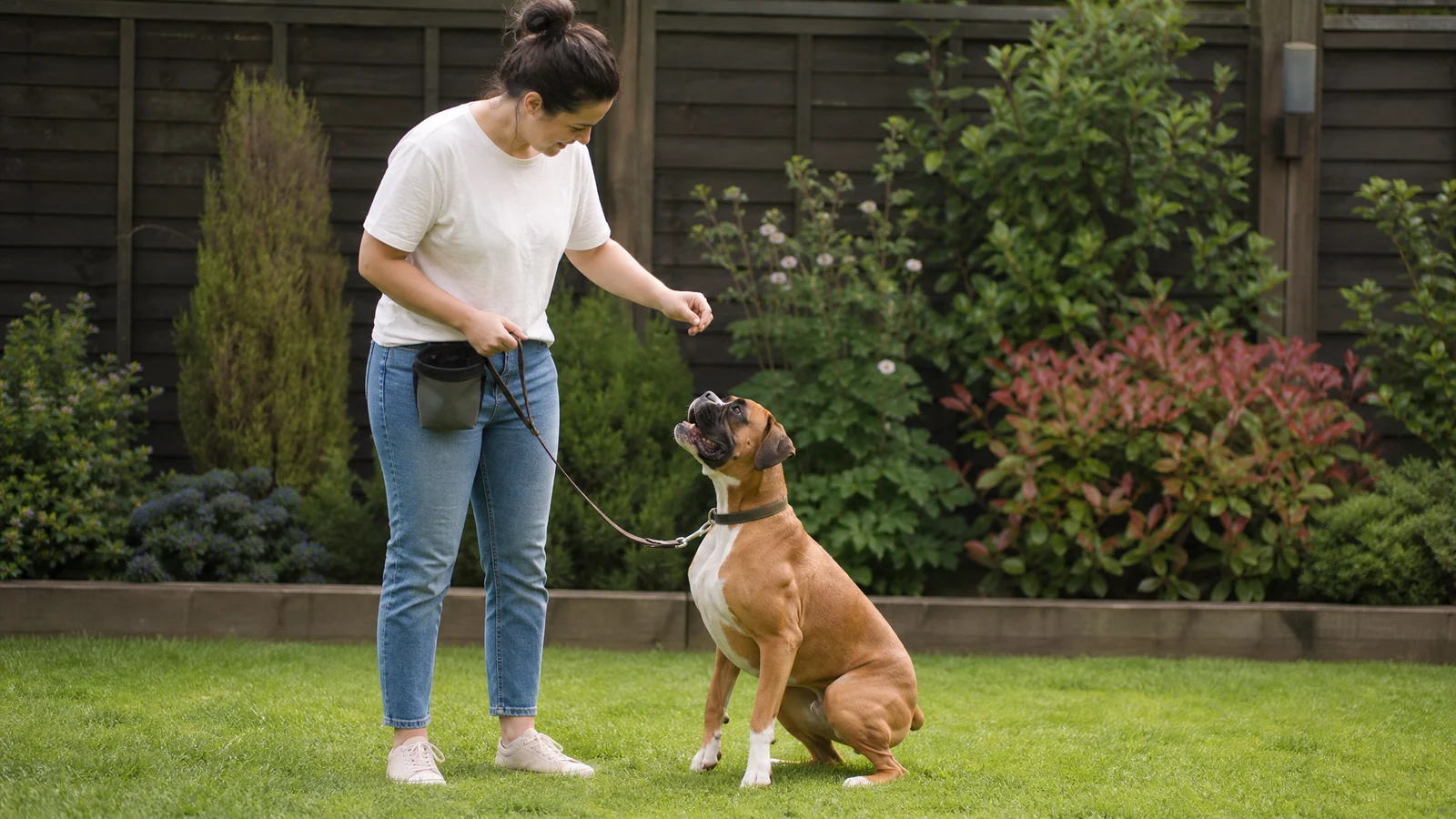
Boxers can be easy to teach when the lesson is clear and well rewarded. They are much less interested in repeating the same cue until the handler gets bored too. The breed combines high trainability with intelligence, playfulness and a well-known dislike of dull repetition. That mix rewards clear teaching and exposes lazy lesson design.
We answer the practical questions here, not an abstract intelligence debate. This guide separates learning speed from reliability, explains lost attention, compares useful rewards and connects temperament to daily training. It also explains which problems call for a simpler plan, a regular veterinary check or qualified reward-based help. The goal is an engaged partner, not mechanical obedience.
Boxer Temperament and Trainability
Boxer temperament makes training both promising and lively. The breed is described as intelligent, energetic and tractable, with loyal affection toward family. Published trait ratings place trainability high, yet the breed can become bored with repetition and tends to solve problems independently. Those qualities can coexist without contradiction.
Are Boxers Naturally Easy to Train?
They are naturally capable learners. The Boxer's expression is described as energetic and intelligent, while the breed's trainability rating sits near the eager end of the scale. A Boxer often understands the behavior before a long practice session is finished.
Capability does not remove the handler's job. If the cue changes, rewards arrive late or family members use different criteria, the dog receives several lessons at once. Use one cue, mark the exact useful response and reward promptly. Consistency lets intelligence work for you instead of turning ambiguity into a guessing game.
A Mind of Their Own
Not by itself. A dog who stops repeating a known sit may be bored, overexcited, distracted or uncertain about what now earns the reward. Calling all four states stubborn hides the information you need. Identify what changed before deciding the Boxer has refused.
The breed's independent problem solving can be useful. Ask for small choices, such as finding the mat or offering a nose target, and mark the correct attempt. When the dog learns that experimenting calmly leads to rewards, their initiative becomes part of the lesson rather than competition with it.
Temperament and Training Attention
Attention is not a fixed trait that a Boxer either has or lacks. It changes with the setting, energy level, reward and amount of repetition. Treat a lost connection as a symptom. The pattern around it usually points to the next adjustment.

Why Does My Boxer Stop Listening?
If responses slow after several similar repetitions, boredom is likely. Change the skill, move to a different spot or finish after one easy success. Guidance on reward-based training favors brief sessions that do not overwhelm the dog. That format suits a breed who notices sameness quickly.
If the dog cannot begin, the environment may be too difficult. A busy sidewalk asks for more attention than a quiet room. Increase distance from the distraction, use a better reward and ask for a behavior the dog already knows. Success at an easier level is training, not retreat.
Barking During Practice
Barking can come from excitement, frustration, anticipation or something outside the session. Look at what happens immediately before it. If the bark follows a delayed reward, simplify the exercise and improve timing. If it begins when someone passes the window, move away from the view and reward a turn back toward you.
Teach an action before the bark builds. The barking guidance from Battersea recommends noticing early signs and cueing a rewardable response such as a sit or down. The lesson is easier before the dog is fully committed to the noise.
Reading What Went Wrong
Use the first visible change as your clue. These patterns do not establish a cause, but they organize the next training choice.
- Slower responses after repeated cues suggest the lesson has become stale, so switch tasks or end on an easy win.
- Spinning, jumping or grabbing at the reward suggests arousal is too high, so add movement first and then ask for a simple settle.
- Scanning the room and ignoring food suggests the setting is too difficult, so create more distance and lower the challenge.
- Offering many behaviors rapidly suggests the criteria are unclear, so mark one small step and reward it consistently.
- A sudden change across familiar settings suggests a health or comfort issue deserves veterinary attention.
Rewards and Boxer Temperament
Rewards answer the dog's question about why a behavior is worth repeating. Food is convenient, but it is not the only option. A playful Boxer may value a short tug game, access to sniffing, praise, a toy or the chance to greet someone. Match the reward to the difficulty and the dog's interest that day.
Rewards That Hold Attention
Use rewards you can deliver cleanly. A small food reward suits precise teaching because it arrives quickly. Play can pay for a short chain of behaviors, while opening a door or releasing the dog to sniff works well for daily manners. The best reward is the one the Boxer wants now and can receive without losing the lesson.
Rotate rewards before any one becomes predictable. The dog may earn food for a new behavior, praise for a familiar response and a quick game after a short sequence. Variety matches the breed's problem-solving nature. It also helps you avoid waving food continuously instead of teaching the cue.
Structure Within Reward-Based Training
No. A reward-based plan still has rules, management and consequences. The humane training statement supports reward-based methods for training and behavior work. You decide which behavior opens the door, starts play or earns attention, then arrange the environment so the Boxer can make that choice.
Management prevents practice of unwanted behavior. A gate can keep a greeting organized, a mat can define the resting place and a toy put away between sessions can retain value. If jumping makes attention pause and four paws on the floor make it return, the rule is clear without turning training into conflict.
Boxer Personality in Daily Training
Temperament descriptions are tendencies, not promises about every dog. Affection, playfulness, energy and initial wariness can each shape a lesson. Train the individual while using breed context to predict where extra structure may help.
Family Affection During Training
Loyal affection can make proximity and praise valuable, but closeness alone does not teach a behavior. A Boxer who wants to be beside you still needs the marker to identify the right choice. Use that social interest by rewarding check-ins, calm greetings and returning to you after a distraction.
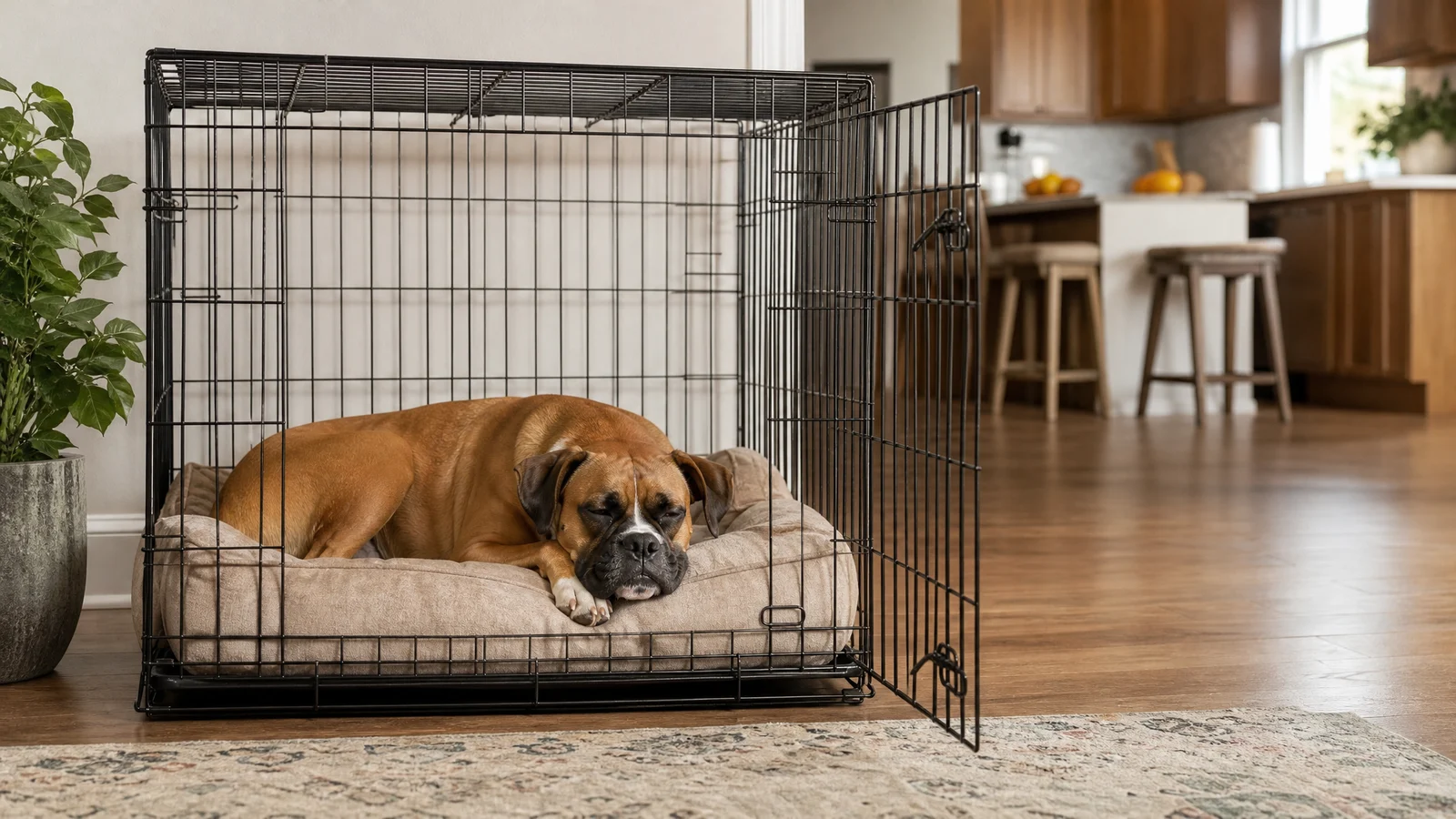
Independence should also be taught. A dog who works only while touching the family may struggle with a mat across the room or calm rest apart. Our Boxer crate training guide treats comfort in the crate and comfort during absence as separate skills.
Playfulness During a Session
Playfulness makes training lively, but it can blur the moment work ends. Use clear start and release cues. Ask for a brief behavior, mark it, then release the dog into play. After the game, pause for calm before asking again. That rhythm gives energy a place without letting it take over every cue.
For a Boxer who invents a different game, use the idea rather than fighting it. A toy delivered during mat practice can become the reward after the next successful settle. The dog learns that cooperation opens access to fun, while you keep control of the sequence.
Wariness Around Strangers
The standard describes deliberate wariness paired with curiosity and a prompt response to friendly overtures. A cautious first look is therefore compatible with breed temperament. Do not force a greeting. Leave room for observation, reward composure and allow the Boxer to decide about moving closer.
Training around strangers should build neutrality before sociability. A Boxer who can look, return attention to you and move on has a valuable skill. The dog does not need to greet every person to be well trained.
Temperament Problems and Professional Help
Most ordinary training friction improves when criteria become clearer, sessions become shorter and the environment becomes easier. Revisit those pieces before adding complexity. If a cue works in the kitchen but fails outside, practice at a quieter outdoor distance rather than assuming the dog forgot everything.
When to Rebuild the Lesson
Start over when the dog is guessing rapidly, cannot take the reward calmly or has stopped improving across several sessions. Return to the smallest recognizable step. Mark one correct response and finish. On the next attempt, change only one variable, such as distance, duration or distraction.
Review your timing as well. A marker should identify the behavior, and the reward should follow rather than precede it. If the reward appears first, the dog may be following the food instead of understanding the cue.
When Outside Help Is Appropriate
Seek a qualified reward-based trainer when household members cannot apply one plan, when distractions make safe practice difficult or when progress stays stalled despite simpler steps. Fear, escalating reactivity or any bite risk needs experienced help early. Training should not require the family to improvise around danger.
Keep regular veterinary visits, and arrange an exam when a familiar behavior changes suddenly. Discomfort can look like reluctance, distraction or irritability. A health check protects the dog and keeps you from treating a physical problem as a personality flaw.
For the broader sequence of core skills, see our complete Boxer training guide. Use that plan after this FAQ has helped you identify which part of the learning setup needs attention.
A Trainable Boxer Stays Curious
Judge training by more than instant compliance. A useful session leaves the Boxer willing to return, able to recover from a mistake and increasingly clear about what earns the reward. Curiosity with self-control is a better long-term result than a dog who repeats one behavior until interest disappears.
Keep lessons brief, vary the problem and make criteria easy to read. Raise difficulty only when the current version looks fluent. If attention breaks, assess the setting before blaming the dog. That habit turns the Boxer's independent mind from a source of frustration into the quality that makes training enjoyable.
So, are Boxers easy to train? They are rewarding to train when the work stays clear, varied and worth doing. Meet those conditions and the breed's intelligence becomes practical reliability, while the playful personality that made the question complicated remains intact.
 Exercise and jobsBoxer Sports and Jobs: Putting the Breed's Instincts to Work
 Training basicsCrate Training a Boxer and Preventing Separation Anxiety
 Exercise and jobsBoxer Exercise Needs and Brain Games for a High-Energy Dog
