 Boxer
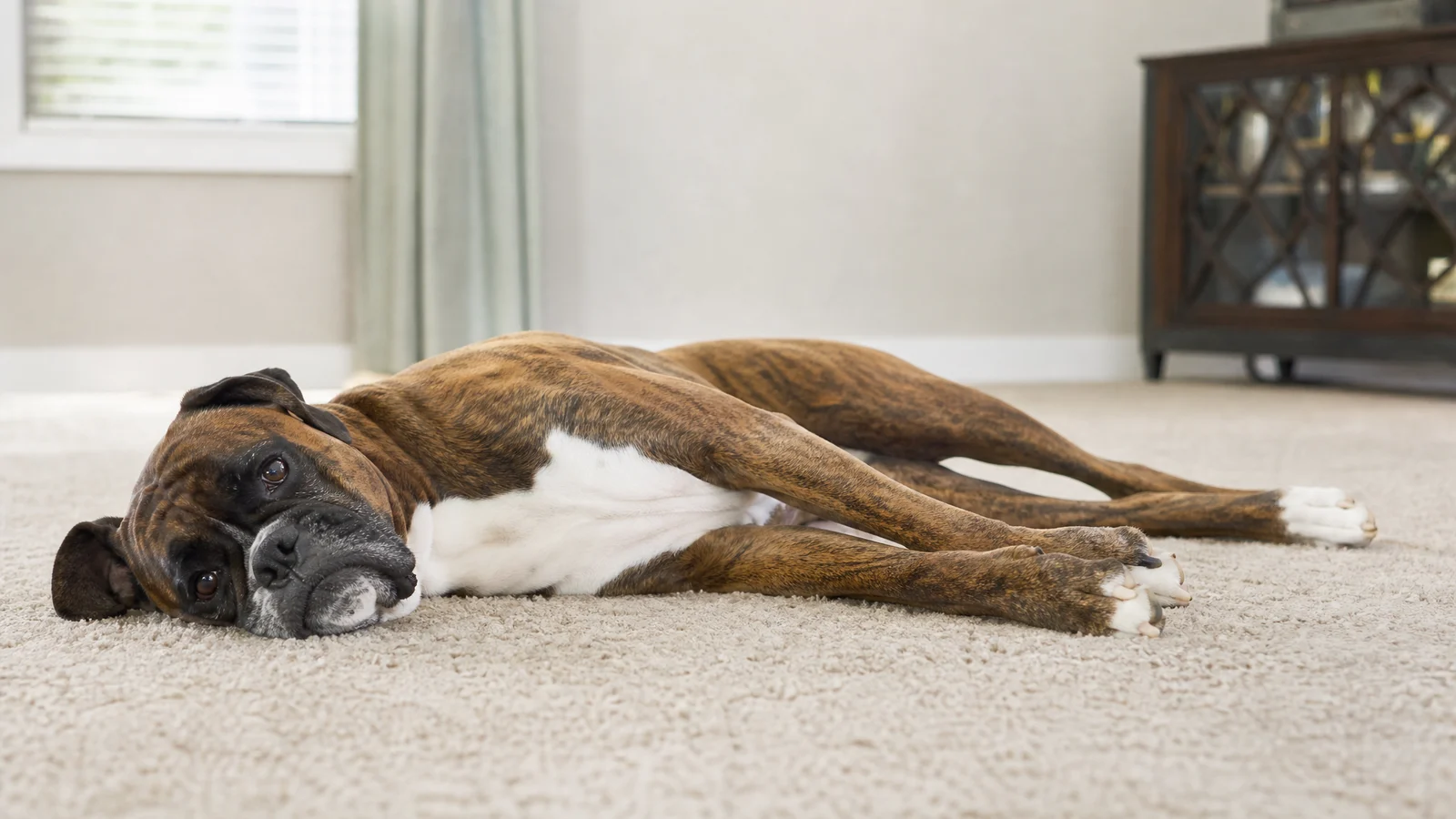
Roll over suits a Boxer's busy mind, because the trick comes in small stages and each one is a win of its own. For a dog who can get bored with repetition, that means no single piece asks for endless drilling.
It also points a Boxer's big energy somewhere useful. The route runs from a settled down to a tip onto one hip, over the back and across to the far side, and trouble tends to show up at the joins between those pieces instead of in the trick as a whole. A bouncy dog who skips a join is likely to pop back onto their feet, so every piece gets its own steps, a sign that it is ready to move on and a fix for when it stalls.
Below, you'll find the setup, each stage in order, the command and how to shrink the lure, and the stalls to expect, so you can teach the whole trick from this one page.
The Path From a Down to a Full Roll Over
Every roll over follows the same route, and it begins with your Boxer lying down. From there they tip onto one hip, turn onto their back, carry on over to the far side and finish on the floor before standing up. A treat held close to the nose steers the whole trip, so your hand traces the path while your dog's body follows it.
Setting Up the Floor
Because the middle of that trip leaves your dog on their back, the floor deserves a moment of thought. Here is what to have ready:
- A non-slip, lightly padded spot, such as a rug laid over a bare floor, with room for a long body to stretch out and turn.
- Soft treats that are small enough to swallow in a second.
- A dog who already has a dependable down, which our Boxer obedience basics guide walks through.
Quiet Space and Safety
Quiet matters as much as the surface. The SF SPCA's trick-training tips suggest beginning a new behavior in a distraction-free place and probably starting indoors, moving outdoors only once a dog has mastered the trick, which suits an energetic, playful dog who would rather chase whatever moves next.
Safety comes with the setup. If your Boxer ever seems uncomfortable lying on their side or back, or moves differently afterward, stop the lesson and talk with your veterinarian, and keep up regular veterinary visits so any change gets noticed early.
Teaching a Boxer to Roll Over From Hip to Back
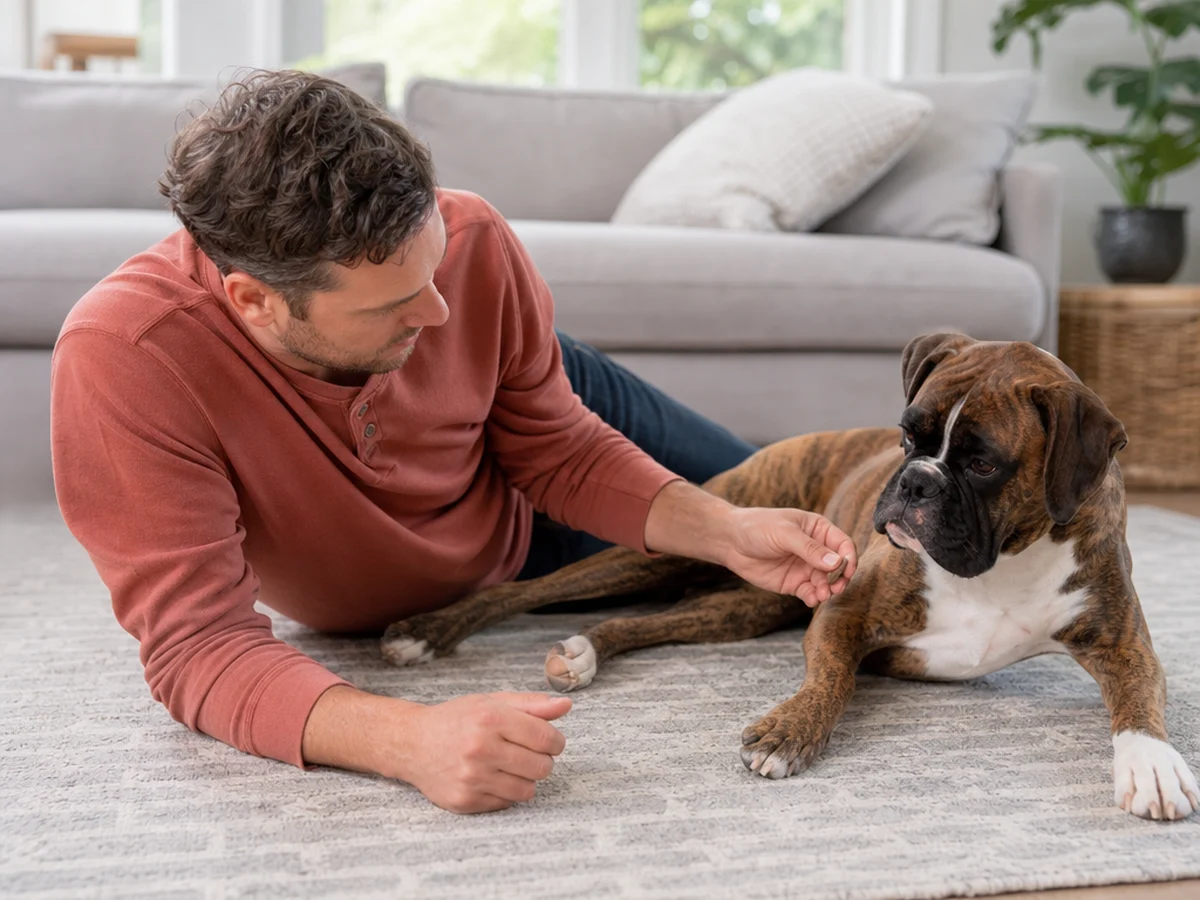
With the floor ready, the first two stages keep your Boxer low and close to you, which makes them the place to be patient. Move on only when a stage looks easy, in the spirit of the Animal Humane Society's advice to keep each step small enough that a dog has a good chance of getting it right.
A short marker word such as "yes" tells your dog exactly which moment earned the treat. Say it the instant the movement happens and pay right after, so the word and the reward always arrive in that order.
Down to a Side Lie
Start with a settled down, then let the treat do the asking. Your dog's head curls toward their shoulder as their weight slides onto one hip, and that shift is the whole stage. Here is the order of events for one round:
- Ask for a down and wait until your Boxer settles with their elbows on the floor, because a bouncy dog launches from a half-ready down.
- Kneel beside them and hold a soft treat against their nose, with your palm up and your hand low so there is no reason to stand.
- Slide the treat slowly along their cheek toward their shoulder until their weight shifts onto one hip and their legs slide out to the side.
- Say your marker the instant the hip drops and pay at their nose, keeping the treat low so their head stays on the floor.
- Release with a cheerful word, let your Boxer stand, ask for a down and go again, paying even a small tip in the early rounds.
Stay on this stage until your dog drops onto a side smoothly several times in a row with only a small movement of your hand. If they keep popping up, your hand is probably moving too high or too fast, so lower it, slow it down and pay the smallest shift toward the hip.
Side Lie Onto the Back
With your Boxer comfortable on a hip, the next stage asks them to tip a little farther than feels natural. This is the first time their shoulders meet the floor, and how steady that moment feels decides how willing they are to go on.
- Cue the side lie the way you just taught it, then mark and pay once so this stage opens with an easy success.
- Hold the next treat at their nose and trace it slowly from their shoulder toward their backbone, so their head tips back and their shoulders follow.
- Mark the instant their back touches the floor, even for a beat, and pay at the nose so their head stays down.
- Let them settle for a moment, release them to stand, ask for a down and run the first stage again before the second.
- Repeat until your Boxer tips onto their back easily and stays there for a beat before you mark.
A dog who stiffens or scrambles on their back is telling you this stage is too big. Ask for a smaller tip, pay it generously and let your Boxer's shoulders earn a gentler slope to follow before you try the longer path again.
Carrying the Roll to the Far Side
Once your Boxer lies on their back without fuss, the last stage turns a pose into a roll. This is where a quick mind helps, because the treat is already taking your dog where they are curious to go, and your job is to keep the trip slow and low enough that they stay with it.
Ask for the side lie and then the back, paying the first one briefly so the sequence starts with an easy win. From the back, carry the treat past their backbone toward the shoulder on the far side, staying close enough that their nose keeps following. Mark when their weight lands on the far hip and pay low, with their head resting on the floor. Then release them to stand, ask for a down and repeat until the turn looks smooth and they finish it without scrambling.
When each piece works on its own, link them together. At first pay at the hip, at the back and at the far side, then drop the pay at the hip, then the pay at the back, until one slow sweep of your hand carries your dog all the way around and the treat waits at the end.
Adding the Roll Over Command and Shrinking the Lure
A Boxer who finishes the turn every time has learned the path but not the word, so the next job is to attach a name to it. The AKC's roll-over lesson adds the verbal cue once a dog is consistently following the treat all the way around.
Say "roll over" once in a pleasant voice, pause for a beat, then start your hand. As the pairing sinks in, your dog begins to move on the word, with your hand arriving as a reminder instead of the instruction.
Then shrink the lure in small bites. Make the sweep smaller, then lead with an empty hand and pay from the other one, then let a small circle of your fingers stand for the whole path.
A bouncy Boxer reads any wobble as a cue to launch, so if they stand up, you shrank too fast: make the sweep bigger again for a round or two and shrink more slowly.
When a Boxer's Roll Over Trick Stalls
Even a well-built lesson hits snags, and each snag points at the stage that needs more care. The stalls we see in energetic dogs cluster around a handful of spots, so check these before changing anything else.
- Pops up at the hip. The lure is moving too high or too fast, so lower your hand, slow it down and pay the smallest tip before you ask for more.
- Grabbing the Treat: A keen dog may mouth your fingers as the treat travels, so hold it in a loose fist against their nose and pay from your other hand after the marker.
- Freezes on the back and will not turn, which often means the far-side path is too long a leap, so lure a little farther each time and pay for every small step beyond the spine.
- Stiff or uneasy on their back: Stop the lesson, because comfort comes first, and practice gentle body handling with the vet handling training guide before trying again. If your Boxer never relaxes there, a side lie on cue is a complete trick, and you can teach another one in the same stages.
Whichever stall you meet, ask for less and pay sooner instead of repeating the same attempt, because a dog who keeps missing a stage learns to dislike it. A smaller, easier win gets the lesson moving again.
Roll Over Work for a Busy Boxer Mind
A Boxer who gets bored with repetition will drift away from a lesson that runs the same route over and over, so give each stage its own short sitting instead of drilling the full sweep every time. Spend one sitting on the hip, another on the back, another on the far side, and let the full roll appear when the pieces are solid.
Between rounds, change something small, such as the treat, the room or which stage comes first, and your bright dog gets variety without losing the thread. Most other skills a bright Boxer needs grow from the same small stages and clear payoffs, and our free e-book follows that approach across the whole range of their training, complete without being heavy, when you register with us.
 Exercise and jobsHow to Teach a Boxer to Weave Through Your Legs
 Exercise and jobsHow to Teach a Boxer to Jump Over Obstacles
 Training basicsAre Boxers Easy to Train? Smart or Stubborn
