 Boxer
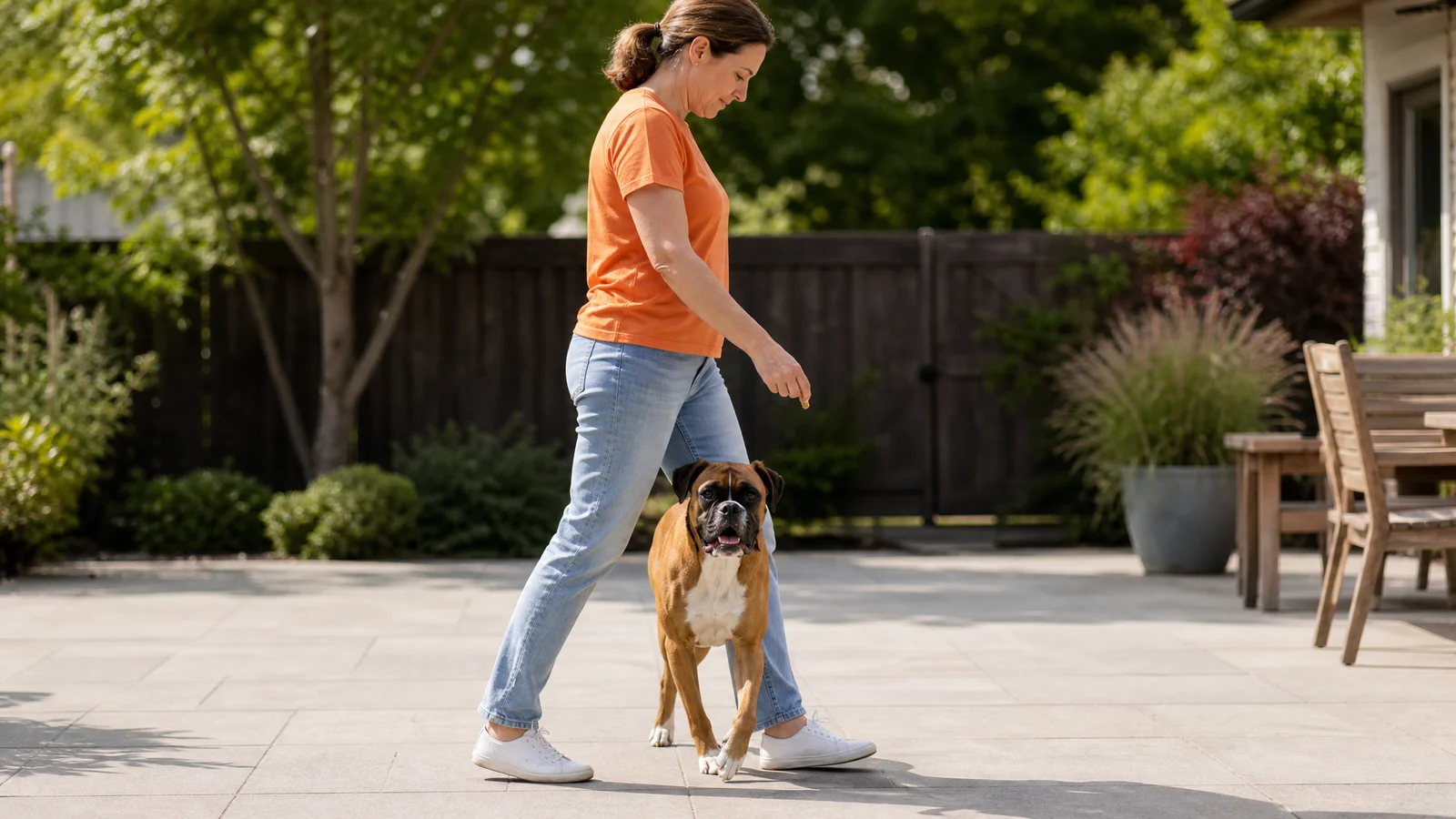
Most Boxers reach your legs at full speed. A leg weave asks for close to the opposite: slow, curving steps through the gap and around each knee, one calm pass at a time.
That contrast is why the trick suits this breed so well. Boxers are strong, playful and quick to bounce, so the lesson works by moving a treat slowly enough that bouncing never pays, while your hand draws the path and your dog does the thinking. By the end, your Boxer circles both legs and comes back to face you, and a single word and a bend of your knees start the whole figure eight.
Below, you will find the setup, each leg taught on its own, the full figure eight, and fixes for the places a Boxer tends to stall. Every stage tells you what to look for before you move on.
The Floor and Stance a Boxer Weave Trick Needs
A Boxer's strength is the reason setup comes first. The weave puts a powerful dog right beside your shins, so footing and room decide whether it feels like a game or a collision. Choose a spot where your dog can turn without brushing furniture, and where neither of you will slide when the turns begin.
Checking Comfort First
It also helps to know what the trick asks of a dog's body. As your Boxer curls around a leg, the back end has to follow the front, which Battersea's leg weave guide calls a great way of teaching hind end awareness, while steering dogs with joint pain or other medical issues that might make weaving uncomfortable toward different tricks.
A Boxer who moves stiffly or resists turning is a reason to ask your vet before you continue. Routine vet visits are a good moment to mention it, and a comfortable dog is a dog who will want to keep playing.
Choosing the Space and Supplies
Once your dog is comfortable, you will probably want to begin in a distraction-free environment such as a quiet room indoors, and move outside only once your Boxer has mastered the trick. Before the first session, get these four things ready:
- Dry, grippy floor. Bare tile and slick wood send a turning dog skidding, so use carpet or lay a rug where paws can hold.
- A Wide, Soft-Kneed Stance: Stand with your feet about shoulder-width apart and your knees slightly bent, so the gap is roomy enough for a strong dog to pass without brushing you.
- Small, soft treats work best because a Boxer can swallow them in one bite and look straight back at you for the next step.
- No leash: A leash trails around ankles and turns a lure into a tangle, so take it off before you begin.
Treat the setup as part of the training, because a dog who bumps a shin or slips on a turn learns to avoid the gap. If your Boxer still lunges at every treat hand, spend a few days on our Boxer obedience basics first, so that following a hand calmly is already a habit.
Teaching Your Boxer to Weave One Leg at a Time
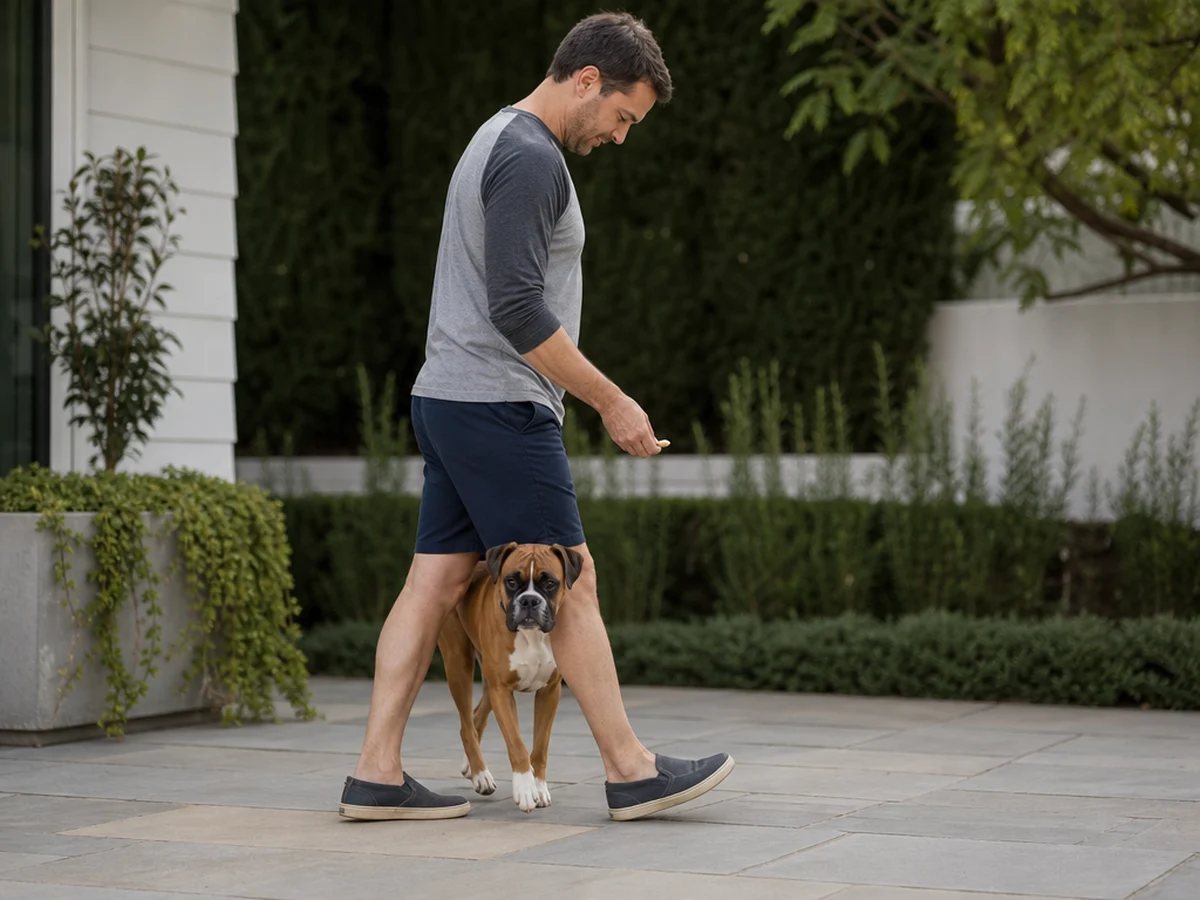
With the room ready, the weave starts far smaller than a figure eight. You will teach it in three short stages, each with its own finish line, because every stage is the base for the next and skipping ahead is how a weave falls apart.
Luring Through the Middle
This stage asks for one thing, a calm walk through the gap between your feet. Here is how the first passes go:
- Stand with your feet apart, your Boxer facing you, and a treat in your right hand held behind your right leg.
- Bend your knees slightly and draw the treat back through the gap at nose height, so your dog follows it between your legs.
- Say your marker word, or click, as your dog's shoulders pass your feet, then give the treat from behind you.
- Let your dog turn and come back to face you, then reset your stance for the next pass.
Repeat these passes until your Boxer glides through without stopping to study the gap. If they leap at your hand, lower the treat and slow down until walking is the faster way to reach it. If they stall at the entrance, widen your stance and pay the very first step toward the gap. A dog still racing around from a burst of speed will not care much about a slow hand, so let that finish first, as our Boxer zoomies guide explains.
Going Around the First Leg
Once the middle pass is easy, give the lure a longer path. Draw the treat through the gap and then around the outside of your right leg, until your Boxer is back in front of you and facing you again. Keep the treat at nose height the whole way, and you can let your dog nibble at it as they travel so they stay with your hand.
Pay when your dog is back in front, since that return is the part of the loop you want them to repeat. If they cut the corner and skip the leg, hold the treat closer to your knee and slow down. If they back out of the gap halfway, shorten the loop and pay earlier for a few passes before you stretch it again.
Teaching the Second Leg
When the first side is confident, switch hands and repeat every step on the other side, with the treat riding behind your left leg and the loop running around the outside of it. The switch matters because your dog reads your hand more than your leg, and the new hand draws a new path.
Expect the second side to look like a brand new trick for a few passes, with wide turns and extra hesitation, and pay generously anyway. Boxers are clever and can get bored with repetition, so end each practice while your dog is still keen, after a handful of clean loops rather than a long drill.
Turning Two Loops Into a Weave on Cue
Both legs now work on their own, so the next job is stitching them together and slowly taking the treat out of your hand. Each change below removes one thing your dog has been relying on, which is why they come in this order.
Building a Boxer Figure 8 Through Your Legs
A figure eight is just the two loops back to back, and you build it by delaying the treat one loop at a time. Start by paying after each loop, then work toward this sequence:
- Lure through the gap and around your right leg, as before.
- Keep the treat moving back through the gap and around your left leg without pausing.
- Stop with your Boxer facing you, then mark and pay once the full figure is finished.
When this looks smooth, quicken your hand a little at a time. If your dog speeds up and the loops go wide, slow the hand again and pay the tighter pass, because a Boxer's enthusiasm tends to turn extra speed into sloppy circles.
Swapping the Treat for an Empty Hand
Trace the same figure eight with your hand empty and pay from your other hand once your dog finishes. Your Boxer already knows the route, so the hand is now a signal rather than bait, and the treat arrives as pay instead of as a lure.
When that holds, shrink the movement into a pointing hand, then make it smaller and subtler with each pass. If your dog starts to hesitate, bend your knees more deeply, because the exaggerated bend can prompt a dog to walk through.
Adding the Word Weave
Say weave only once your Boxer follows the empty hand through a full figure eight. Speak the word just before your hand moves, so it predicts the path, and pay at the finish. After enough repetitions, your knee bend often becomes part of the signal on its own, and the hand can shrink further.
Weaving While You Walk
A standing weave is only half the trick, and the walking version builds on it. It begins with large, slow steps while you cue, with the treat lure back in your hand to build your dog's confidence. As your dog gains experience, you can phase out the lure and walk faster with smaller steps, as laid out in the AKC's leg weave steps.
Walking is where a Boxer's enthusiasm returns, so if your dog speeds up and clips your ankles, go back to slow steps and pay the unhurried pass. A calm walking weave is worth waiting for.
When Your Boxer Stalls Mid-Weave
Most stalls come down to one question from your dog: what exactly pays here? The answers below settle it by changing where the treat arrives and what your hands do.
Why does my Boxer sit in the gap?
A sit between your feet is usually the last thing that earned a treat, offered hopefully. In our experience, a clever Boxer tries it again and again until it stops paying. Deliver the treat just past your leg so your dog has to keep moving to collect, and pay only for steps, never for the pause.
Can I nudge my Boxer's hips along?
Hands on a dog's body add pressure without adding information, and the lure already shows the path. Keep your hands on the treat and let the nose lead the hips. If the back end seems to get stuck, shorten the loop and pay the front half for a few passes before asking for the full circle.
What if the loops get wide and sloppy?
Wide loops mean your hand is traveling too far from your leg or moving too fast. Hold the treat closer to your knee, slow your hand and pay the tighter pass. If the circles stay wide, shorten the session and pay single loops for a few passes before you link them again.
Giving Both Sides of the Weave Equal Time
A finished weave looks even, with the same speed and distance around the left leg as around the right. If your Boxer favors one direction, that side will tempt you to repeat it, because the neat loops come quicker and the treats come easier.
Give the harder side its share. Spend extra passes on it in each practice, pay both sides the same, and keep your stance and hand speed identical on the left and the right. A figure eight is only as good as its weaker half, and the even one holds up when you add the word and the walking steps.
A trick is the playful end of training, and the whole of what your Boxer needs to learn is in our e-book, laid out in full but never hard to follow, and sent without charge once you join through this page.
 Exercise and jobsHow to Teach a Boxer to Jump Over Obstacles
 Training basicsAre Boxers Easy to Train? Smart or Stubborn
 Training basicsHow to Choose a Boxer Trainer
