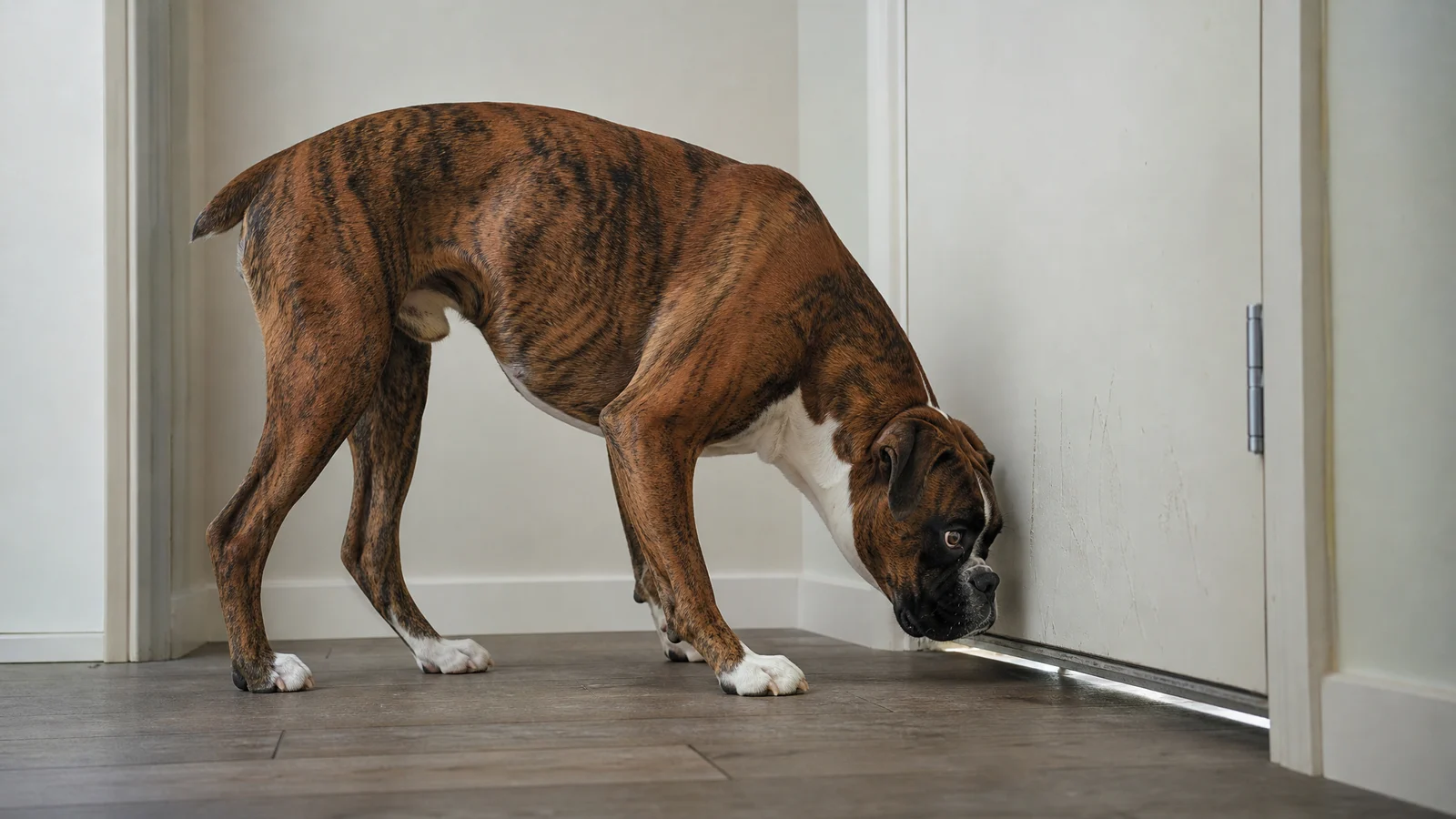
 Boxer
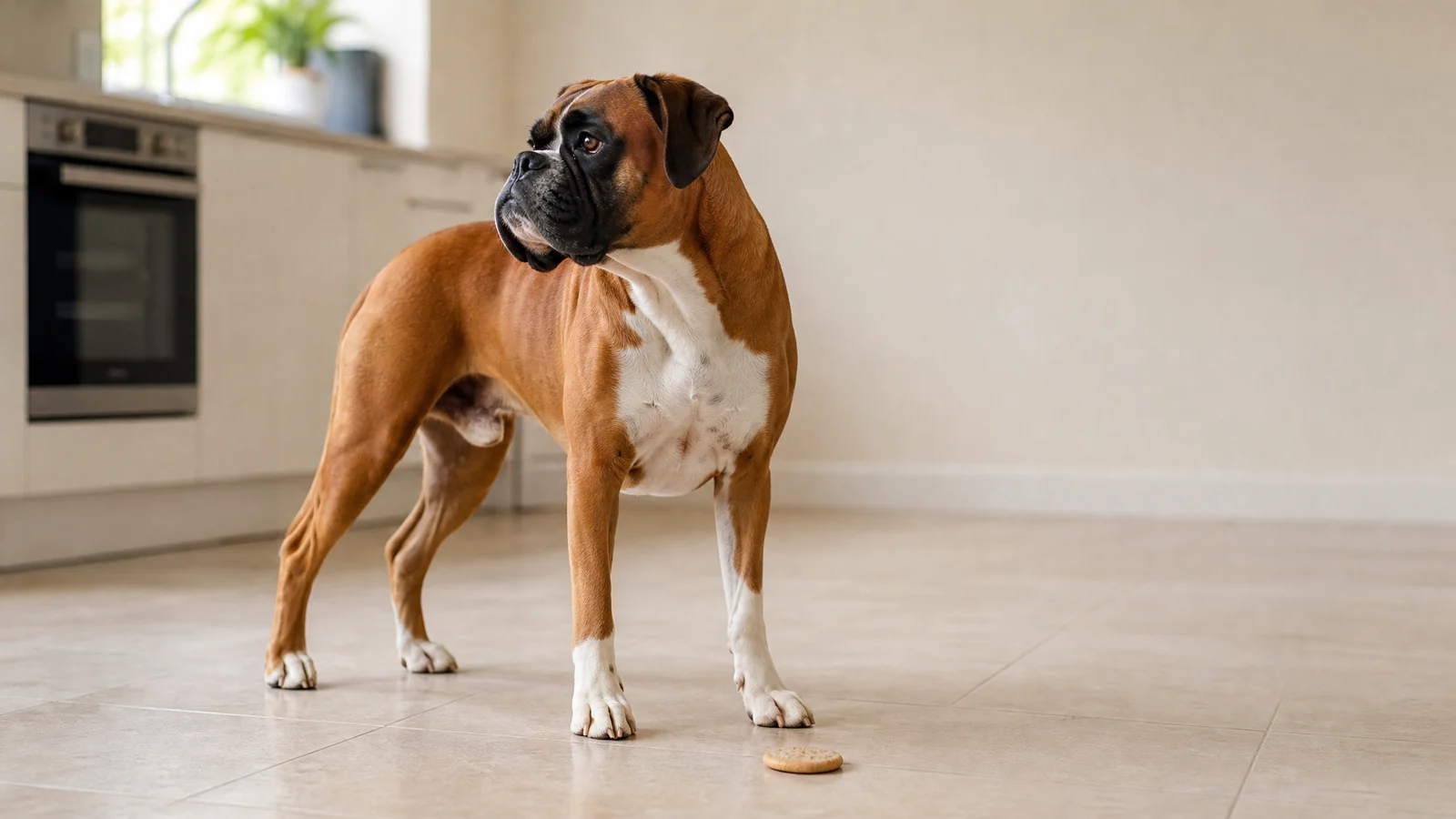
Leave it has to land in the moment before your Boxer takes something, and with a quick, playful dog that moment is short. A cue practiced only on the couch will not hold it open, which is why we teach this one as a trade your dog wants to win, in small stages, long before the real thing turns up.
The idea fits in one sentence: your Boxer turns away from something they want and gets something better for it. Everything after that is about keeping the deal clear and worth their while.
Below, you'll find why the deal works for a bright dog who bores easily, three stages from a covered treat to ordinary household items, how to carry the cue onto walks, and answers to the snags that stall practice.
The Deal Behind a Boxer's Leave It
That deal is the whole lesson. Leave it asks your Boxer to stop short of something they have not taken yet, and what keeps them stopping is the payoff: a better treat, or a quick game, in place of the thing they walked away from. A cue that only meant "no" would give your dog nothing to work toward, and Boxers are bright, independent, quick problem solvers who will go looking for a better offer.
That same mind bores quickly when a drill repeats itself, and it comes with plenty of energy and play, so the lesson should feel like a short game with a fast payoff instead of an exam. Keep each round brief, change the item and the reward from time to time, and stop while your dog is still interested.
The stakes are practical. Dogs are curious about everything on the ground, and teaching leave it can prevent them from picking up harmful objects, like discarded food or trash, so the cue earns its place on ordinary neighborhood walks as well as in the kitchen. That is why the stages ahead start easy and finish with the kind of everyday items a real walk serves up.
Teaching Boxer Leave It in Three Stages
A deal this simple still has to be built in order, so the lesson climbs from a covered treat to loose items on the floor. We follow the sequence in Best Friends' leave-it lesson, and the gradual climb matters: this cue can keep a dog away from toxic foods and chemicals, broken glass or even another animal, and a response that only works on easy items protects them from none of that.
A Covered Treat Under Your Hand
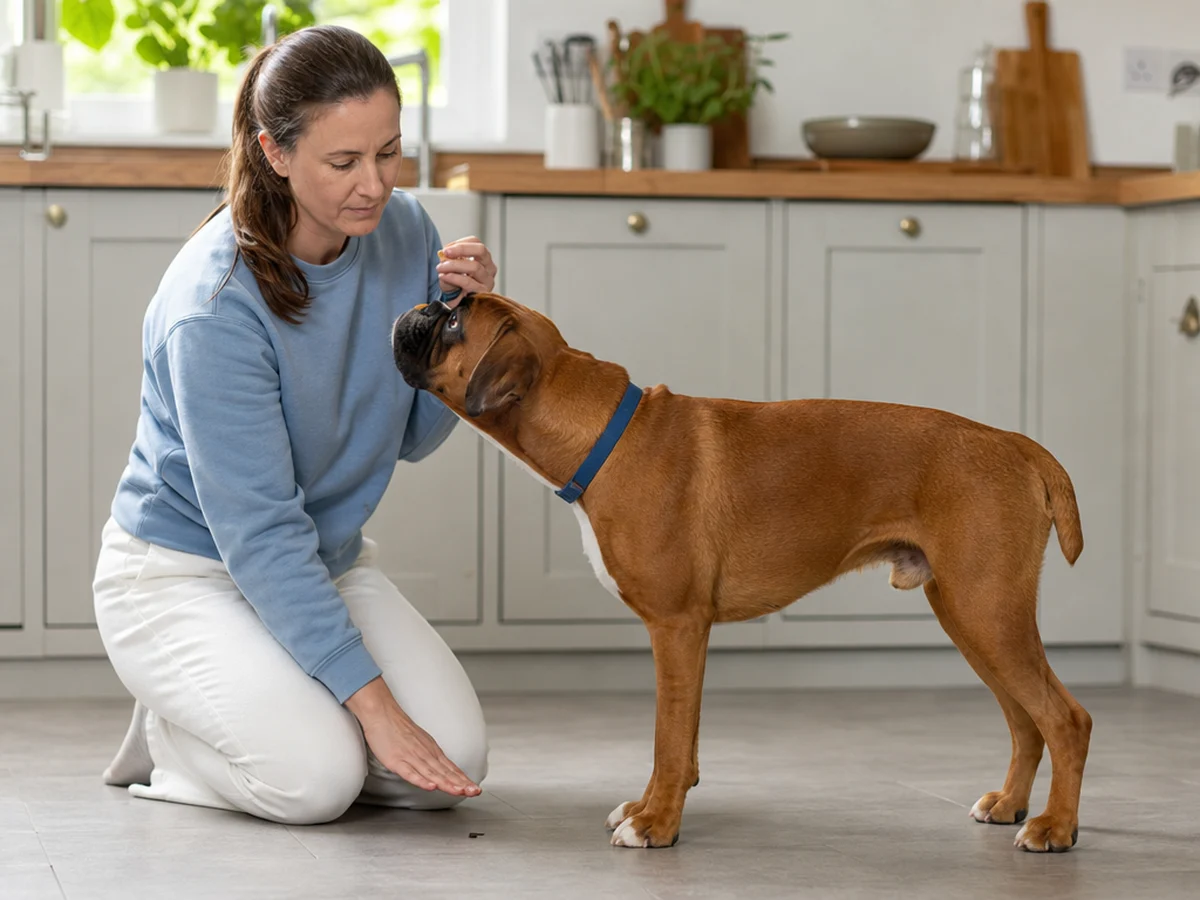
You need two kinds of treats for this stage, one your Boxer likes and one they love. Put the plainer treat on a flat surface under your hand and let your dog sniff the hand. Then work through the same few steps each time:
- Say "leave it" once and wait while your Boxer sniffs your covered hand.
- The moment the sniffing stops, mark it with a quick "yes", or with a click if you train with a clicker.
- Pay right away with the better treat from your free hand, then reset and go again.
Repeat until your Boxer backs off the hand as soon as they hear the cue. If your dog bounces or paws at your hand instead, hold it still and keep quiet. The wait is your Boxer's to end, and a springy dog learns fast that stillness is what pays.
A Leashed Toss Just Out of Reach
Once the cue works on a covered hand, clip on the leash and toss a plainer treat where your dog cannot reach it. Wait for your Boxer to stop sniffing and pulling toward it, mark that moment, and pay with the better treat from your hand rather than from the floor. Practice this several times, and your dog should stop pulling at the cue. The leash keeps the treat out of reach, so you never have to block it with your body, and that keeps the whole exercise calm.
From Treats to Dull Household Items
The cue only becomes useful when it works on more than food, so repeat the exercise with five different items your Boxer finds fairly boring. Move up to slightly more exciting items only after those are easy, and never jump to the things your dog would grab at once. If a tissue or a piece of plastic would instantly attract your Boxer, it does not belong at this stage.
Choose each new item with your goal in mind: whenever you say leave it, you want to be confident your dog will actually leave whatever it is. If your Boxer grabs something, the step was too big, so go back to a duller item and work up more gradually.
Taking Leave It Out Into the World
With dull household items working, the next test is everything outside your practice spot. Change the reward on purpose: a quick squeak of a favorite toy and a moment of play can pay as well as a treat, which suits a playful Boxer. Keep it a game your dog wants to repeat, and give a break the moment attention drifts.
Once leave it is solid at home, add new places and more distractions gradually. Walks are the natural next step, so pair this lesson with our Boxer leash training guide. If the things that tempt your dog are mostly around the house, our Boxer chewing guide covers that side.
Leave it covers what your dog has not taken yet. If your Boxer already has something in their mouth, the job changes: teach a separate give cue by pairing the giving up with a treat, and always offer a trade when you need to take something away.
Sticking Points in Leave It Practice
Practice rarely runs in a straight line, even with a dog as quick as a Boxer. These three snags are worth sorting out before they turn into habits.
When is it time for a harder item?
When your Boxer turns away right after the cue and does it smoothly several times in a row at the current level, you can move up a notch. If they grab instead, you moved too fast, so step back to a duller item and build up again. The goal is a dog you are confident will leave whatever you ask.
What if my Boxer bounces at my hand?
Boxers are springy dogs, so some bounce is normal at first. Keep your hand still, stay quiet and wait, then mark and pay the moment the bouncing and sniffing stop. Nothing your dog does with their paws earns the treat, and that is the whole point.
Can leave it help around other animals?
It can be part of the plan, but it is the last thing to build toward. Another animal is a far bigger temptation than any practice treat, so work through the stages and keep your dog on the leash until the cue is reliable on much easier items. A reward-based trainer can help you plan the gradual climb.
Keeping Leave It a Game Your Boxer Wins
Under all of these stages sits a serious purpose, because a quick response to leave it can matter a great deal for a dog who gets into things. The method only works, though, while it still feels like a game to your Boxer, and a playful, high-energy dog is easy to keep in that mood: a fast payoff, a squeaking toy, a round that ends before interest fades. Let your dog win most of the time, and the serious moment finds a dog who is used to winning.
Keep up regular visits with your veterinarian, and call right away if your Boxer swallows anything that might be harmful. A dog this lively has plenty more to learn, and you can get all of it in our Boxer e-book, offered to readers at no cost and kept clear and complete from its first page to its last.
 Training basicsClicker Training a Boxer
 Training basicsHow to Teach a Boxer to Come When Called
 BehaviorHow to Fix Boxer Separation Anxiety
