 Boxer
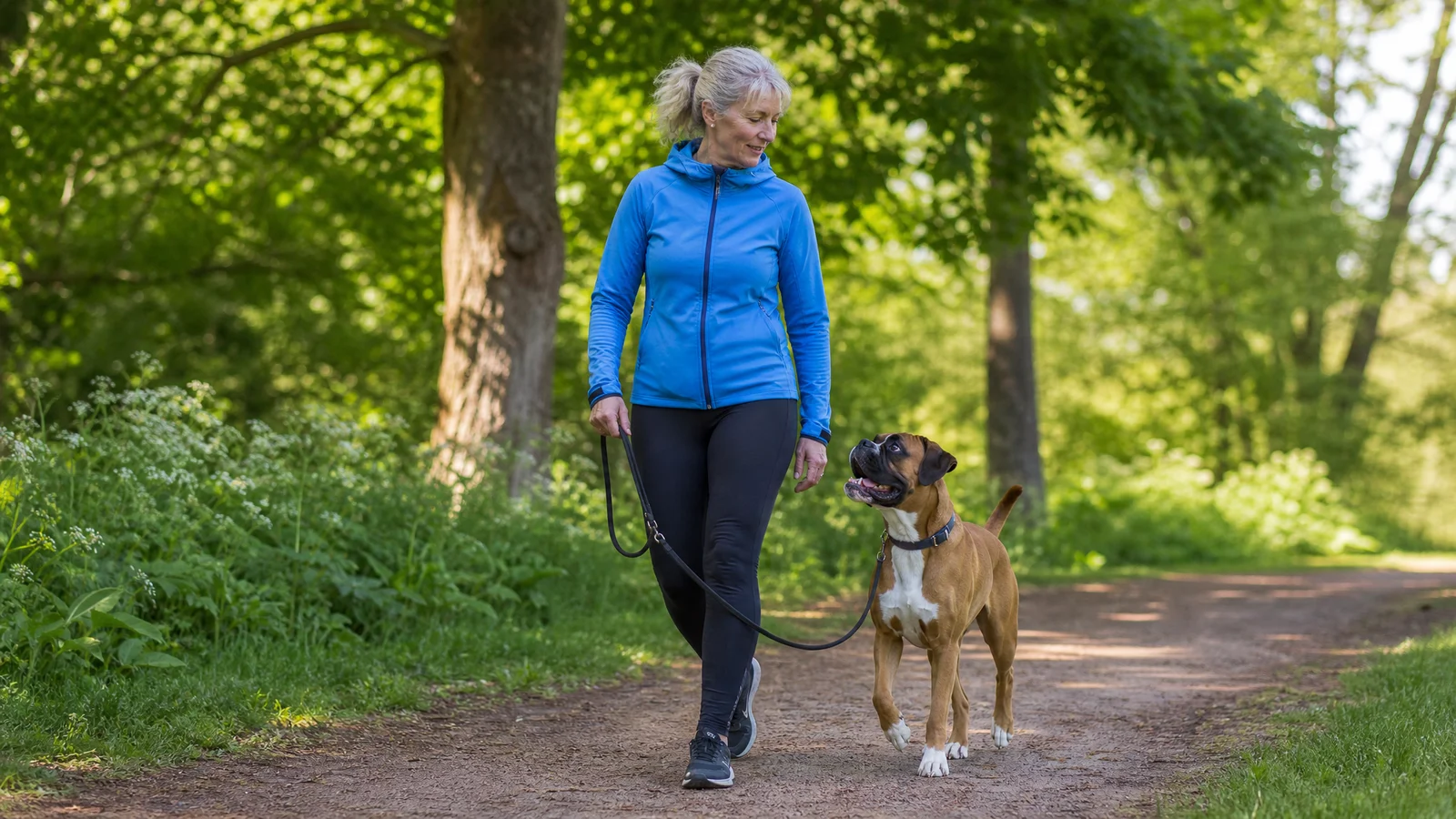
A well-trained Boxer is a joy to share a home with: affectionate, playful and quick to learn. Getting there takes more of you than that sweet face suggests.
Most households can learn to train a Boxer well. The real question is whether yours has room for what this dog needs: short, varied lessons, steady rules about bounce and greetings, company through the day, an outlet for plenty of energy, and patience that lasts for years. None of that is exotic, but all of it repeats, and the repeating decides whether a Boxer ends up easy to live with.
This page sorts that work into its separate jobs. You can hold each one up against your own household and decide with your eyes open.
Boxer Training Runs on Variety, Not Repetition
The first job surprises people most, because it changes how every lesson gets taught: the usual drill of the same cue, the same spot and the same treat does not suit this breed. A Boxer learns quickly and likes working things out, which is a gift until a lesson turns into the same thing over and over. Repetition is where a Boxer can lose interest, and a Boxer who loses interest rarely sits there politely. They start offering ideas of their own.
That is why the owner's habits matter as much as the dog's. If you enjoy inventing small games, changing the rules before your dog gets bored and ending a lesson while they still want more, a Boxer will reward you quickly. If you want a dog who runs the same routine every evening without complaint, this breed will test your patience before you test theirs.
Their independence is the other half of the picture. A Boxer with a mind of their own is not being stubborn for sport, because they are weighing your request against other ideas. The answer is a reward worth choosing and cues that mean the same thing every time, and then that cleverness starts working for you.
What Variety Looks Like in Practice
Variety does not mean chaos, and it does not mean a new skill every day. It means keeping the same reward-based method while you change one thing from one session to the next:
- Change the reward. Rotate small treats, a favorite toy, a quick game and warm praise, so the payoff stays interesting and your dog keeps wondering what comes next.
- Shift the setting: Practice the same cue in the kitchen, the hallway and the yard, because a Boxer who sits perfectly in one room has not yet learned that sit works everywhere.
- Reorder the Steps: Mix up the order of your cues and slip a game in between them, so the session never settles into a routine your dog can drift through.
- Stop while your Boxer still wants more, because a short lesson that ends on a success leaves them eager for the next one.
When variety is working, you will see a Boxer who stays bright-eyed through a lesson and comes back to it willingly. When it is not, the signs are easy to read: wandering off, bouncing at you or inventing a trick nobody asked for. Take that as a sign to shorten and change the session, not to repeat it harder.
Training a Strong, Bouncy Dog Around Children and Guests
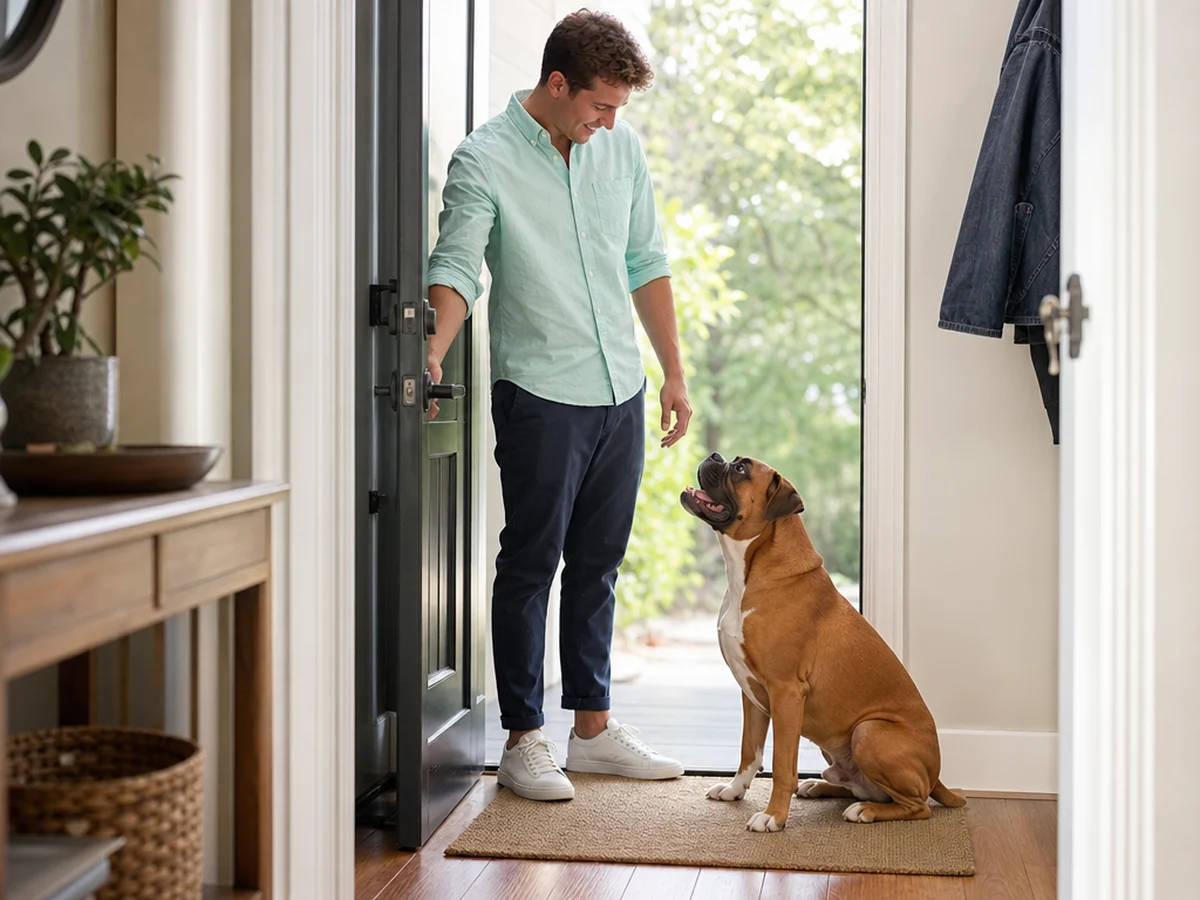
A quick mind is only half of a Boxer, and the other half is a strong, springy body that shows up the moment someone walks through the door. The leaping goes back to the breed's history as a chaser of wild game, so expect a young Boxer to launch at greetings again and again until four paws on the floor is a habit they have been paid for.
That energy deserves a plain word about who it suits. A dog this powerful, active and playful may not be the best choice for a very frail adult, nor for a small child who could be overwhelmed by a well-meaning but bouncy puppy. If your home includes either, the training plan has to include management from the first day, such as gates and a leash at the door, and not only lessons.
Management is not a failure of training. A gate, a leash looped over your wrist at the door and a toy ready for the moment a guest walks in all give your dog fewer chances to practice the wrong habit while the right one is still being built.
Greeting Rules Everyone Can Follow
Greetings are where bounce turns into a training project. Choose one rule for the whole household, such as attention only when four paws are on the floor, and pay your dog at the exact moment they settle, with a treat, a pat or a toss of a toy. A Boxer who gets nothing for jumping and something for standing soon works out which one pays.
Children need their own version of the rule, because a child's excited squeal can set off the very bounce you are trying to retire. Keep young children and a bouncy Boxer supervised, let the child drop a treat on the floor instead of waving a hand, and have the dog meet visitors on a leash at first. Our Boxer socialization guide covers meeting kids, dogs and strangers in more detail.
Company and Alone Time Shape a Boxer's Day
Bounce is what visitors notice, but closeness is what you live with every day. Boxers are affectionate dogs who are happiest with their people, and that closeness is lovely until the house empties out for the day.
Before you commit, it is worth working through the AVMA's guide to selecting a pet dog, which puts questions to you about how long your work day is and who will care for the dog during planned or emergency absences. Any dog left alone all day without an outlet for exercise, exploring and company can become bored and potentially destructive, and a dog as people-centered as a Boxer has plenty of company to miss.
So the honest question is less whether you love dogs and more whether every stretch of the day has a named person behind it, along with a plan for the stretches nobody can cover.
Teaching Alone Time on Purpose
Alone time is a skill, and a Boxer learns it the way they learn anything else, in small steps that pay. Start with a short absence while your dog settles on a mat with a chew, come back before they get worried and pay calm behavior with a quiet treat, then lengthen the gap slowly as they stay relaxed, because each calm return teaches that being alone ends well.
Vary the practice too, with a few minutes in another room, a quick trip to the mailbox and the occasional longer outing, so leaving never becomes one predictable event. A comfortable crate can help, and our Boxer alone-time guide walks through crate training and the early signs of separation trouble.
Teaching a Watchful Dog to Meet the World
The same attachment that makes a Boxer dislike being alone also makes them watchful about anyone new. Many Boxers are wary of strangers until a friendly approach tells them there is nothing to worry about, and other dogs can be harder still.
That is why early socialization and a good puppy class do so much for this breed: they give a young Boxer calm practice at meeting new people and dogs while the bounce is still small, and they turn exuberance into good manners before it hardens into habit. Introductions that stay short, pleasant and well paid build a dog who expects new things to go well.
If you already share your home with a dog, plan the introduction rather than hoping for the best, with a calm, spacious first meeting and rewards for relaxed behavior from both dogs. A second dog of the same sex deserves the most careful thought, since Boxers are not always tolerant of them.
Rewarding Calm After the Alert
A Boxer often takes the watchdog job seriously, and a bark at the window or a stiff stare at the gate is the breed doing what it has always done. Training does not try to erase the alert, and the goal is calm, never a bigger reaction. It teaches what comes after: notice the look, say your dog's name or a settle cue, and pay the moment they turn away from the window and relax.
Reward the settle, not the silence. Over time the alert becomes a short announcement followed by a dog who looks to you and relaxes, which is what a household needs from a watchful breed. Our Boxer guard dog guide goes further into what the instinct does and does not mean.
Daily Energy Is Part of the Training Plan
Calm after an alert comes more easily to a dog whose energy has already gone somewhere. The profile on the American Boxer Club's site describes Boxers as very active, strong, quick, busy dogs who need plenty of exercise, and it gives a life expectancy of 10-12 years, so the daily outlet is a long commitment rather than a puppy phase.
Exercise alone will not do the whole job, because a Boxer with tired legs can still patrol the kitchen looking for a project. Brain work counts as training time: a scent game, a new trick, a puzzle feeder or a short lesson in a new room spends mental energy the way a run spends physical energy, and a Boxer needs both.
Structured outlets can help too. Many Boxers enjoy having a job, and our Boxer sports and jobs guide shows how to match activities to the dog in front of you. None of it needs to look like a program. What it needs is regularity, since a dog whose day reliably includes movement, thinking and company has less reason to invent projects of their own.
Testing the Training Load Against Your Own Evenings
Put those jobs next to an ordinary evening in your own home. A Boxer does not need a training marathon, but they do need these things to happen reliably:
- A short, varied training session, with an occasional change of room or reward so the lessons stay interesting.
- A greeting rule that every person in the house follows, including children and visitors.
- A daily outlet for energy and a daily chance to use their mind, both of which count as training time.
- Company through the day, or a clear plan for the hours nobody is home, with alone-time practice built in.
- A calm routine for the moments your dog alerts at the window, the door or the gate.
Read that list against a real evening, not an ideal one. A line you cannot cover is a gap to plan around, such as a walker for the long stretches or a household rule written on the refrigerator, and it is far better to find it before the dog arrives than after.
In a shared home, decide who handles which job before the dog arrives. A Boxer reads the whole household, so if one person insists on four paws down and another laughs at a jump, your dog learns that the rule depends on the audience. One greeting rule, one set of cue words and one reward routine make every lesson easier to hold.
Getting Help and Keeping Your Vet in the Loop
Some households will want help beyond a page like this, and that is sensible. Look for a trainer who uses reward-based methods and who coaches you as well as the dog, because the person on the other end of the leash is half of every lesson. Our Boxer training guide covers the methods in depth, and the Boxer puppy timeline shows what to expect at each age.
Whatever you decide, plan for regular vet visits from the start, and mention any change in your Boxer's energy or behavior, because a dog who suddenly acts differently deserves a check before anyone assumes it is a training problem.
A Boxer Learns Whether or Not You Plan Lessons
Once the list is on paper, the larger point behind it is easy to state: every day with a Boxer is training, whether or not it looks like it. The greeting at the door, the pause before a walk, the minutes on the sofa and the barking at the window all teach something, and a quick learner takes the lesson on board fast.
So the decision in front of you is smaller and clearer than it first looks. It is not whether a Boxer can be trained, because they can, and it is not whether you can be a perfect trainer, because nobody is. It is whether you want to be the one choosing what they learn, day after day, for all the years the breed lives with you.
Should a Boxer end up in your home, our e-book on Boxer training takes every part of their schooling in turn, with real depth and nothing hard to follow, and a copy costs you nothing.
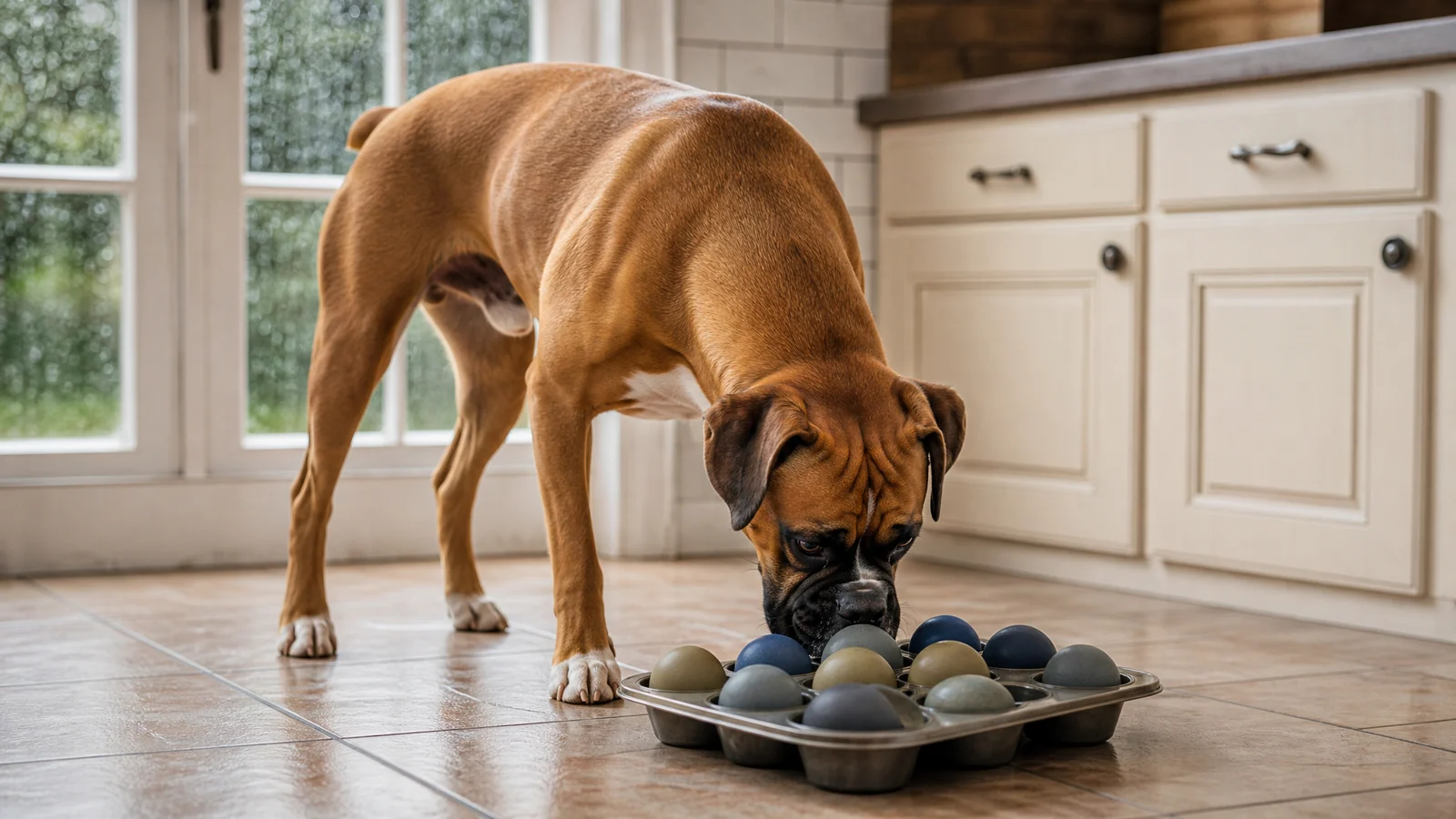 Exercise and jobsIndoor Activities and Brain Games for a Boxer
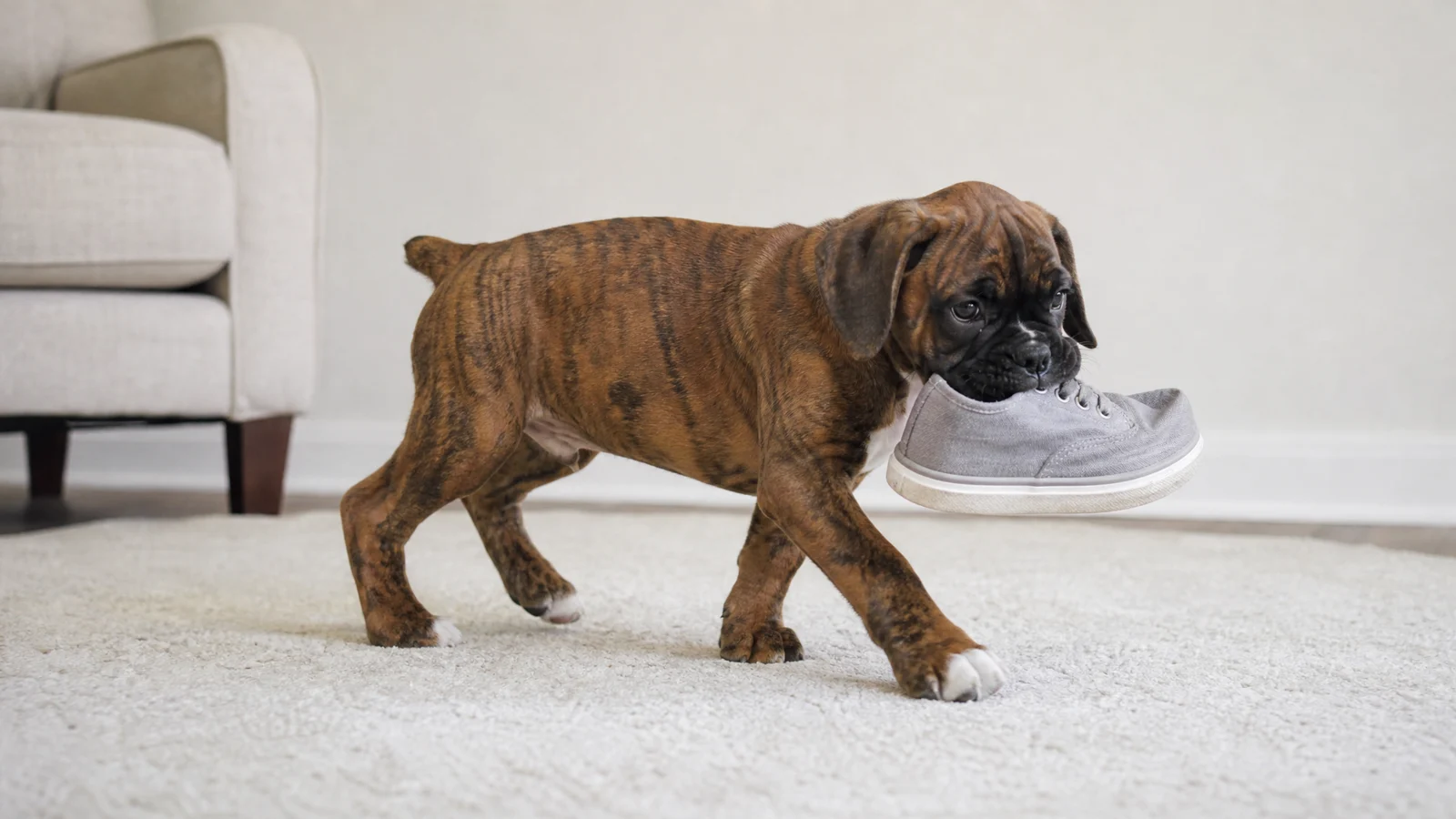 Puppy trainingBoxer Puppy: What to Expect and How to Start Training
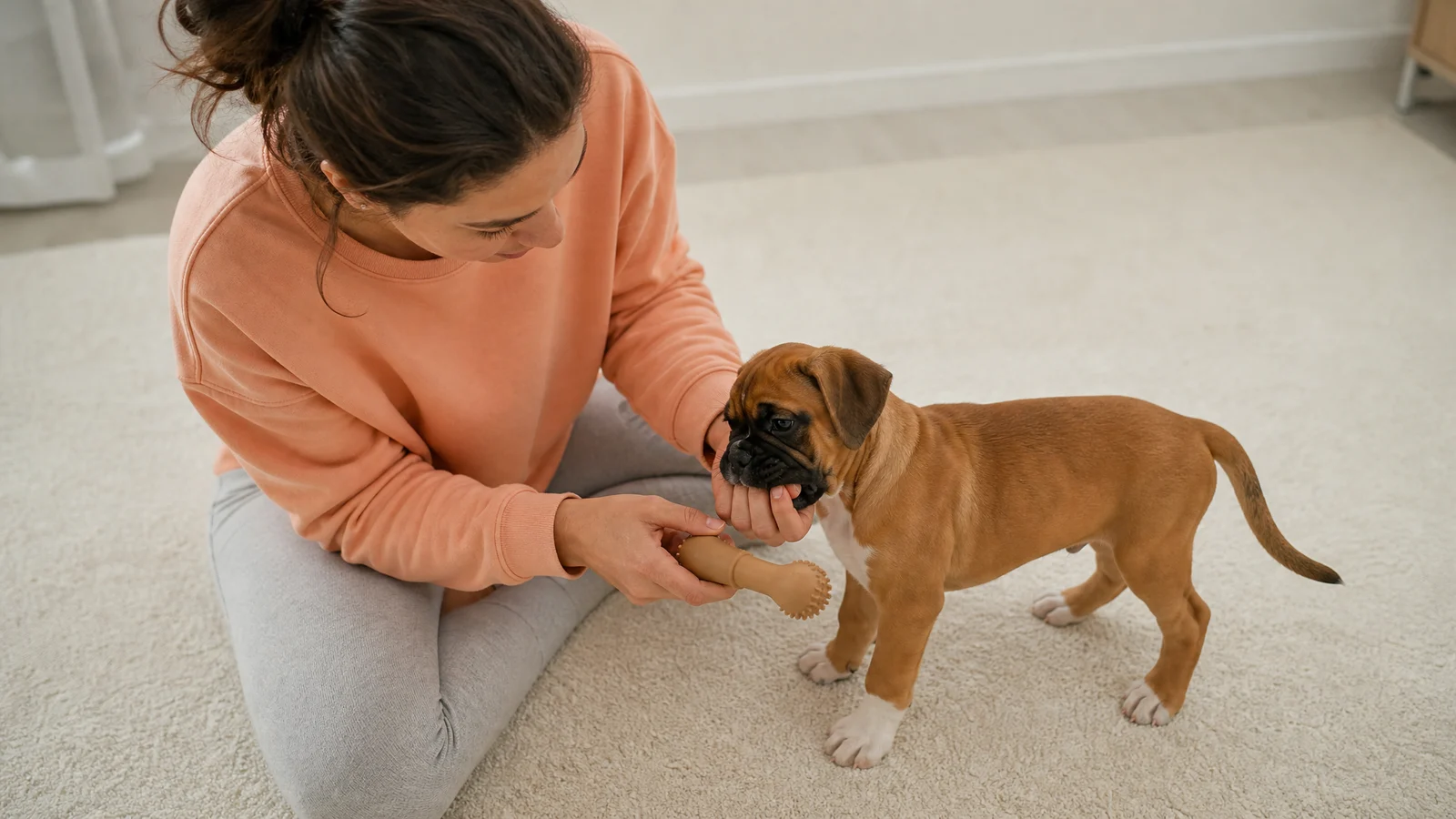 Puppy trainingBoxer Puppy at 3 to 4 Months: Teething and Mouthing
