 Boxer
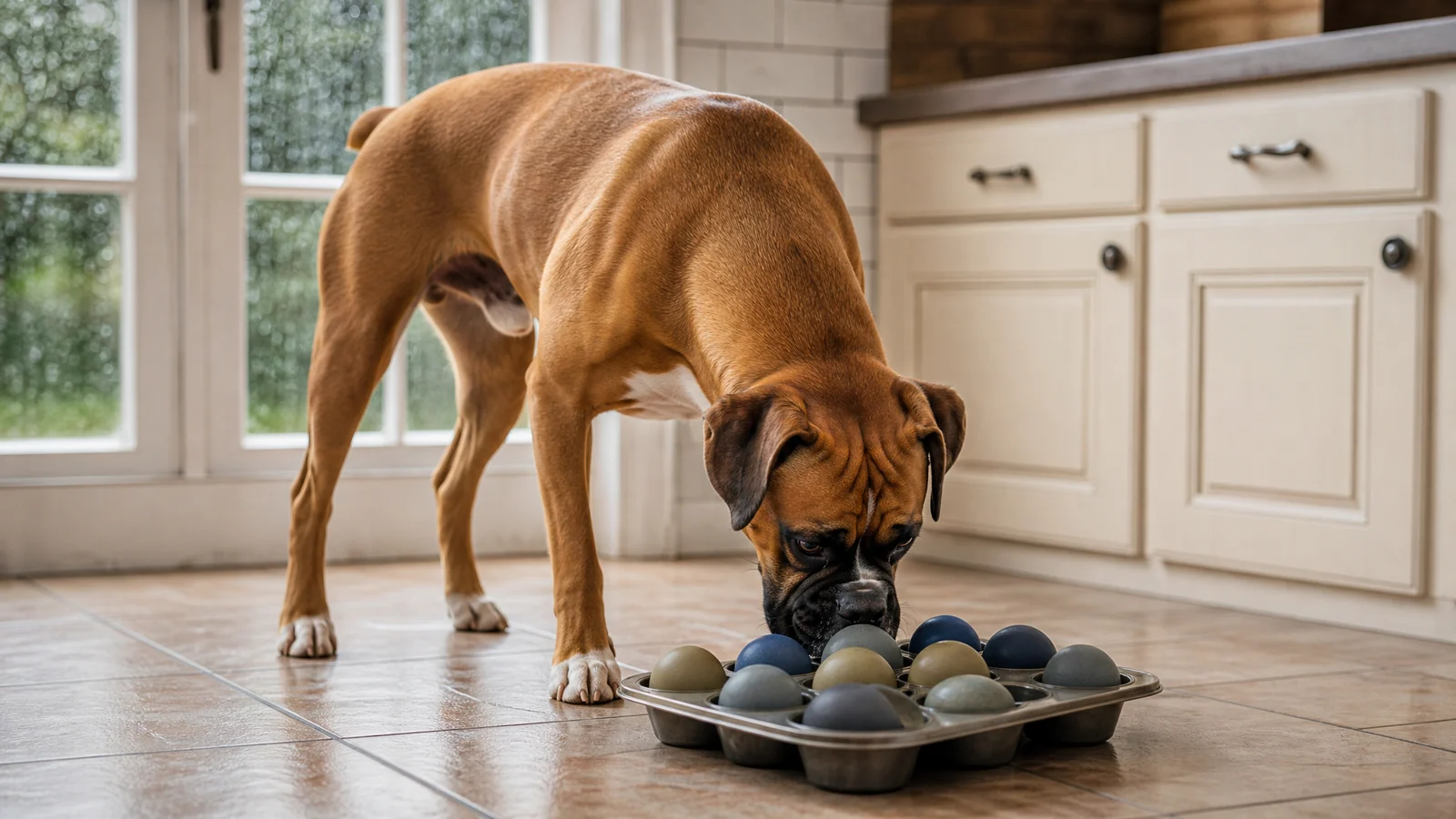
A Boxer who is never handed a puzzle will go looking for one: the sofa cushions, the trash can and whatever is left on the coffee table. That is not spite.
Boxers are quick problem solvers who can get bored with repetition, and a dog with energy to spare and nothing to solve will invent a project. The better answer is to hand over projects of your own, and the best ones are cheap, quiet and playable in a hallway. This guide teaches find it, the scent game that every other puzzle here builds on, then adds box and muffin tin searches and ways to keep them fresh.
Why Indoor Brain Games Suit a Problem-Solving Boxer
The reason a puzzle beats a plain toy for a Boxer is the same reason the cushions suffer without one. For a clever, active breed, boredom does not stay quiet, and the useful move is to give it a better place to go. We reach for scent games first with Boxers because a nose game asks for thinking instead of speed, which suits a powerful dog who would otherwise launch around the living room. Every dog also arrives with the skill already built in.
Dogs who don't receive stimulation tend to find ways to enrich themselves, resulting in unwanted behaviors, and the ASPCA's DIY enrichment ideas describe sniffing as both stimulating and calming, which makes it the easiest kind of work to hand a dog indoors.
Setting Up a Safe Indoor Room for a Powerful Boxer
Before the first treat goes down, the room needs a few minutes of attention, because a strong dog in a hurry treats clutter as an obstacle course. Clear away anything a bouncing Boxer could knock over or slide on, such as low tables, cords, shoes and loose rugs.
Do your hiding while your dog is in another room or behind a closed door, so the first sight of the setup is the game itself. Before any box goes down, remove any tape or plastic labels, since a Boxer will tear into cardboard to reach the treats inside.
Stay in the room for every game that involves cardboard, toys or a food puzzle, and take away any scrap your dog starts to swallow instead of search for. Regular vet visits are the right place to mention anything odd about how your Boxer chews or eats, so bring it up at the next one.
Teaching a Boxer Find It in Four Stages of Scent Training
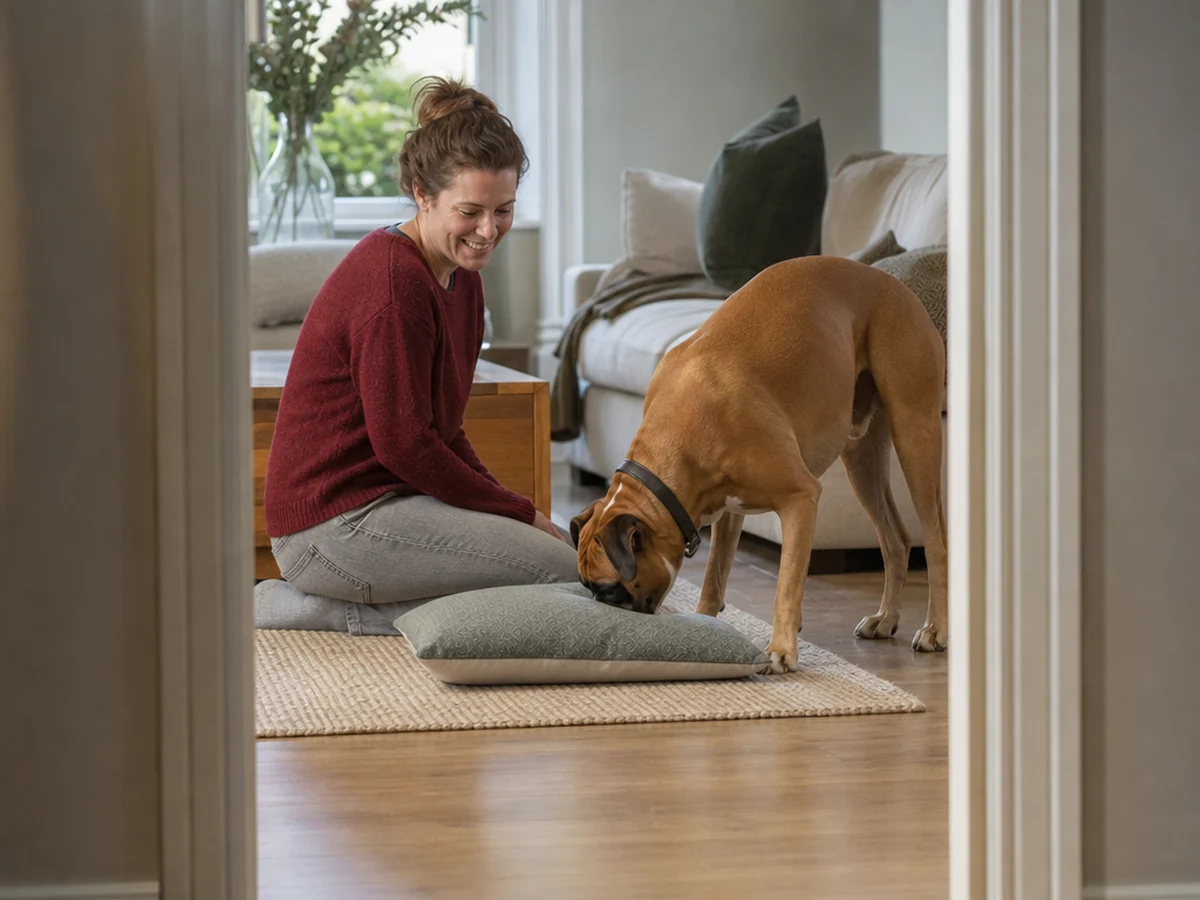
With the room ready, find it is the first game to teach, because every box and tin later in this guide is the same game with a harder hiding place. Give each stage its own short sitting, and move on only when your Boxer does the current one smoothly several times in a row.
Four Stages From Toss to Hidden Treat
Use tiny, smelly treats and hold them low and still, since an excited Boxer may jump at a hand held high. Praise as your dog eats each find, so the words and the treat arrive together.
- Toss and Name It: Show a treat, say "find it" in a bright voice, then toss it a step or two away onto bare floor where your Boxer sees it land. Move on when the words alone turn them toward the floor. If they watch you instead, toss closer.
- Put some distance in. Toss farther, then toss so the treat lands behind a chair leg or just around the corner of the sofa, so your Boxer follows their nose for a few steps instead of their eyes. If they give up halfway, shorten the toss.
- Hide the treat in the open while your Boxer waits in another room or with a helper facing away. Set out a few treats on the floor in obvious spots, say "find it" and let your dog in. Move on when they sweep the room without checking back with you. If they hover at the door, drop one treat just inside it.
- Tuck it out of sight: Now hide treats beside a table leg or behind an open door, and keep every hide at floor level, because a Boxer who leaps for a high hide is practicing the wrong game. If they stall, uncover half the treat so the smell does the persuading.
Change only the one thing each stage adds, so your Boxer can tell which part is new. The same level repeated for too long is what bores this breed, which is why the next two sections change the setup and leave the rules alone.
Indoor Box and Muffin Tin Games Once Find It Works
Once your Boxer swings toward the floor at the words, the same nose can take on containers, where the answer is hidden instead of merely out of view. Keep the boxes open and easy to get into at first, so the early rounds teach your dog that searching pays on its own.
For a box search, set out several empty cardboard boxes and bait at least half of them with smelly treats while your dog is in another room. Best Friends Animal Society's nose work guide follows with rounds of a minute or two, three to five rounds a sitting and at least six sittings before making the search harder, for example by closing the boxes loosely.
A muffin tin gives the same nose a different shape of problem. Drop a treat into a few cups, set a ball or small toy over every cup and let your Boxer nose them aside. Choose pieces too big to swallow, set the tin on a rug so it does not skate across the floor, and change which cups hold treats each time so the nose, not memory, does the work.
Mental Enrichment That Stays Fresh for a Boxer Who Bores Easily
Six sittings at one level sounds like a lot for a dog who bores of repetition. A different box, a different corner of the room and a different treat each time keep the level steady and the game new. Staying at one level for several sittings only works for a Boxer if everything around that level keeps changing. Three dials do the changing, and turning one at a time keeps your dog from getting lost:
- Where the treats go. Move them from open floor to beside a chair leg, then into a box lying on its side, and keep every hide at floor level so the game never becomes a leaping contest.
- What the treats are: Swap one smelly treat for another, or use a few pieces of your dog's regular meal, so the reward stays a small surprise even when the search is familiar.
- How many places there are can grow too, so add a second box or one more cup before you add anything fancier, because more places to check is a gentler step than a harder hiding spot.
A Boxer who wanders off mid-game often means the puzzle has gone stale or got too hard, so make the next round easier and end on a find. When the weather clears, the Boxer sports guide covers bigger outlets for the same busy mind.
A Boxer's Nose on the Floor and Four Paws Down
When the games are working, there is a sight you will start to recognize: a Boxer working a scent with their head down, their feet planted and the wiggle moved to the back end, which is the opposite of the launch this breed is famous for. Leaping is a lifelong habit for Boxers, and find it gives that restless interest a floor to land on.
If chewing is already how your Boxer solves boredom, our Boxer chewing guide covers that problem directly. These games work alongside it, giving the same busy mind a better project than the furniture.
Following a cue to a reward is how every other lesson works too, so our e-book carries that idea across all of your Boxer's training in a thorough, readable way, and a copy is waiting once you join from this page.
 Puppy trainingBoxer Puppy: What to Expect and How to Start Training
 Puppy trainingBoxer Puppy at 3 to 4 Months: Teething and Mouthing
 Puppy trainingBoxer Puppy at 4 to 6 Months: What Changes
