 Boxer
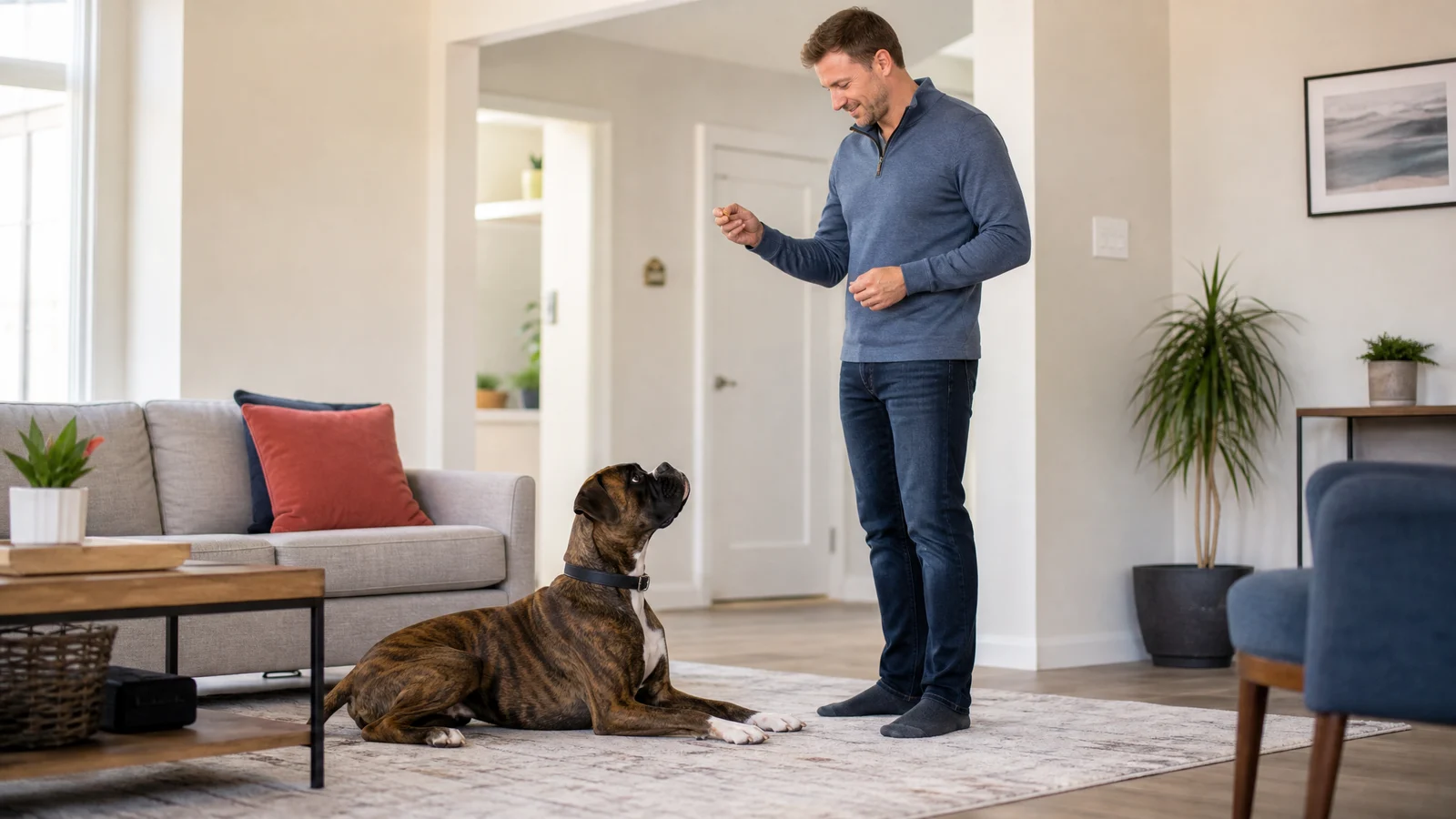
Some Boxers drop into a down the moment someone opens the door. Others bounce off the sofa, the guests and the walls, and never seem to hear the cue at all. The gap between them is mostly in how the cues were taught, not in the dog.
That matters for a breed this powerful and playful. A Boxer with no clear way to channel their exuberance will find their own, usually with all four paws off the floor. A Boxer who has learned the basics gives a lot back, because the AKC rates trainability at 4 of 5 and the dogs are quick to learn what pays.
Read on for the setup that keeps sessions productive, a lured sit, a down that holds, a stay built in small steps, a come worth running toward, and the work of carrying every cue into new places.
Gather Rewards and Pick a Training Spot
Training goes wrong early when the owner is fumbling for treats while a Boxer waits, bored and bouncing. Prepare the session before the dog arrives, and you will get more from every minute of it.
- Pick soft, bite-sized treats that go down in a single gulp, so the session never stalls while the dog chews.
- Pick a quiet room with few distractions and no other pets wandering through.
- Keep the treats in a pouch or pocket rather than in your hand, so the dog learns to watch you and not the bag.
- Pick a short marker word, with "yes" being a popular choice, and say it the moment the dog nails the behavior. Then hand over the treat.
- Stop while your Boxer is still keen and eager for another round, and keep each session brief.
Short matters more than people admit. The usual advice is to repeat a cue until it sticks, and for this breed that advice is shaky. Boxers are highly intelligent but can become bored with repetition, and they are excellent problem solvers with a mind of their own. A dog who has done ten identical sits will start inventing variations. Our verdict: vary the cue, the reward and the order, and quit early.
You are working with a willing student. The breed standard describes an energetic, intelligent expression, and that is the face you will see when a session is going well. Start puppy classes and socialization early, since channeling that energy is much easier before bad habits set. And keep up regular vet visits. A Boxer who suddenly resists sitting or lying down may be uncomfortable, so mention it at the next checkup.
Lure the First Boxer Sit
Sit is the best first cue because it is easy for the dog and useful for you. A lure, which is a treat guiding the dog's nose into position, gets the behavior without any pushing or pressure.
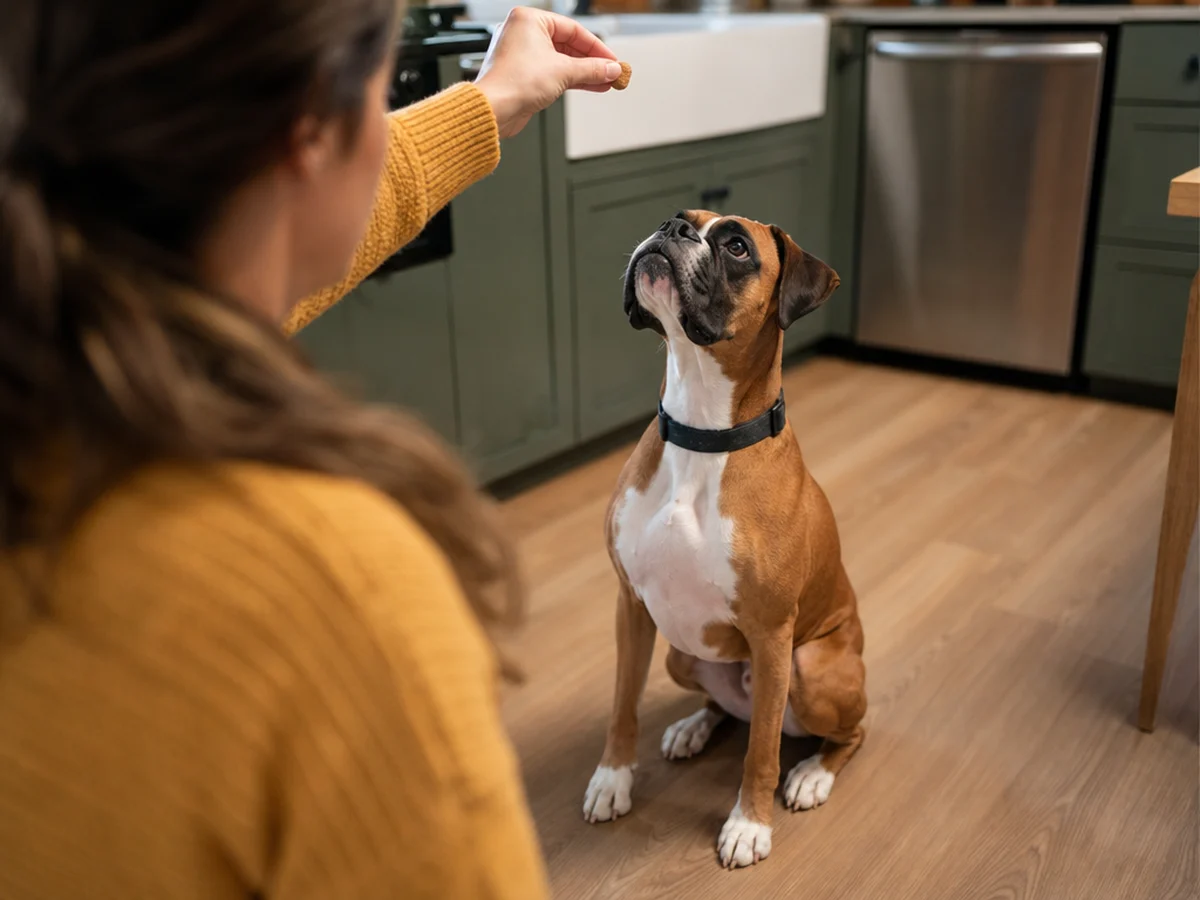
Luring the Sit
Work through these steps with the dog standing in front of you. Keep the first location quiet so the movement is easy to follow.
- Hold a treat at the dog's nose so they know it is there.
- Slowly move your hand up and slightly back over their head. Their nose follows and their rear end lowers.
- As soon as their rear touches the floor, mark it with your word and hand over the treat.
- Toss a second treat a step away to reset, so the dog stands up and you can repeat.
- Do a few repetitions, then play or take a break.
This follows a principle worth copying everywhere: decide what the finished behavior looks like, then break it into small steps and click and reward them one after another. If your Boxer jumps for the treat, keep your hand lower and closer to their nose.
Fading the Lure
Once the dog sits smoothly, keep the same hand motion but with nothing in it, and pay from the other hand or the pouch. Then shrink the motion toward a small signal. Only after the position is dependable do you add the word, said once just before the hand moves.
Resist repeating the word. Saying "sit, sit, sit" teaches the dog that the cue means a string of sounds, and that the real one is the third. Say it once, wait a moment, and help only if needed.
Why Does Down Matter More in Boxer Training?
Most dogs can skip polishing down and still live happily. A Boxer cannot. Because of the breed's heritage as a chaser of wild game, Boxers spend a good deal of time jumping and leaping about, and as young dogs they constantly need reminders to stay down. This is the cue that answers the door, the visitor, and the excited hello.
So treat down as the cue that carries the most weight. Sit is often just a brief pause before a Boxer springs up again. A down is harder to launch from, and it lowers the whole body's excitement.
Teaching the Down
Begin from a sit, since the dog is already partly settled. Hold a treat at their nose and draw it straight down between the front paws, then slowly out along the floor. When the elbows touch the ground, mark and reward right there on the floor.
If the dog lifts their rear to scoot after the treat, you moved too fast. Reward smaller bends first, like a lowered chest, and build up gradually. If the dog hesitates to lie down on a slick floor, try a rug or mat. When the motion is smooth, fade the lure the same way you did for sit, then add the word.
Holding the Down
Teaching the position is the easy half. The hard half is keeping it when something exciting happens. Pay for staying down, not just for getting there. Feed several treats in a row between the paws while the dog remains in place, and slow the delivery as they settle.
Then practice the real situation. In greeting practice with a helper, the dog may pop up out of the sit as the visitor walks closer. When that happens, the visitor turns away and leaves at once. Standing up loses the visitor, and staying down brings them back. Dogs learn that trade quickly when the visitor's attention is the reward.
Building Stay Training in Small Steps
Stay is really three skills disguised as one: time, distance and distraction. Ask for them one at a time, because raising two at once is the usual reason a Boxer breaks the position. The table shows what to change, and what to leave alone, at each stage.
| Stage | What you change | What stays easy |
|---|---|---|
| Duration | Add a few seconds before you mark and reward | You stay right beside the dog |
| Distance | Take a single step back, then return to pay | The time stays brief |
| Distraction | Add a dropped toy, a clap, or a person walking by | The time and distance go back to short |
| Release | Use a clear word such as "free" to end the stay | Everything else remains familiar |
Always return to the dog to deliver the treat while they hold the position. If you call them to you, the stay ends by their choice and the dog learns that breaking early is fine. A release word gives the end of the stay a definite shape.
When the dog gets up early, don't scold. Calmly put them back, shorten the demand, and reward success at the easier level. A Boxer who fails repeatedly is telling you the steps were too big.
How Do You Train a Reliable Come?
Come is the cue people most want and teach worst. The usual advice is to never call a dog for something unpleasant, which is sound as far as it goes. The part left out is that come must also beat everything else the dog could be doing. For a chasing breed, that is a big ask, so we aim for rewarding enough, not guaranteed.
Start indoors with no distractions. Say the word in a happy voice, step backward, and mark the moment the dog reaches you. Pay generously with a handful of treats or a quick game of tug. The best recalls are built from dozens of cheap, joyful repetitions.
Games That Build Eagerness
Boxers are playful, so use it. Have a partner hold the dog while you run away and call, then release them to race to you. Play hide and seek in the house, calling from a different room. Call the dog away from a mild distraction, and let them go back to it as a bonus reward.
Using a Long Line
Open space is where recall fails, so practice it safely. Attach a light long line to a harness and let it drag or hold the end. Call, reward, and release the dog back to sniffing and play. The line gives the dog freedom while stopping any rehearsal of ignoring you. Keep it on until the cue has held up across many places and temptations.
Generalizing Training in New Places
Dogs are poor at assuming a rule travels. A Boxer who sits perfectly in the kitchen may look at you blankly in the yard. That is not stubbornness. They haven't yet learned that the cue works there too. Boxers are moderately adaptable, so give them time.
Change One Thing at a Time
Move to a new room, the yard, the front step, then a quiet street. Each time, lower the demands. Ask for easy sits and rewards at a higher rate until the dog is fluent again, then raise the difficulty. Practice each cue in several positions as well, with you sitting, facing away, or across the room.
Add Distractions Last
Distractions come after the location is solid. Other dogs are a good example. Boxers do well with other dogs under supervision, and they are not always tolerant of the same sex, so start far enough away that the dog will still accept treats. If they cannot eat, you are too close. Back away and win there first.
Where Boxer Training Goes After the Core Cues
Once sit, down, stay and come hold up in everyday life, the next questions are usually about the situations where they get tested hardest. These guides pick up where this one leaves off.
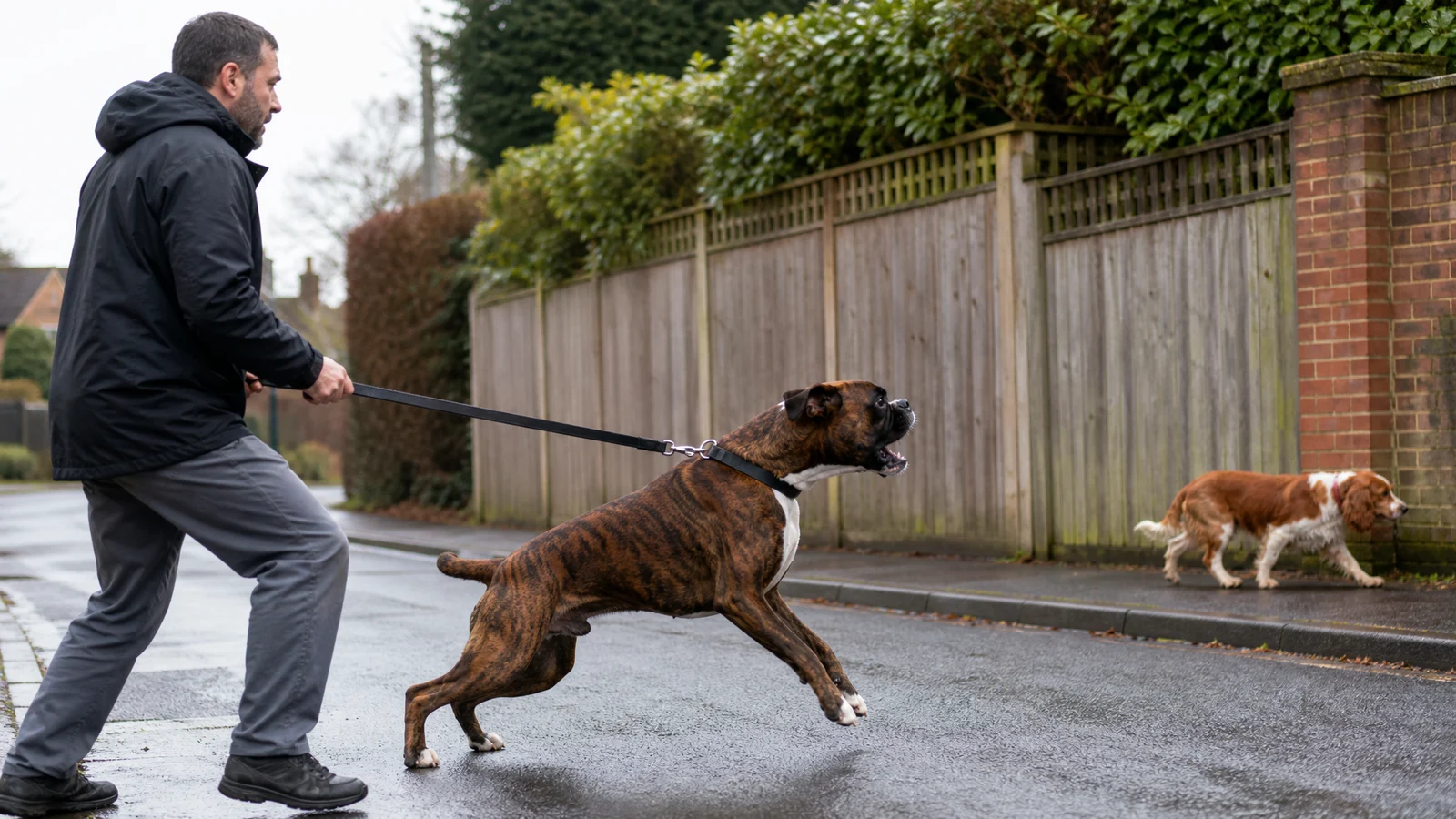
- Is the dog still hauling you down the sidewalk? Start with Boxer leash training for pulling and lunging.
- Does the dog fall apart when you leave? Read Boxer crate training and separation anxiety.
- Is a puppy at home with accidents on the floor? See potty training a Boxer puppy.
The thread through all of it is the Boxer's mix of energy and intelligence. A dog with that much drive and that much brain will find something to do, and if you haven't supplied a job, it will be the sofa or the guests. Teach the cues with rewards, keep sessions varied and short, put extra effort into the down, and take every cue out into the world. A Boxer with clear, well-paid ways to use their energy is the one who drops to the floor at the door.
 Training basicsHow to Teach a Boxer to Focus on You
 BehaviorHow to Stop a Boxer Barking
 BehaviorBoxer Leash Reactivity: What Helps
