 Boxer
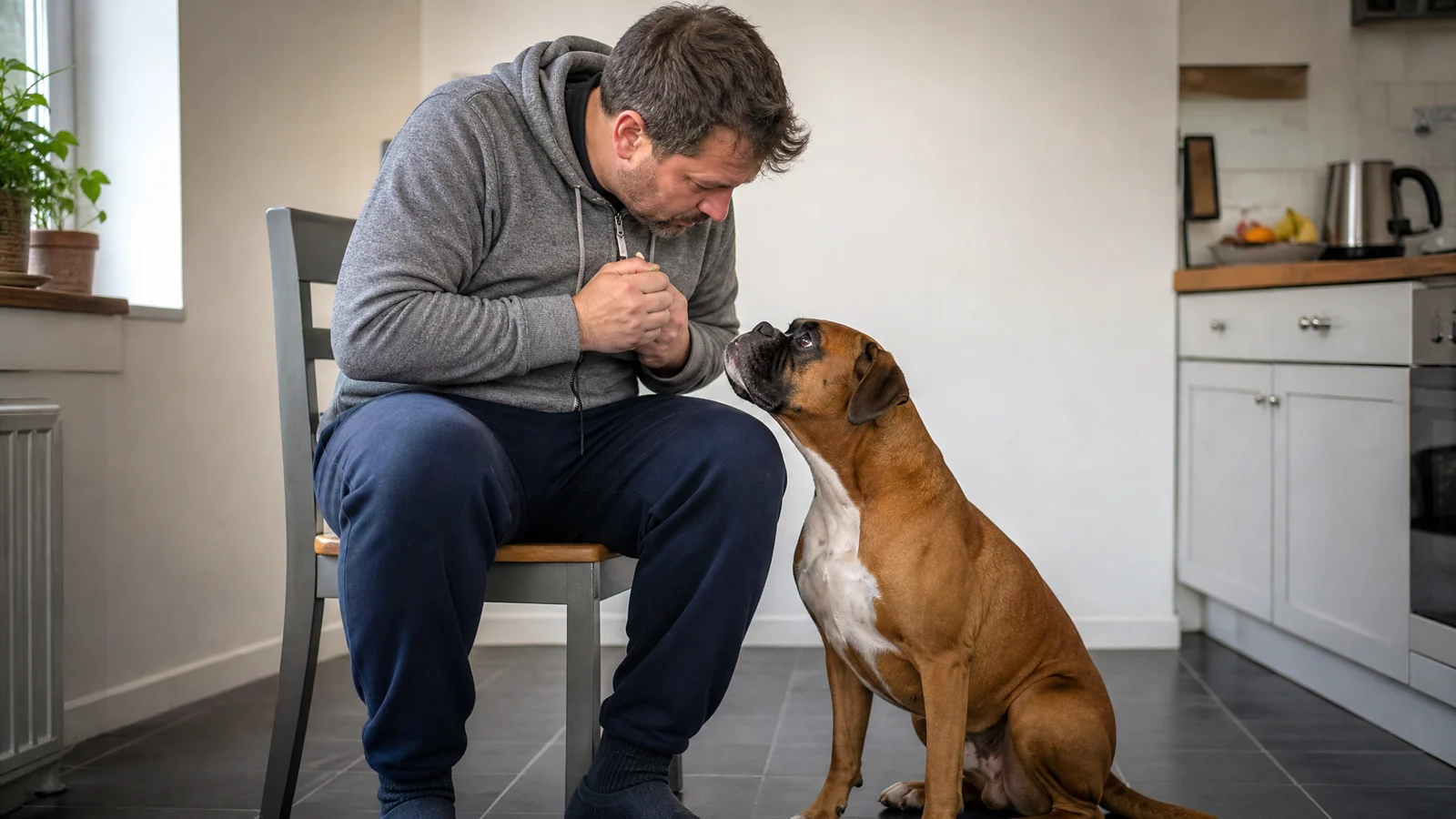
A Boxer who turns toward you before you ask for anything is a Boxer you can steer, and that single habit makes every other lesson easier to teach. This page builds it from the first glance, using rewards, small stages and a generous supply of patience for the bounce.
Boxers are playful, energetic dogs, which means the world is always competing with you for their attention. A lesson that pays well and stays fun gives you a way to win some of it back.
Read on for what counts as a good look, the four stages that teach it, the word that puts it on cue and the places where it tends to come apart. A pocketful of small treats is all the gear you need.
Why Boxer Focus Wanders and What Counts as Enough
Before the first treat, know what you are asking for and why this dog finds it hard. Boxers are quick problem solvers who tire of repetition and have opinions about what should happen next.
We see this in Boxers all the time: a playful, energetic body sends their attention after whatever moves, squeaks or smells interesting, and a plain request to look at you loses to nearly all of it. So the lesson has to pay better than the distraction and stay short enough that boredom never gets a vote.
That is why we keep the goal small. Focus here means your Boxer turns their head or eyes toward you, even for a moment, because you are the best offer around. Many quick turns beat one long, unblinking gaze, and an easily bored dog finds them far easier to give.
The skill is as basic as training gets. A Dumb Friends League trainer suggests starting with hand targeting, eye contact and capturing attention, and recall if you are new to clicker training, which shows how early this lesson belongs.
Teach Your Boxer to Pay Attention in Four Stages
With the goal set, the work breaks into four stages, and each one earns the next. Start in the quietest room you have, with no other pets, no open door and nothing on the floor worth chasing, because every distraction you remove is one less thing you have to outbid.
Here is the method in the order a Boxer can handle it, with a pocketful of tiny treats. Stay at each stage until it looks smooth several times in a row.
- Quiet start. Stand or sit relaxed, let your Boxer wander loose, and ask for nothing. You are only waiting for a free moment when their head turns your way.
- Catch the turn: the instant their head or eyes swing toward you, say a short marker such as "yes" or click, then hand over a treat low by your knee so the pay does not turn into an invitation to jump.
- Ask for a little more once the turn comes smoothly several times in a row, by holding your marker back for a beat so your Boxer has to look a moment longer before the treat arrives.
- Make Coming Back the Game: toss a treat a few steps away, let your Boxer chase it, and mark the moment they spin back to find you. Boxers love a chase, so the turn becomes part of the fun.
If your Boxer stalls at any stage, go back one stage and pay more often rather than waiting in silence. Waiting only gives their attention more time to leave.
Eye Contact Training Past the First Glance
A head turn and a meeting of eyes are not the same thing, and Boxers often swing toward your hands first because that is where treats come from. Keep both hands still, at your belt or behind your back, and hold your marker until the gaze lands on your face rather than on the pocket.
When your Boxer starts checking your face first and your hands second, you have the behavior. Pay that moment with an extra treat and a happy voice now and then.
Adding a “Watch Me” Command to Focus Practice
Once your Boxer finds your eyes without help, the behavior is ready for a name, and timing decides whether the name sticks. Say “watch me” one time in a bright, easy voice just before you expect the look, then mark and pay when it arrives. That way the word predicts something your Boxer already knows how to do instead of becoming a sound to ignore.
Resist the urge to repeat the cue when nothing happens. A second “watch me” teaches your Boxer that the first one was optional, so wait a moment, and if the look still does not come, make the next try easier by moving closer or removing a distraction.
Keep the word and the marker separate. Your marker says a treat is coming, while “watch me” asks for the look, and mixing the two muddles both jobs for a dog who is already thinking about the next snack. The cue is working when the look follows it on the first ask in a quiet room.
Holding Focus When the Sidewalk Gets Exciting
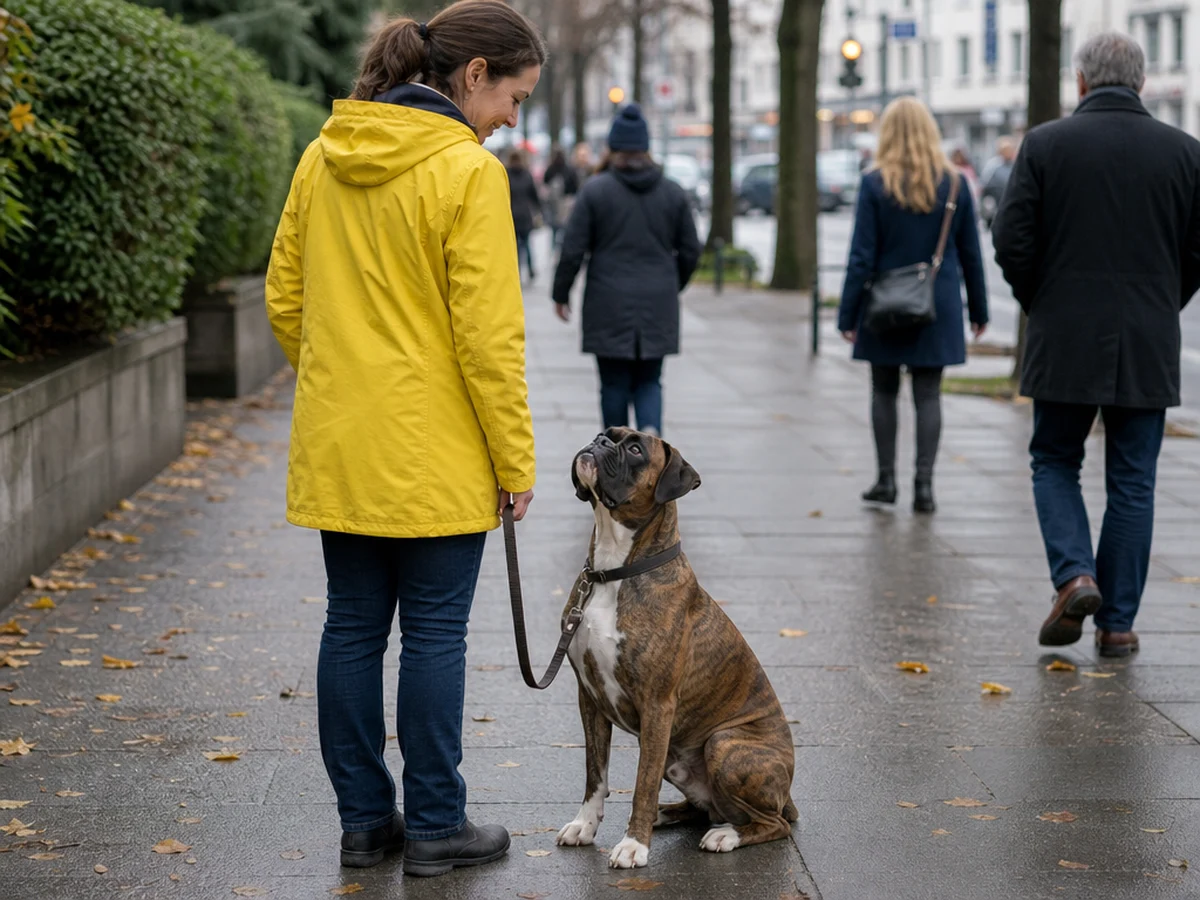
A look that appears every time in the living room still has to survive the sidewalk, and it will not manage that on its own. Change one thing at a time. Once the basics are solid in a quiet space, the sequence in AAHA's training tips adds small distractions such as toys, other pets and people, then your yard or driveway, and finally public places like the park or a pet supply store.
Match the pay to the place. A good rule is to match the reward to the setting: lower value rewards for low distraction environments like inside your home, and high value rewards for high distraction environments like walks outside. When a step keeps falling apart, it's a sign that you're going too far too fast, so back your Boxer up to the last successful point and rebuild from there.
Leash walks are the natural next place for the habit, and our guide to loose-leash walking builds on it. If your Boxer is already buzzing, a round of brain games first helps.
One caution: if a Boxer who has always turned toward you easily suddenly stops responding, call your vet before blaming training, and keep up regular vet checkups either way.
Snags That Turn Up During Focus Practice
Three snags come from the Boxer side of the lesson rather than the method itself: boredom, excitement and the temptation to pay forever. Each one has a simple fix.
What if my Boxer gets bored mid-session?
End the round while they are still keen and change what pays: a quick game of tug or a tossed treat can replace the usual snack. Boxers can get bored with repetition, so a new twist keeps the look worth giving.
Will this help when guests arrive?
It gives your Boxer a better first move than a launch, as long as you start well away from the door and pay low so the reward does not invite a leap. Treat it as step one, because the full plan for four paws on the floor covers the rest.
Do I have to pay every look forever?
Not at the same rate. Early on, pay every look so the habit forms. Once it is solid, pay most looks, let a game or a release to sniff do some of the paying, and keep your best treat for the looks that happen in the hardest places.
Standing Still With a Boxer in Public
Practicing focus outdoors looks like very little. You stand still, hold a pocketful of treats and gaze at a dog who gazes back, which may feel a little silly until you notice what your Boxer is not doing: lunging, leaping or leaving.
That is the real result of this lesson, and it will rarely look like much to anyone watching. A lively dog who spends a quiet moment looking at you is a dog whose next move you can still influence, and a minute of standing still is a small price for that. Once a pocket of treats and a quiet minute start to feel routine, our Boxer e-book works through every kind of training your dog is likely to need, thoroughly and in wording that holds up after a long day.
 BehaviorHow to Stop a Boxer Barking
 BehaviorBoxer Leash Reactivity: What Helps
 BehaviorBoxers With Cats and Other Dogs
