 Boxer
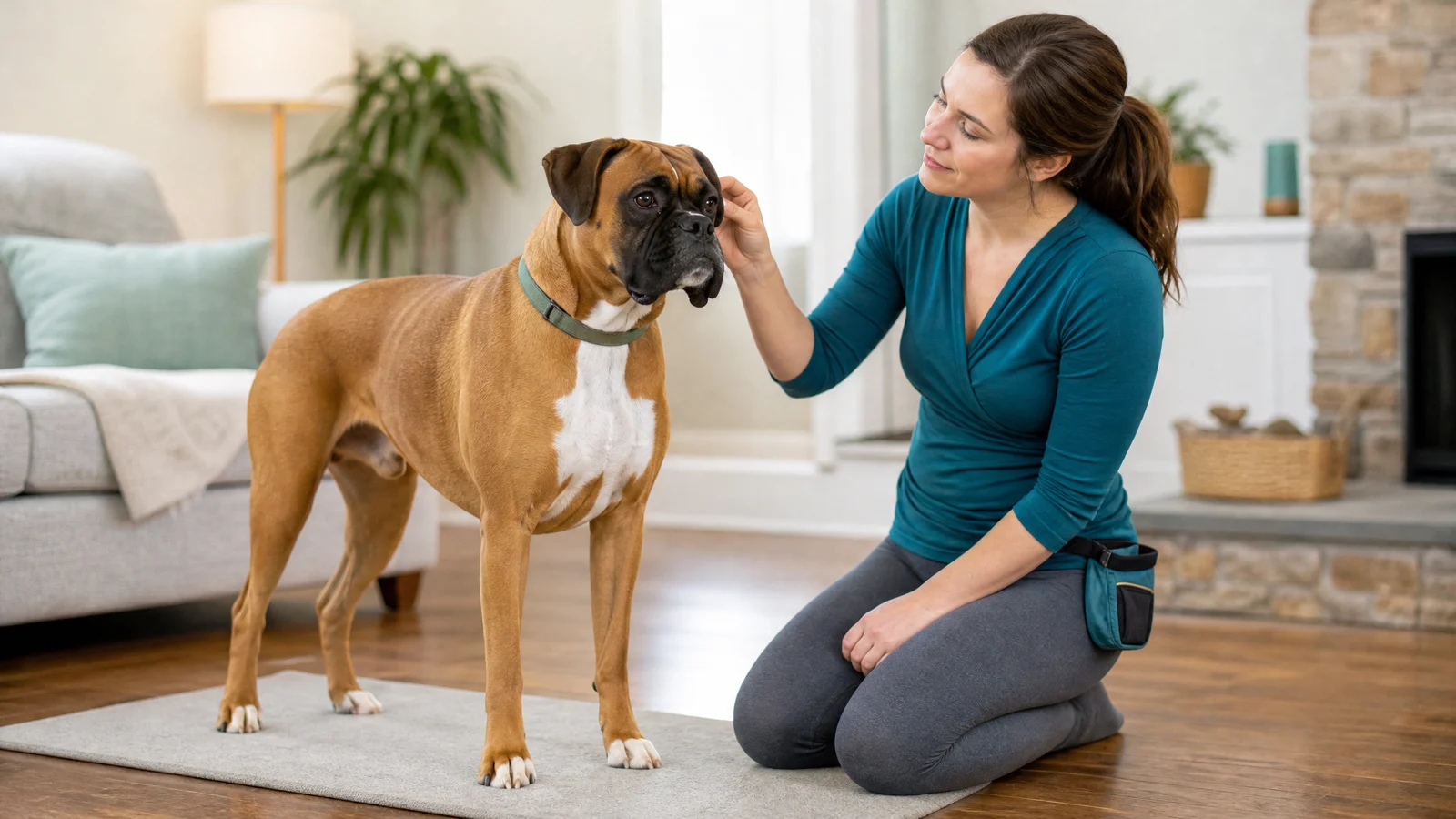
Ordinary dog advice says to get your dog used to being handled. A bouncy, wiggly, people-loving Boxer needs that goal cut into small steps with a choice built in, because their enthusiasm can override their comfort. A Boxer who wiggles happily through a touch is not always a Boxer who is fine with it.
This matters because Boxers are powerful, and a dog who learns that handling simply happens to them gets harder to groom, examine, and treat over time. Done well, you get a dog who holds still, offers a paw, and walks into the clinic with a loose, happy body.
This guide covers cooperative care for a Boxer, from the first mat session to the adult years, following one hypothetical puppy through the practice plan, the first clinic visit, the signs of progress, and the point where a professional should step in.
Our Example Boxer Puppy in a Small Apartment
To keep the steps in order, we will follow an entirely hypothetical household from the first day onward: a Boxer puppy at ten weeks old living in an apartment with two bedrooms and adults who work normal hours. Your puppy will move faster or slower, and the sequence matters more than the pace.
The goals are simple. The puppy settles on a mat, accepts touch on feet, ears, mouth, and body, and walks into a clinic ready to eat treats. We also want the puppy to be able to say not now and have it respected, because a dog who is allowed to opt out is far more willing to opt in. The plan is identical for a fawn, brindle, or white Boxer. Colors outside the standard are still Boxers, and the same gentle steps apply.
Practice After the Energy Burst
Timing follows the Boxer's rhythm. Many owners describe a dog who lounges most of the day and saves wrestling and zoomies for a short daily window, bouncy outdoors and flopped out the moment they come back inside. In our example, practice happens in the settled stretch after that burst, never during it.
Energy varies by dog, by day, and even by season, so watch the puppy rather than the clock. Our page on ways to exercise a Boxer and offer brain work covers that outlet.
Week One Cooperative Care Foundations
In the example, the first week involves almost no real handling. The puppy learns that a bath mat on the living room floor is where good things happen, and that one word means touch is about to begin. We use reward-based methods only, with treats and calm praise doing all the work.
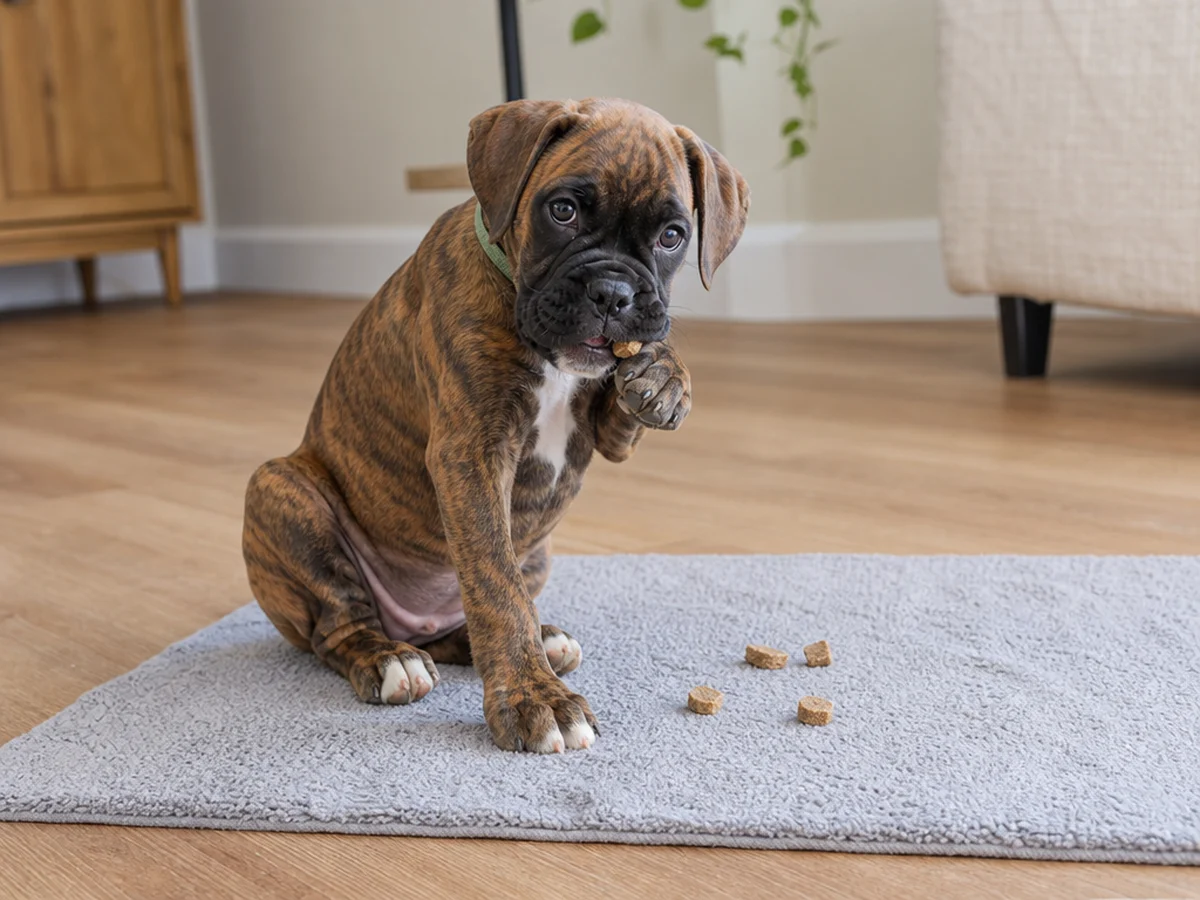
- Scatter a few treats on the mat so the puppy steps on it and lies down by choice.
- Pick a start signal, such as the word ready, and say it just before every touch so the puppy can predict what comes next.
- Rest one hand lightly on the shoulder for a moment, then feed a treat and lift the hand away.
- Pause with both hands visible. If the puppy leans in or stays, that is a yes. If they wander off, let them go and try again later.
- End with a release word, so every session finishes cleanly.
That pause is the consent step, and an eager Boxer needs it more than most. A puppy this keen may lean into a touch they dislike just to stay close to you, so the choice has to be part of the routine.
Keep each session brief, a handful of repetitions, and stop while the puppy is still interested. Boxers are clever and can tire of repetition, so vary the order of the steps and the treats.
Meanwhile, management prevents the stressful handling you have not had time to train. Keep a towel and a treat jar by the door instead of grabbing muddy paws. Ask visitors to let the puppy approach on their own rather than scooping them up. If something must be done before the puppy is ready, such as a quick wipe, feed a steady stream of treats and keep it short.
Why Does the Exam Table Worry a Boxer?
In our example, the puppy skids across the kitchen tile with a stiff, careful walk, then turns down a treat on the slick floor. That small moment predicts a lot about the clinic, where shiny floors, a raised table, unfamiliar smells, and strangers all arrive at once.
Each piece can matter for this breed. Slippery footing unsettles a square-built, powerful dog who likes to push into the ground for balance. Being lifted or held tight removes the choice we just spent a week building.
Strangers deserve thought too, since the breed standard describes the Boxer as deliberate and wary with strangers, yet responsive to friendly overtures honestly rendered. A staff member who looms and grabs gets a very different dog from one who crouches and offers a treat.
Because this puppy is also social and bouncy, stress often looks like enthusiasm. Slow the session and compare the behavior with the signs below before you continue.
- A frantic, wiggling greeting that does not settle, which can be nerves rather than joy.
- Repeated lip licks, yawns, or a head that turns away from a hand.
- Refusing treats they would normally gulp.
- Pulling toward the door or hiding behind your legs.
- Sudden mouthing at hands during a touch.
Young Boxers also leap and need repeated reminders to keep four feet on the floor, so a nervous jump toward a stranger's face is easy to misread. Treat it as information about how the puppy feels, then make the next step easier.
Cooperative Care Touch Practice for Paws, Ears, and Mouth
By weeks three to six in the example, the mat is familiar and the puppy trots over to it unprompted. Now the plan adds touch in order of difficulty. Each area follows the same rhythm of start signal, touch, treat, pause, and each step is small enough that the puppy keeps wagging.
Feet and Paws
Begin by resting a hand on a leg, then slide toward the foot over several sessions. Hold a paw for a moment, treat, and release. Later, touch each toenail and the pads. The Boxer's short, tight coat keeps grooming light, but nail trims are a lifelong chore and worth the patience.
Ears and Body
Stroke the outside of the ear, then lift the flap, then look inside, always followed by a treat. Do the same along the back, belly, and tail, and lean gently over the puppy as a vet would. Practice standing on the mat as well as lying down, since exams happen on four feet.
Mouth and Teeth
This is often the hardest area for a mouthy puppy. Stroke the lips, then lift one edge for a moment while a treat arrives from your other hand. Keep a chew toy nearby so the puppy has an outlet for mouthing between repetitions.
Pace by the puppy, not the calendar. Progress varies widely by dog, with some accepting a step in days and others needing months. Go back a step whenever the pause shows hesitation, and finish on something easy.
How Do You Prepare Your Boxer for the First Clinic Visit?
In the example, the puppy visits the clinic parking lot and lobby before the first real appointment, just to eat treats and leave. These rehearsals cost little and make the actual visit feel like a repeat of something good.
Start with the car. Practice short rides that end somewhere pleasant, then add a ride to the clinic. Ask the staff if you can pop in for a quick hello, and let the puppy greet people with four paws down while strangers offer treats instead of reaching over their head. Our guide to training a Boxer not to jump helps with the greeting itself.
Call ahead and tell the team you are practicing cooperative care. Ask for a quiet room, a floor exam if possible, and a few extra moments for the puppy to settle before anyone touches them. Some owners use daycare, including vet-run daycare, to take the edge off their Boxer's energy and make the building familiar. A Boxer who is overtired can turn irritable, so aim for pleasantly tired.
Clinic Kit and Appointment
Pack a small kit. Familiar gear helps the puppy settle while you wait.
- A stash of tiny, high-value treats, far better than everyday kibble.
- The mat from home, which gives grip on a slick floor and a familiar smell.
- A favorite chew or toy for waiting.
- A basket muzzle, only if you have trained it with rewards. Muzzle training with rewards lets a dog see the muzzle as a good thing, while introducing it for the first time during a stressful moment can scare the dog and make later attempts harder.
Regular vet visits are part of good care, so book them on schedule. At the appointment, use your start signal, feed throughout, and let the pause work for the vet too. Ask the team to follow the order the puppy practiced, weight and body check first and the harder areas last. If the puppy needs a break, step back and take one.
Signs Cooperative Care Is Working and Warning Flags
In the example, progress shows up in small, specific ways. By the first real visit, the puppy steps onto the mat, lets their shoulders drop, and leans into a touch rather than away from it. That is the picture you want: a soft body, not just a dog putting up with it.
Good signs show the dog still feels able to choose. Look for the behaviors below across several sessions.
- Relaxed muscles and a loose, wiggly body that settles quickly.
- Choosing to stay on the mat when the pause happens.
- Taking treats calmly during handling.
- Offering a paw or turning toward you when you say the start signal.
- Recovering quickly after a stressful moment instead of staying wound up.
Warning flags mean it is time to slow down or get help. Stiffening, freezing, growling, snapping, or a puppy who starts avoiding the mat all say the steps are too big. Drop back to an easier stage and rebuild. If a dog is suddenly sensitive about a spot they used to allow, talk to your veterinarian, because pain can look like a behavior problem.
This article is general information, not veterinary advice. Sudden touch sensitivity, mouth or ear discomfort, or any question about treatment, pain, or your dog's health should go to your veterinarian, who can examine your Boxer and advise on what is right for them.
If the signs persist or a dog shows real aggression, bring in a qualified professional who works with rewards. The title of behaviorist is restricted to veterinarians with board certification, so ask about credentials and look for board-certified veterinary behaviorists when the problem is serious.
Cooperative Care Pays Off Through the Adult Boxer Years
In the example, the puppy grows into a teenager and the plan carries on. Adolescence brings new bounce, selective hearing, and the occasional setback, such as a sudden dislike of the ear check. Treat that as normal, return to a smaller step, and keep rewarding. Our guide to common Boxer behavior problems explains why this stage can feel messy. Many owners find that maturity, routine, and training settle even a very energetic Boxer.
Upkeep stays light. A few brief sessions a week on the mat, with the start signal, a touch or two, and a treat, keep the skills fresh without becoming a chore. Add a mock exam before each real visit. As the dog ages and gets stiffer or sleepier, slow the pace, use a non-slip surface, and let them lie down for exams. Older Boxers tire sooner and cannot match younger dogs, so shorter sessions suit them.
Long-term success looks like a Boxer who walks up to the table, offers a paw, and stays because they want to. That dog does not need to be held down, and the clinic becomes just another place where treats appear. A few minutes of upkeep as the dog grows and ages keeps that trust intact for life.
 BehaviorStop Destructive Chewing in a Boxer
 Puppy trainingBoxer Puppy Training Timeline: 8 Weeks to 2 Years
 BehaviorCommon Boxer Behavior Problems and the Instinct Behind Each
