 Boxer
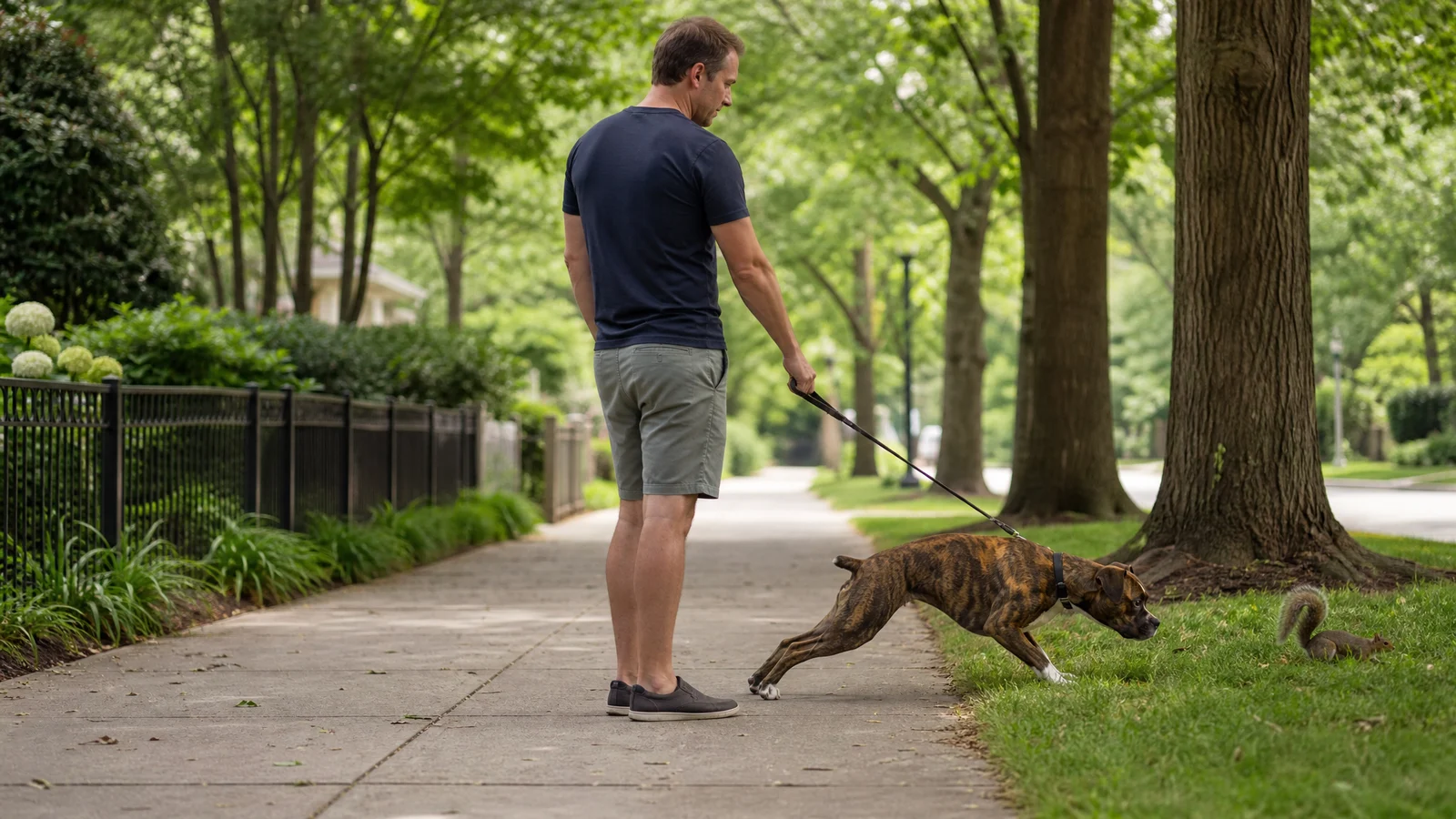
The walk starts politely, then a squirrel crosses the curb and the Boxer reaches the end of the leash with every strong limb committed to the project. A square-built, energetic dog can turn one sudden decision into a full-body tow. The answer is not one generic pulling fix, because steady tension, a quick surge and frustrated lunging have different triggers.
We will map what you see to the next useful action. This guide covers the basic leash conversation, constant pulling, sudden launches, agitation caused by restriction and the steps that build loose-leash walking across real places. The work is reward-based and practical. Your Boxer learns where forward movement comes from, while you learn to act before excitement reaches the end of the line.
The Boxer's Leash Conversation
Loose-leash walking means the leash hangs without steady tension while the dog moves with you. It does not require a formal position or unbroken eye contact. A Boxer should be able to sniff, look around and enjoy the walk while remaining responsive to changes in pace and direction.
The breed's build explains why early practice matters. The official Boxer standard describes a square-built dog of good substance with strong limbs and movements that denote energy. That body does not cause pulling, but it magnifies a habit that forward motion has rewarded.
Begin where the environment is dull enough for learning. Mark and reward a glance toward you, one step near you and any moment the leash softens. Use a clear release for sniffing. The dog learns that connection produces both food and access to the world, rather than having to choose between you and every interesting smell.
Prepare the first outing as a lesson, not a mileage goal. Bring rewards the dog values, choose a quieter route and leave enough time to pause. Regular veterinary visits help you account for comfort and physical changes that may affect walking. A sudden reluctance or uneven gait deserves an exam before more practice.
Boxer Leash Training Under Constant Tension
Constant pulling usually has a simple history: tension moved the dog toward something valuable. The sidewalk advanced, the smell got closer or the park gate arrived. The leash became tight, but the trip continued, so the environment rewarded the behavior with perfect timing.
Stop the Forward Payment
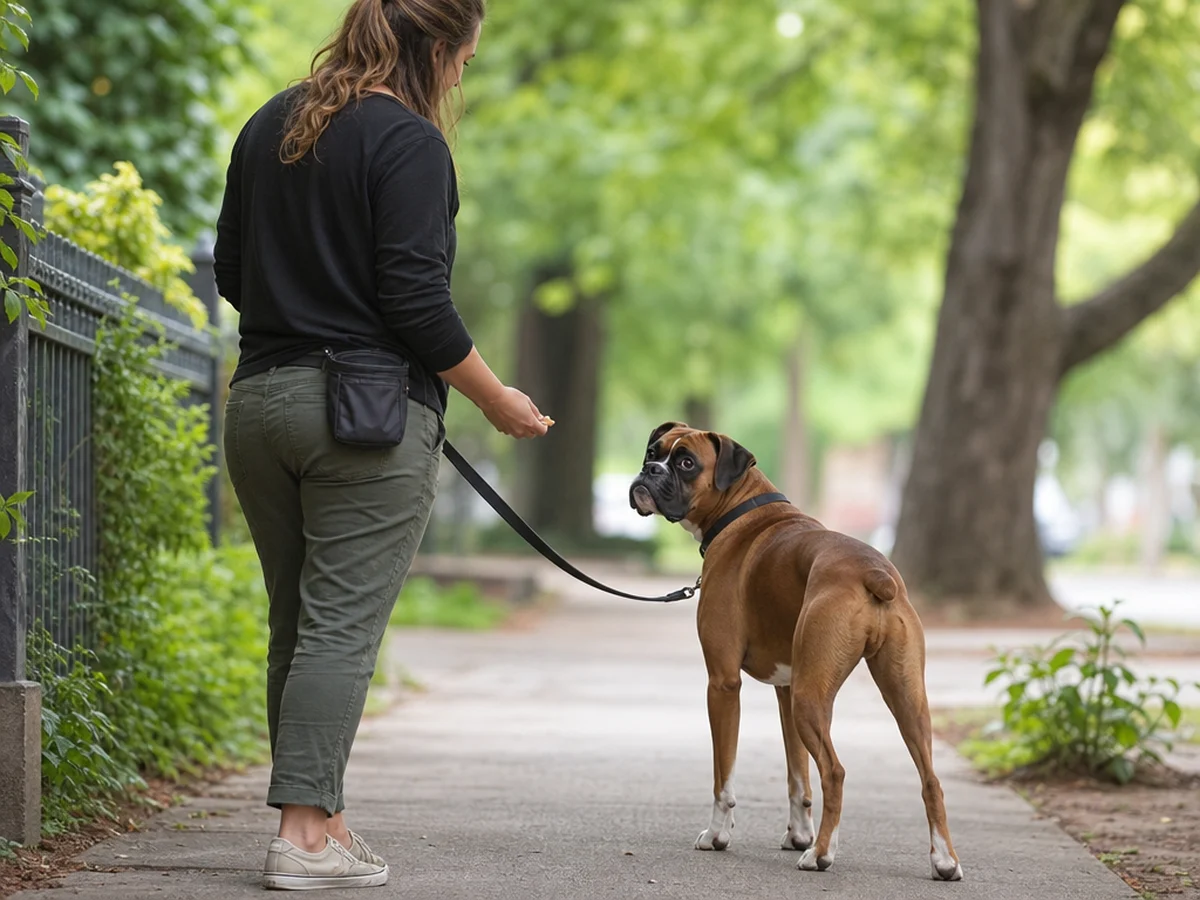
When the leash tightens, stop moving. Wait for the Boxer to shift weight back, turn toward you or create any slack. Mark that instant, reward near your side and continue. PDSA's loose-leash guidance follows this pause and restart approach, making a soft leash the route forward.
Expect many pauses at first. That does not mean the walk failed. The dog is learning a new rule in the exact setting where the old rule used to work. Keep your body quiet while waiting, then make the restart clear. Forward movement becomes the life reward for a soft leash.
Reward the Position You Want
Do not wait only for errors. Pay frequently while the leash is already loose, especially before the Boxer reaches a favorite smell or corner. Deliver the reward near the side where you want the dog to travel. Then release them to sniff when the leash remains soft.
Use short stretches of close attention between longer sniffing sections. A Boxer who becomes bored by repetition is unlikely to enjoy an entire walk treated as one extended drill. Several clean steps, a reward and permission to explore create a rhythm the dog can understand.
- If tension appears immediately after each restart, shorten the expected stretch and reward the first soft step.
- If the dog pulls toward one smell, use access to that smell as the reward after they return and move forward with slack.
- If your Boxer loses interest in food, create more distance from the attraction or choose a quieter route.
- If progress collapses late in the outing, finish with an easier section instead of practicing tired pulling all the way home.
Leash Training for Sudden Surges
A sudden surge is different from steady pulling. The leash may be loose until motion, scent or a familiar destination appears. The useful moment is the instant the Boxer notices, before the body gathers speed. Train that first look into a turn back toward you.
Practice with mild distractions at a workable distance. Let the dog notice, mark the calm glance and reward when they return attention. Then either continue past or release them to investigate when safe. The sequence teaches that noticing something does not require launching toward it.
Teach a cheerful direction change in an easy place. Say the cue, turn and reward the Boxer for coming with you. Best Friends recommends changing direction when stopping alone does not resolve pulling. Practice before you need it, so the cue is familiar rather than an emergency surprise.
Movement itself can help. Take a few quick steps away from the distraction, reward the dog for catching up and then slow again. The purpose is to redirect momentum into cooperation. Keep the turn smooth and readable, with enough room that neither of you becomes tangled.
Manage predictable launch points. Pause before the front door opens, cross the street before reaching a busy corner and begin rewarding before the park comes into view. Preparation may look less dramatic than stopping a full-speed Boxer, which is precisely why it works better.
What a Boxer Lunge Is Communicating
Lunging can come from excitement, frustration, fear or a mixture. The leash prevents access or escape, arousal rises and the dog throws their body toward the trigger. Battersea describes leash frustration as agitation connected to being restricted. That description does not tell you what your individual dog feels, so read the whole body and context.
Excited Lunging
An excited Boxer may lean forward, bounce and keep trying to approach a person or dog. Create distance before asking for a cue. Reward a glance back, a hand target or a few steps with you. Greeting should happen only when the dog can approach on a soft leash and the situation is appropriate.
Do not make every sighting end in a greeting. Neutral passing is a skill. If the Boxer expects access each time, restriction itself becomes more frustrating. Alternate calmly moving away, watching from a distance and approaching only when both dog and setting remain relaxed.
Worried Lunging
A worried dog may become stiff, stare, move behind you, refuse food or lunge to make the trigger retreat. Increase distance immediately. Do not require a sit close to something the dog finds frightening. Movement away is useful management and gives the nervous system room to settle.
Work far enough away that the Boxer can notice and still eat or respond. Mark calm observation and leave before tension rises. If fear is persistent, reactions escalate or safety is uncertain, involve a qualified reward-based professional. Distance is not avoiding training. It is the condition that makes learning possible.
Recovery After a Lunge
After a reaction, move to a quiet space and let the dog sniff. Ask for an easy behavior only after breathing and movement begin to normalize. Trying to run a strict lesson while the Boxer remains highly aroused usually produces more struggle and little learning.
Review what happened later. Note the trigger, distance, earliest body change and whether the dog could take a reward. Use that information to begin farther away next time. Our Boxer temperament FAQ explains how attention, excitement and the environment change training responses.
Loose-Leash Training Practice
Loose-leash skill must be rebuilt in layers. A quiet room teaches the marker and side position. A hallway adds movement. A calm outdoor space adds smells. A normal sidewalk adds changing distractions. Skipping layers can make a capable Boxer look untrained when the real problem is an environment that rose too quickly.
Begin Below Walking Speed
Stand still and reward the Boxer for choosing your side. Take one step, mark the dog for moving with you and reward. Change direction after a few steps. Keep the first practice varied enough that the dog must attend, but easy enough that guessing never turns frantic.
Add a release to sniff after a short successful stretch. Sniffing is not the enemy of leash training. It is a valuable reward and part of the walk. The distinction is that slack earns access, while steady pulling pauses progress.
Add Distance and Distraction Separately
Extend the number of loose steps in a quiet place before adding a busy setting. In a new location, shorten the expected stretch again. The dog should not face greater distance and greater distraction at the same moment.
Use this progression as a set of conditions rather than a calendar:
- Mark and reward voluntary attention while standing still in a familiar space.
- Build several changes of direction with a soft leash and clear rewards.
- Move to a quiet outdoor area and return to very short successful stretches.
- Add mild moving distractions at a distance where the Boxer can still respond.
- Practice one ordinary route, using sniffing access to reward slack near favorite places.
Keep the Boxer Interested
Boxers are intelligent problem solvers who can tire of repetition. Change pace, reward surprise check-ins and use simple targets or direction changes. A walk can include training without becoming a long obedience session.
Meet exercise needs outside the leash lesson as well. A dog carrying a full day's energy into the hardest street is starting with an unnecessary disadvantage. The complete Boxer training guide shows how short, varied practice supports daily skills.
The Next Boxer Walk
Choose the response from the first symptom you see. If the leash becomes steadily tight, stop forward movement, wait for slack, reward at your side and restart. If the Boxer surges at one sight, increase distance, mark the first calm look and use the practiced direction change before speed builds.
If lunging begins with frustrated excitement, stop automatic greetings and reward neutral observation from farther away. If the body looks worried, create more distance and leave the area while the dog can still recover. Safety and emotional comfort take priority over completing the planned route.
Keep the first goal modest: one stretch in which the leash stays soft and the Boxer can return attention after noticing the world. End that stretch with a sniffing release or another reward the dog values. Then allow an ordinary walk before asking again.
Loose-leash walking grows from many readable decisions. Slack moves the walk, attention opens choices and distance protects learning. Apply the branch that matches the behavior instead of treating every strong movement as the same problem. The next outing then becomes less of a tow and more of a conversation.
 BehaviorTeaching Your Boxer to Play Gently With Kids and Meet Other Dogs
 BehaviorHow to Train a Boxer Dog Not to Jump
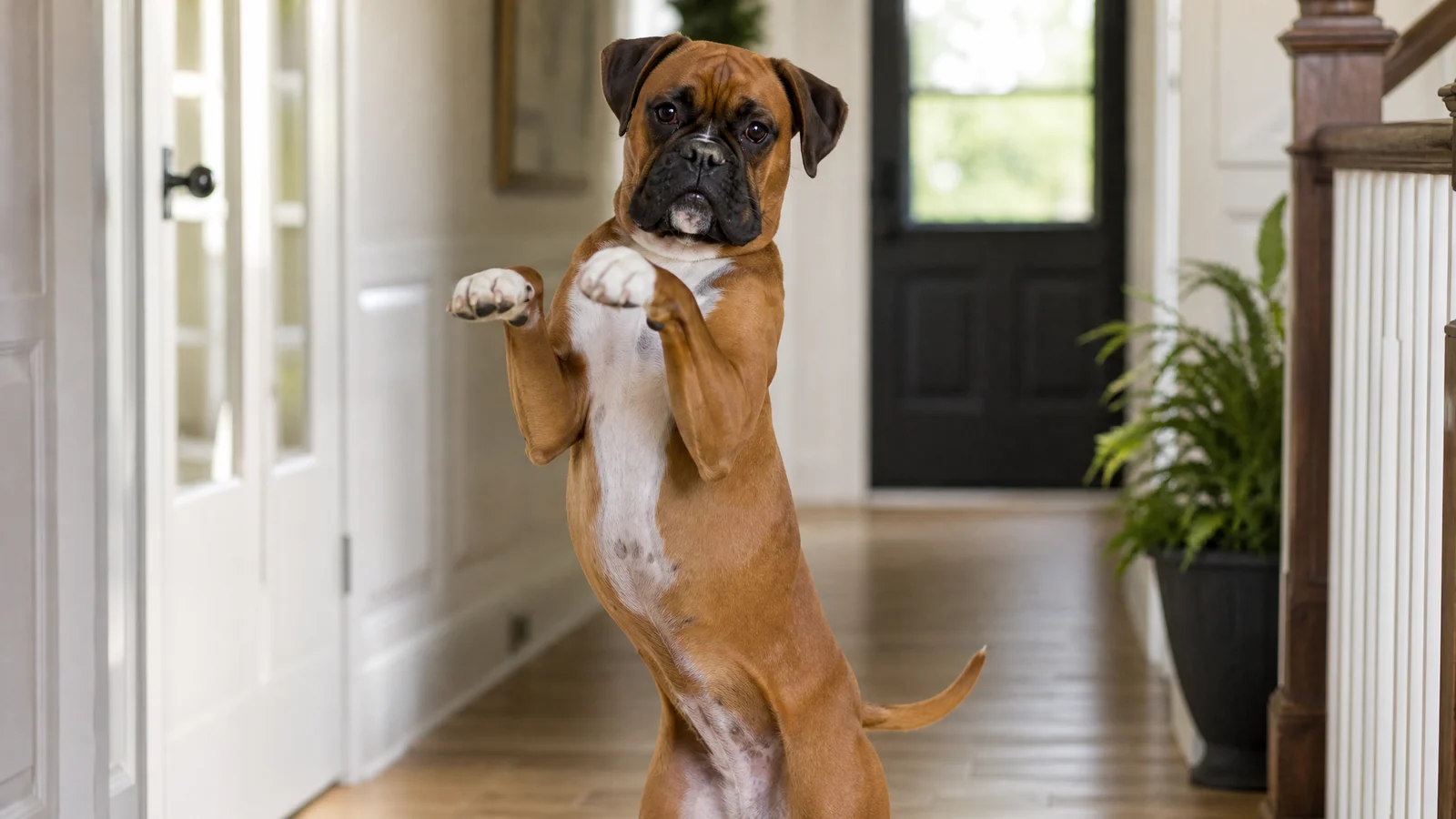 BehaviorBoxer Bounce and Paw Swats: Rewarding Four Feet on the Floor
