 Boxer
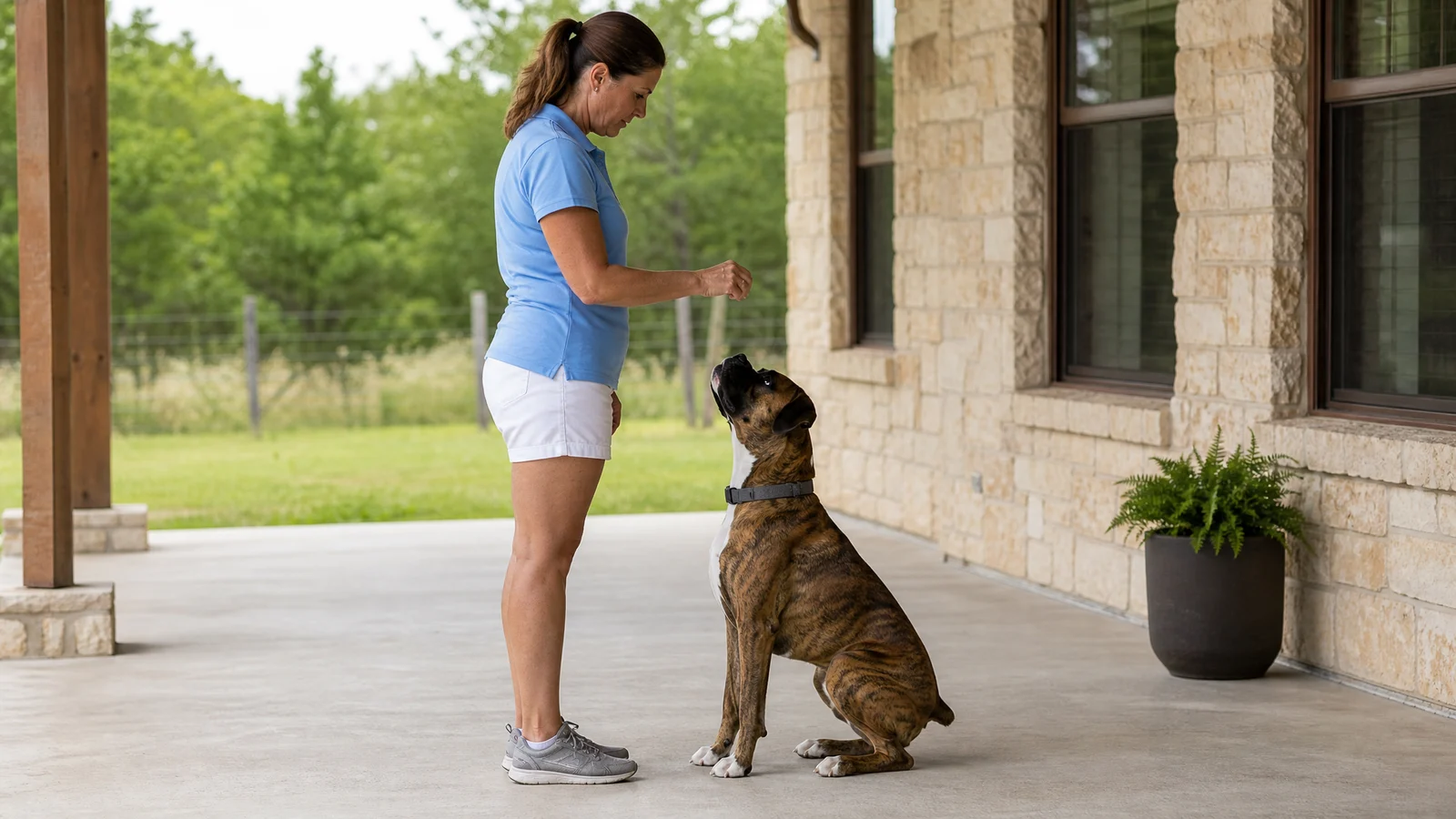
The moment you most want a sit from your Boxer is usually the moment they are least able to give one: the front door swinging open, the leash coming off its hook, a guest stepping inside. A Boxer meets all of that with a spring in every leg, which makes a sit the quickest way to give that spring somewhere calmer to land.
The method is short: guide the nose with a treat, pay the instant the rear touches the floor, and add the word once the movement is reliable. Read on for the lure, the fixes for a Boxer who keeps bouncing back up, and how to attach the cue. For a quick mind in a springy body, the details carry the lesson, because sloppy timing gets magnified fast.
Why Sit Leads the Basic Boxer Commands
That calmer landing is why sit goes first among the basic Boxer commands. Boxers are natural leapers, and the young ones need plenty of reminders to keep their feet on the floor, but a dog cannot sit and jump in the same moment. Our Boxer jumping guide covers the greeting itself, so here the sit gets a lesson of its own.
Another reason is how a Boxer learns. Boxers are quick thinkers who tire of the same drill, so a sit taught in short, well-paid bursts suits that mind better than one ground out over a long session. We would rather you stop a lesson while your dog is still eager than squeeze in one more repeat. A Boxer is also powerful and playful, so safety matters. PetMD points out that a sit can also keep others safe if your dog has a tendency to jump on children or older people.
Luring a Sit From Nose to Floor
All of that depends on one small movement, your Boxer's nose following your hand. Choose a quiet room with a non-slip floor, keep a handful of tiny, soft treats ready, and work through these steps:
- Hold a treat at your Boxer's nose so they can smell it but cannot snatch it.
- Raise your hand slowly up and slightly back over their head, so the nose tips up and the rear folds down.
- The moment the rear touches the floor, say a short marker word such as "yes" and bring the treat to their mouth, low and close.
- Step away or toss a treat to reset, then ask again so each sit is a fresh answer rather than a habit of standing there.
- Repeat in short rounds while the treat still guides the movement, and finish before your dog loses interest.
Timing is the heart of it. A Boxer who is paid a beat late is paid for whatever they were doing in that beat, and with a body this springy that is usually standing back up, so keep the reward close and fast. If your dog already offers sits on their own, skip the lure, mark the sit the moment it happens and pay it.
Fixing a Sit That Bounces Back Up
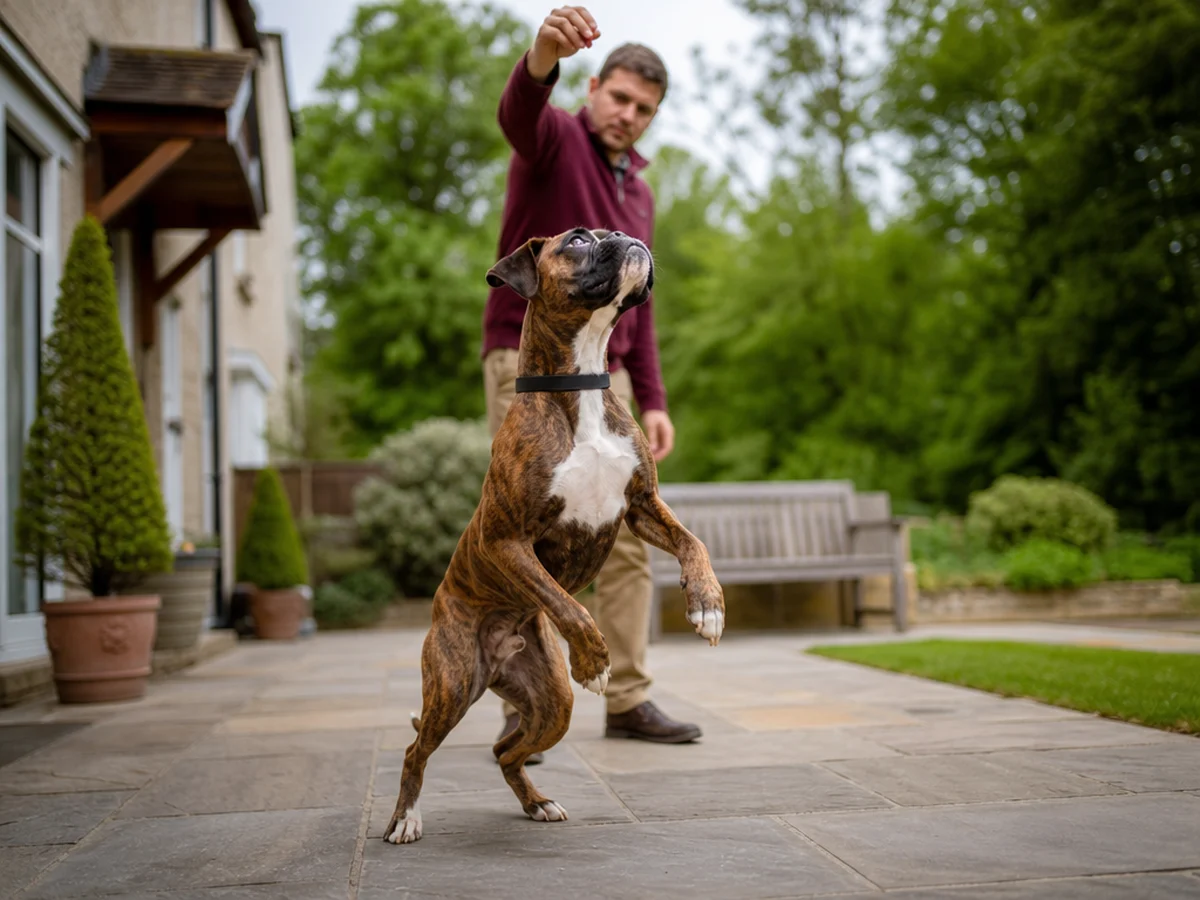
Even a clean first lesson tends to run into snags, and in a Boxer they usually look like energy rather than confusion. A dog who hops for the treat is not being difficult, they are being a Boxer, and each snag has a simple fix. Regular vet visits matter through all of this, too, since a dog who finds sitting uncomfortable cannot tell you so.
If your Boxer jumps for the treat instead of sinking, your hand is moving too high or too fast, so keep it close to the nose and slow it down until the head tips back and the rear follows. If they back away from the lure, ask with a wall or the side of the couch behind them, which takes the retreat off the table and keeps the lesson about sitting.
If they sit and spring up before the treat arrives, you are paying too slowly, so bring the reward to their mouth the instant the rear lands. And if the sit comes out crooked or wiggly, pay it anyway, because a Boxer who is rewarded for squirming into a sit is learning that sitting works, and neatness can come later.
Adding the Boxer Sit Command Word
Once the pop-ups are rare, the lesson changes from guiding your dog to asking. Say the word once, just before your hand starts the lure, and pay the sit that follows.
The San Francisco SPCA puppy training guide advises avoiding repeating the command multiple times: say it once and reward the correct response. If a dog struggles, it says to go back a step and practice until they succeed.
Then shrink the lure. Make the hand motion a little smaller each round until an open, empty hand lifted a few inches is enough, and pay from your other hand or a pouch so the signal stops being a treat in disguise. Ask in a second room and a third, so the word comes to mean sit wherever you are, and see our Boxer obedience basics for down and stay once the sit is solid.
Smaller Doubts About Asking for a Sit
The steps above cover how to teach a sit. What is left are the practical edges: how a sit ends, where it helps most and how to keep treat manners tidy while you teach it.
How do I end a sit without a launch?
Choose a release word, such as "okay", and say it before your Boxer decides to move on their own. Then toss a treat or start a game so that getting up becomes part of the reward. Without a word to end it, a Boxer is likely to end the sit on their own, often with a leap, and the next sit starts to look optional.
Can sit calm the start of a walk?
A sit at the door gives the leash moment a shape instead of a scramble. It will not spend any energy, though, so our exercise and brain games guide still matters for the walk itself.
The door routine has outside backing, too: MSPCA-Angell notes that asking your dog to sit at the door before you take them out can be reinforced by opening the door, and that asking for a sit while you look to see who or what is outside can prevent unwanted surprise beginnings to a walk.
Why does my Boxer snatch the treat?
A Boxer's mouth tends to move faster than their manners, and a treat held in open fingers looks like an invitation. Pinch it between your thumb and fingers so your dog can lick and nibble at it without getting it, and pay from an open hand, held low, once the rear has landed. If the grabbing gets worse, slow your hand down.
A Sit Gives You Something Else to Ask For
A lot of what a Boxer does in an excited second is something you would rather not have: the leap at the door, the lunge at a guest, the full-body greeting. A sit changes your side of those moments, because instead of reaching for no you can ask for something your Boxer already knows how to win, and a dog who is busy winning a request is not busy practicing the jump.
That is a calmer way to live with a powerful, playful dog, and it starts with one short lesson. Download the free e-book on this site and you get every one of a Boxer's training needs covered in depth, in writing that a first-time owner can follow without feeling lost.
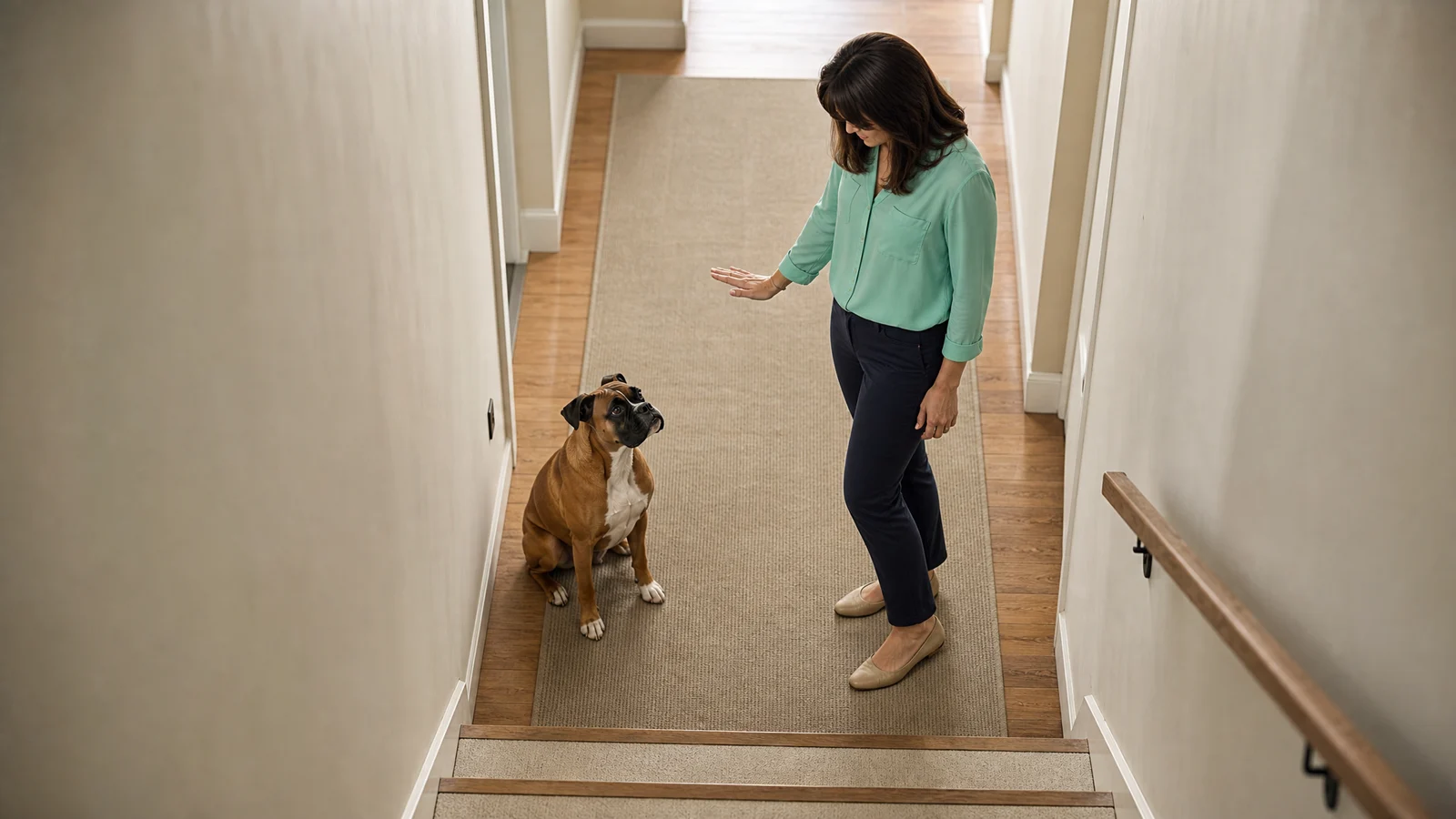 Training basicsHow to Teach a Boxer to Stay
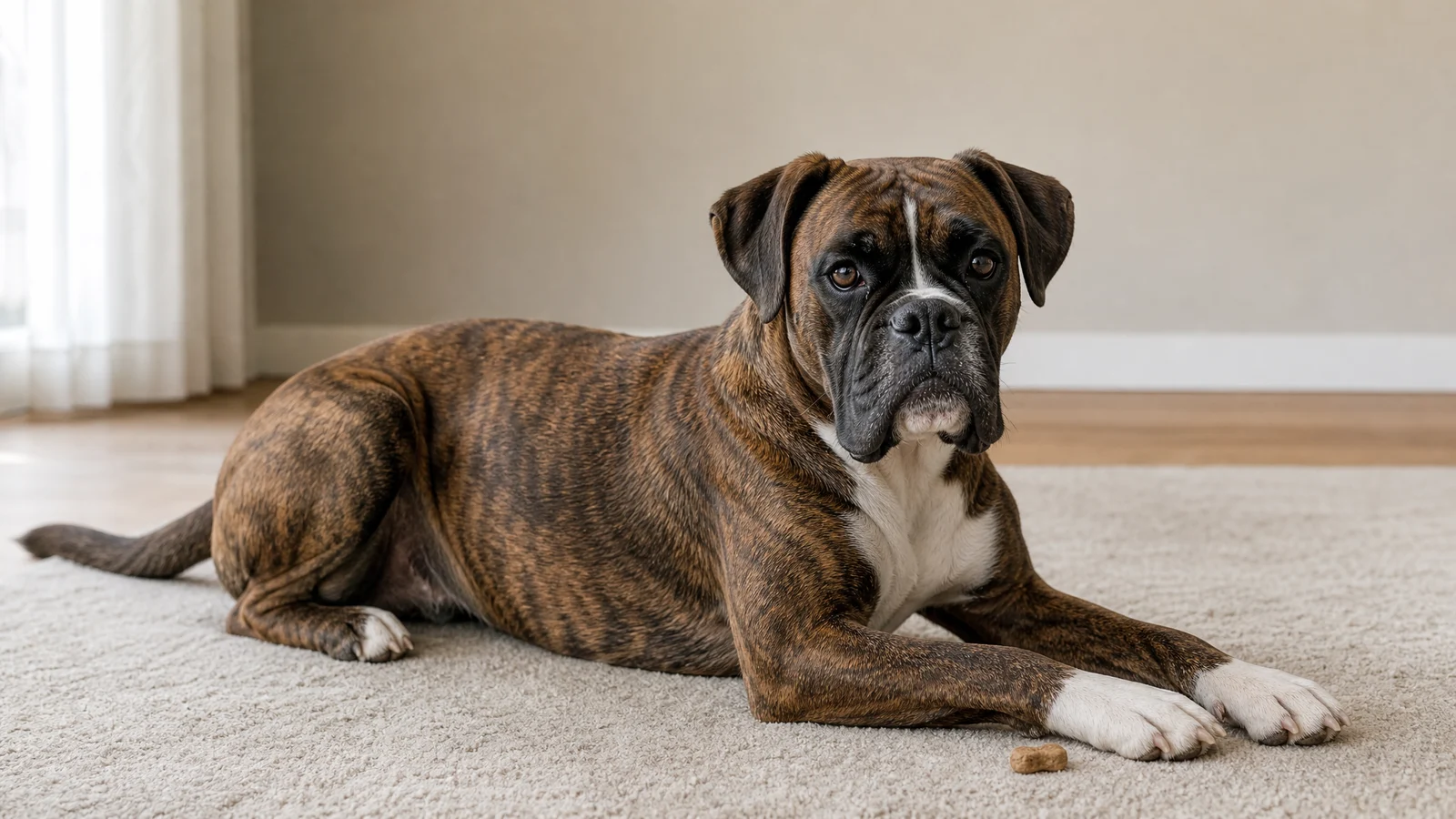 Training basicsHow to Teach a Boxer to Lie Down
 Training basicsHow to Teach a Boxer to Heel
