 Boxer
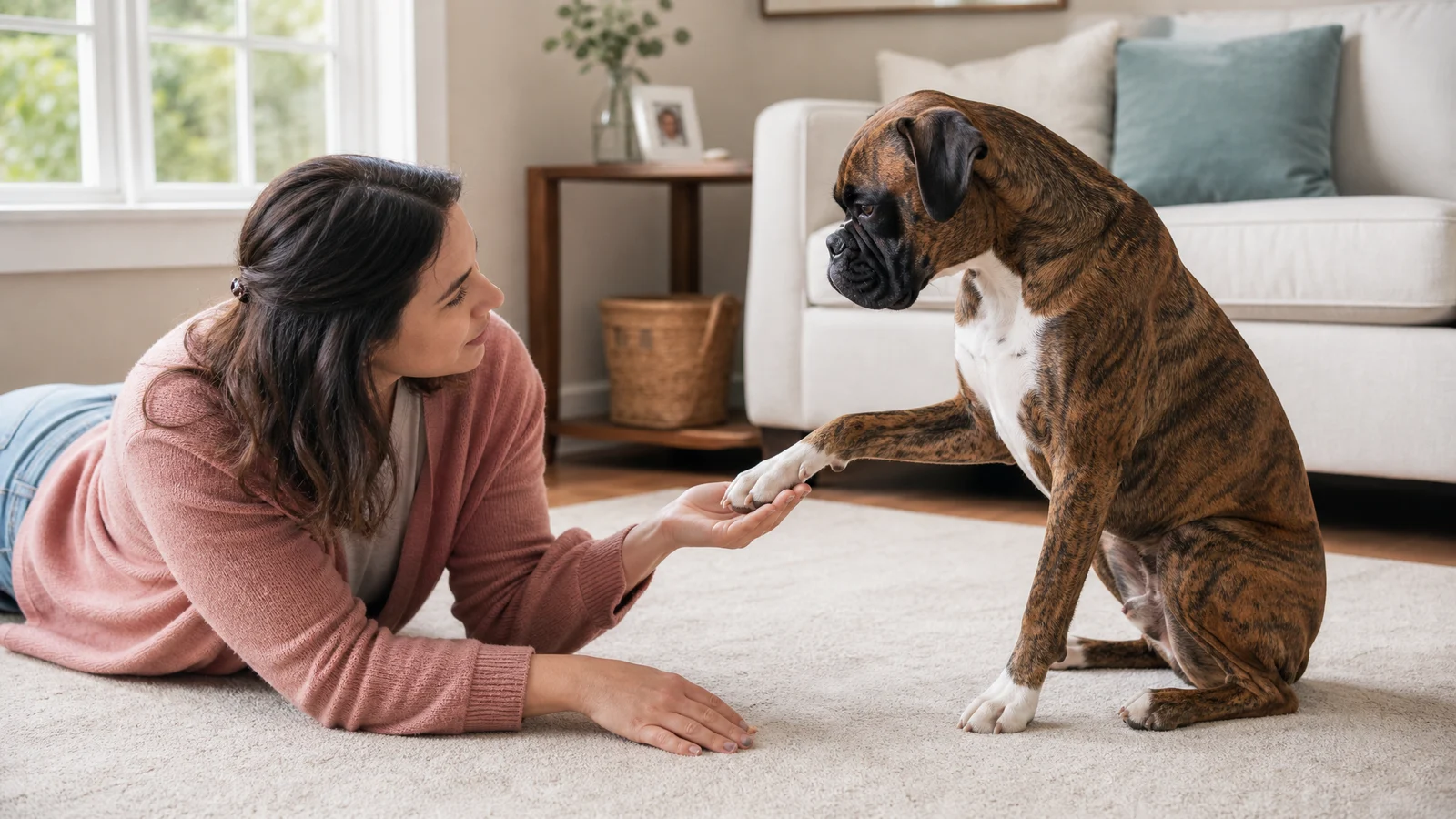
A Boxer's front paws are rarely idle, which gives you a head start on shake. Getting a paw into the air is the easy part, and most of the work comes after it.
The real lesson is teaching that paw to land in your hand and rest there for a moment. Your Boxer is also quick to work out what pays and quick to tire of doing the same thing twice, so every stage below is short and ends while they still want another turn.
This guide takes you from the first paw lift to a relaxed handshake, adds the cue, steps up to a high five, and covers what to do when a stage stalls or a paw gets too rough.
The Paw Your Boxer Already Offers Is Your Shake
Shake is a paw offered to an open hand and left there for a beat, which makes it a lesson in waiting far more than in lifting. Your Boxer supplies the lift on their own, since Boxers famously use their front paws in play. What you supply is a still hand and well-timed payment, so the paw learns that landing on your palm is the move that pays. Set up three things before you start:
- Start in a quiet, distraction-free space and pick a moment when your Boxer is calm enough to follow a treat without leaping.
- Keep small, soft treats in your other hand, down at your belt, so your open hand never becomes the place food comes from.
- Pick a short marker word such as “yes” to tell your dog the exact moment the paw earned its reward.
In a busy room a lively dog has plenty to react to besides you, so an empty one lets the paw be the most interesting thing available. That detail about treats matters with a Boxer, because a dog who learns that your open hand holds a treat will lick and lunge at it instead of offering a paw.
Four Rungs of Shake, From the Floor to Your Palm
With the room and treats ready, shake grows as a ladder of four small wins. You stay on each rung until your Boxer climbs it smoothly several times in a row.
That patience mirrors the Animal Humane Society's small-steps advice: a step has to be small enough that a dog has a good chance of getting it right, and a behavior that keeps falling apart is a sign you are going too far too fast. When a rung wobbles, back up to the last one that worked before you try again.
Pay Any Paw Lift
Hold your open hand low in front of your Boxer's chest, palm up, and wait. Sniffing and licking get no reaction at all, because they are not the behavior you want, and a paw lifting even a little is. The moment it does, say your marker word and pay from your other hand.
If your Boxer springs up for the treat, deliver it low, near their front feet, so the paw lift stays the exciting part and the leap earns nothing. If a long pause brings only licking, lower your hand a little closer to the paws and pay a smaller movement. You are ready for the next rung when a paw comes up every time your hand appears.
Wait for a Touch
Now you hold out for more, and only a paw that touches your palm gets paid. Early touches may arrive as dabs and swats, which is fine because contact is what you are building. Pay the softer ones a little more often, and a Boxer's powerful paw will soon learn which version cashes in. The loop for this rung runs the same way every time:
- Hold your open hand still and low, and say nothing while your Boxer decides.
- Mark the instant a paw touches your palm, even for a moment.
- Pay from your other hand, low and near the floor.
- Drop both hands for a beat, then offer your open hand again.
That reset keeps your Boxer from stacking one swat on top of the next, which would turn a calm trick into a boxing match. If the paw keeps landing beside your hand instead of on it, slide your palm over to where the paw is arriving, pay, and then shift it back a little at a time.
Ask the Paw to Stay
A shake is a rest rather than a tap, so now you wait until the paw settles in your palm before you mark. Begin with the briefest pause and lengthen it gradually, since a Boxer who is used to swatting will want to pull away the instant contact happens. Keep your own hand still throughout, because a moving hand invites another swat.
If the paw leaves before you can mark, you asked for too much too soon on this rung. Mark earlier, accept a shorter rest, and build back up.
Tilt the Palm Into a Boxer Shake Hands Trick
Once the paw rests reliably, turn your palm toward upright a little at a time until your hand looks like the start of a handshake. Add a small up-and-down movement before you pay, using the same flattened, upright hand and gentle motion laid out in this shake walkthrough, so the rest becomes a real shake.
Keep each wiggle tiny while the paw is still settling into the new position, and pay only when the paw stays put. If the swatting returns, go back to the flat palm for a round or two and rebuild from there.
Adding the Shake Word Without Losing the Paw
With the handshake steady, your Boxer is ready to learn what to call it. Say “shake” a beat before you present your hand, then let the paw arrive and pay as usual. The word has to come first so that it predicts the paw instead of trailing behind it.
Next, thin out the food rather than the paw. Pay some rounds with praise or a quick game of tug instead of a treat, because a Boxer who gets bored with repetition will keep a trick that stays a little unpredictable. Mixed rewards also stop your dog from treating your treat hand as the point of the exercise.
Then take shake on the road in small steps: another room, then the yard, then a friend asking. Each new place deserves a few easier rounds first, because a skill that is solid in the kitchen can wobble outside.
Raising Your Palm for a Boxer High Five Trick
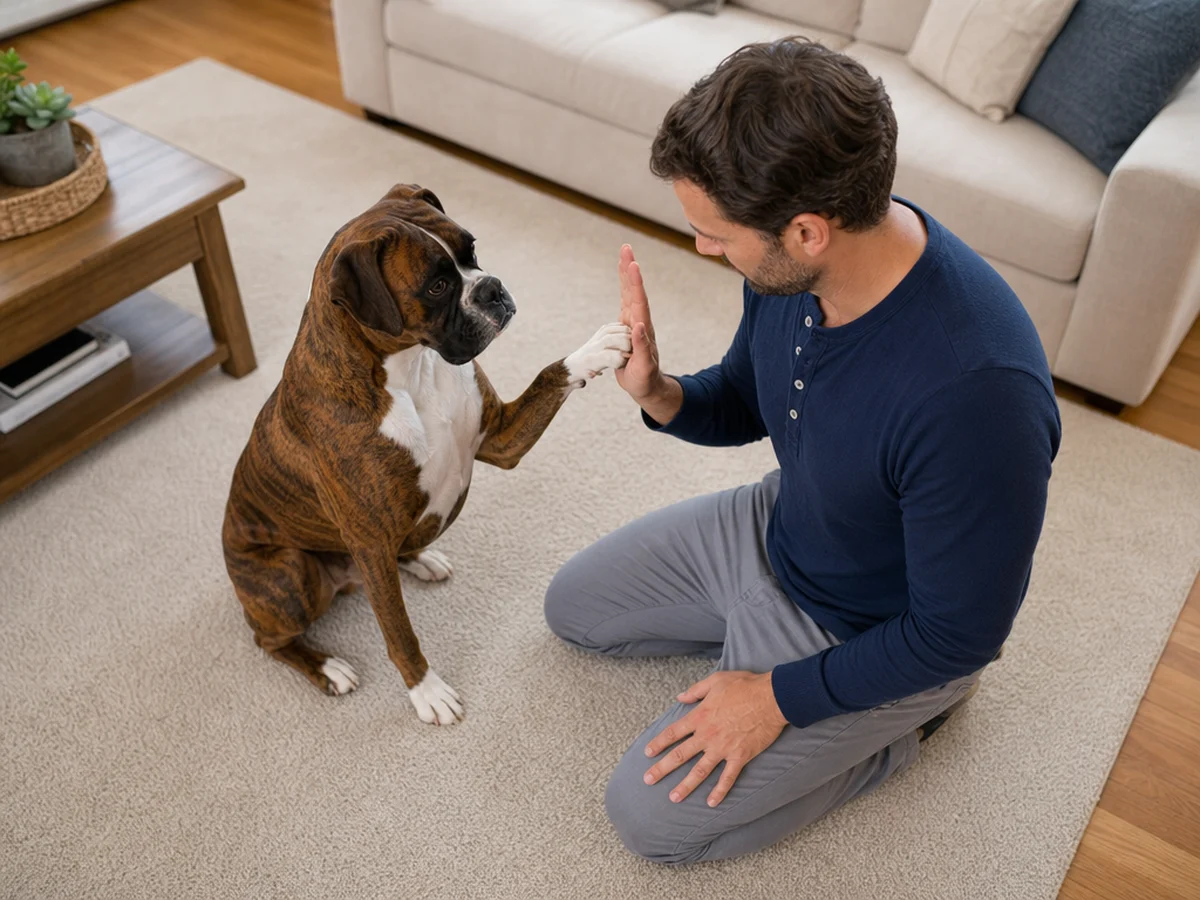
A reliable shake is most of a high five already. Present your flat palm as before, and as your Boxer's paw comes up, turn the palm to face them and let the paw tap it. Pay the touch, repeat, and only then start raising your hand by small amounts.
Keep the high five at chest height or lower so your Boxer stays on four feet and the trick does not blur into jumping. If leaping up at hands already shows up in your house, our Boxer bounce and paw swats guide covers that habit on its own. Give each trick its own word and its own hand picture, a sideways hand held low for shake and a palm facing your dog for high five. When every cue has a distinct look, a clever problem solver stops guessing which one you meant.
When Shake Stalls or Gets Too Rough
When shake stalls, the first move is to drop back to the last rung that went smoothly, because a stage that keeps falling apart usually means the step was too big. A few snags also come with a Boxer's size and enthusiasm, and three are worth planning for before they appear:
- Constant pawing at your arm comes from a clever dog working out that paws pay, so reward only after you have presented your hand or said the word, and quietly turn away from a paw that arrives unasked.
- A paw that lands hard or fast softens when you pay only the gentler contacts and hold your hand a little lower, so your Boxer has to reach and settle instead of slapping.
- A dog who drops into a down or mouths your hand is telling you the rung is too hard or the treats are too exciting, so pull your hand away, reset, and ask for something smaller.
Whatever the snag, end the session on a round that went well, so the last thing your Boxer remembers is winning. If your Boxer ever pulls a paw back as though it hurts, mention it at your next regular vet visit instead of pushing on with the lessons, and take paw handling itself to our Boxer vet handling training guide.
The Oldest Boxer Habit, Said Politely
The breed's English name comes from the way Boxers spar with their front paws, so a shake is a kind of translation. The same paw that spars in play now lands in a waiting palm and rests there, and nothing about your dog had to change except which version of the habit gets paid.
So when that paw settles into your hand, you are looking at an old breed habit with new manners, shaped by the small payments you made along the way. A paw in your palm is a small win, and our free e-book is built for the bigger list, covering the many other skills your Boxer will need in real depth and without ever feeling like homework.
 Exercise and jobsHow to Teach a Boxer to Spin
 Exercise and jobsHow to Teach a Boxer to Roll Over
 Exercise and jobsHow to Teach a Boxer to Weave Through Your Legs
