 Boxer
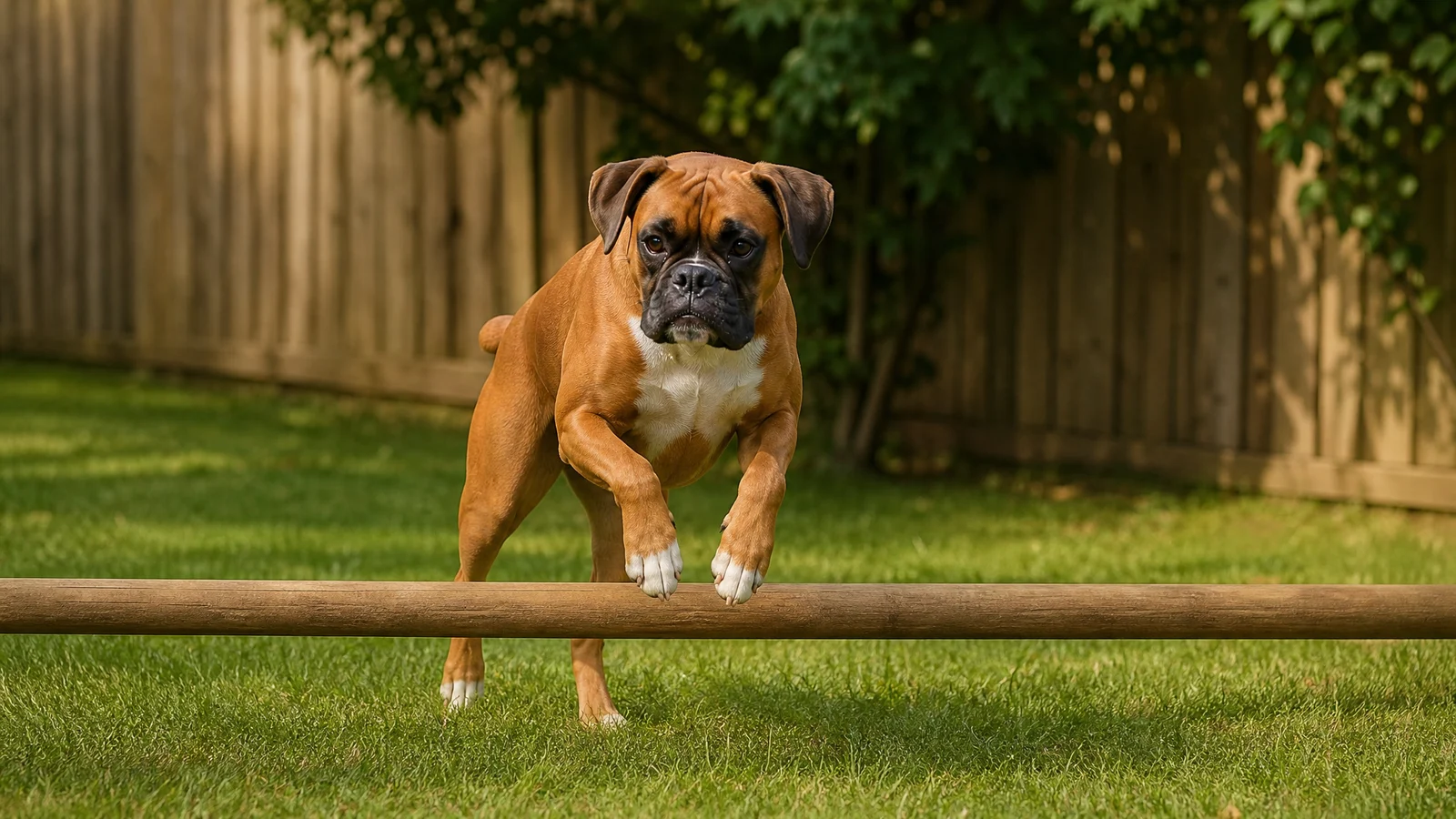
The hard part of teaching a Boxer to jump is asking for less. A dog who already treats sofa cushions and doorways as launch pads will happily turn a pole into a leap, so this lesson keeps the bar almost on the floor and the whole trick calm.
That calm is the point. A cued crossing gives your Boxer's spring a job you picked, and a clever dog who bores easily gets a small puzzle to solve instead of another round of bouncing. This guide covers who should wait, what to set up, five stages from a pole on the floor to a spoken cue, and the snags a bouncy Boxer tends to hit. Nothing here asks for height, and a broom handle and a few books are all the equipment it takes.
Agility Training for Boxers Begins With a Low Jump
Low is the whole plan, and it comes from what Boxers are like. They carry spring in every step, so your Boxer can clear far more than this lesson needs, and we find that a pole low enough to step over keeps a bouncy dog thinking about footwork instead of flight.
Wait Until Your Boxer Is Grown
Growth comes first. The usual recommendation is to wait until fully grown before asking a dog to jump, which is usually around a year to eighteen months, and since agility puts a dog's joints, heart and breathing under pressure, any medical concern belongs with your vet before you begin.
Pick a Pace and Plan Ahead
Boxers are slow to mature, so lean toward the far end of that window instead of the near one. A regular vet visit is the easiest moment to ask whether your dog has finished growing, and our Boxer puppy timeline shows how long that takes. If you hope to go further someday, the Boxer sports and jobs guide covers what a grown dog can try next.
The Boxer Jump Lesson, One Small Stage at a Time
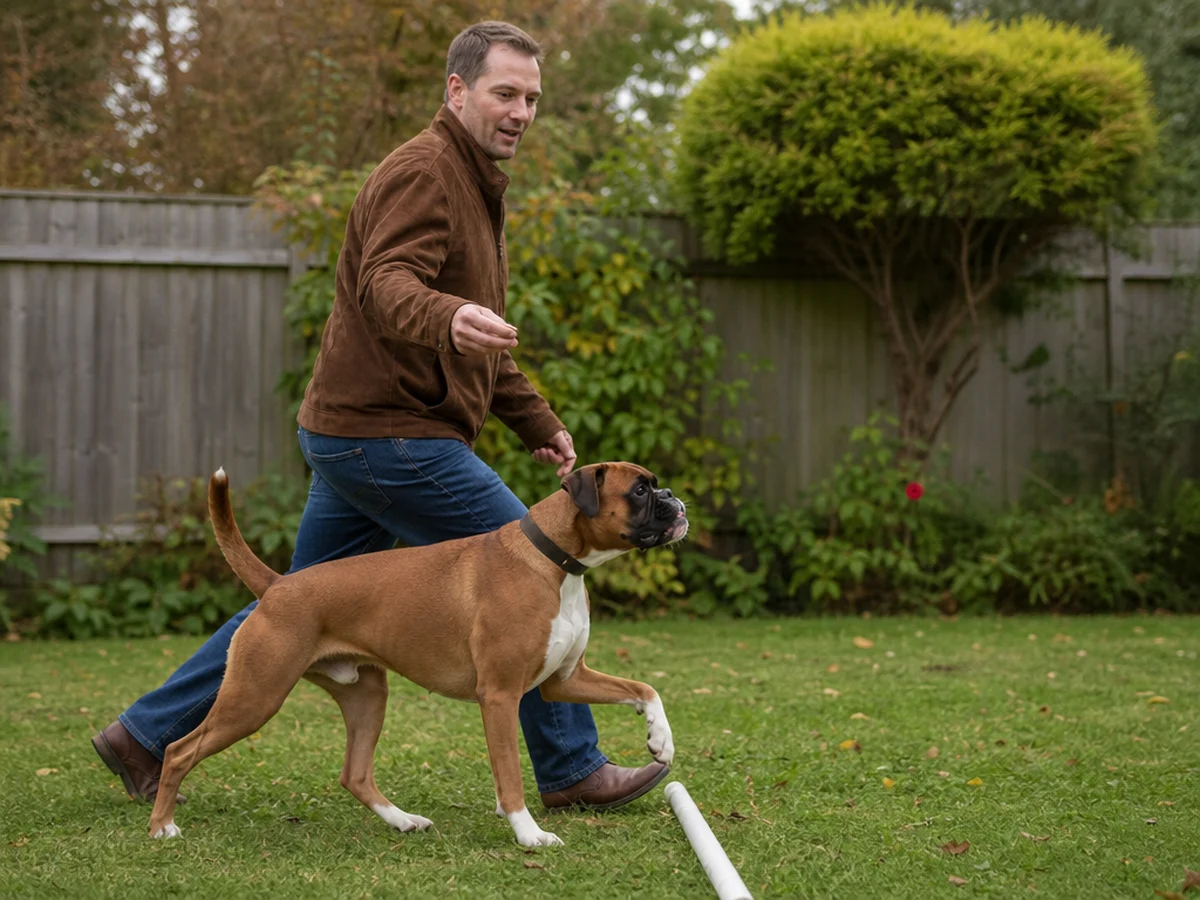
With growth settled, the gear is simple. A broomstick or any similar pole balanced between two low supports, such as stacks of books or flower pots, is enough, and it should fall if your Boxer bumps it so a mistake never hurts. Work on grippy flooring only, because a slippery surface risks an injury.
Put the pole across a hallway or the gap between two pieces of furniture, so your Boxer cannot swing around the end, and keep a handful of small, soft treats ready. Boxers get bored by repetition, so plan on short sessions and a quick stop while your dog is still keen.
Walk Across a Pole on the Floor
Start with the pole lying on the floor, because the first goal is only that your Boxer crosses it willingly. The whole stage takes four steps.
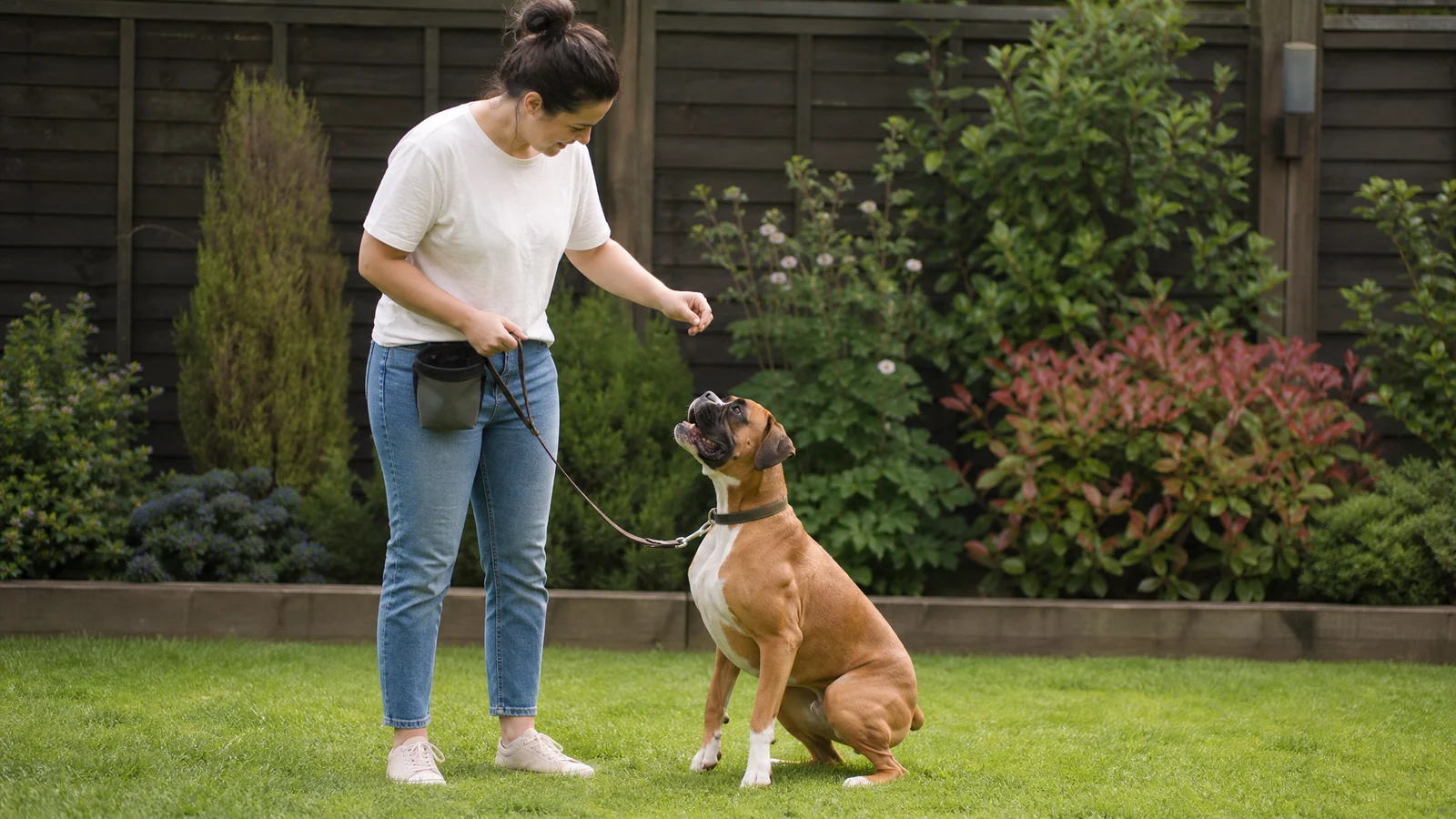
- Stand at one end of the lane with a treat at your Boxer's nose and walk toward the pole, keeping your dog's nose on the treat.
- Lead your Boxer straight over the pole and say "yes" the moment all four paws are across.
- Hand over the treat on the far side, so the reward arrives right where you want the landing.
- Turn, walk back to the start and repeat, keeping every round brief.
Move on when your Boxer crosses smoothly several times in a row. If they swing around the end of the pole, narrow the lane, and if they stop to sniff, hold the treat low along the line of the pole so that crossing becomes the shortest route to the reward.
Give the Pole a Little Height
Once floor-level crossings are easy, raise both ends of the pole by about the thickness of a paperback and repeat the same four steps. That is only enough to make your Boxer lift their feet instead of shuffling over. A bouncy dog will want to leap, and the height of your lure steers the height of the jump, so keep the treat low and lead straight along the pole.
If your Boxer launches anyway, lower the pole and pay for a calm crossing. Move on when the raised pole gets the same calm crossing as the floor-level one, and stop after a few clean tries to play, because a bored Boxer turns sloppy fast.
Shrink the Lure Into a Signal
Right now the treat is doing the asking, which is fine for learning and useless as a cue. Every trick runs on the cue, lure, behavior and reward chain, and once your Boxer clearly connects the signal with crossing, you can start giving it from a different spot and farther away. Fade the lure in three moves.
- Make the same hand motion with an empty hand while the treat waits in your other hand, and reward from the treat hand once your Boxer lands.
- Stand beside the pole instead of behind it, and let the signal send your Boxer across from your side.
- Shrink the motion a little each round until a small point toward the pole does the job.
Move on when your Boxer crosses to that small signal without hesitating. If they stall, bring the lure back for a while and fade it more slowly.
Teaching Your Boxer to Jump on Command
Add the word only after the empty-handed signal works, because a word attached too early is just noise. Pick one short word, such as over, say it once in a calm voice, then give the signal, and mark and pay the crossing as usual. Repeating the word teaches your Boxer to wait for the third repeat, so if nothing happens, stay quiet, reset and ask again.
Over the following sessions, wait a beat longer before the signal each time. When your Boxer crosses on the word alone with your hands at your sides, the signal can disappear.
Practice the Word in New Rooms
A new room feels like a new puzzle to a Boxer, so make it easy. Lay the pole back on the floor or just above it, bring the signal back for a few crossings and change only one thing at a time: the room, the floor or the person asking. When the crossing looks smooth, raise the pole back to its usual height, and add distractions last.
Four Ways a Boxer Jump Goes Wrong
Even a good plan wobbles somewhere, and a clever Boxer finds the wobble quickly. The table below lists four common ones, why a Boxer tends to do it and the single change that usually helps.
| What you see | Why a Boxer does it | What to change |
|---|---|---|
| Walks around the end of the pole | Going around is shorter, and Boxers solve problems by the easy route | Narrow the lane and hold the treat low on the line of the pole |
| Leaps high or rushes the crossing | Spring and excitement outrun the plan | Lower the pole, slow the lure and pay on the far side |
| Loses interest or wanders off | Boxers tire of repetition quickly | End the session, shorten the next one and swap the treat |
| Backs away after bumping the pole | The pole moved or made a noise they did not expect | Lay it flat again and pay for calm approaches |
Every fix changes the setup or the payment, never how hard your Boxer has to try, which keeps a keen dog keen. If a problem sticks, drop back one stage and build up again.
Practical Points Around the Pole
A few decisions sit around this lesson rather than inside it, and each can change how a session goes. Here are four of them, answered briefly.
Does my Boxer need other cues first?
No cue is required, but a reliable release word helps, because it tells your Boxer the crossing is over and keeps them from launching into the next round alone. A dog who already comes when called and settles on a mat will also be easier to manage in the lane.
Can we practice when it is warm out?
Wait for a cooler hour or work in a cool room, and keep sessions short, because a short-nosed breed can have a harder time cooling off. Our Boxer hot-weather play guide covers warm days in more detail, and your vet can tell you what suits your own dog.
Can a helper make this easier?
Yes, once your Boxer crosses to the signal reliably. A helper at the far end can pay the landing while you send from the start, which also teaches your dog to cross on your cue rather than chase the treat. Give the helper one job, the same treats and instructions to stay quiet until the crossing is done.
What if my Boxer seems stiff afterward?
Stop practicing and call your vet before the next session, because stiffness or a sudden reluctance to cross is a reason to check, not to push through. Keep the pole put away until your vet has had a look.
A Boxer Learns What Over Means
By now your Boxer understands one small, useful idea. Over means cross the low thing in front of you, on purpose, and get paid for it. That idea has room to travel, because a rolled towel in the hallway or a board lying flat on the lawn can become an over too, as long as the thing is low, flat and on grippy ground.
Each new one is a small puzzle for a dog who solves problems for fun and tires of repeats, so the same cue-and-pay routine often carries across after a quick reminder. A pole on the hallway floor is one small lesson, and our free Boxer e-book covers the many others a lively dog needs, clearly and completely, with nothing hard to follow.
 Training basicsAre Boxers Easy to Train? Smart or Stubborn
 Training basicsHow to Choose a Boxer Trainer
 Training basicsAre Boxers Easy to Train? Temperament and Trainability FAQ
