 Boxer
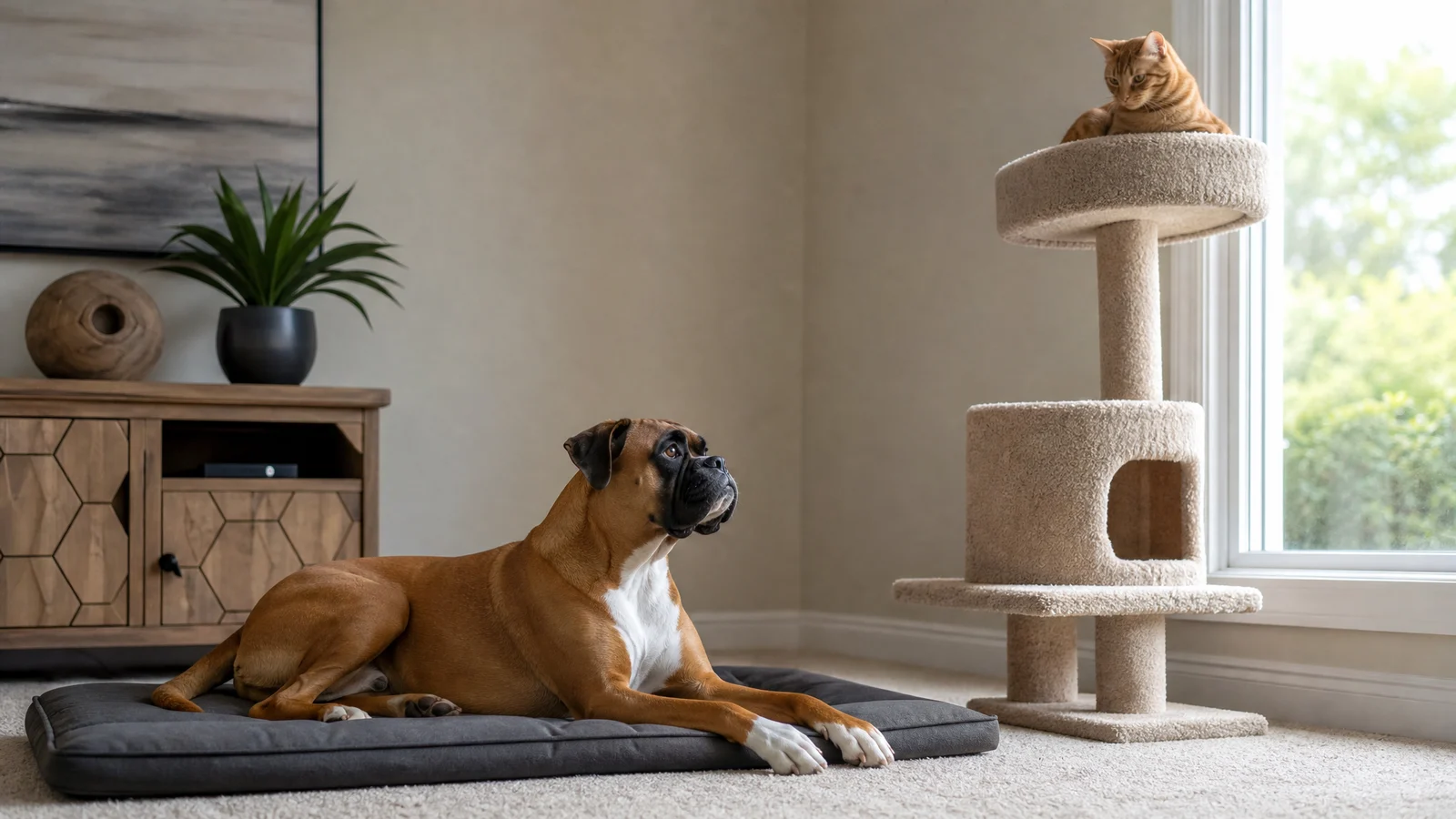
Whether your Boxer is the newcomer or the one who was here first, the first meeting with a cat or another dog can go wrong in a hurry. A Boxer's hello is a whole-body event, and a smaller animal may read all that joy as pressure.
Most of the fix comes down to pace and payment. Keep meetings short, leave the other animal an open exit, and reward your Boxer every time they choose calm.
In this guide, we cover both situations, a resident cat and a second dog, starting with the skills your Boxer needs well before any meeting takes place. Along the way you will see what to reward, when to move on and when to ask a professional for help.
Why Cats and Boxers Misread Each Other
Pace and payment only work when you know what each animal is actually seeing, so it helps to look at one meeting from both sides. The two views are very different, and neither animal can explain theirs.
From the Boxer's side, anything that moves is an invitation. Boxers are playful, high-energy dogs, so a flicking tail or a cat darting behind the sofa looks like the start of a game, and the Boxer's answer is to rush in, bounce and paw. From the cat's side, the same behavior is a large animal charging forward and looming, and a cat has no way of knowing the charge is friendly.
The cat's reaction then adds fuel. Running is exactly what turns a friendly rush into a chase, and a bouncy Boxer can hurt a kitten or an older cat without meaning to.
None of this makes a Boxer the wrong dog for a household with cats. It makes the first weeks a training project, and we plan every introduction from the cat's side first, because the cat is the one who needs a guaranteed way out of a bad moment. The Boxer's side can then be handled with leashes, gates and rewards.
Skills to Teach Before Your Boxer Meets a Cat
Plans on paper do not help when a cat strolls into the room and your Boxer's whole body lights up, so the first job is giving your dog something to do besides rush. Four skills cover most of what you will need, and each one can be taught in a quiet room with no cat in sight:
- Leave it. This teaches your Boxer that turning away from something exciting pays better than reaching for it. Always pay from your hand, not from the thing your dog left behind, so the cat never becomes the reward.
- Settle on a mat: A bed or rug your Boxer likes gives them a calm job when the cat walks through. Pay while they lie still, then pay again before they get up, so lying down stays worth the effort.
- Coming when called matters most at the moment a cat darts away, because that is when a chase begins. Practice with a leash on, in rooms the cat does not use, and pay with something better than anything the cat could offer.
- Check In: A glance up at you is the habit that keeps the other three working. Reward every look away from the cat with a treat, and your Boxer starts checking in on their own.
Making the Skills Stick
Boxers are clever and they bore quickly, so keep each practice session short and change the treat, the room or the order of skills often. Once the skills hold in a quiet room, rehearse them where the meetings will happen, and add the leash work in our guide to loose-leash walking, since your Boxer will be on a leash indoors for the early stages.
Every skill here is a payment plan for later. The more often your Boxer earns a treat for the right choice now, the more often they will offer it when the cat appears.
Four Stages to Get a Boxer Used to Cats
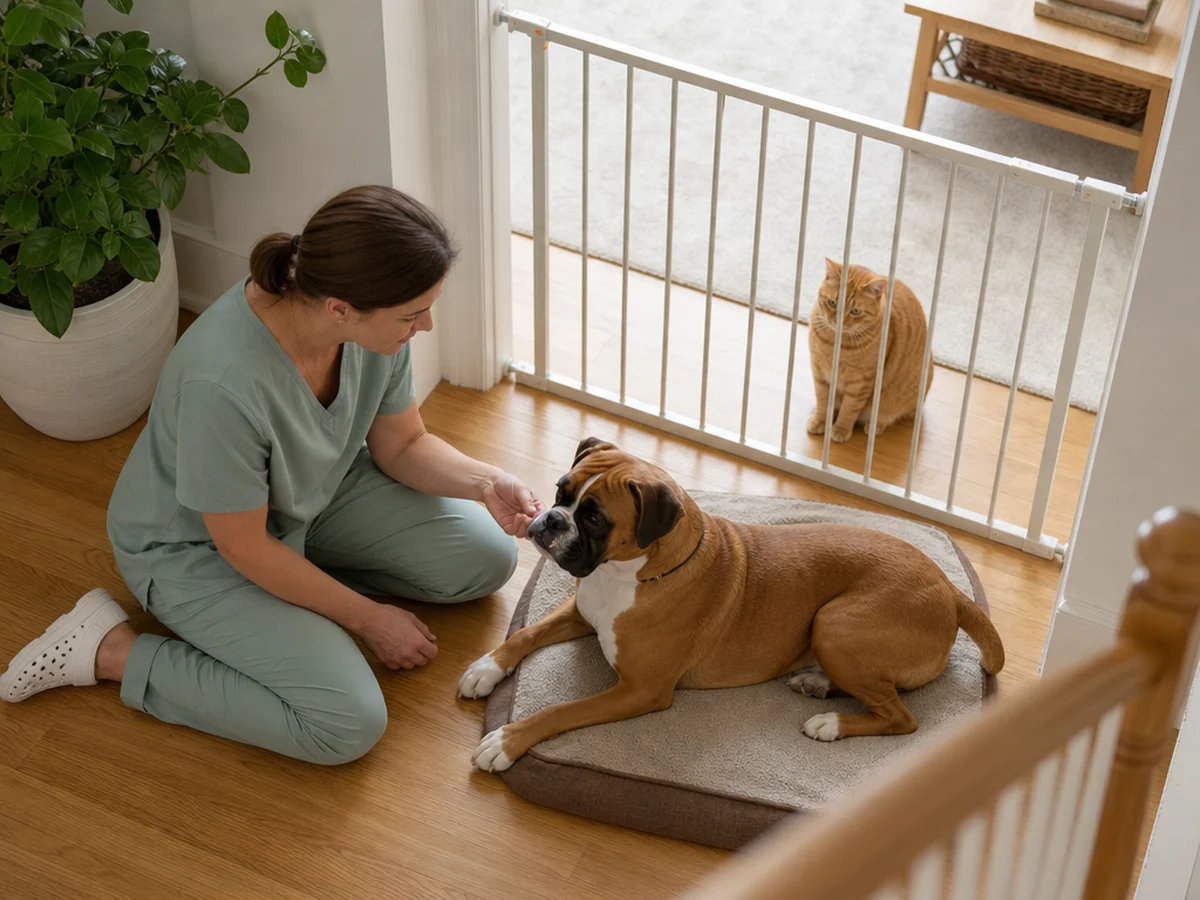
With those skills in place, the introductions can begin, although the first step has nothing to do with the cat. If your Boxer is the newcomer, make sure every pet already living in the house is up to date on their shots and in good general health, because a new arrival can be stressful for the pets already there.
How Careful Introductions Are Staged
American Humane's guide to introducing dogs to cats describes four steps: a calm location, scent exchange while the animals are kept apart, supervised leashed meetings, and gradually longer time together, with many experts recommending about a month of waiting before any unsupervised interactions. A dog who aggressively chases, pins or roughly handles cats may struggle to live safely with one.
The Four Stages With a Boxer
Here is how those steps look with a Boxer on the other end of the leash, along with a test for moving on from each. Stay at a stage until both animals pass it.
- Swap smells, not places. Rotate which animal has the run of each room so each learns the other's scent, and give your Boxer a chew in their own area. Move on when your Boxer shrugs off the cat's scent and the cat is eating, resting and using the litter box as usual.
- Meet Through a Gate: Use a baby gate or a barrier your Boxer cannot jump, and give the cat a high perch on their side. Each time your Boxer glances at the cat and then looks away, say your marker word and hand over a treat. Move on when your Boxer can notice the cat and look back at you without being asked.
- Share a room on leash: Keep sessions short and the cat free to leave. Ask for a settle on the mat, pay steadily for calm, and end each session before your Boxer's excitement builds. Move on when your Boxer begins to ignore the cat and the cat moves around the room naturally.
- Adding time while still supervising means lengthening the sessions a little at a time and letting the cat wander past while your Boxer is still on leash. Stay within reach, and when no one is home keep the animals in separate spaces. Unsupervised time comes only after many calm sessions.
Each pass should feel dull, and if it does not, that is your cue to slow down. A stage that excites your Boxer is a stage you have not finished teaching, so repeat it rather than pushing ahead.
When a Stage Does Not Go Well
If either animal shows fear or aggression at any stage, go back to the previous one and stay there longer. Keep up regular vet visits for both animals as well, and ask your vet before you begin if either one is unwell or recovering.
Meeting a Second Dog on a Walk
A second dog changes the problem, because either dog can chase and either can be chased. That makes the choice of dog as important as the method.
Choosing the Other Dog
The rating for getting along with other dogs in the AKC's Boxer profile is "With Supervision," and Boxers are not always tolerant of other dogs of the same sex, while most Boxers of opposite sexes enjoy each other's company. Neither point is a promise about one particular dog, but a pairing of opposite sexes may be the easier place to start.
Beyond sex, look for a dog who can match your Boxer's energy without bullying and who is steady enough to walk away from a bounce. A dog who is nervous or very rough is a harder first partner for a Boxer who greets everything at full volume.
The First Walks Together
The gentlest start is one dog at a time, ideally an easygoing dog whose owner joins you on a walk. Keep a polite distance until both dogs look relaxed, allow a short sniff, keep the leashes loose and keep each greeting brief. If either dog tenses, call them apart in a pleasant, relaxed voice, and if both look loose with wagging tails, you can consider a session in a fenced yard with the leashes trailing.
Your Boxer's job is the same as it was with the cat: notice, then turn back to you. Pay for each calm glance at the other dog, and call your Boxer away while they are still easy to interrupt, which is earlier than you might expect for a dog this bouncy. Rough play can look friendly for a while, so pause the game every so often and see whether both dogs choose to go back to it.
Our guide to socializing a Boxer covers meeting other dogs and playing gently with kids. That early work is the groundwork these walks build on, so it is worth a look if your Boxer missed it.
Keeping Cats Comfortable Day to Day
Once the stages are done, the real test is an ordinary week, with a cat who wants the sofa and a Boxer who wants everything. Give your cat places the Boxer cannot reach, such as a tall cat tree or a shelf, plus a room behind a gate, so the cat never has to win an argument to keep their space.
Spend your Boxer's energy well away from the cat. A real walk and a short thinking game stop a high-energy dog from saving it all for the moment the cat walks past.
Zoomies will still happen. Give them a home in the yard or a long hallway with the cat's door closed, and see our Boxer zoomies guide for outlets that double as recall practice.
Keep paying for boring. When the cat walks by and your Boxer stays on the mat, drop a treat between their paws without making a fuss, and do the same when they ignore a cat sitting in plain view. Boxers love variety, so change the treat, the mat's location and the way you pay now and then, which keeps the habit sharp for a dog who tires of repetition. Quiet payments like these feel dull to you, and that is exactly the point.
Signs to Pause the Plan
Both animals need watching for signs that the pairing is not working. Stop the introductions and bring in a qualified, reward-based trainer or behavior professional if you see any of these:
- Your Boxer stays fixed on the cat and ignores your attempts to call them away.
- Your Boxer lunges or snaps when the cat moves.
- Your cat stops eating, hides most of the day or avoids the litter box.
None of these means the pairing is hopeless, but each one means the stages need help from someone who can watch both animals in person. Until then, keep the animals apart whenever you cannot supervise them.
Edge Cases for Boxers and Cats
Three situations catch owners out once the stages are working: a cat who is not yours, a door that has become the most interesting thing in the house, and a Boxer with energy to burn. Each gets a short answer.
Will my Boxer accept other cats too?
Not automatically. A Boxer who is calm with your cat has learned about that one cat, and a neighbor's cat who bolts across the yard is a brand-new puzzle. Keep your Boxer on a leash outdoors, reward them for turning away from any cat, and treat each new cat like the first one you introduced.
What if my Boxer fixates on a door?
Take the door out of the game by moving your Boxer's mat and chews to the far side of the room, then pay for every moment spent there. If the fixation keeps up, ask a qualified trainer to help rather than letting it grow.
Should I tire my Boxer out first?
A walk and a short thinking game beforehand help, because a high-energy Boxer who has had an outlet finds it easier to pay attention. Treat that as a head start, though, and not a replacement for the stages, since a tired Boxer can still lunge at a cat who moves.
A Cat in the Room Can Mean Good News
Each stage above is built on one repeated idea: the cat appears, and something good happens for your Boxer. Repeat that often enough and the cat stops being a puzzle and becomes a signal, much as the sound of a jingling leash means a walk is coming. Your Boxer spots the cat, swings around to find you, and waits for the payment they have learned to expect.
That reflex is what lets a quick, bouncy dog share a house with a much smaller animal. Your cat, meanwhile, gets a housemate whose first reaction is a glance your way. A Boxer who can share a home with a cat still has a long list of skills ahead, and our free e-book sets out the full range of their training needs, complete without being heavy.
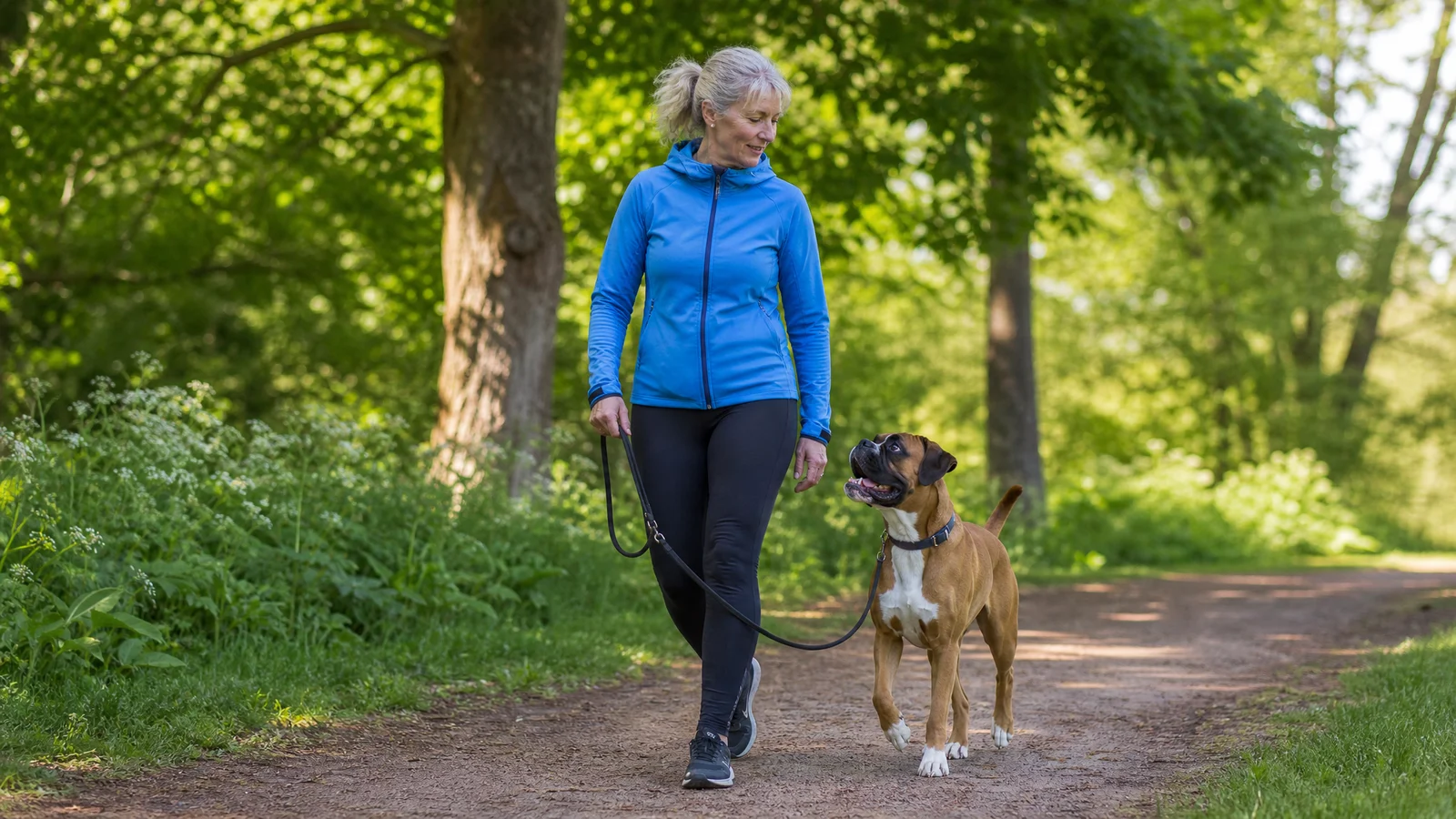 Training basicsIs a Boxer the Right Dog for You? What Training Takes
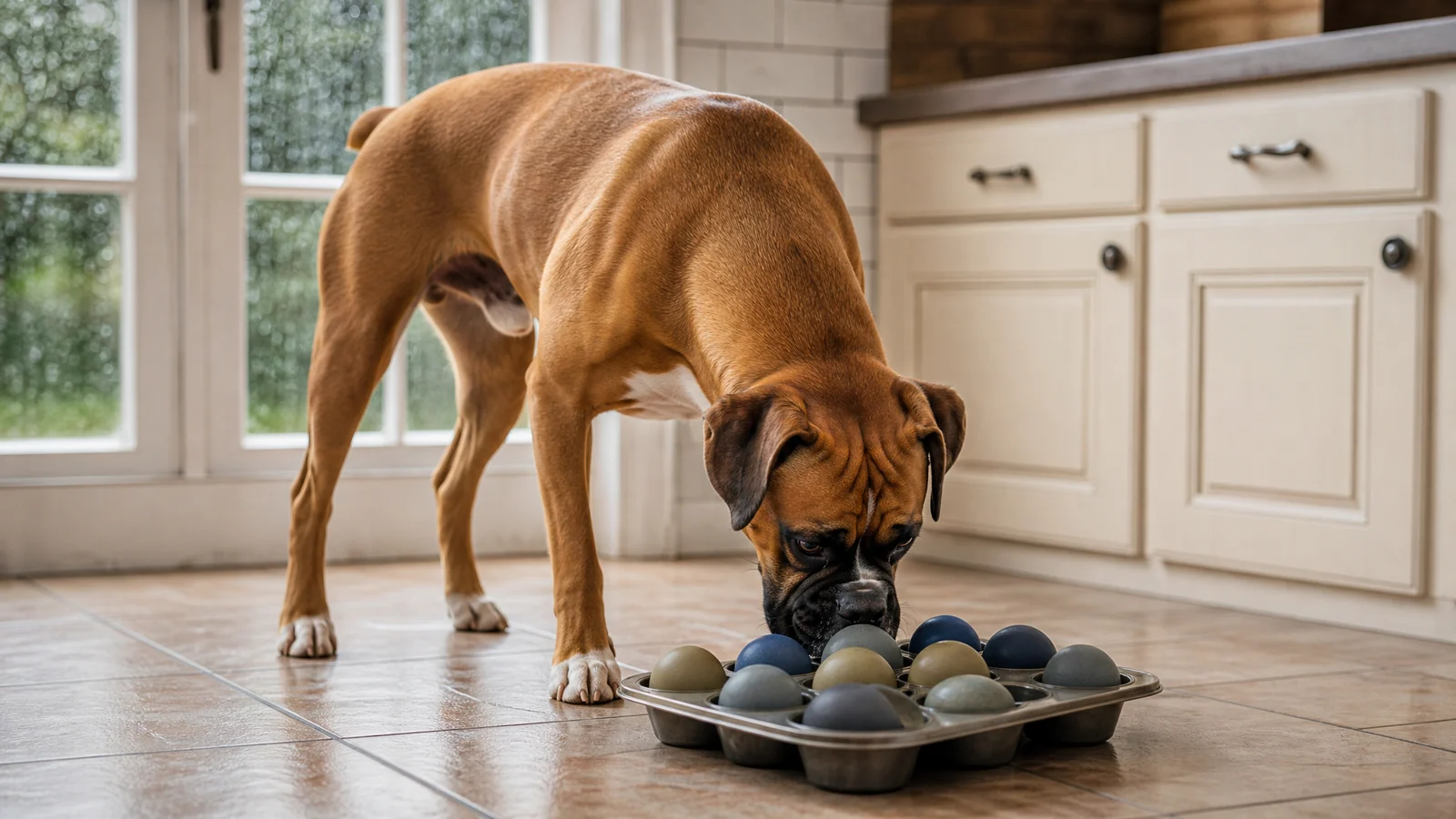 Exercise and jobsIndoor Activities and Brain Games for a Boxer
 Puppy trainingBoxer Puppy: What to Expect and How to Start Training
