 Boxer
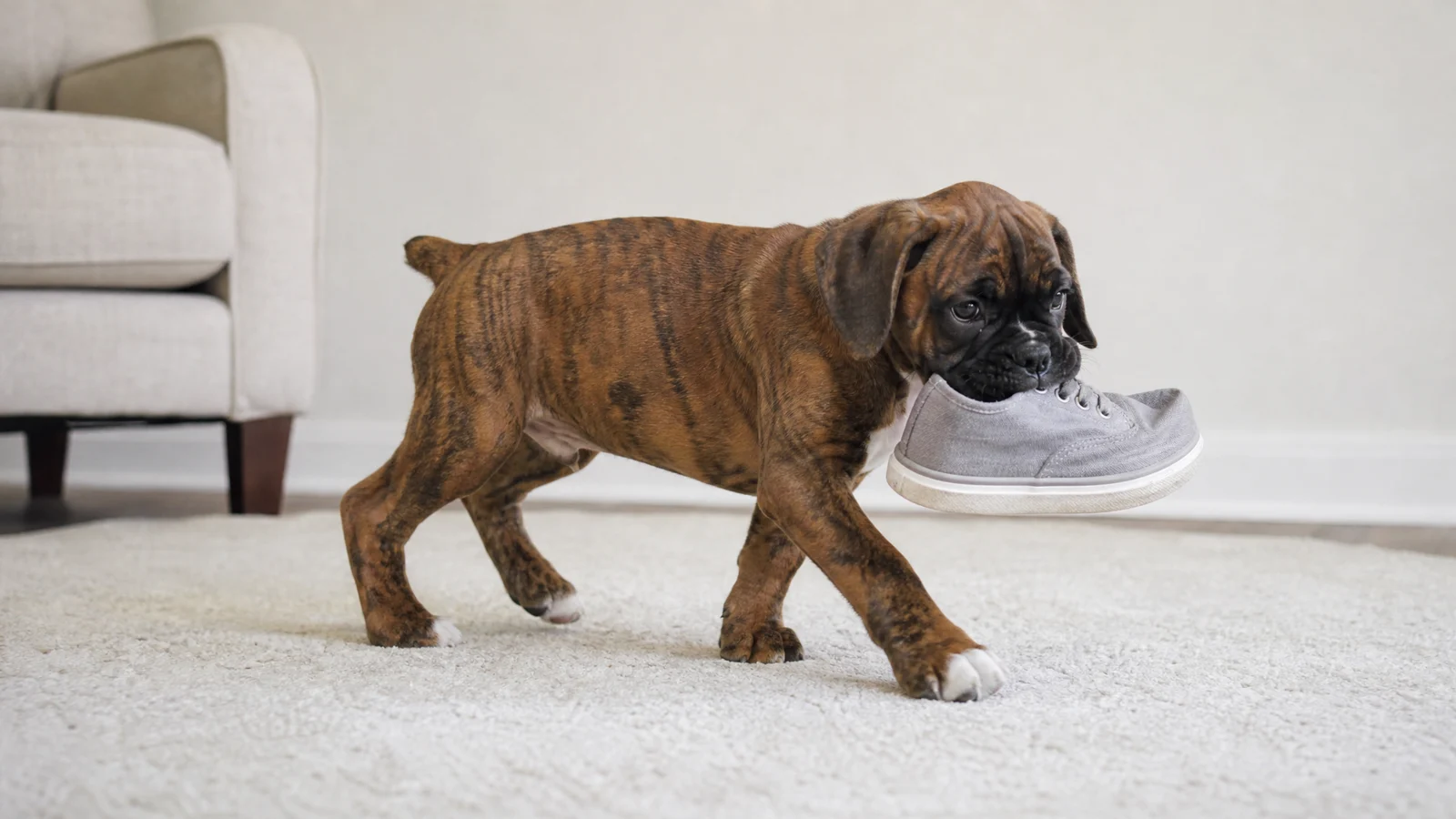
A Boxer puppy meets everything with their whole body. Visitors get a wriggling lean, couch cushions get a running start, and the leash makes a fine tug toy until somebody explains otherwise. That spirit is the best thing about the breed, and it is also what your training has to steer, because the habits a puppy rehearses now will one day be performed by a much stronger dog who is far harder to redirect.
Training starts the day your puppy comes home. It simply looks different at this age: small rewards, short lessons and a lot of smart management.
Below, you will find what a Boxer puppy is really like, how to set up the first weeks, and which early lessons give you the most for the least effort. Nothing here needs special equipment, only a little planning and a handy supply of small treats.
What Your Boxer Puppy Brings Through the Door
Knowing what you are working with makes every later decision easier, so start with three traits that shape most of a Boxer puppy's early months. Each one explains something you will see this week and points to what to do about it.
A Body That Leaps First
Boxers are athletic, playful dogs, and young ones seem to treat gravity as a suggestion. Your puppy will launch at faces, countertops and anyone who sits down, usually from sheer excitement rather than any plan to cause trouble.
Boxers are also a late-maturing breed, so the leaping energy sticks around far longer than the puppy teeth do. The training plan has to be built for the long haul, and decisions about greetings are worth making early, before a bigger body makes every habit harder to change.
A Mind That Tires of Repetition
Boxers are clever problem solvers with plenty of opinions, and they lose interest when a lesson never changes. Ask for the same sit again and again and you will watch attention fade well before the treats run out.
In our experience, a bored Boxer puppy rarely sits quietly and waits for something better. They go looking for their own entertainment, and it is often your shoe. So we keep lessons short and shift the details often: a new room, a different treat, a fresh twist before the old skill returns.
A Family Dog Who Sizes Up Strangers
With their own family and friends, Boxers are playful and affectionate. With strangers they tend to be a little deliberate, watching before they warm up, and then they respond quickly when the approach is friendly. They also take watchdog duty seriously.
None of that needs training as a job. The watchful side comes with the breed, and your part is making sure it grows up alongside plenty of calm, pleasant meetings with all kinds of people, which is where the socialization section below picks up.
Setting Up Your Puppy's First Weeks at Home
Once you know who is coming through the door, the next job is making your home easy for them to be good in. Most early trouble with a Boxer puppy is not disobedience, it is an energetic puppy with too much space and too little to do.
Start small. A single puppy-proofed room, or a gated corner of one, gives your puppy a place to rest and gives you an easy way to supervise without hovering. Handing over the whole house on day one tends to overexcite a young puppy, which is the opposite of what the first days need.
Setup does not need to be fancy. A good first-weeks routine has four working parts, and each one prevents a different kind of trouble.
- A resting spot: a bed or crate in a quiet corner, away from the busiest foot traffic. Puppies sleep a lot, and a place that is truly theirs makes it easier for everyone to leave them alone.
- Safe things to chew. Offer several different chews and swap them through the day, so a fresh option is always close and the table legs stay out of the picture.
- Supervised freedom grows in small steps. Let your puppy explore one room at a time while you watch, and widen the territory only as they show they can handle it.
- Predictable Timing: meals, breaks and naps at similar times each day help your puppy learn the shape of the day, which makes toilet trips and lessons easier to place.
Pick the pieces that fit your household and keep them steady for a few weeks. Puppies learn the pattern of a day from repetition long before they understand a single word.
Toilet Breaks Come Often
Toilet breaks need more planning than most new owners expect. Take your puppy out after meals, naps and play, then expect to repeat the trip more often than feels reasonable. A UC Davis puppy schedule lists 8 to 10 breaks a day for puppies 6 to 14 weeks old, easing to 6 to 8 a day at 14 to 20 weeks, because a young puppy's bladder muscles are not developed enough to hold on as long as an adult dog's can.
We keep the full methods on their own pages so this one can stay broad. Our Boxer potty training guide covers cues and accidents, and Boxer crate training covers the crate and time alone.
Boxer Puppy Socialization Without the Overload
A settled home gives your puppy a base to explore from, and exploring is the next job, because the first weeks are when new people, sounds and places leave the deepest mark. That window is real but short, so it pays to use it well.
The socialization stage lasts between 3 and 12 weeks of age, and most of what puppies learn about socialization happens in it. Positive experiences with people, new objects and new places during that stretch help a puppy gain confidence, so early outings and visitors count for more than they seem to.
Staying Safe Before Vaccines Finish
Socializing a very young puppy comes with a safety question, because they are still working through their vaccines. Choose a class that requires proof of vaccination, since a puppy should have at least one set of vaccines and a first deworming at least 7 days before the first session. Dog parks and other places that cannot be sanitized are best avoided until the whole vaccine series is complete.
Pick a class built on rewards, too. Treats and praise build the behavior you want, while punishment can add fear that shows up later as new problems.
Vaccine timing and health questions belong with your veterinarian, who knows your puppy's history and can say when classes and outings are safe. This page covers training only.
Letting a Reserved Puppy Set the Pace
Boxers add a wrinkle, because many are reserved with new people until the stranger proves friendly. Let your puppy approach on their own terms, and ask visitors to stay calm and let the puppy come to them instead of swooping in. Keep early meetings with small children seated, supervised and brief, since a bouncy puppy and a small child can overwhelm each other.
Pair each new thing with a small treat, and let your puppy back away whenever they want to. A puppy who is allowed to retreat learns that new things are safe to approach, while one who is pushed forward learns the opposite.
When you are ready for more, our guides to puppy socialization classes and socializing a Boxer go deeper on classes, children and other dogs. Both help you plan outings that stay inside what your puppy can handle.
First Lessons for New Boxer Puppy Training
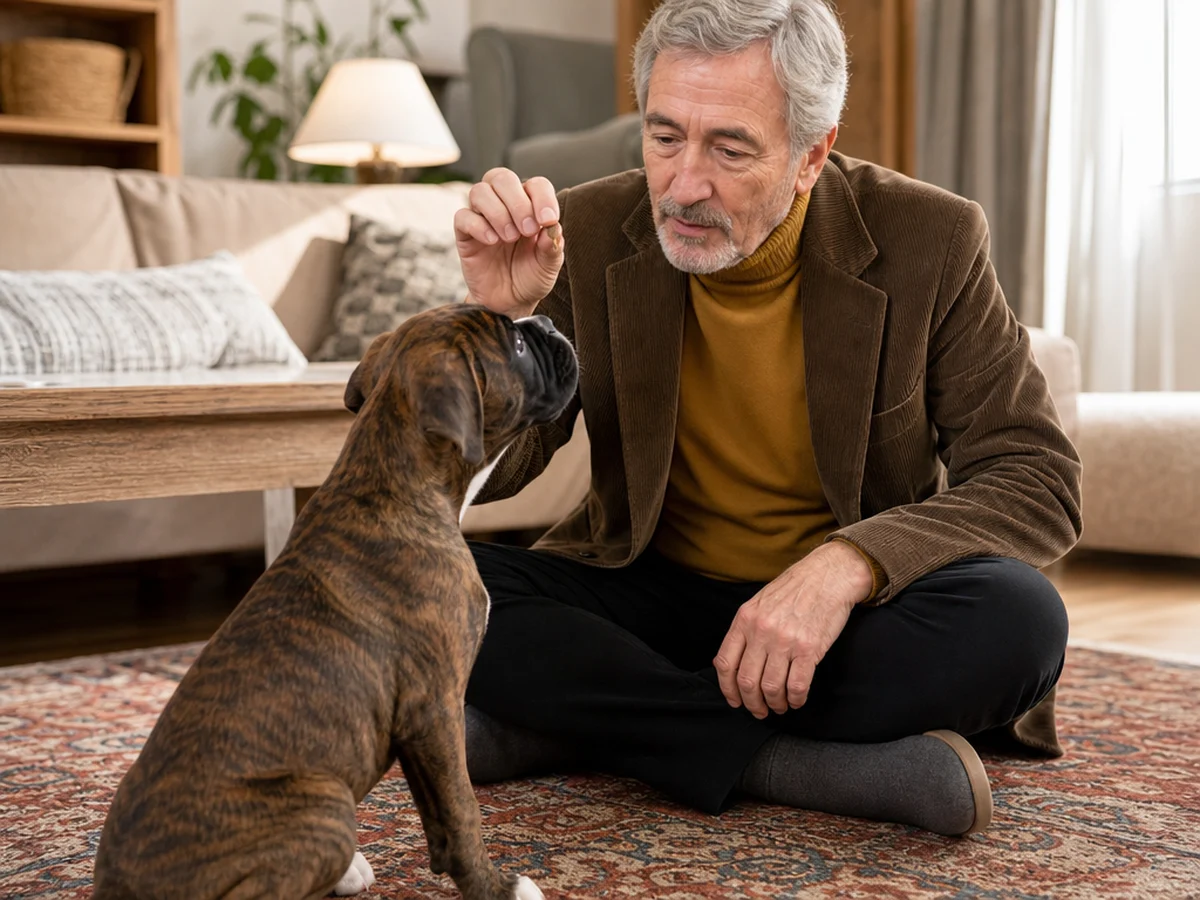
Safe socializing and a steady routine do half the work, and short lessons add the rest. Puppies are never too young to learn the basics, and for a bright Boxer who bores easily, lessons that feel like games are the ones that stick.
These four give you the most return for the least effort. Teach them in this order, because each one makes the next easier.
- Pick a marker word. Choose a short, cheerful word such as "yes" and say it the instant your puppy does something you like, then hand over a small treat. The word pinpoints which moment earned the reward, which makes every later lesson clearer.
- Name game: say your puppy's name once in a happy voice, and the moment they look at you, mark and reward. Never use the name for scolding, so it always predicts something good in a distracting room.
- Sit for greetings comes next. Hold a treat at your puppy's nose and lift it slowly over their head, and their bottom will usually drop. Mark and reward at once. A puppy who is sitting is not jumping, so this one skill answers doors and visitors.
- Come When Called: start a few steps away indoors, say the name and then "come" in a bright voice, and reward when they arrive. Keep every early recall a happy surprise, never the end of the fun, so the word stays worth running toward.
Keep each lesson brief and stop while your puppy is still keen. If they start to drift, you have usually gone on a little too long, and the fix is a shorter session next time.
Keeping Lessons Fresh for a Quick Mind
Because Boxers get bored when a lesson never changes, vary where, when and how you practice. Ask for a sit in the hallway, then the kitchen, then beside the back door, and switch between treats and a quick game of tug as rewards. The skill stays the same while the picture around it keeps changing, which is exactly what a clever puppy needs.
Fold practice into ordinary moments too. A sit before the bowl goes down, a name game while you wait for the kettle, a calm moment on the bed while you read: these small repetitions add up without ever feeling like homework.
Turning Puppy Bounce and Chewing Into Better Habits
Lessons teach your puppy what to do on purpose, but daily life is mostly the things they do on their own, so the next skill is offering a better option for each habit you do not want. Two of them show up early in many Boxer households.
Greetings That Keep Four Paws Down
Jumping works for a puppy because it gets results: faces come down, hands reach out and voices get higher. Take away the payoff by turning away calmly the moment feet leave the floor, then give attention and a treat the instant all four paws are down or your puppy sits.
Ask visitors to do the same, and keep a small jar of treats by the door so everyone can pay for good manners. A Boxer puppy who is rewarded at the door every time learns that sitting is the fastest way to say hello.
Mouthing and Chewing Need Outlets
Mouthing is how puppies explore and play, and a tired puppy mouths more than a rested one. When teeth land on hands or sleeves, calmly offer a toy instead, and give a nap or a quiet break if the grabbing keeps escalating.
Chewing follows the same logic, because a puppy with the run of the house and nothing better to do will find something. Keep a rotation of safe chews within reach, supervise whenever your puppy is loose, and save the full method for our soft-mouth training for Boxers guide.
Neither habit disappears in a week. Each swap you pay for makes the next one a little more likely.
Finding Outlets for All That Energy
Every swap above goes more smoothly with a puppy who has had a good day, because a satisfied puppy sleeps through more of the trouble, so energy deserves a plan of its own. Boxers are high-energy dogs with minds that need work as well as legs, and young puppies need both in small doses.
Several short play sessions and gentle walks spread through the day suit a growing puppy better than one long outing, and naps matter as much as activity. Build the day around bursts of play and training with real rest in between, and the wild evening hour often gets quieter.
Brain work counts as exercise too. Hide a few treats in a room and let your puppy sniff them out, and a clever Boxer will be pleasantly tired without extra running.
Sudden sprints around the room are normal for a puppy, so clear a safe space and let them run it out. Because Boxers mature late, ask your veterinarian what kind and amount of exercise suits your puppy at each stage, and keep regular vet visits on the calendar through the whole of puppyhood.
What Your Reactions Teach in Puppyhood
Boxer puppies are funny, and anyone who lives with one knows the problem: the shoe carried proudly past your chair, the full-body wriggle that sends a water bowl across the kitchen, the leap that nearly reaches the cat. Laughing is natural, but your puppy reads a laugh, a squeal or a game of chase as attention, and attention is a reward.
That does not mean keeping a straight face for months. It means choosing, on purpose, which moments get the big, warm reaction: the sit at the door, the toy brought over instead of your sleeve, the calm lap of a quiet room. Everything else can be met with a quiet redirect and very little drama, which usually helps those habits fade.
Your puppy will still make you laugh on days you least expect it, and that is part of why people love the breed. Training is how you keep the joy and lose the chaos. Your reactions keep teaching long after puppyhood, and our Boxer e-book, yours to keep without paying, takes every other training need in turn, thorough yet easy to read.
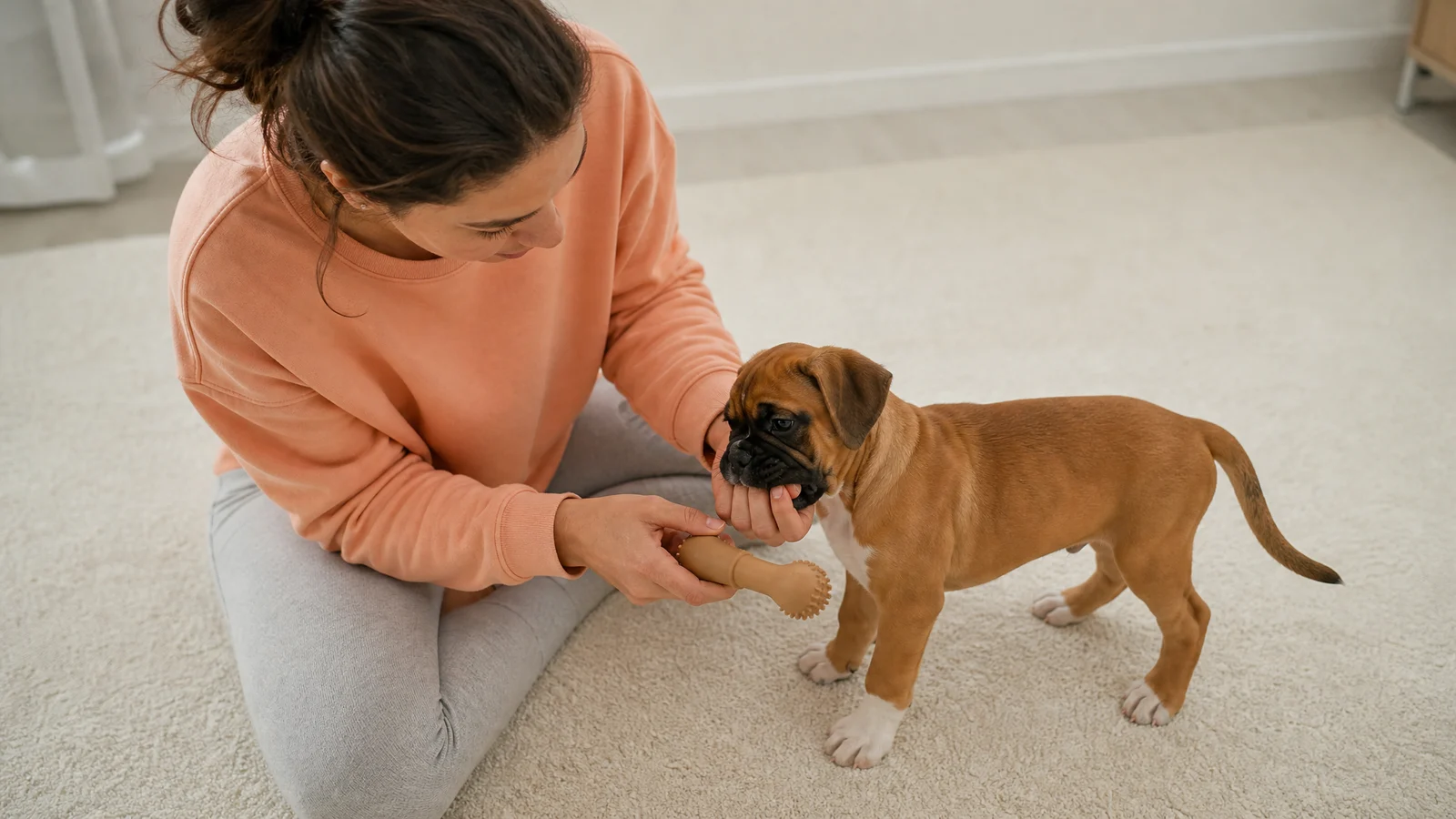 Puppy trainingBoxer Puppy at 3 to 4 Months: Teething and Mouthing
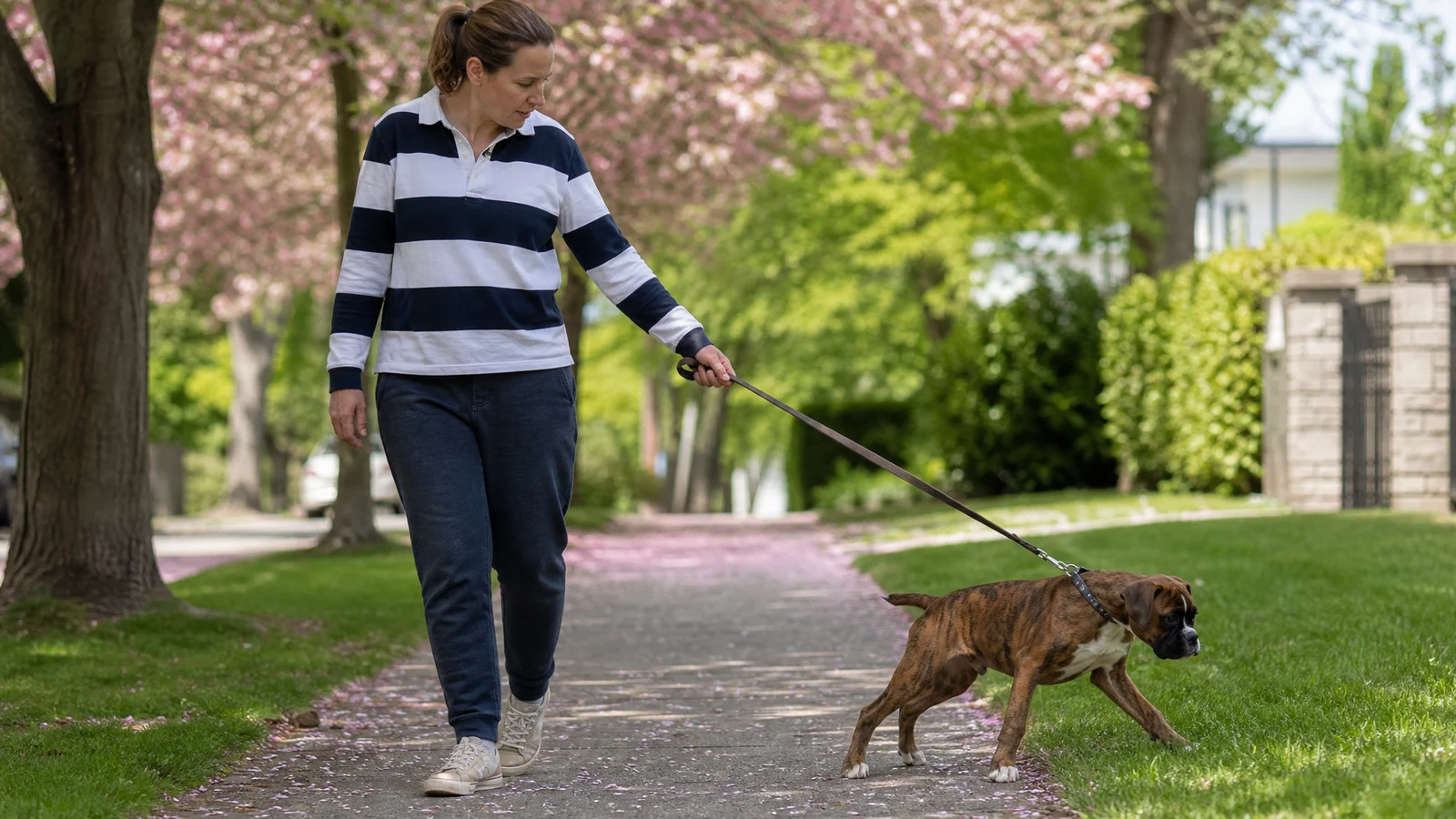 Puppy trainingBoxer Puppy at 4 to 6 Months: What Changes
 Puppy trainingBoxer at 6 to 12 Months: Adolescence Begins
