 Boxer
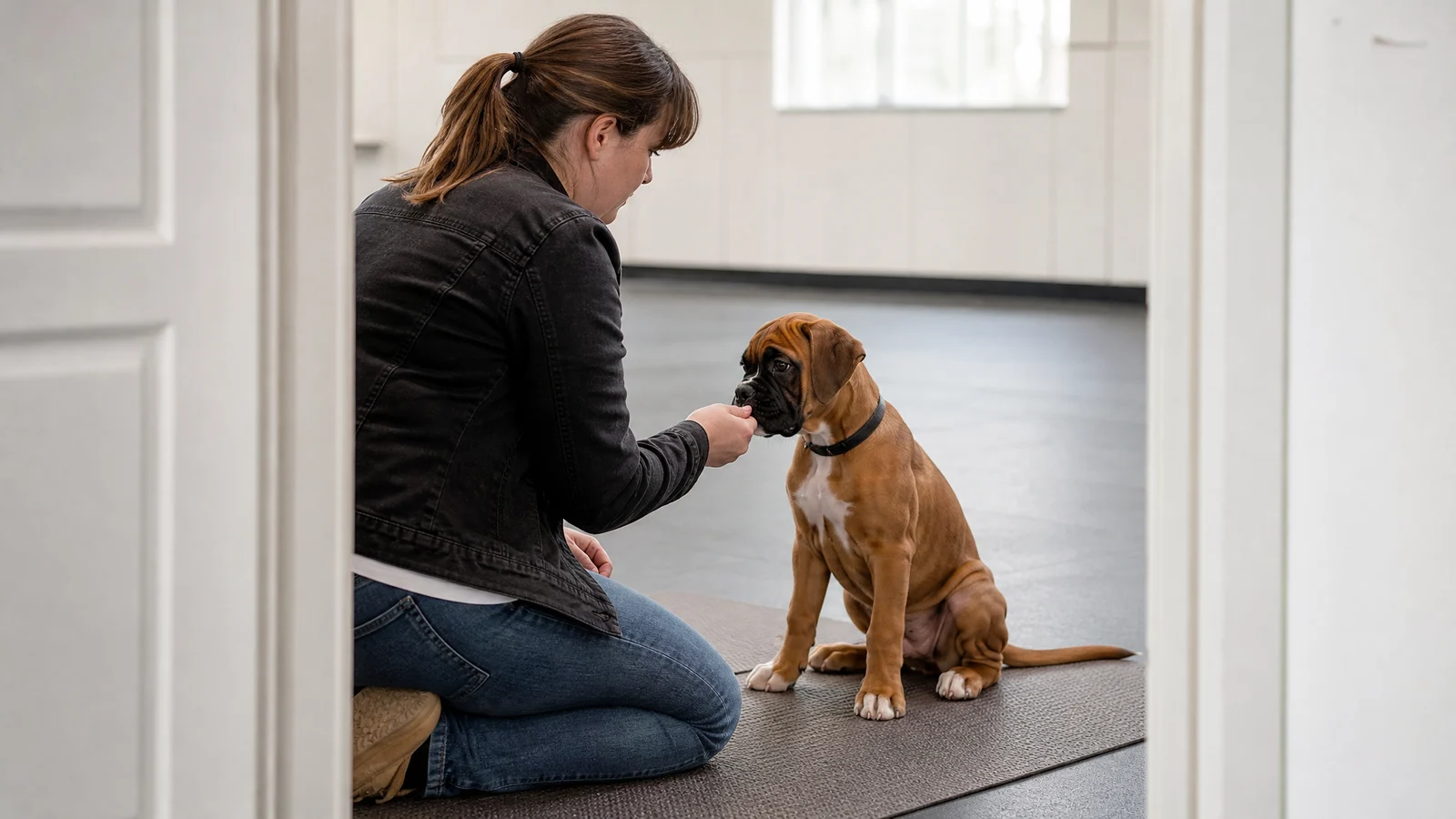
Early socialization and puppy training classes are vital for channeling the Boxer's energy and exuberance in a positive way. That is good advice, and it is where most plans begin. What it leaves out is how things play out in real homes: a Boxer who is deliberate and wary with strangers, greetings that turn into leaps, and puppy classes so busy that a young dog is overwhelmed instead of helped.
We have trained Boxers for many years and focus on their behavior and training, because this breed rewards careful, kind exposure. A puppy who learns early that new people bring good things grows into a dog who greets with joy instead of suspicion or chaos.
This guide shows how to judge the socialization goal, introductions to people, places and sounds, class fit, health and stress limits, and the practice that keeps those skills useful in adulthood.
What Puppy Training Should Build
Start with the adult behavior you want rather than a count of meetings. A Boxer should be able to notice people, stay grounded, recover from excitement, and look back to the handler without being pushed into every greeting.
Household Planning
Start with a goal you can picture: a Boxer who greets visitors with four paws on the floor, settles when you are busy, and looks to you in new places. Boxers spend a good deal of time jumping and leaping about, and young dogs need constant reminders to stay down. Decide now that everyone in the house will reward the same behavior.
Plan for the breed's power and bounce. A Boxer is strong, active and playful, which can overwhelm a small child or a very frail adult. Arrange seated, supervised greetings and keep a gate or pen ready for the moments when the puppy's energy peaks.
Training Around People With a Boxer
Puppies are most receptive to new experiences between 3 and 14 weeks old, so that window is when socialization does the most good. For a Boxer, the point is not to meet everyone. It is to show a naturally watchful dog that new people, places and noises are safe. Go gently, and never push a puppy closer than they want to go.
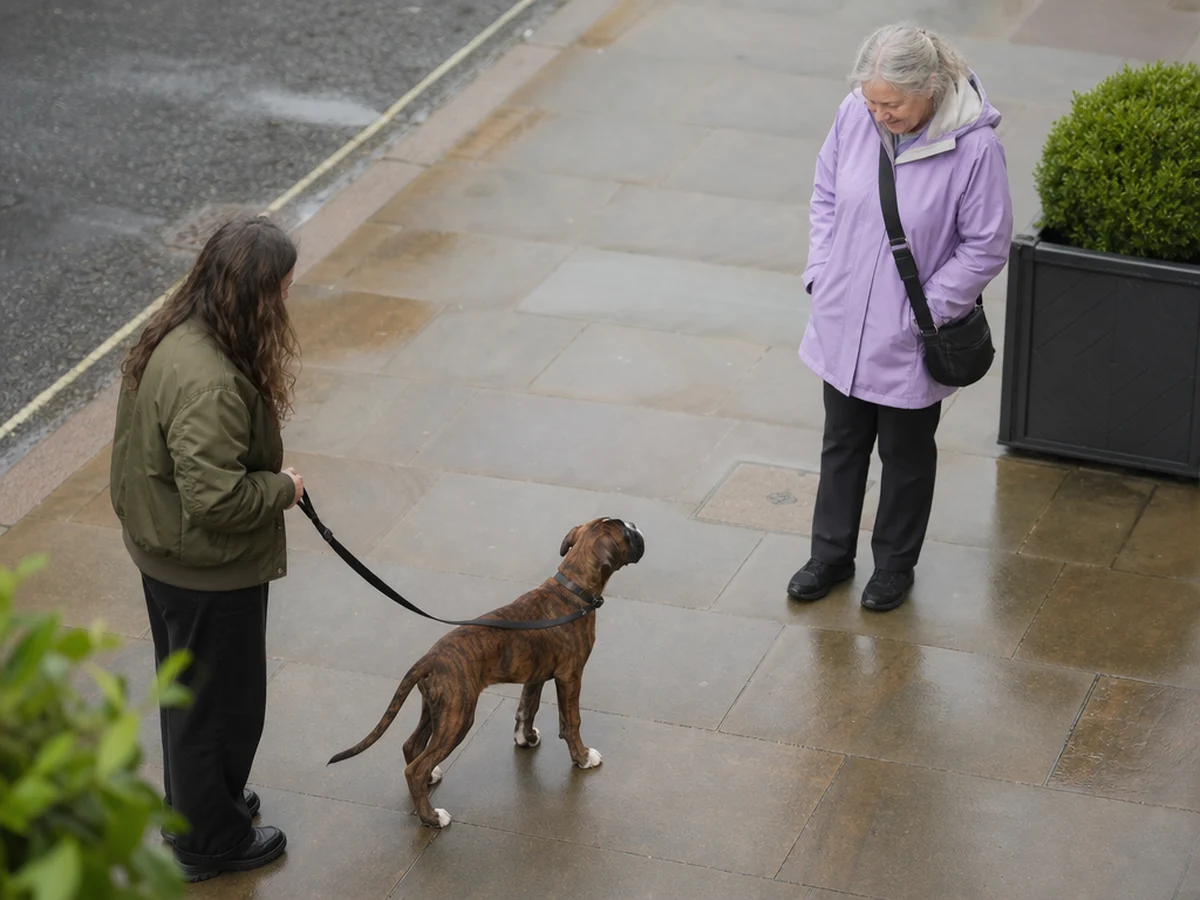
The breed standard describes the Boxer as deliberate and wary with strangers, yet responding promptly to friendly overtures honestly rendered. Read that as a training plan. Your job is to make sure every overture a stranger offers is honest: calm, unhurried and paired with something good.
People
Let your puppy decide when to approach. A Boxer who chooses to walk up to a stranger learns that people are safe, while a puppy who is swarmed learns that people are a lot. Brief your guests before they arrive, and use these steps:
- Ask the person to sit or stand quietly, turn slightly sideways and let your puppy sniff at their own pace.
- Hand the person a few soft treats to toss near their feet, then offer one from a flat palm once your puppy is coming close.
- Keep every greeting short and end it while your puppy is still happy and curious.
- Vary who your puppy meets, one at a time, including people in hats, sunglasses, uniforms and beards.
- Keep the mood low-key, because an excited greeting teaches jumping and a calm one teaches manners.
Maintaining Boxer Social Confidence
Socialization does not end when the certificate is on the fridge. An adult Boxer is still watchful, still strong, and still deciding what each new person means. Regular, pleasant exposure keeps their confidence and friendliness current, and it is far easier to maintain than to rebuild.
Plan maintenance outings that fit your week: a new walking route, a visit to a friend's home, a calm chat with a neighbor, a stop at a pet-friendly store. Keep treats in your pocket and pay for relaxed behavior. Boxers are good with other dogs under supervision, though they are not always tolerant of dogs of the same sex, so choose canine company with care.
If your adult is under-socialized, start slowly and be generous. Find the distance where they can see a stranger and still take a treat, reward calm looks, and let the person stay sideways and quiet. The UKC standard treats extreme shyness as a fault the breed should not show, which is a good reminder that confidence is something we help them build.
Progress takes weeks of tiny successes. If your Boxer reacts strongly even at a distance, ask your veterinarian for a referral to a reward-based trainer and keep exposure well under the level that worries them.
New Places in Puppy Training
Variety helps only while the puppy can stay curious, eat, and move freely. Choose quiet versions first, give the dog room to watch, and leave before novelty turns into pressure.
Places
Short visits beat long ones. Sit on a bench outside a store, take a car ride, let your puppy walk across slick floors, gravel and grass, and watch the world from a comfortable distance while treats flow. Leave while they are still curious, long before they go stiff or stop eating.
Read the body language as you go. A relaxed puppy takes treats, sniffs and moves loosely. A puppy who stares, leans away or refuses food is asking you for more distance, and giving it builds trust.
Sounds
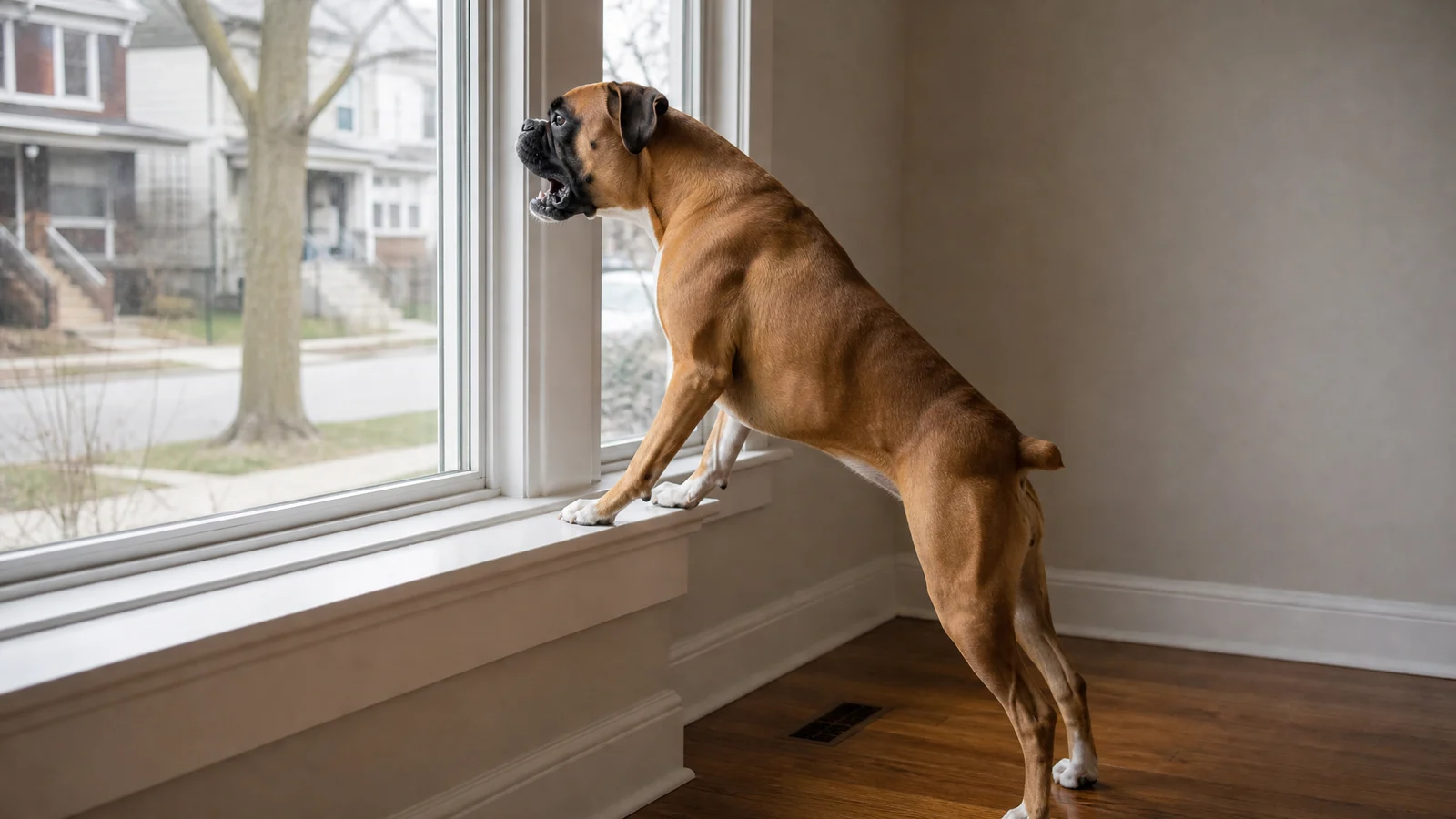
Boxers take the watchdog job seriously, so everyday noises deserve attention early. Play recordings of traffic, vacuums and doorbells quietly during meals or games, then turn them up gradually over several days. You want a puppy who notices a sound, glances at you and earns a treat.
Pair the real doorbell with a treat tossed onto a mat. Soon the bell predicts a calm game on the mat instead of an alarm, and your Boxer learns that visitors mean good news.
Health Limits for Puppy Training
Safe exposure depends on both physical protection and the puppy's emotional state. Set those limits before an outing so enthusiasm does not make the decision for you.
Health Planning
Book a first visit with your veterinarian right around pickup, and keep regular checkups on the calendar through the first year. Ask which places are safe for your puppy right now and when that will change. The window for learning about the world opens early, so you want an answer before you need it.
This is general information, not medical advice. Your veterinarian can tell you which vaccinations your puppy needs and when, and which outings and classes are safe until protection is complete, so check with them before you plan.
Choosing a Boxer Puppy Class
A class is where your Boxer practices manners around strangers and other dogs, so the room matters as much as the curriculum. Look for reward-based training, which does not mean a dog may do anything they want. Good classes give puppies clear structure, routine and guidelines, and they teach without fear, intimidation or pain.
Visit once without your puppy. Watch whether the puppies look loose and curious or frozen and frantic, and whether the instructor helps the shy and the bouncy alike. Then run through this checklist:
- Instructors reward good choices with treats, praise and play, and can explain why they teach what they teach.
- Classes are small enough that each puppy has room, and play is supervised and matched by size and style.
- Puppies can step back, take a break or watch from behind a barrier whenever they need to.
- Questions about vaccination and health requirements get clear, confident answers.
- Sessions are varied, since Boxers are intelligent and can become bored with repetition.
Red flags are easy to spot once you know them. Walk away from a class where shy puppies are pushed into the middle of the group, where play is a free-for-all, where nobody uses treats, or where the instructor cannot explain their methods in plain words.
Prepare your bouncy puppy so they can learn. Take a sniffing walk and a short game beforehand, bring small soft treats and a mat to settle on, and arrive early so they can see the room from a distance. Practice four-on-the-floor at home first, and if mouthing flares up, read about teaching soft mouths before the first session.
Class Research
Start calling trainers before your puppy comes home, because good puppy classes tend to fill up. Ask to watch a session, ask what the instructor does when a puppy gets overexcited, and ask which rewards they use. Our guide on where to start Boxer training pairs well with this homework.
Watch and Prepare
Puppy Training Outside Class
Class skills matter only when they work around everyday distractions. Keep the work varied, adjust distance when confidence dips, and practice in enough places that the puppy does not tie one response to one room.
Keep the Brain Engaged
Build on class with short, upbeat sessions many times a day. Boxers are excellent problem solvers with a mind of their own, so rotate games, rewards and cues instead of drilling one exercise. A puppy who is thinking is a puppy who is learning.
Reward four paws on the floor each time it happens, especially around visitors. The habit of staying down is built from hundreds of small, cheerful payments.
Adjust for Wariness
Selective hearing, extra bounce, or new wariness can appear even after earlier meetings went well. Do not take it personally and do not stop going out. Lower your criteria, increase the distance from whatever worries your Boxer, and raise the value of your treats.
Keep outings short and successful rather than ambitious. One pleasant visit with a calm friend beats a crowded street fair that ends in a puppy who is too wound up to learn.
Generalize the Skills
Skills practiced only at home fall apart in the real world. Reward in distracting places, starting far from the distraction and paying well, then move closer as your puppy succeeds. Mix treats, tug, praise and life rewards such as permission to sniff, so the work stays fun.
Repeat a class when greeting manners slip, when a new person or pet joins the household, or when you want a safe place to practice around other dogs. A refresher is a smart tune-up, not a sign that you failed.
One Calm Boxer Greeting
Every piece of this plan points at one idea. A Boxer comes into the world watchful and exuberant, and positive exposure teaches them who is safe. When the people they meet are calm and the treats are good, wariness turns into a confident, wiggly welcome instead of leaping, barking or retreat.
That is also why the work never stops being worthwhile. A well-socialized Boxer is a steady family dog who greets friends with joy and still takes their watchdog role seriously, without needing to treat every stranger as a threat.
Here is one thing to do today. Invite one calm, friendly person to your home, have treats ready, and ask them to sit quietly and ignore your Boxer at first. Then let your dog choose to approach, and reward every brave step toward a new friend.
 Training basicsBoxer Obedience Training With Rewards: Sit, Down, Stay, Come
 Training basicsHow to Teach a Boxer to Focus on You
 BehaviorHow to Stop a Boxer Barking
