 Boxer
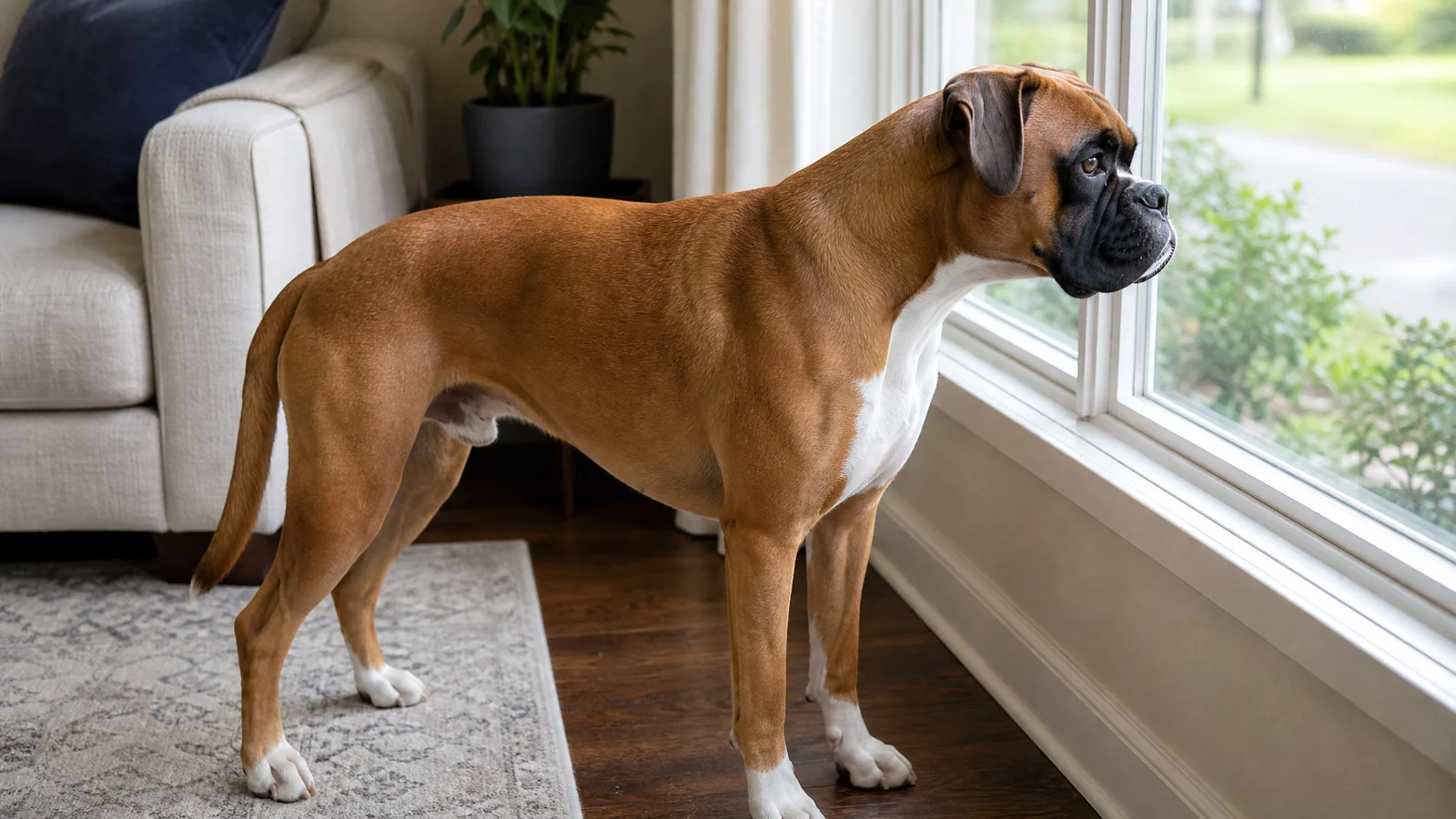
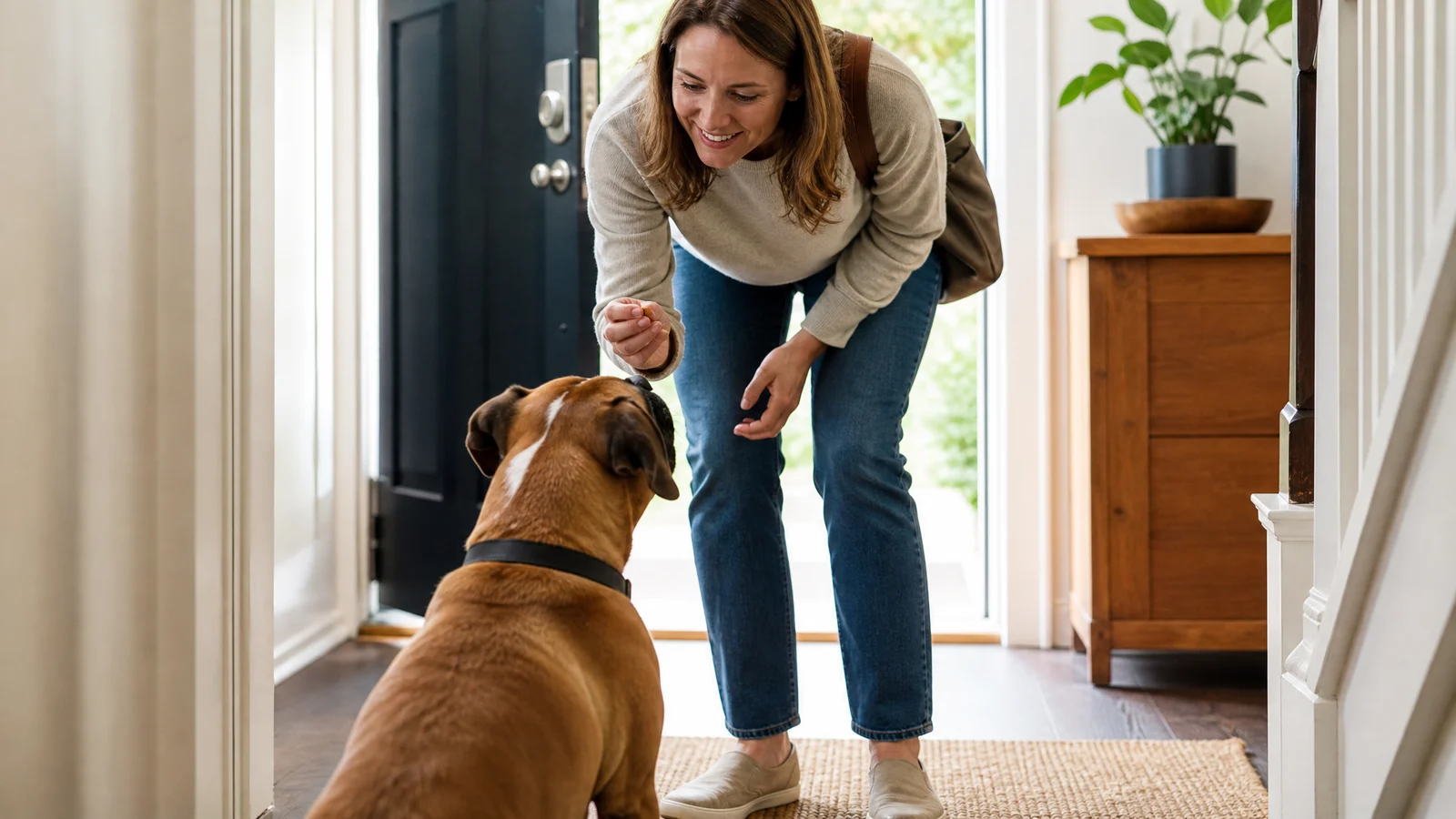
Owners describe the same scene again and again. The Boxer stands at the window, body stiff, eyes locked on the person coming up the walk. Then the door opens, and that same dog wriggles around the visitor like an old friend.
Nothing odd is going on. Watching and guarding are different jobs, and Boxers are far better at the first. Handled well, that alertness gives you an early warning system and a steady, friendly family dog. Handled badly, it drifts into barking at everything, or into a suspicion that is hard to undo.
This guide covers guarding in the Boxer, from the breed's working origins and the way instincts shift between puppyhood and adulthood to the line between watching and protecting. Then come a step-by-step alert-and-settle routine, house rules for guests and children, and the signs that tell you when to call a professional.
The Boxer's Original Job
Start with the work, because the work explains the dog in front of you. The Boxer descends from the Bullenbeisser, which noblemen in medieval Germany used on vast estates to run down, catch, and hold bear, bison, and wild boar. That history produced a brave, physical, close-working dog.
The breed was later developed to serve as guard, working, and companion dog, and the American Boxer Club notes that the Working Group classification is a natural fit. Military and police use followed after World War II. Today the same traits make Boxers good family dogs.
The breed standard calls the Boxer instinctively a guard dog, with an alert, dignified, and self-assured bearing. Read that closely. It describes a temperament, not a hobby. The key words are alert and self-assured, and neither one asks for aggression.
Taken as a whole, the standard asks for this mix.
It starts with a dignified, self-assured bearing that stays steady instead of jumpy. With strangers, the Boxer is deliberately wary but also genuinely curious, and they respond promptly to friendly overtures honestly offered. If truly threatened, they show fearless courage.
At home the picture softens, since the Boxer has a playful side with family and friends while remaining patient and stoical with children.
Here is the part owners most need to hear. Many Boxers watch strangers closely without ever putting up a guard or reacting defensively. A young Boxer on a walk may track every approaching person with full attention and then simply walk on. Watchfulness is not guarding. It is the raw material, and what you do with it decides which way it goes.
Character matters so much that the standard treats viciousness, along with extreme shyness, as a disqualification. A Boxer who snarls at every visitor is not showing breed type. They are showing a training gap or a worry.
How Boxer Instincts Develop
Guarding behavior is not a switch that is either on or off. It grows as the dog does, and what you should practice changes from one life stage to the next. Find your dog's stage below and start there.
Puppyhood
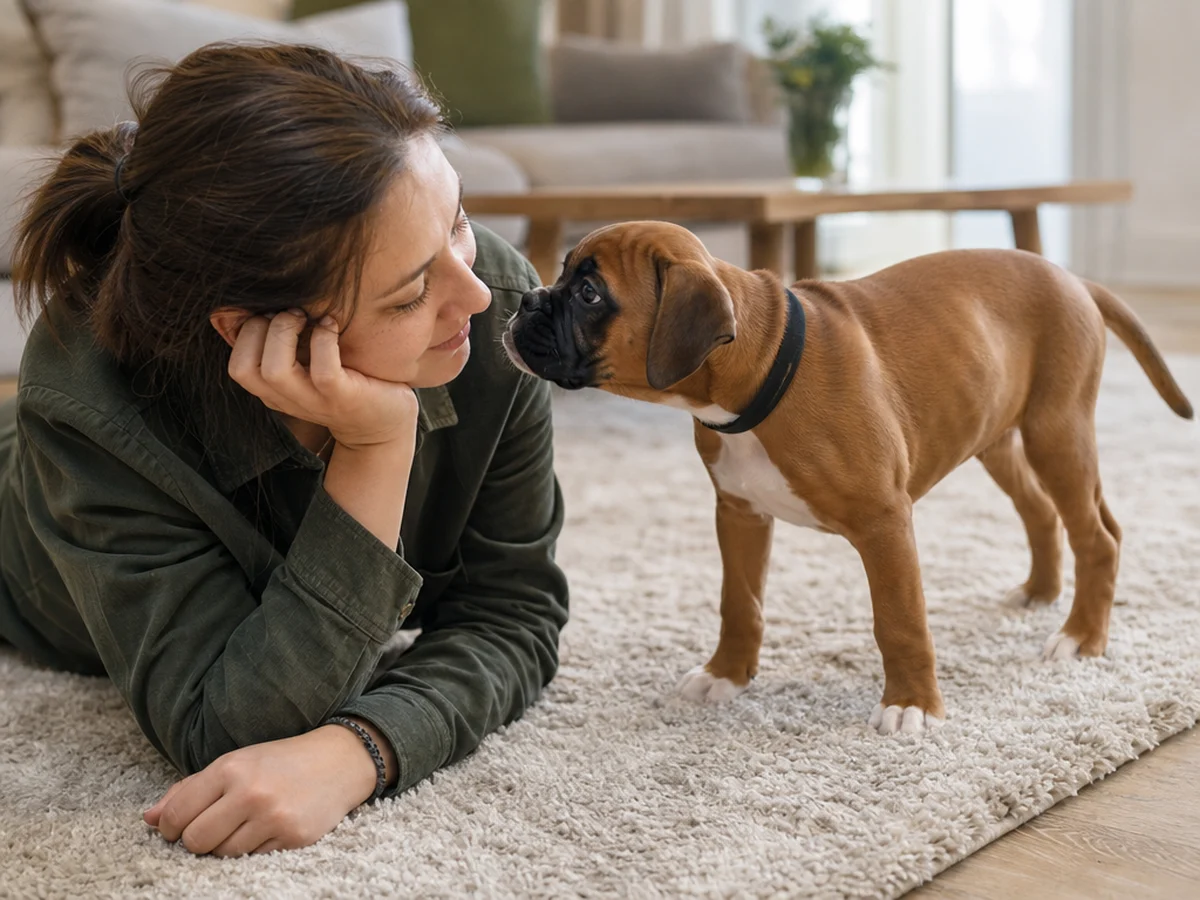
Puppies are not guard dogs. They are curious clowns who jump, wiggle, and test everything. Some Boxers show wariness of strangers from the very start, though, and it can persist while still easing with a slow introduction. Notice it early and never force the issue.
The breed's energy and exuberance are best channeled through early socialization and puppy classes. Introduce your puppy to new people, sounds, and places one at a time, hand out treats as each goes well, and let them approach at their own pace. Our guide to socializing your Boxer covers the details.
Adolescence
As young Boxers mature, some owners notice a new interest in what happens beyond the property line. A dog who was quiet before may start barking, and sometimes growling, at people walking past the yard. Treat it as a training moment, not a verdict on their character.
Some owners see the opposite: a Boxer who once barked at every entrant now rarely does. If the yard or window feeds the barking, block the view, reward quiet, and keep the social outings going.
Adulthood
Adult Boxers tend to be protective in particular situations rather than suspicious all day. Owners most often report it when people seem nervous or suspicious around dogs, and when strangers or unfamiliar dogs approach the children. When it happens, it usually comes without aggression, though dogs vary.
Mind the dog-to-dog side too. Boxers do well with other dogs under supervision, but they are not always tolerant of dogs of the same sex. Give your Boxer extra distance when an unfamiliar dog heads toward your family.
Watchdog Versus Guard Dog
Breed ratings put the Boxer at 4 of 5 for watchdog and protective nature, yet only 3 of 5 for barking, which means occasional. That gap tells the story. The American Boxer Club describes a dog who is always vigilant but not nervous, and one who will not bark without cause.
People lump several different jobs under the word guarding. Pulling them apart helps you decide what is worth working on.
Alerting
Alerting means noticing something and telling you. Boxers do this very well, and it is the job to keep. A short burst of barking or a still, stiff stance when the doorbell rings is the breed doing its natural work.
Deterring
Deterring happens before anyone says a word. A square-built dog with strong limbs and an alert expression makes most people think twice, with no growling needed. Your Boxer deters just by standing in the hall, and it costs you nothing.
Protecting
Protecting means acting against a real threat. The standard gives the Boxer fearless courage if threatened, and that is where the reputation comes from. Real threats are rare, though, and a dog who treats every doorbell as an emergency is anxious, not brave. Courage is a trait of temperament here, not a skill for you to build, and viciousness is a disqualifying fault, not a goal.
You will hear that a guard breed should be encouraged to be suspicious so they take the job seriously. We disagree. Boxers already take the roles of watchdog and family guardian seriously, and extra suspicion mostly produces a dog who cannot relax around guests.
Training the Alert Boxer
The goal is a Boxer who tells you, then lets you take over. Everything here is reward-based, which does not mean permissive. Dogs thrive on structure, routine, and guidelines that are taught without fear. Work through the steps in order, starting where your dog is calm.
Noticing the Alert
Begin by learning what your Boxer is alerting to. Barking has many causes, and identifying the cause comes before any fix. Window sightings, doorbell sounds, and people passing the yard may each need slightly different handling.
When the alert happens, go and look. Say a calm thank you as a marker, then give a treat. You are telling your Boxer that noticing is valued and that the job is now finished.
Settling After the Alert
Teach the settle on a mat in a quiet room first, away from triggers. Follow this order:
- Reward your Boxer for lying on the mat, and reward immediately while they are still down.
- Add the cue word settle just as they lie down.
- Stretch the time between treats slowly, so calm lying becomes the habit.
- Practice with a mild trigger, such as a recorded doorbell at low volume.
- Move to real triggers at a distance, then closer, rewarding every calm response.
Keep sessions short and change the game often. Boxers are highly intelligent, and they get bored with repetition.
Releasing the Alert
Next, teach a word that means the alert is over. After the thank you, say all done, give the treat, and send your Boxer to the mat or a chew. In time the words themselves become the signal to stand down.
If barking keeps going, use a calm interrupt. Step between your dog and the window, wait for the first pause, and reward it. Then close the curtains or move the dog away from the view.
Guarding Around Family and Guests
Guests, children, and neighbors are where training meets daily life. The standard describes the Boxer as deliberate and wary with strangers, yet quick to respond to friendly overtures honestly rendered. So make the overtures honest, and give your dog time.
Slow introductions work best. Ask guests to let the dog sniff a hand and to use gentle, high-pitched talk before any head pats. Some owners find wary Boxers warm up within minutes when nobody rushes them.
Excited greetings are the other half of the problem. Young Boxers constantly need reminders to keep all four feet on the floor, so work on that with our guide to training a Boxer not to jump.
Children deserve special thought. The breed rates 5 of 5 with young children, and the standard calls them patient and stoical with kids. That warmth is also why protectiveness can appear when strangers or unfamiliar dogs approach the children. A powerful, bouncy Boxer can also overwhelm a small child, so supervise.
Set these house rules and keep them the same every day:
- Guests ignore the dog at first and offer a low hand only after the Boxer approaches.
- The Boxer waits on the mat or behind a gate until calm, then earns a reward for staying there.
- Children never hug, grab, or stare down the dog, and adults supervise play.
- Unfamiliar dogs are kept at a distance, and you step in front of your Boxer before they have to worry.
- The yard and front window are managed so passersby do not become a constant trigger.
Guarding Progress and Warning Signs
Judge progress by how quickly your Boxer recovers, not by whether they ever alert. The standard penalizes a lack of alertness, so a few barks at the door are no failure. What you want is alert first, then settle on cue. These signs say the approach is working:
- Your Boxer alerts with a short bark or a hard look, then turns to you within moments.
- They go to the mat on the settle cue even with a visitor in sight.
- Barking at passersby gets shorter and rarer week by week.
- Wary greetings turn loose and wiggly after a slow introduction.
- They shake off a trigger and return to play or rest quickly.
Some behavior needs more than home training. Fear-based reactivity does not respond to enthusiasm alone, and it is kinder to get help early. Bring in a qualified reward-based trainer or a veterinary behaviorist if you see any of these:
- Growling that escalates, snapping, or any bite toward people.
- Barking while backing away, cowering, or with raised hackles and no recovery.
- Refusing treats around triggers even at a good distance.
- Reactions that grow worse after weeks of steady, rewarded practice.
- A sudden change in behavior, which calls for a vet visit before anything else.
Keep up regular vet visits as well, since they catch problems that training cannot fix. The Boxer is built to notice, so give that watchfulness a clear end point. Reward the alert, teach the stand-down, and let the friendly side of the breed do the rest. A Boxer who knows the job ends with a thank you will watch over your home with dignity and still greet your guests like old friends.
 Training basicsLeash Training a Boxer: Pulling, Lunging and Loose-Leash Walking
 BehaviorTeaching Your Boxer to Play Gently With Kids and Meet Other Dogs
 BehaviorHow to Train a Boxer Dog Not to Jump
