 Boxer
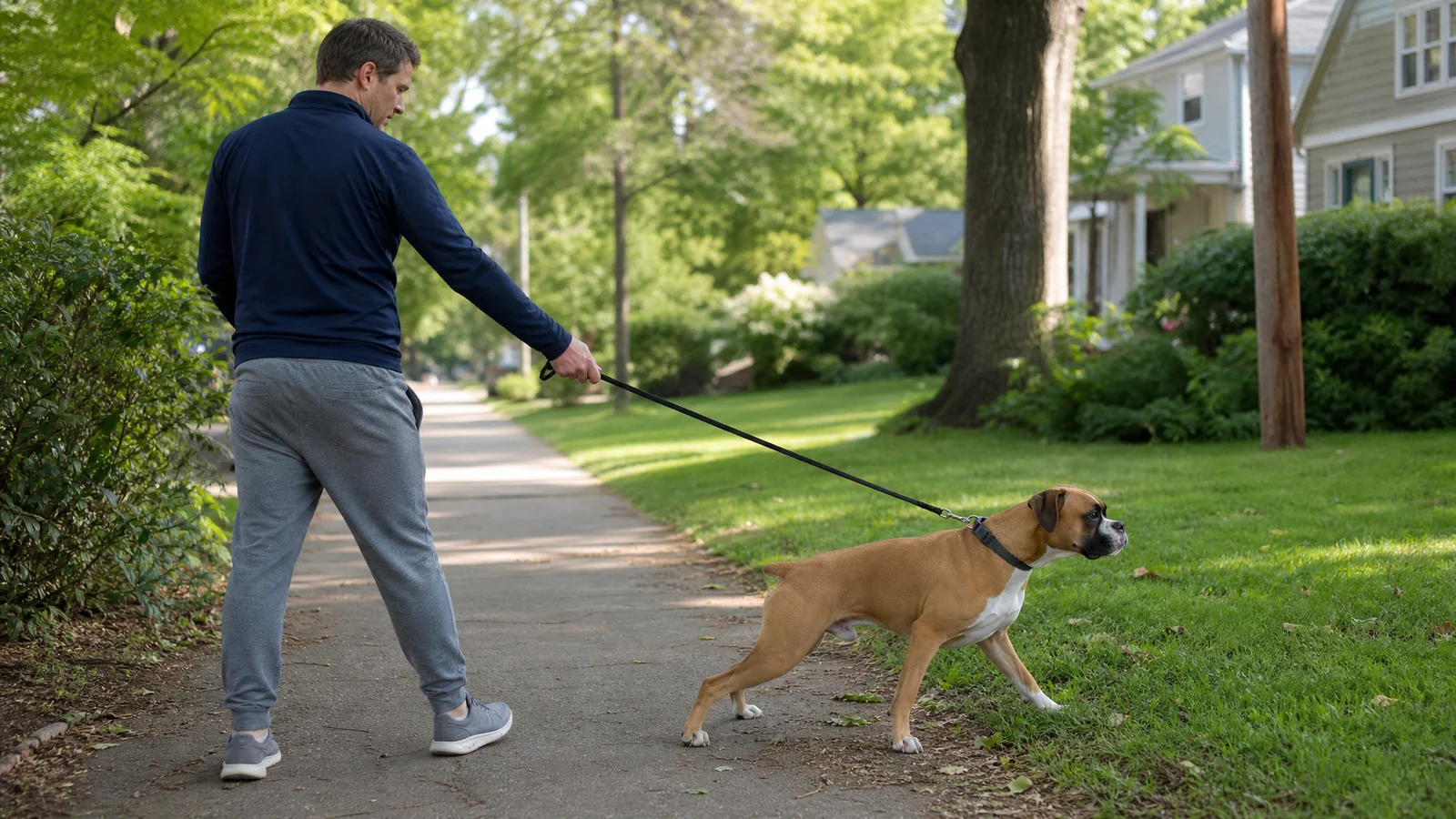
Walking a strong, cheerful Boxer can feel like being towed by someone who is thrilled about everything, and the tight leash is how that thrill reaches your arm. It is also why the habit holds on so well: leaning into the leash has been a very successful plan for your dog, and successful plans do not get retired without a replacement.
The good news is that a pull is learned, so something better can be learned in its place. The replacement is easy to describe and takes patience to deliver: the walk moves forward only while the leash stays loose.
Below, you'll find the whole repair, from how the habit forms to what to do when a friendly face appears at the end of the block. We keep it practical, because the lesson is won or lost on ordinary walks.
How Pulling on the Leash Becomes a Boxer Habit
Fixing a habit starts with seeing how it was built, and this one is built out of your own footsteps. Each time the leash goes tight and you follow, the walk pays your dog for leaning. A reward that arrives several times a day teaches faster than any command, which is why a Boxer can learn to pull long before anyone gets around to teaching them how to walk.
Dogs pull when they are excited, full of energy, eager to explore or simply used to it, and a Boxer can tick every one of those boxes before the end of the driveway. The breed is powerful, active and playful, which adds up to a lot of leverage and a lot of reasons to hurry. Boxers are also quick, independent thinkers who tend to get bored with repetition, so a routine that feels like a drill loses them fast.
Setting Up Practice Walks for a Strong Boxer
Once you can see that movement pays the pull, the first job is making slack easy to earn. Start somewhere quiet, such as a hallway, a fenced yard or the end of your own driveway, because a Boxer who is already buzzing will not learn much about a loose leash. A few minutes of play first helps too, since a dog who has burned off the first rush is easier to teach than one who is still wound up, and our Boxer zoomies guide has ideas for getting that energy out safely.
What to Carry on Practice Walks
Three small things make practice smoother, and scrambling for any of them mid-walk is how a good session falls apart. None of them costs much, but each one earns its place.
- A plain, fixed-length leash. A fixed length lets you feel exactly when the line goes tight, and it keeps your Boxer close enough that the reward can be delivered right where you want slack.
- Treats small enough to swallow in a second and kept in a pocket or pouch at hip height, so payment is always waiting beside your leg and the walk never stalls while your dog chews.
- Comfortable gear: a snug, well-fitted collar or harness, checked before every walk, because gear that slips or pinches gives a strong dog one more thing to fuss about.
With those in your pocket, the only real choice left is what your Boxer wears. That choice is worth a closer look, because a strong dog tests every strap.
Harness or Leader for a Strong Puller
Tools can manage a strong dog while the training catches up, and the Animal Humane Society suggests a front-clip harness or gentle leader for exactly that job. Treat either one as a helper, not the lesson, because the pulling only truly changes when the stop-and-reward routine below does its work. Introduce anything new slowly, with treats and a short walk, so your Boxer comes to like the gear.
One more habit belongs in this setup. If your Boxer's walking changes suddenly, or the pulling comes with soreness or a reluctance to go out, mention it at your next regular vet visit so a professional can rule out discomfort. Our guide to vet handling practice makes those visits easier for a bouncy dog.
Standing Still Until a Pulling Boxer Finds Slack
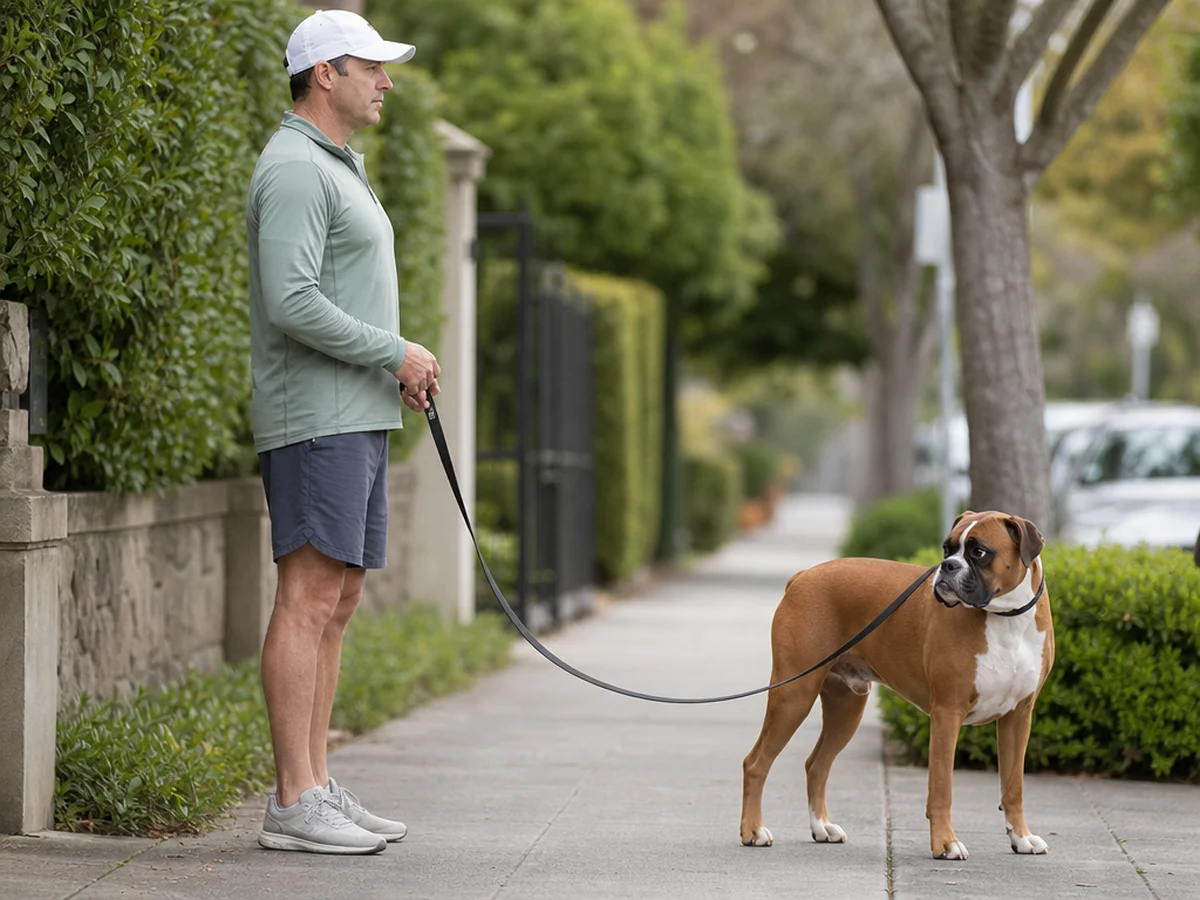
With the setup ready, the routine itself is almost insultingly simple. Whenever the leash goes tight, the walk stops, and it starts again once the leash has some give. You are, in effect, being a tree, standing still until the leash goes slack and then moving on. Keep practice to around 5 to 10 minutes at a time and end on a positive note, because a Boxer who gets bored with repetition will thank you for stopping early.
Here is the routine in the order you will run it, with the reason behind each move so you can adjust on the spot. Read all five before you start, because the order matters more than the speed:
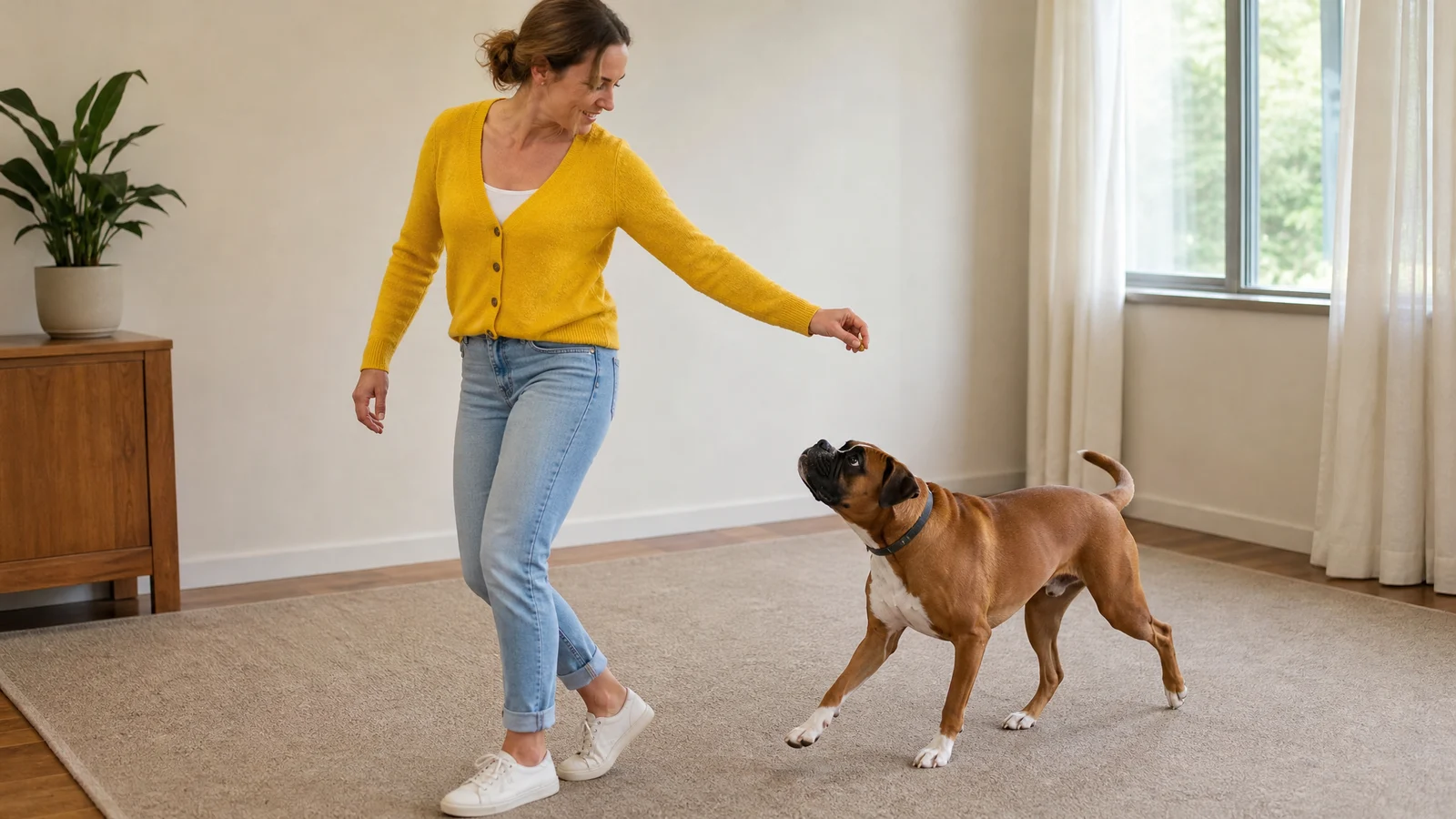
- Clip on the leash and start at an easy, steady pace, with a treat hand at your hip so your Boxer learns where the good things happen.
- The instant the leash tightens, stop, plant your feet and stay quiet. Pulling back or scolding turns the stop into a tug game, and a quiet stop is dull enough to be easy to learn from.
- Wait for any sign of slack, such as the leash drooping into a curve, your Boxer stepping back toward you or a glance in your direction.
- The moment slack appears, say your marker word and give a treat right beside your leg, so the loose leash is what gets paid.
- Walk on, and repeat every single time the line tightens, even on mornings when you are in a hurry.
The routine never changes, but where you run it does, and moving it up in three stages keeps your Boxer winning. Each stage below ends with a simple test for moving on, so you are never guessing.
A Quiet Room With Nothing to Chase
Begin indoors or in a fenced yard, where the most exciting thing around is the treat in your hand. Walk a few steps, stop when the leash tightens, wait, mark and pay. Move up to the next stage when your Boxer keeps the leash loose several times in a row without any help from you. If your dog stalls by straining in place, give the wait a little longer and make the payment for the first loose moment a generous one, because that moment is the whole lesson.
A Quiet Street Outside
Take the same routine out the front door and onto the calmest stretch near home. Expect it to feel like starting over, since the outdoors is far more interesting than a hallway, and be ready to stop every few steps at first. Shorten the distance you expect between stops rather than the number of treats you hand out. When your Boxer can cover a stretch of sidewalk with only the odd pause, you are ready for company.
A Busier Street With Real Distractions
Now add traffic, other walkers or a neighbor's yard, one new thing at a time. If your Boxer pulls hard at the first sight of something exciting, back up to a quieter spot for a few rounds and come at the distraction again from farther away. Once slack comes easily here, you have the skill that our loose-leash walking guide builds into an everyday habit.
Changing Direction for a Boxer Who Keeps Pulling
Sometimes standing still is not enough, because a Boxer who is determined to reach something can simply lean harder and wait you out. When that happens, the answer is a turn, which puts your Boxer behind you and the pull behind them.
If the stop does not bring slack, say a cheerful word and walk off by turning the other way, then reward your dog as they swing around to follow. You never need to yank the leash to make it work, and the rule has to hold every time, because stopping four times out of five can still teach that pulling pays off.
What the First Few Blocks Look Like
A playful Boxer often enjoys unpredictable turns, and a game of random changes of direction teaches them to keep one eye on you, which is a habit worth having. Expect this part to feel clumsy at first, though. You will turn more often than you would like, the leash will still tighten on some of those turns, and a walk that once covered the whole neighborhood may cover a single block for a while.
That slow start is the cost of retraining a habit that was paid for every day. It shrinks as slack begins to pay better than the pull ever did, so the best use of those early blocks is to make every loose moment pay off.
What Pays Better Than a Pull for a Boxer
A turn only works if what follows it is worth more than the pull was earning, so payment deserves as much planning as the stop. Start with food delivered at your leg, in the spot where you want the leash to hang loose, because the place a treat lands is part of the message. Pay generously and often at first, then space the treats out as slack becomes the usual thing instead of the happy accident.
Food is not the only currency a Boxer will work for. A good sniff is real mental work for a dog, so it satisfies a clever mind in a way a quick treat cannot, and a few steps of loose leash earn a release toward the hydrant or the patch of grass your dog has been eyeing.
Hellos, Games and Pace as Pay
A hello to a friendly neighbor can pay even more, and with a social, playful breed, so can a quick game of tug or a toss of a toy. The walk itself is a reward, and the pull loses its best customer when you hand it over only for slack.
Pace matters as well. A steady, brisk walk keeps the outing interesting enough that you are not the slowest part of your Boxer's day, and it makes slack easier to find. As the loose leash becomes the default, stretch the time between treats and let sniffs and greetings carry more of the pay.
Leash Manners When a Boxer Spots a Friend
There is a social side to the pull as well. Many Boxers are open and friendly with new people, so the neighbor on the porch, the dog across the street and the stranger with a smile are all destinations worth towing you toward. What we see is a dog whose whole body says happy while the leash says otherwise, so it is easy to mistake cheer for permission to pull. We would rather you keep the cheer and lose the tension, and the steps here are built to do exactly that.
The hardest test of all this arrives when something wonderful appears ahead, whether that is a neighbor, another dog or a squirrel on the fence. The pull toward a friend is the strongest one because the payoff, a face to greet, is so big. So the plan is the same with more room: begin at a spot where your Boxer can see the person or dog without losing their head, then ask for a check-in with a cue such as “watch me” and pay it before the greeting rather than after.
Letting the Greeting Pay for Slack
Then let the greeting itself be the reward for slack. Walk forward only while the leash is loose, stop when it tightens, and let your dog say hello once the line has some give. As Boxer people, we know a happy hello is the point of half their walks, so this plan keeps the hello and changes only how it is earned. For greeting manners beyond the leash, our guide to meeting people and dogs goes further.
Keep one distinction in mind. If your Boxer lunges, barks or freezes at other dogs or people instead of simply pulling toward them, that is a different problem from a tight leash, and a qualified reward-based trainer or veterinary behaviorist can help with it.
Practical Questions About Boxer Pulling
Practice walks raise a few practical points that have nothing to do with the method itself. These three are easier to settle now than at the curb, with a leash in one hand and a Boxer leaning out of the other.
Can a Grown Boxer Unlearn Years of Pulling?
Yes, and the method is the same at any age. An older habit has simply been practiced more, so it may take longer to fade, even when you stop every time. Celebrate the first loose stretch, however short, and build from there.
What If I Am Running Late for a Walk?
Make it a short outing, do your Boxer's business in the yard or by the curb, and save the real walk for a day when you have time to stop and wait. A rushed walk where pulling is allowed teaches the habit all over again, and it undoes more than the minutes you saved.
Is a Boxer Puppy Too Young to Start?
No, but keep it very short and very upbeat. Puppies have small attention spans, so a few steps of slack followed by a treat and a happy word is a full session. The goal is a good experience with the leash, not a distance.
A Slack Leash Opens Up the Rest of the Walk
Whether your Boxer is a puppy or a grown dog with years of practice behind the pull, the lesson comes down to one trade. Slack is what your dog gets to spend: the sniff by the hydrant, the hello at the gate and the longer loop home all become available when the leash hangs loose, and none of them is handed over on a tight one. That puts slack first and the yes second, in the same order every time.
As the list of yeses grows, so does the world your Boxer can walk through, from busier streets to new routes to friends waiting at the end of the block. The cheer you started with stays, and the tension goes.
Once the leash stays loose, a long list of lessons is still waiting for a clever Boxer, and our e-book, yours on the house, takes them one by one, complete enough to rely on and simple enough to follow after a long day.
 Exercise and jobsEasy Tricks to Teach a Boxer
 Exercise and jobsHow to Teach a Boxer to Shake and High Five
 Exercise and jobsHow to Teach a Boxer to Spin
