 Boxer
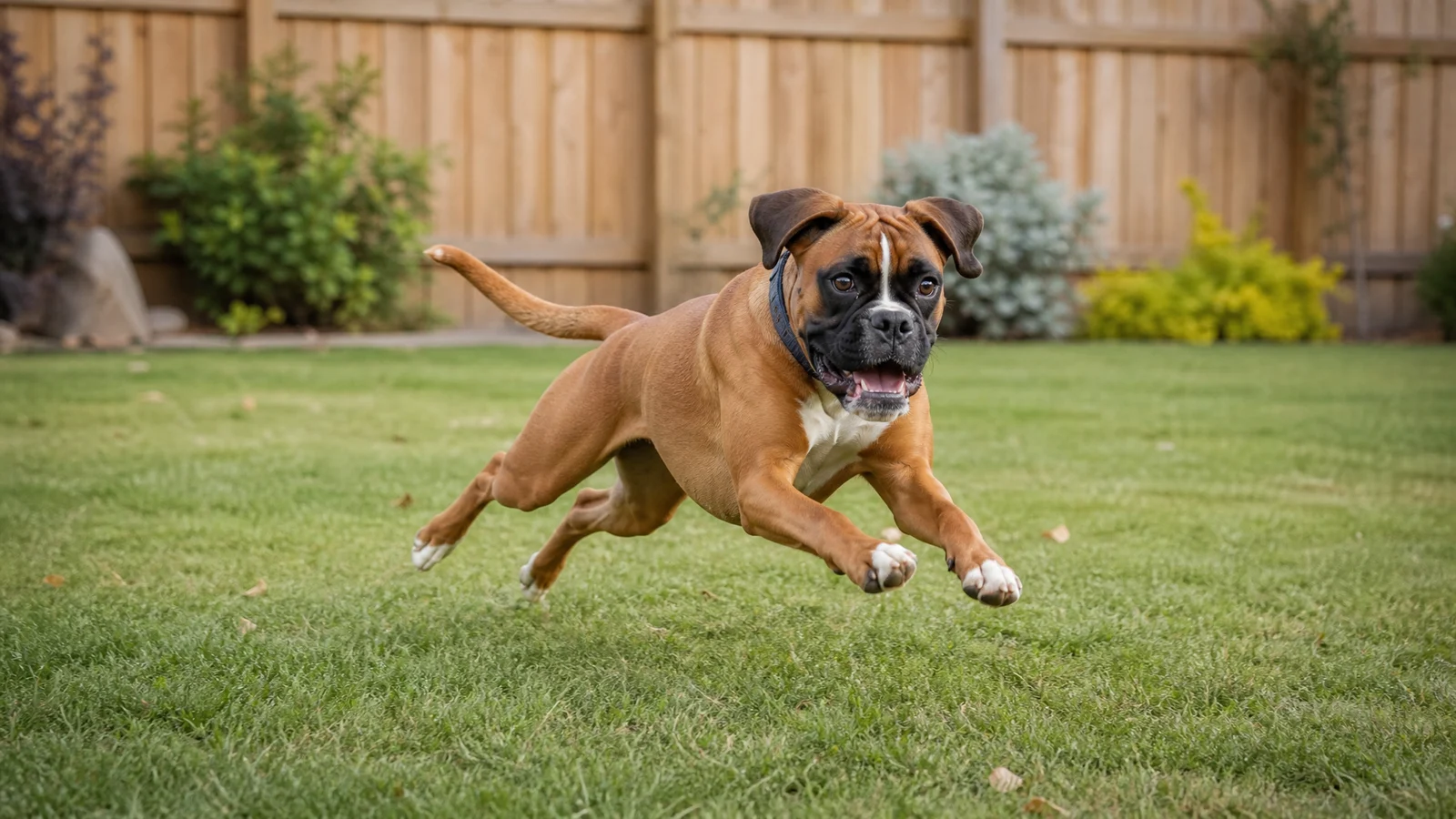
Your Boxer suddenly tears around the yard at full speed, and you wonder what could possibly calm them down. Most advice says to tire them out with a longer walk or one more round of fetch. That helps a little with most dogs, but it falls short here, because the bursts come from how this breed is built and wired, not from a shortage of miles.
This article looks at where Boxer zoomies come from, what sets them off, and how to make room for them safely, so you can turn each burst into a rewarded recall game. Handled badly, a fast dog who ignores your voice is one open gate away from real danger. Handled well, the same speed becomes the best reward you have to offer, and it keeps paying back for as long as your dog lives.
How the Boxer Was Bred to Cover Ground
The speed makes sense once you know the job. In medieval Germany the Boxer's ancestor, the Bullenbeisser, was the country's premier big-game hunter, used by noblemen to run down, catch, and hold bear, bison, and wild boar on vast ducal estates. Work like that rewards a dog who accelerates hard, turns sharply, and keeps going past the point where most dogs would quit.
The breed was later developed to serve as a guard, working, and companion dog. It was then virtually ignored until World War II, when Boxers were brought into use as military or police dogs. Today they sit in the Working Group, and that heritage still shows in a dog who goes from lounging to full stretch in a heartbeat.
A planner's lesson follows from this: a job disappearing does not make the drive disappear. A pet Boxer carries the same engine, and a household that budgets for it during the puppy months spends far less effort on it during adolescence. Ignore it and the speed finds its own outlets, usually the couch, the coffee table, or the gap beside the gate.
What Boxer Movement Tells Us About Recall
Read the breed standard closely and you find the zoomie described in formal language. The gait is alive with energy, firm but elastic, with a free, roomy, and ground-covering stride. Another standard says the Boxer's movements denote energy, and even the show ring asks for constrained animation, which tells you the animation exists and is being held in check.
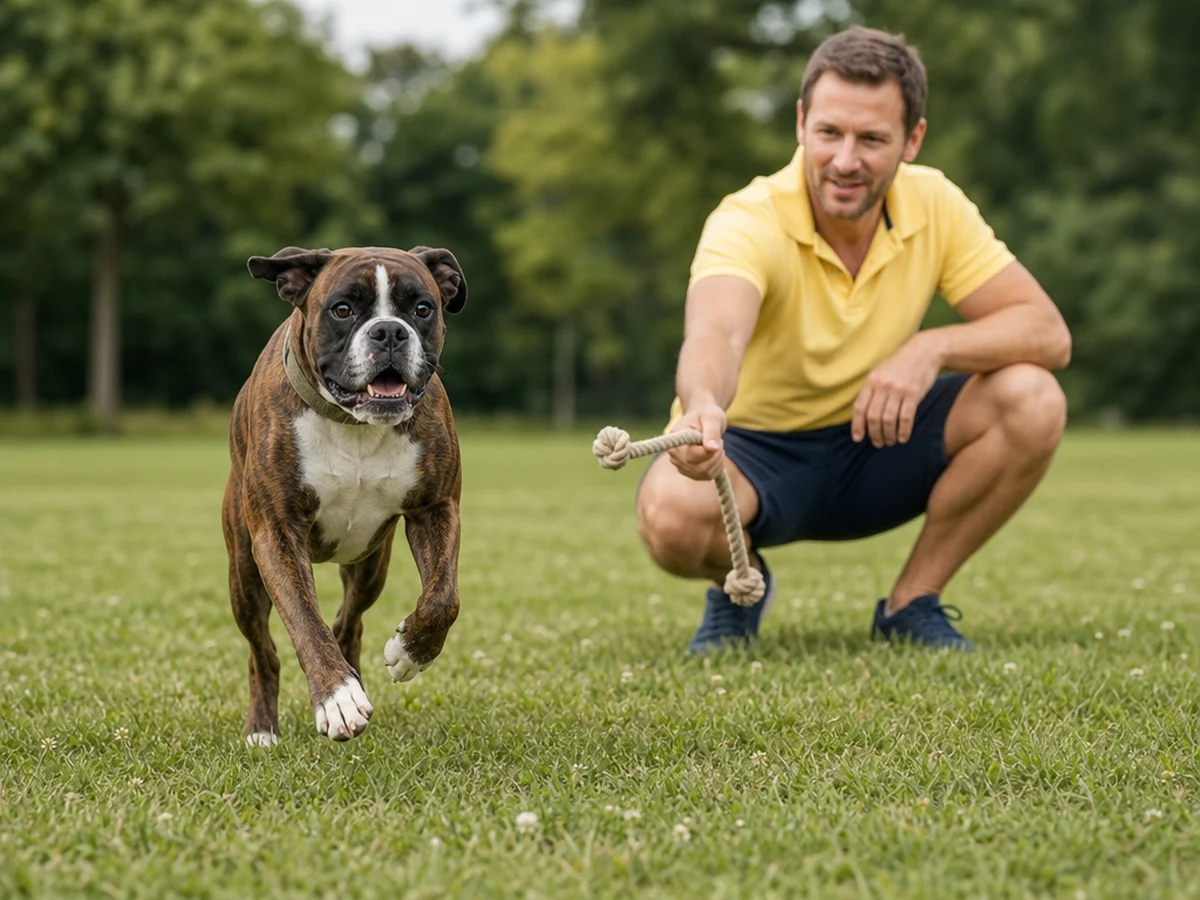
The frame explains the stride. The ideal Boxer is square built, with a short back, strong limbs, and strong bone, sturdy but never cumbersome, under a short, tight-fitting coat. The expression is energetic and intelligent, and the temperament steadfast and tractable. That mix works in your favor, because a dog who reads situations quickly can learn just as quickly that coming back is where the good things happen.
For training, the sprint is the breed's normal gait at full volume, not a flaw to suppress. A stride that covers ground also shrinks an average yard into a small pen, and a Boxer can cross it before you finish saying their name. Recall therefore cannot be an afterthought taught at the park. It is the skill that lets a ground-covering dog live safely among fences, roads, and neighbors.
Why Does a Boxer Suddenly Sprint?
Because the breed is made for it. Energy level is rated 4 of 5, where 5 means high energy, and playfulness is rated 4 of 5 as well. A dog scoring that high stores up excitement and releases it in a rush of wide loops and hard turns. We have trained Boxers for many years, and we treat a short, loose, joyful zoomie as ordinary Boxer business rather than a problem to fix.
What Sets Off a Burst
Most zoomies follow a change in state. Common triggers are release after a stretch of confinement or quiet, a greeting, an invitation to play, a new place, or another dog or person who lifts the mood. Once you know your dog's triggers, you can predict the burst and be ready for it.
Exercise helps, but the bursts are part of how the breed is built, so wearing a Boxer out only goes part of the way. Daily physical and mental work both count, and our guide to Boxer exercise needs and brain games covers building that routine.
When a Burst Is a Warning Sign
A healthy zoomie is brief, bouncy, and interruptible. The dog looks loose, may play-bow, and can still respond if you call in a happy voice. Worry when the running looks frantic or stiff, when you cannot reach them at all, when they limp afterward, or when the bursts seem tied to fear. A lingering limp or a sudden change belongs with your vet, and regular vet visits should stay on the calendar as the years pass.
A Boxer who bolts out of fear is a different case from one who is celebrating. Work with a fearful dog goes at their own pace, and management protects that training by keeping them feeling safe. Here that means a secure yard and a quiet place to retreat rather than open space.
Making Boxer Zoomies Safe Before Recall Practice
Safety is mostly arranged before the burst starts, because a Boxer at full stretch is not also reading the terrain. The trade-off is simple: an afternoon spent preparing the space costs far less than a season of worrying about injuries and escapes. Work through these points before you release your dog.
- Use a fully fenced yard with a fence tall and solid enough that an athletic dog is not tempted to test it, and a gate that latches on its own.
- Choose grass or packed dry ground over slick floors, and keep indoor bursts to rooms with grippy rugs and no furniture to skid into.
- Clear the run first, including hoses, tools, toys, low planters, and anything with a sharp edge at chest height.
- Keep stairs, decks, and pools off the route, or block them for now.
- Give the burst a start signal, such as go play, so zoomies happen on your cue in the right place.
Plan by life stage too. Keep puppy bursts on soft, level ground and let them end on their own. As your dog ages, keep surfaces forgiving, since the bursts get rarer but not less sudden.
Heat changes the arithmetic, because a burst in summer sun is hard on a dog with this build. Our notes on Boxer play in hot weather cover timing and cooling. Indoors, if a burst starts in the wrong place, calmly open the door to the yard and walk out with them. Chasing a Boxer around the living room only teaches that the room is the best racetrack.
Recall Games That Pay Off
A recall earns its place by being the best part of the run, not the end of it. A solid one lets a dog enjoy off-leash exercise safely, so every repetition is an investment in freedom later. Begin where the dog is already moving and happy, use small, tasty treats, and pair each one with a bit of the game they were loving.
Name-and-Run Games
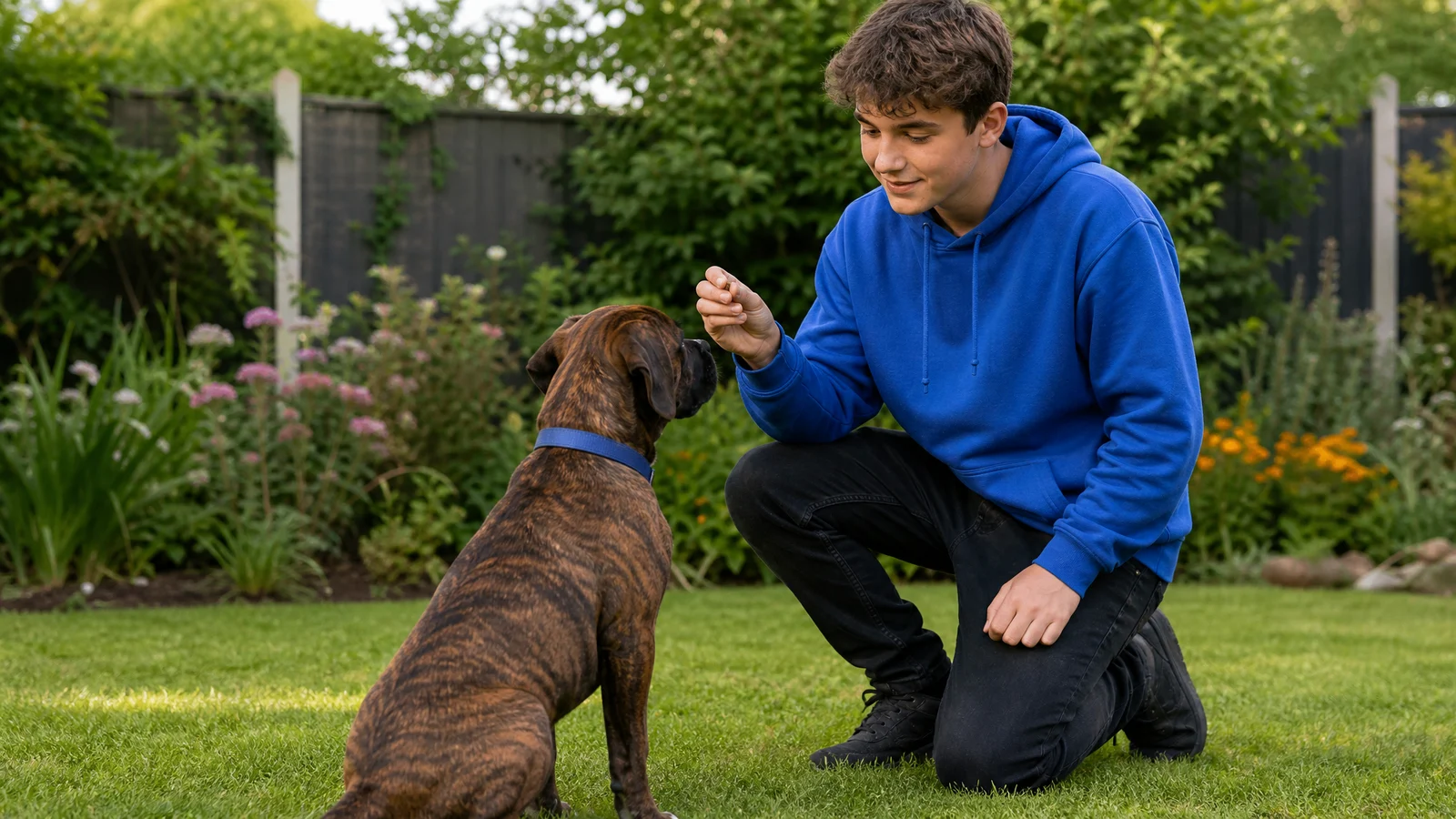
Say the dog's name in a bright voice, and the instant they swing toward you, give your marker word and sprint away. Chasing comes naturally to this breed, so the turn is rewarded twice: first by the marker, then by a race that ends with a treat and a quick game of tug. Release them back to play right afterward, so coming to you means the fun continues instead of finishing.
Vary the game so it stays fresh for an intelligent dog. Call from behind a tree, from another room, or while crouched low. Once the habit is strong, add a separate recall word, so your dog's name stays a happy attention signal and never becomes the sound they learn to ignore.
The Long Line
Once the game works in the yard, a lightweight long line clipped to a harness lets you practice in bigger spaces without losing the safety net. Keep the line slack. Call, wait for the dog's own response, and pay generously on arrival, so the line stays a backstop rather than a way to reel them in. Slack means the dog is making the decision, and a decision made freely is the one that holds up later.
Can Recall Beat a Boxer's Speed?
Not on foot, and nobody should try. A recall wins by becoming a habit stronger than the distraction, and that habit is built in stages. Boxers are often friendly with strangers, and other dogs call for supervision, so people, play invitations, and open ground are the competition you are training against. Move up only when the last stage looks easy, and step back at once when it does not.
- Practice in a quiet room, then the yard, until the dog turns and arrives with a bounce every time.
- Add mild distractions in the yard, such as a toy on the ground, a family member walking past, or a treat bowl in view.
- Move to a fenced area or a long line in a new place, paying extra for each arrival.
- Bring in bigger distractions at a distance, such as people and dogs on the far side of a fence, before you close the gap.
- Reserve off-leash freedom for places where it is safe, and keep checking the response by calling now and then when nothing is wrong.
The sensible rule is to keep them on leash whenever you doubt their recall or expect a distraction that might pull them away. Skipping stages feels like saving months, but each failure teaches a fast dog that ignoring you is possible, and that lesson takes longer to undo than the skipped stage would have taken to build.
A Boxer Who Runs Out and Returns for Life
Expect the zoomies to change shape across the years rather than count on them disappearing. Adolescence can be a testing time for recall, since speed and confidence may arrive before reliability. Keep the games going through that stretch, drop back a stage when needed, and keep the long line handy.
The bursts may become less frequent as your Boxer gets older, but keep recall ready at every age, since even a settled adult may still erupt into a lap of the yard. Channel the speed into planned outlets, from name-and-run races to the structured activities in our guide to Boxer sports and jobs, and keep regular vet visits on the calendar so changes in how your dog moves are noticed early.
The long-term plan is steady rather than dramatic: let the speed happen in safe places, pay every return generously, and keep practicing recall games for the dog's whole life. A Boxer who has learned that coming back is where the best things happen will run out with joy and return the same way, as a puppy, in their prime, and in their gray-muzzled years.
 CareVet Handling Training for a Boxer
 BehaviorStop Destructive Chewing in a Boxer
 Puppy trainingBoxer Puppy Training Timeline: 8 Weeks to 2 Years
