 Boxer
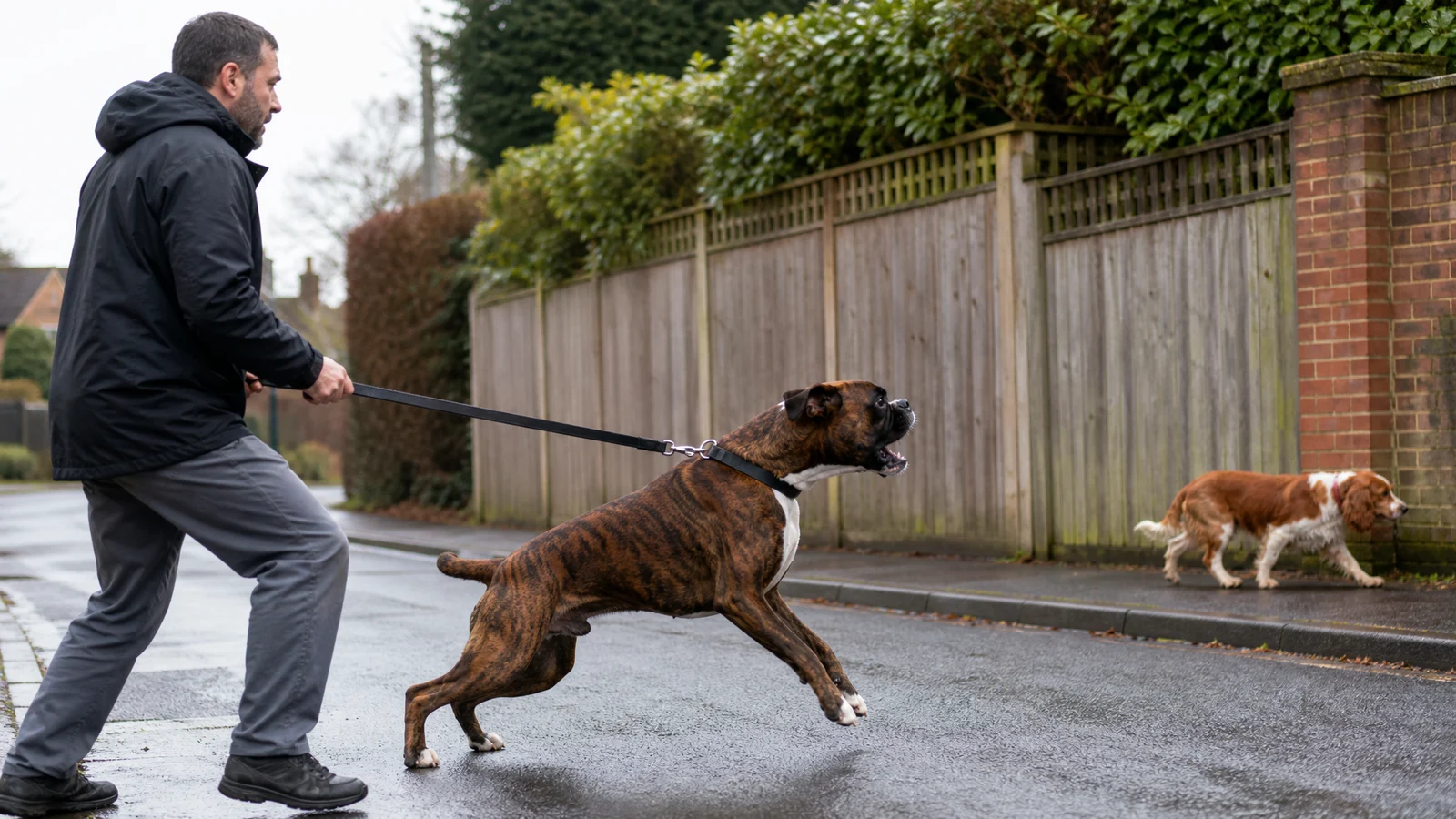
You cannot stop a Boxer from noticing the dog across the street, and you do not have to. What you can change is how far away that dog is, what happens in the moments after your Boxer spots them, and how the walk ends.
Boxers do nothing by halves, so a reaction rarely stays small. The bark, the lunge and the pull all arrive on your arm at the same moment, and every walk starts to feel like a gamble. A plan built on distance, rewards and a ready exit can change that over time, and none of it asks you to win a tug of war.
Below, you will find the moves that work in the moment and the practice that makes them stick. Both start from the same idea: your Boxer needs room to think.
What to Do the Moment Your Dog Reacts
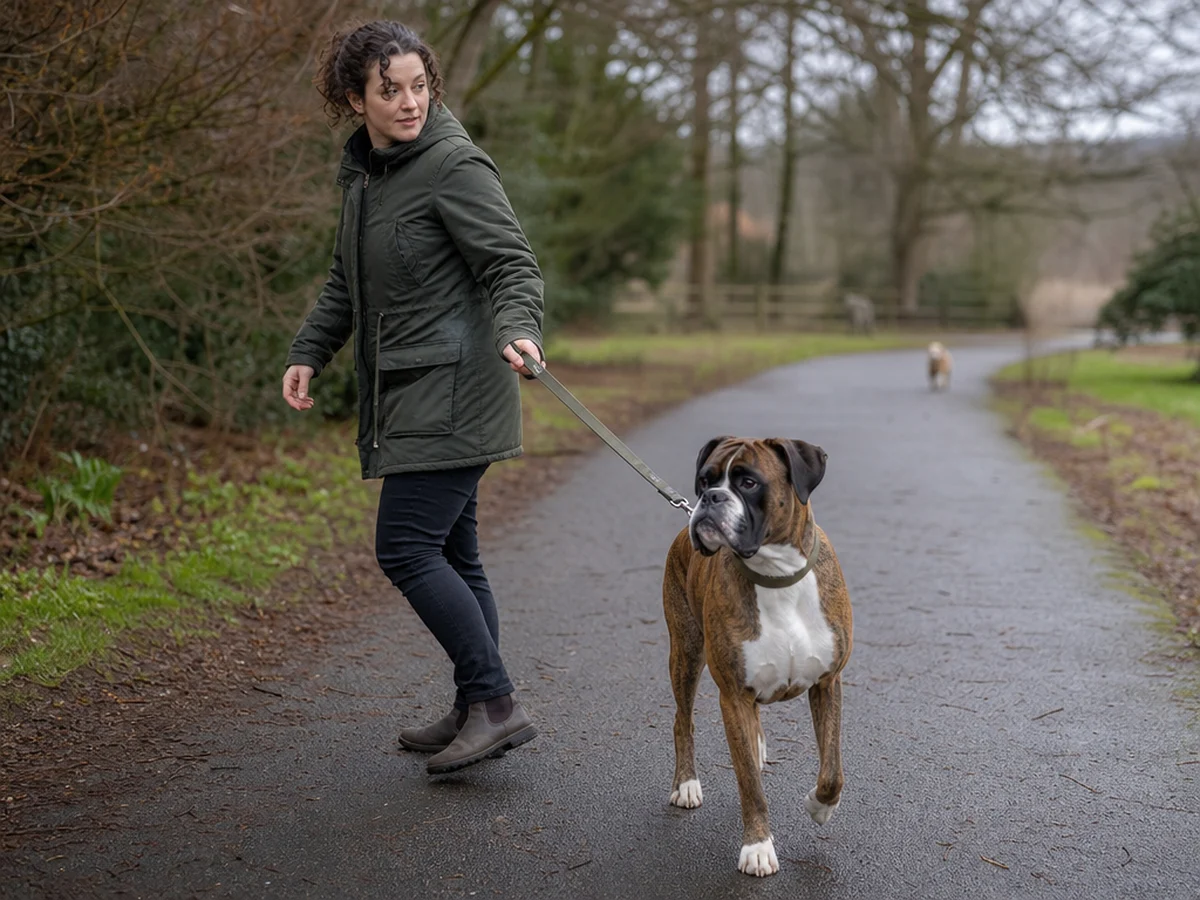
Start with the part you will need on your next walk, because once a reaction is underway the only useful goal is room. A Boxer at close range may find it hard to think their way through a trigger, so the first job is buying distance and the training questions can wait. Turn away from the trigger and move briskly, and keep going until your Boxer can look at you again. Distance is the one thing that helps at that moment, and it is worth more than any command.
For an excited dog heading your way, the exits in Fear Free's leash reactivity advice are simple: you can cross the street, turn up a side street or walk on the other side of a parked car. What nobody should allow is a greeting, since a leash-reactive dog is not going to consider it a social occasion and will instead look upon it as a threat.
A U-Turn You Practice First
The quickest exit is a U-turn, and it works best as a game your Boxer already knows. Pick a bright, happy cue, rehearse it somewhere with no dog in sight, and pay the moment your dog swings around and follows you. A turn that has always ended in a treat gets followed, while one invented on the spot gets dragged along, so the rehearsal is what makes it work.
The Minute After
Once the trigger is gone, keep things quiet. A calm word, a few treats if your Boxer can eat again and an easy stretch of sidewalk let their body settle before you carry on. If they cannot take food yet, that tells you how close the trigger was and where to stand next time.
Why a Leash Changes How a Boxer Reacts
Those moves work whatever lies behind the reaction, but it helps to know why a leash makes so many dogs worse. Knowing it changes how you read your own Boxer on a walk.
Underneath the noise, a reactive dog is usually a fearful dog, and reactive dogs are not necessarily aggressive dogs, but reactivity can turn into aggression, a point driven home in Cornell's guidance on reactive dogs. The leash matters too: some dogs are fine with other dogs off-leash, but become reactive when they are on a leash, and a leash takes away the choice to back off, which may be part of why.
A Boxer has strong feelings and a strong body to express them with. They are powerful, playful, high-energy dogs, so a reaction involves the whole animal, and they are reserved with strangers at first, which is why the trigger list so often includes people as well as dogs. Boxers also take their watchdog duty seriously, a side of the breed we describe in our guide to the Boxer's watchdog instincts.
Other dogs are a trigger for a reason too, since Boxers are not always tolerant of dogs of the same sex. None of this makes a reactive Boxer a lost cause. It means the plan has to suit a strong, quick dog who feels trapped at the end of a leash, and the rest of this page is built around exactly that.
Rebuilding Walks Around a Reactive Dog
Handling reactions well is only half the job, because every reaction your Boxer rehearses makes the next one a little easier to start. The other half is arranging walks that produce fewer of them while you do the training work.
Routes and Hours That Help
Choose routes with a long view, so a trigger shows up early enough to avoid: wide sidewalks, open fields and loops you can walk in either direction. Quiet hours help, and so does skipping places where dogs gather, with the dog park at the top of that list. For now, a walk with no encounters in it counts as a good walk. Use a standard fixed-length leash rather than a retractable one, and hold it with a relaxed arm.
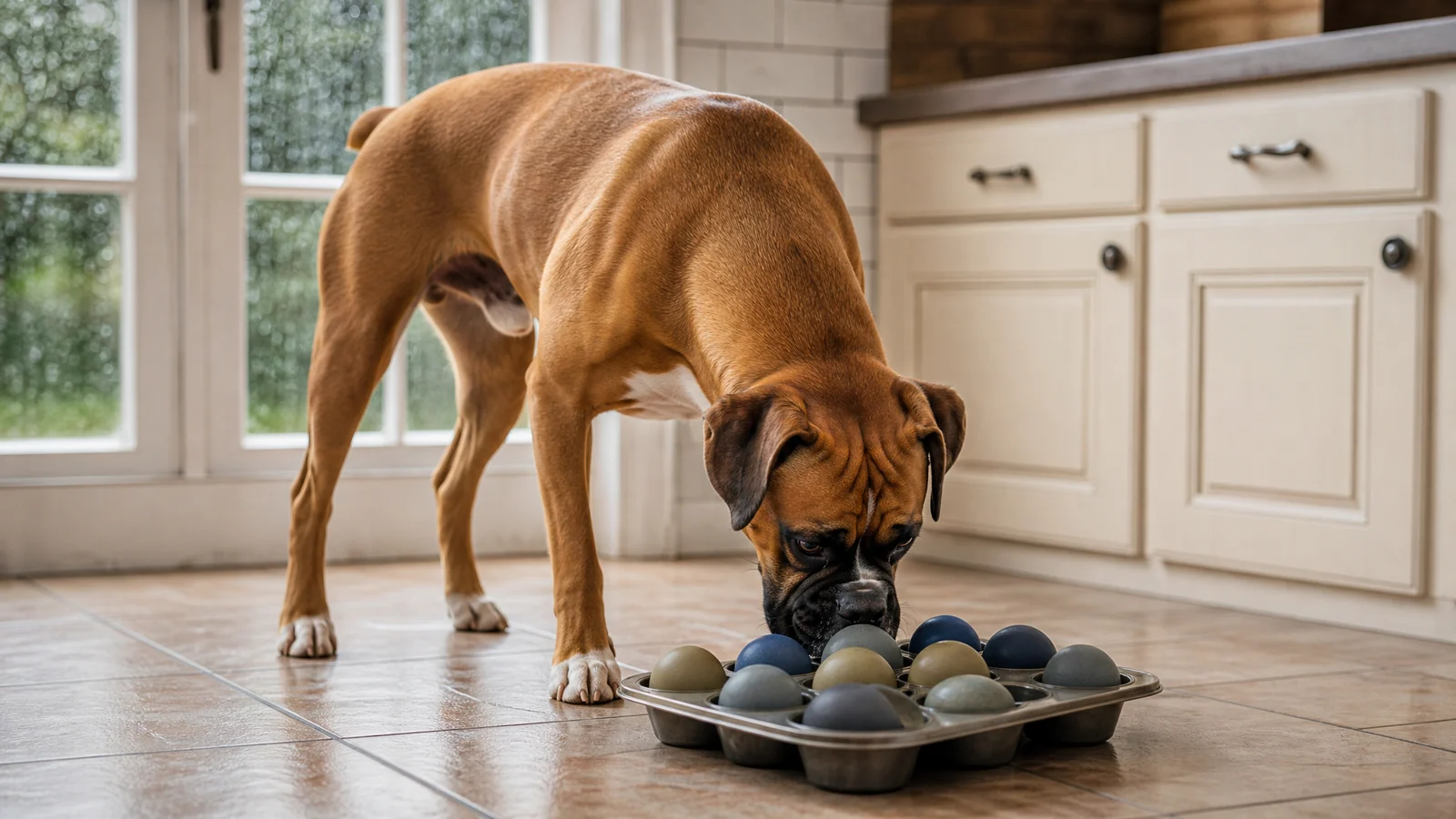
Ordinary pulling is a separate problem from reacting, and our Boxer leash-training guide covers it on its own timeline. Pulling aside, a Boxer's energy does not vanish because the walks get quieter, so replace what you take out. Indoor tug with a sturdy toy, a find-the-treat game around the house and a sprint on a long line in an empty field all spend energy with no trigger in sight. Our guide to Boxer zoomies and speed has more ideas for those bursts.
As Boxer people, we know a clever dog looks for something to do, so variety matters as much as effort. A mind that gets bored with repetition settles better after a different game each day than after the same long walk down the same trigger-filled street.
Mapping Your Boxer's Triggers and Limits
Calmer walks give you a chance to see what is setting your Boxer off, which is the information every later step depends on. A few walks of simple watching will teach you more than any guess.
Treat the next several walks as observation rather than training. Stay well back, keep your dog's attention with treats and notice what they react to, how big the reaction is and how far away the trigger was. Sort what you see into a few plain groups:
- Dogs: note which dogs set your Boxer off, such as ones who rush, ones who stare or ones of the same sex, since Boxers are not always tolerant of dogs who match them.
- Strangers. Boxers tend to be reserved with new people at first, so write down whether a person approaching head-on, leaning over your dog or moving quickly makes the difference.
- Fast-moving things such as bikes, joggers and scooters can produce a reaction even when dogs and people do not, so keep them on a separate line of your notes.
- Where and when: note the setting as well as the trigger, including how crowded the block was, the time of day and whether the other dogs were leashed.
Even a rough list tells you which situations to avoid for now and which one to practice on first. Start with the easiest item on it.
Finding Your Working Distance
Then find your working distance for that trigger. It is the range where your Boxer notices the trigger yet stays able to eat and turn back to you, and it sits just outside the range where none of that is possible. Find it from a spot with a long view, such as the far edge of a parking lot, and note where your dog first stiffens or stops eating. It can change from day to day, so check it at the start of every session.
Counter-Conditioning a Reactive Boxer Step by Step
Your working distance tells you where to stand, and counter-conditioning is what changes how your Boxer feels once you are there. It pairs the sight of a trigger with something wonderful, so that a dog coming into view starts to predict good things.
Setting Up the Session
The order matters more than anything else: the trigger appears first, and only then does the food start, flowing without a pause until the trigger is out of sight or you have moved away, the sequence set out in this plan from Wisconsin Humane Society. Choose a place where your Boxer can see other dogs without any dog being able to walk up, such as the edge of a big parking lot, and bring treats your dog finds hard to resist. Then work through the stages in order:
- Start far enough back that your Boxer spots the trigger while still being able to eat and look away from it.
- The moment the trigger appears, start feeding, and keep the treats coming in a steady stream while it stays in view.
- When the trigger leaves, or you walk away from it, stop the food, so that the trigger is what makes the treats appear.
- Repeat at the same distance until your Boxer looks loose and relaxed, eats readily and keeps glancing back at you for the next treat.
- If your dog stiffens, stops eating or barks, you were too close, so add distance and try again.
- Keep sessions short and change the spot now and then, because a clever Boxer gets bored with repetition.
That is the whole routine, and everything later in this section is the same routine with the trigger a little closer or a little more interesting. Each stage should feel dull to your Boxer before you try the next one.
Turning Looks Into a Game
Once your Boxer is relaxed and eating readily at a given distance, you can let them look at the trigger for longer, which is where a game called "Look at That" comes in.
The moment your dog looks at the trigger, mark it with a bright "yes!" and bring a treat to their nose so their head turns away as they eat. They will look back when the treat is gone, so you mark and feed again. The game works because looking at a trigger starts to mean "check in with my person" instead of "launch." With a Boxer, that new habit is worth building slowly, because the old one is so big and so fast.
Moving Closer in Small Steps
Close the gap in small steps, a few feet at a time, and check that your Boxer is comfortable at each distance before the next one. If they stiffen, stop eating or react, move back out to the last distance that worked, because staying too close teaches the wrong lesson. Plan on this taking a good while, and let how relaxed your dog looks decide when to move on.
A helper is useful for the middle stretch. A friend with a steady dog can stand or walk at a set spot while you practice, then shift a little nearer when your Boxer is relaxed or farther away when they are not.
Bringing In a Trainer or Behaviorist
A good plan can still stall, and that is no failure on your part. Knowing where to turn next keeps the work moving.
Start with your veterinarian. This leash reactivity overview from PetMD notes that in some cases it may be due to an underlying medical condition such as pain, discomfort or illness, and that managing it takes patience, consistency and the help of a professional dog trainer or board-certified veterinary behaviorist.
Mention the reactions at your Boxer's regular vet visits too, even when everything else looks fine, so that any change gets noticed early. A vet can also point you toward a qualified behavior professional if your dog's behavior is hard to read.
Bring someone in sooner rather than later when reactions are frequent, getting worse or hard to get away from, or when you worry about anyone's safety. In that case, pause the walks that put people or dogs at risk until you have a plan with someone qualified. Choose a reward-based trainer, and ask how they would run the first session. A good answer involves distance, food and a dog who stays relaxed, never forced greetings or hoping your Boxer will cope.
The Same First Move for Every Reactive Dog
Even with a trainer's help, you may never learn exactly why your Boxer reacts, and the plan does not need you to. The causes behind a reaction differ from one dog to the next and are hard to read from the other end of a leash.
What does not differ is the first move: more room, a treat for noticing without exploding, and a turn away before the gap closes. Start there, keep the distance generous and let the reasons reveal themselves as your dog relaxes.
While the careful work with triggers goes on, our Boxer e-book, which we give readers of this site free of charge, covers the full range of training your dog needs, in depth and without confusing jargon.
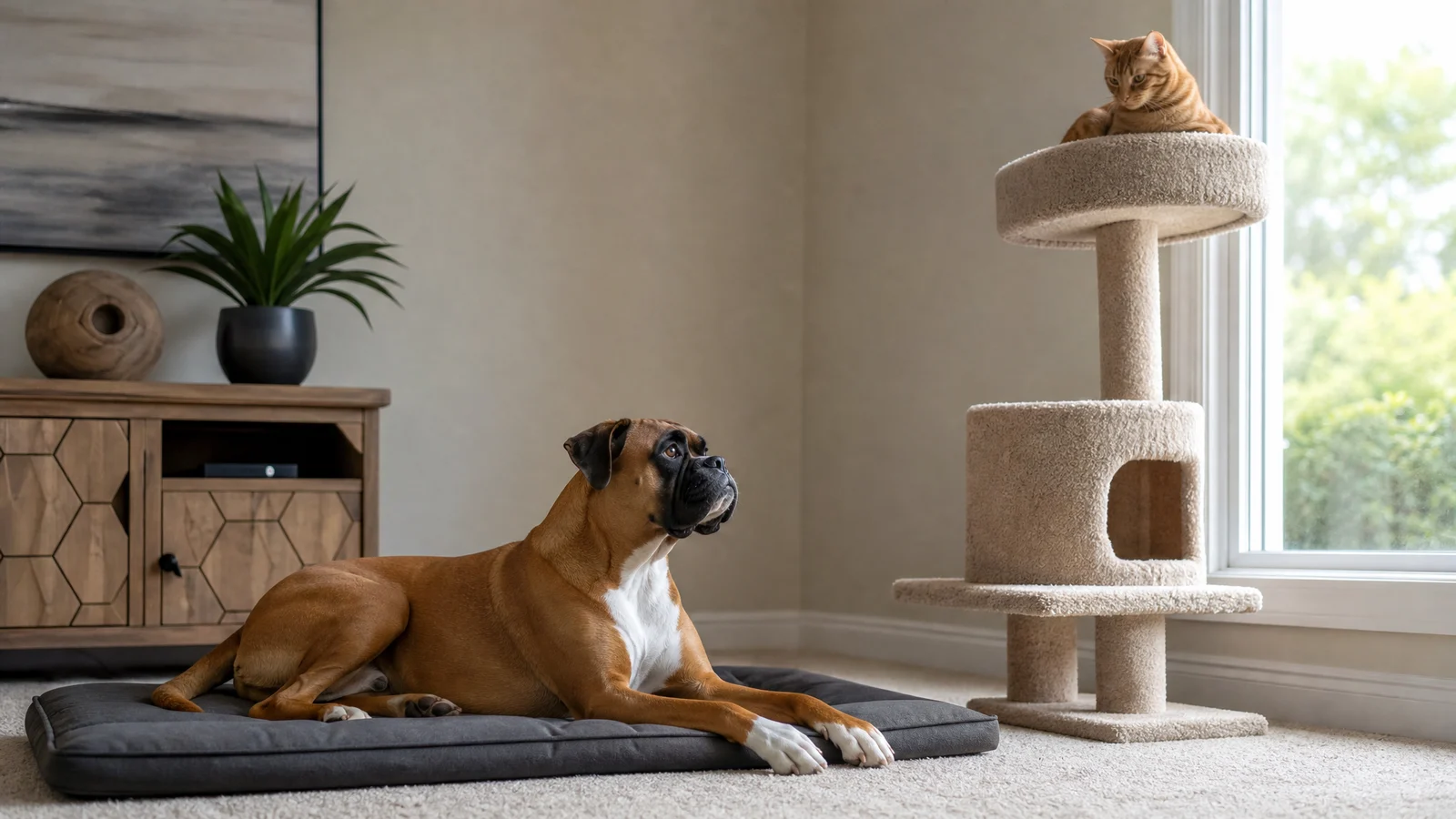 BehaviorBoxers With Cats and Other Dogs
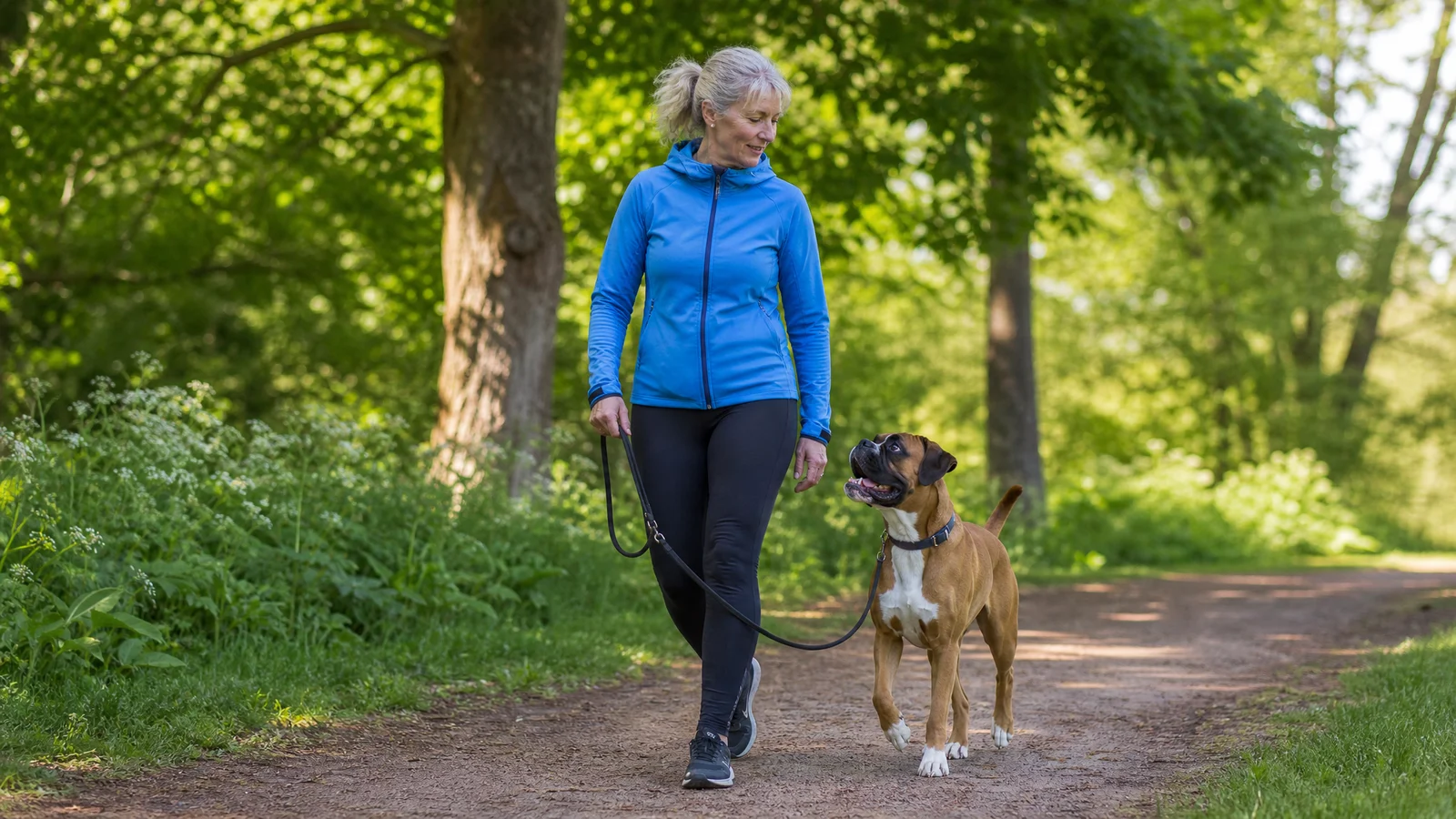 Training basicsIs a Boxer the Right Dog for You? What Training Takes
 Exercise and jobsIndoor Activities and Brain Games for a Boxer
