 Boxer
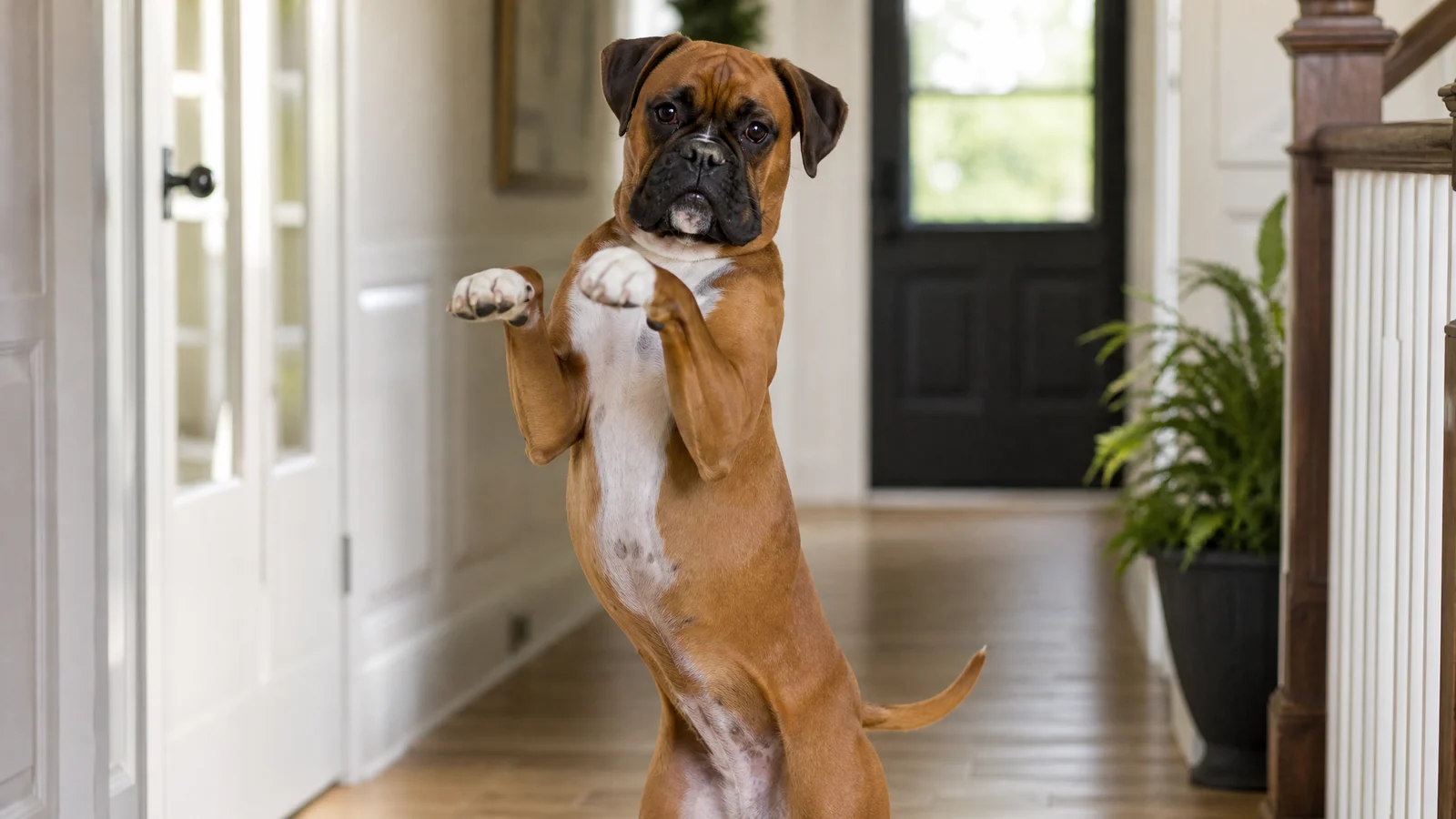
The mistake we hear about most is the shove. A Boxer launches, you push them down or bark off, and they collect hands, voice and eye contact, which was the entire point of the launch. You have just invented a game with a very keen partner. The fix is duller and works far better: stop paying for the bounce, and pay generously whenever all four paws are on the ground.
Boxer behavior and training have been our focus for a long time, and jumping follows a clear rhythm. It clusters around company, not a quiet evening on the couch, so that is where the work belongs. It matters because a grown Boxer who launches at a grandparent or a toddler is a real injury risk, and the habit sets fast when it pays.
We'll walk you through how the Boxer bounce differs from a retriever's lean and why pushing back fails, then how puppies and adults differ, how paw swats differ from jumping, how to manage arrivals and coach family and guests, and a two-week plan.
Paw Swats in Jumping and the Boxer Bounce
Two front-end habits get lumped together as jumping, and they are not the same thing. The bounce is a whole-body launch with its own triggers. The swat is the paw work Boxers are known for, and it needs its own plan because it fires at different moments.
Spot the Bounce
The bounce is the whole dog leaving the floor, usually at the moment of arrival: a key in the lock, a leash coming off the hook, a visitor stepping through the door. It is excitement looking for somewhere to go. Because it is big and fast, it is the one that bruises people, so manage it first and reward floor contact.
Spot the Swat
The swat is smaller and far more deliberate. The Boxer stays mostly grounded, lifts one or both front paws and bats at your arm, knee, hand or phone. It shows up when you are sitting, when your hands are busy, or when you have ignored them for a suspiciously long stretch. It is a request, and it works whenever someone answers with a look, a laugh or a pat.
Pay for the Alternative
Do not wait for the swat to fade on its own. Give the paws a better job. Teach a sit, or a hand target, where the nose touches your open palm held at their level. When a front paw lifts, offer the target, reward the touch, then reward a paw that stays down.
Keep rounds short and change the treats, because a Boxer who is bored with repetition will invent a game of their own. End while the floor choice is still easy.
Puppy Jumping and the Boxer Bounce
The same behavior carries a different price at different ages, and the plan shifts with it. What is cute and free in a small puppy becomes a hazard in a grown dog, so treat each stage on its own terms.
The Young Puppy
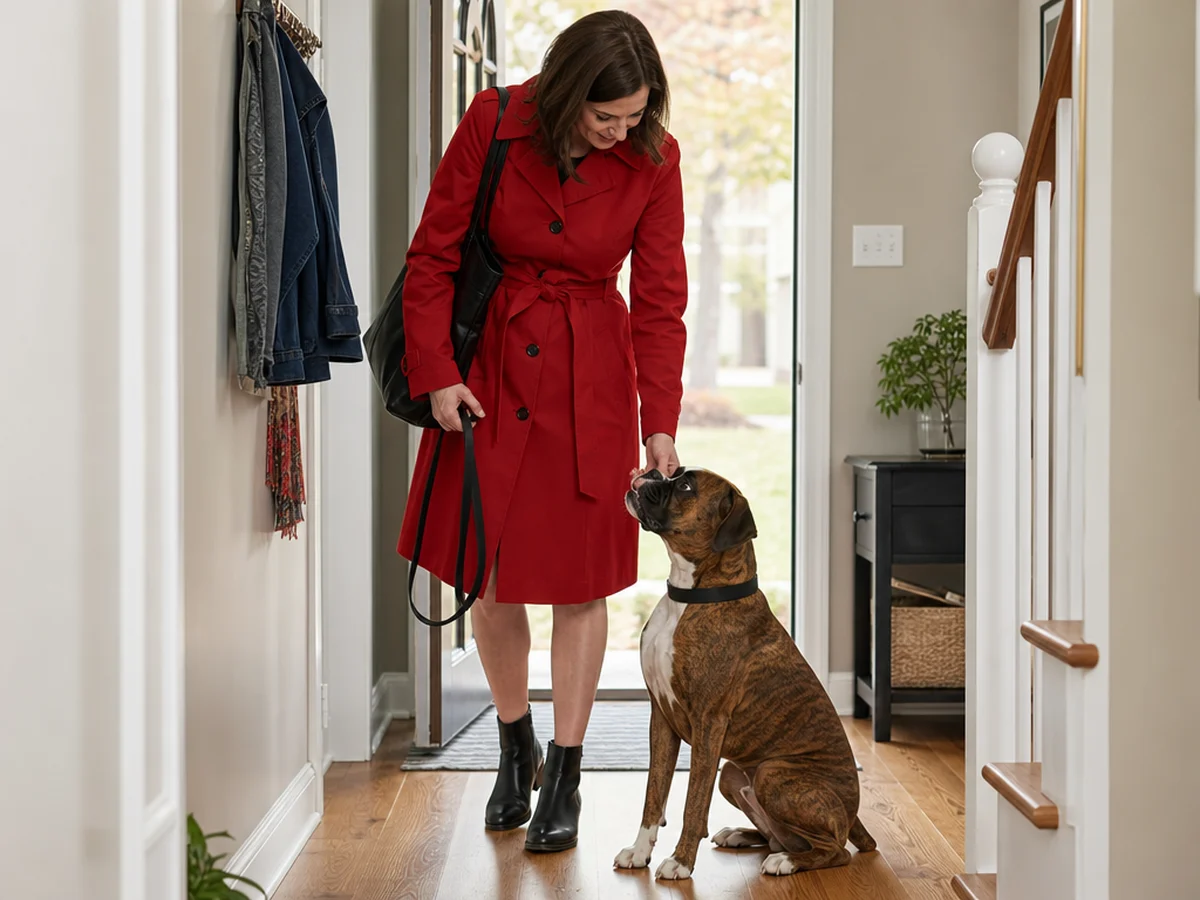
A puppy bouncing at your shins is adorable, which is the trap. Everyone scoops them up, squeals and reaches for a phone, and the puppy learns that going up lights up the room. Fix it by going down yourself: crouch to greet, drop a treat at floor level, and pay for any moment the paws are on the ground.
Early socialization and puppy classes help channel the breed's exuberance, and our guide to teaching soft mouths covers the mouthy side of the same excitement. Practice both skills before greetings become crowded.
The Teenage Months
Adolescence is the hard stretch. The body is bigger, the energy is still high, and manners you thought were settled evaporate when the doorbell rings. Management matters more here than at any other age. Keep a leash or gate in play, run shorter and more frequent practice rounds, and pay well for floor time, because a teenager who gets away with the launch a few times will try it again.
The Grown Boxer
A full-grown Boxer is powerful, active and playful, and a very frail adult or a small child can be overwhelmed by a bouncy dog. A hip-high launch that was funny in the kitchen can flatten a guest at the front door. Adults learn the same lesson, often with longer focus, so the plan stays the same and the management gets stricter.
Our article on training a Boxer not to jump covers the basics. Keep regular vet visits on the calendar too, since a dog who suddenly jumps much more or less than usual may simply feel different.
Family Jumping and the Boxer Bounce
Your household is the easy case and guests are the loud one. Win the easy one first, then take the practice to the door.
One Rule for the Household
The usual reason a Boxer keeps bouncing is that one person in the house still rewards it. If Dad allows the launch and Mom does not, the dog learns to jump at Dad. Agree on one rule: nobody greets a bouncing dog, and everybody pays for four feet down.
Children need the most coaching, since running and squealing set off the bounce, and a Boxer who is playful and patient with kids can still be far too big for them. Take turns coming through the door, ignore the bounce, mark and treat the settle, and end each round early on a good one. Our guide to playing gently with kids goes further.
Coach Your Visitors
Text guests before they arrive. Ask them to come in calmly, skip the eye contact and the high voice, and wait for four feet down before saying hello. Suggest touching the chest or shoulder rather than reaching over the head, which also builds the habits behind vet handling training for Boxers. Hand each guest a few treats to drop on the floor. People like having a job.
Start with one helper who knows the plan, and put the Boxer on a leash or behind a gate. In greeting practice with a helper, the helper walks up and a launch ends the visit on the spot. They turn away, wait, then try again once the paws are down. The fun leaves, and the dog decides whether it returns.
Guests Who Bring Dogs
If a visitor brings their own dog, remember that Boxers are good with other dogs only with supervision, and they are not always tolerant of dogs of the same sex. Keep leashes on until both dogs have calmed down, and reward your Boxer for floor time before any sniffing starts.
Signals From Jumping and the Boxer Bounce
A Labrador jumps like a furniture mover. The front paws land on your thighs, the heavy body leans in, and the dog stays there pressing for contact. You can step back, let the paws slide off and wait for the dog to settle, which is why so much jumping advice sounds easy on paper. It was mostly written for that dog.
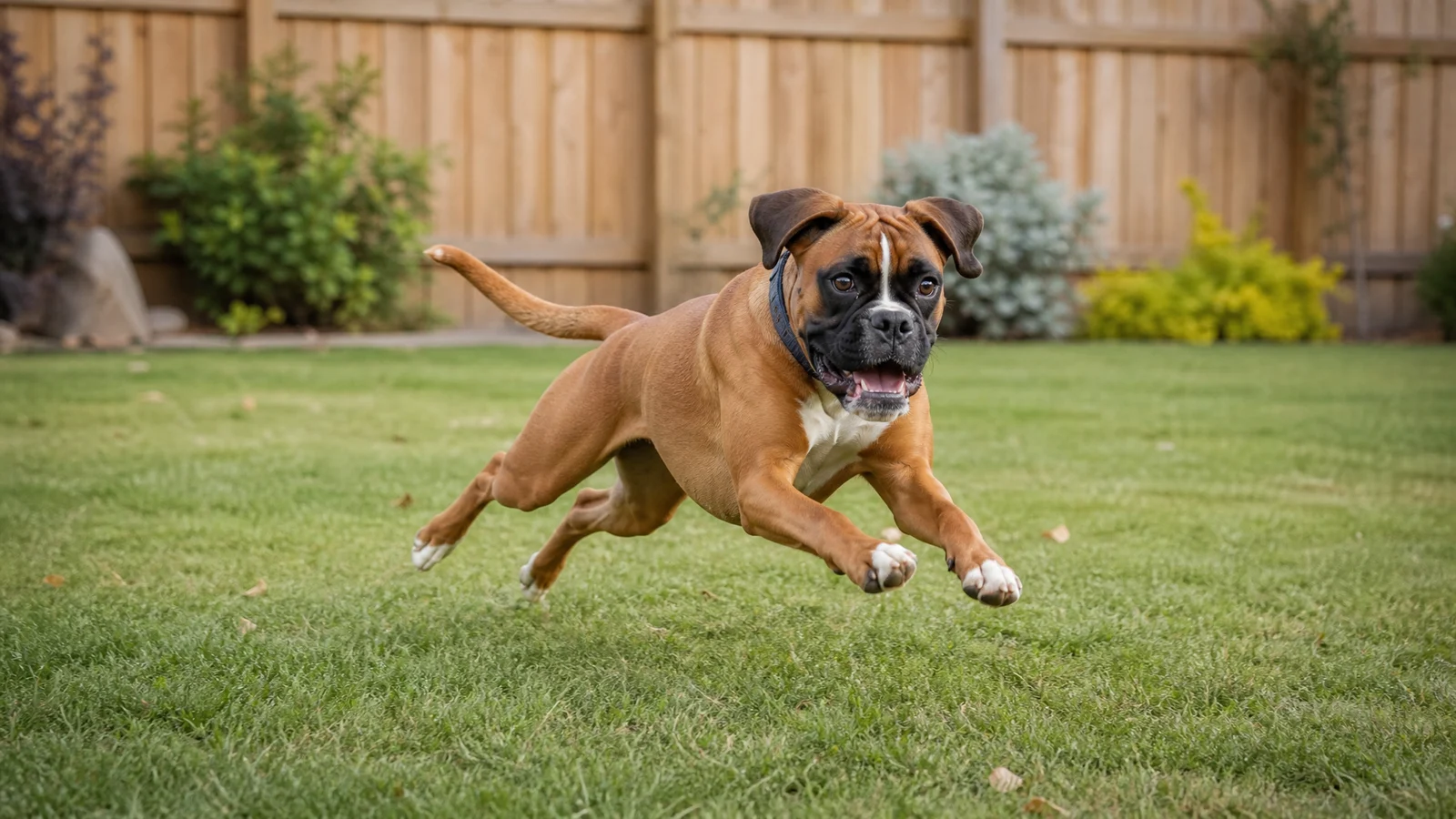
A Boxer jumps like a spring with legs. The back end drives straight up, the paws arrive at chest or face height, and then the dog lands and goes again, often with a wriggling rear end and a grin. There is nothing to wait out, because they are never up long enough to be ignored. Turning your back works only if you can find it between launches.
Part of this is heritage. The breed's background as a chaser of wild game means Boxers spend a good deal of time jumping and leaping about, and young ones constantly need reminders to stay down. Energy and playfulness both rate four out of five, so every arrival is an event. Expect those reminders to run for months, and make them pleasant ones.
The useful detail is timing. The bounce shows up when people arrive, and the Boxer who ricochets off the doorframe is often flopped and snoring minutes after the door closes. Walks follow the same switch: bright and bouncy outside, limp once home. The problem is the moment, not the dog, so the plan targets the moment.
Controlled Greetings for a Boxer
A free greeting is the default in most houses. The bell rings, the dog races over, whoever walks in gets a full launch and a laugh, and the cycle repeats. For a playful, high-energy breed, every successful launch makes the next one likelier, so chance hands you exactly the wrong repetitions. Management comes first because it stops the habit from paying while the new one grows. It is scaffolding, not a cage. Use whatever fits your home:
- A leash or baby gate holds the Boxer back when the door opens, so the first seconds of an arrival stop being a free rehearsal.
- Come in quietly yourself, ignore the dog for a moment, then greet them low and calm once their feet are down.
- As people walk in, toss a few treats across the floor so the nose drops and the paws follow.
- Put a stuffed chew on a mat before an expected knock, so the doorbell becomes a cue to settle.
- Burn off some energy before company arrives, so guests meet a dog closer to their flopped, indoor self.
The same logic applies on walks. A stranger approaching with a smile is a free greeting waiting to happen, so step off the sidewalk, feed low treats as they pass, and ask the person to wait until four paws are down before saying hello. Most people are happy to follow a clear instruction.
Reward Calm Boxer Greetings
The standard response to a bouncing dog is to push, say no, flap your arms and grumble until they stop. With a Boxer all of that is attention, and attention is what the bounce was shopping for. Hands on a bouncing Boxer turn into wrestling, and a chorus of off, off, off is just a very exciting song.
Boxers are smart, get bored with repetition and have a mind of their own, so repeating one sharp word mostly teaches them you are entertaining. What suits the breed is flipping the payoff, so the bounce earns nothing and four paws down earns everything. Start at home, with no visitors and a calm dog:
- Stand still with your hands tucked in and your eyes off the dog while they are in the air. Boring is the goal.
- The instant all four paws touch down, say your marker word and drop a treat low, between the front feet.
- Add calm praise and some chest petting, but only while they stay grounded.
- If the bouncing restarts, the greeting pauses. Step away, wait for the floor and begin again.
- Pay often at first, then ask for a beat more floor time before each treat.
Do this consistently and the floor becomes the place where treats, praise and your attention all live. It is not thrilling, but a bored Boxer on the floor beats an excited one on your shirt.
Track Boxer Bounce Choices
Week one is management and floor time. On day one, set the leash, gate and treat jar by the door, keep your own arrivals quiet, and pay for every moment of four paws down. Over the next few days, teach the sit or hand target in a quiet room with no visitors, and get the whole household using the same rule. Do not try to erase the bounce yet. Just stop it paying.
Week two is guests and distractions. Early in the week, run practice with one briefed helper who turns away at any launch. Then add a real arrival with a text briefing, a leash on the dog and treats dropped on the floor, and finish with a walk past a friendly stranger. Keep every session short and end on a success.
By day fourteen, expect a Boxer who bounces less often and recovers faster, not a finished dog. This breed is built to spring, especially around company, so you are not removing the joy, you are giving it a floor to land on. Keep paying for four paws down for months, and when your Boxer walks up to a visitor with a wiggling back end and every foot on the ground, you will know they chose it.
 Puppy trainingBoxer Puppies Who Bite: Teaching Soft Mouths During Rough Play
 Exercise and jobsBoxer Summer Play: Keeping Exercise Safe and Fun in Hot Weather
 Exercise and jobsBoxer Zoomies: Burst Energy, Speed and Recall Games
