 Boxer
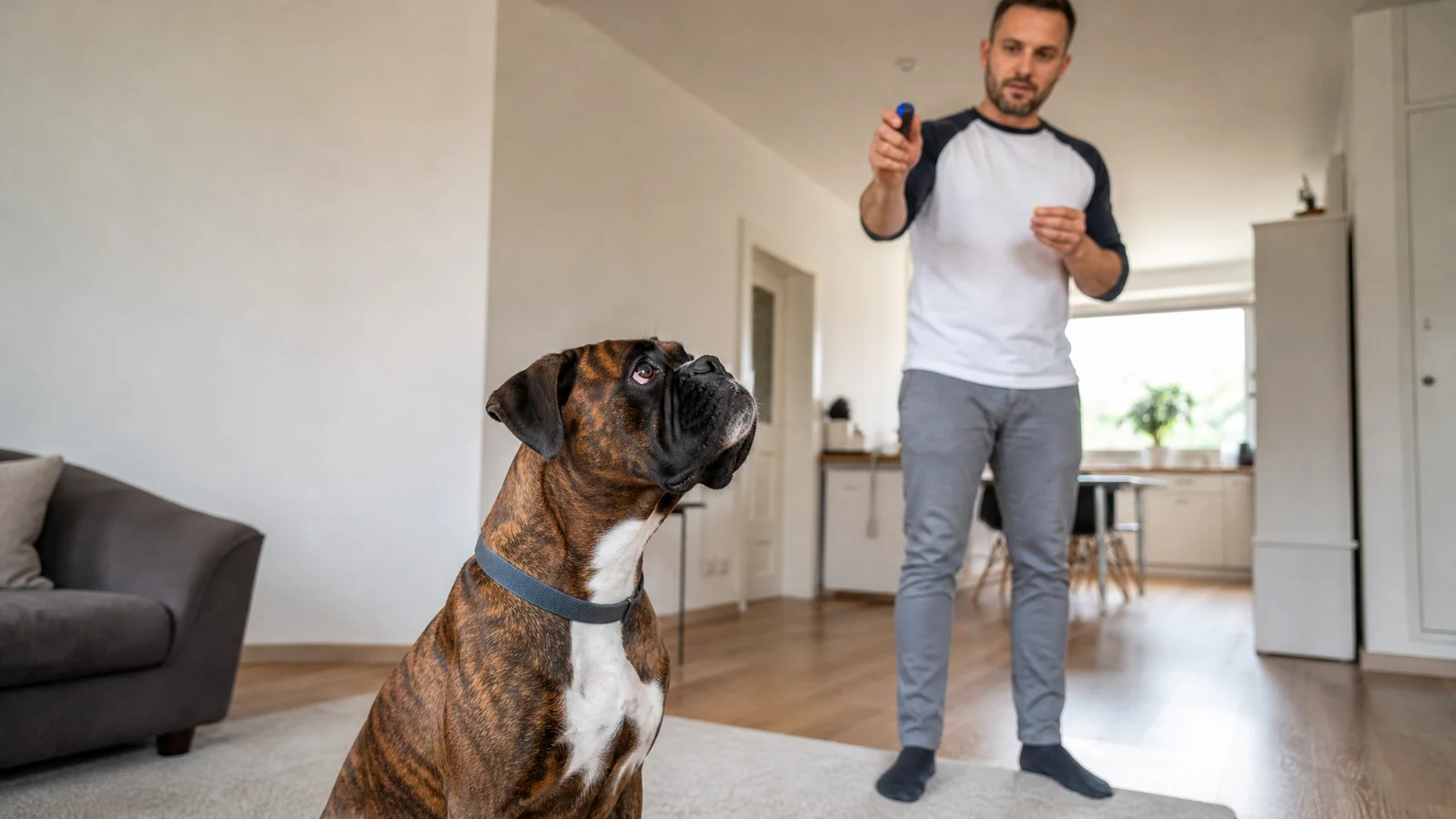
You can clicker train a Boxer with a plastic clicker, a snapped finger or a short spoken word, and your dog will not care which one you pick. What matters is that the sound means one thing and arrives on time.
Timing is the hard part with this breed. A Boxer is quick, and by the time a cheer has left your mouth they have often launched at the next thing, so the praise lands on a bounce instead of the sit you liked. A click is short enough to catch the right moment, and it never gets mixed up with everyday chatter.
Read on for how to give the sound its meaning, how to time it for a dog who rarely holds still, and how to move the food out of sight once the click is doing its job.
What a Clicker Tells a Boxer That Praise Cannot
Praise is wonderful, and you should keep giving it, but it spreads over a whole sentence and a whole body. A click is one clean instant.
Any Sound Can Work as the Click
When your Boxer's rear touches the floor and the click sounds, there is no doubt about which part of the last few seconds earned the treat. The sound itself holds no magic. Whatever you choose gets its meaning from being paired with a reward, so a tongue cluck, a snapped finger or a bright “Yes” works as well as a clicker, as long as it sounds different from your everyday talk.
Why the Click Stays in Training
We reach for the plastic clicker with Boxers because it sounds identical every time, while an excited voice never does. That is also why the click belongs to training only. Use it as a greeting, a call across the yard or a general “good dog” and it stops saying one thing, which is the whole job it was given.
Clicker Training for Boxers Starts With Charging
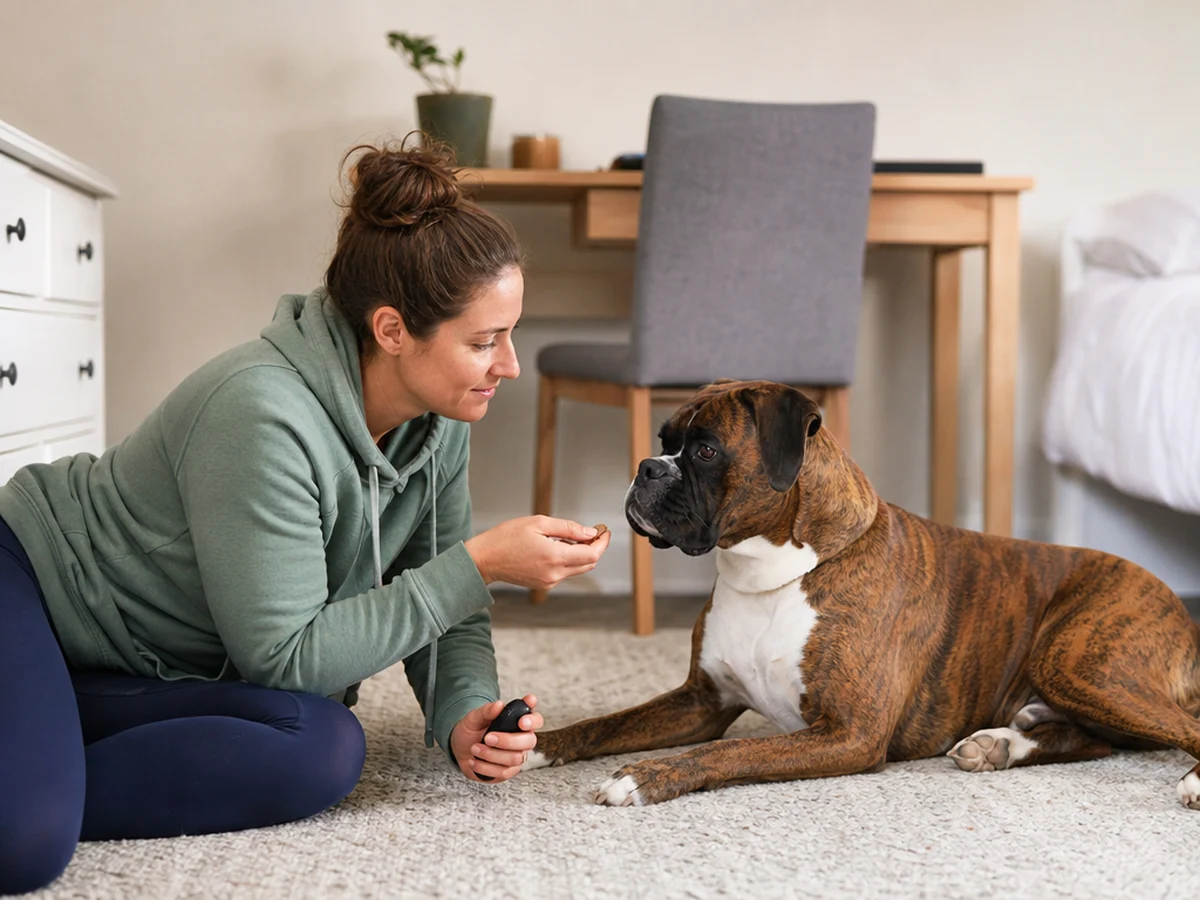
The first lesson is the dullest one, and every later lesson leans on it. Choose a quiet room, load your pocket with treats your Boxer would cross the house for, and ask for nothing at all.
- Stand with your Boxer in front of you and the treats out of sight, then click once and hand over a treat straight away.
- Pause until your dog has swallowed and looked away, then do it again. They are not doing anything to earn the treat, and that is exactly the point.
- Let a wandering or bouncing Boxer wander and bounce between rounds. The click does not have to catch calm behavior yet, only to be followed by food every single time.
- Watch for a head turn or a quick look at your hand when the click sounds. That is your Boxer telling you the sound now predicts a snack.
After about 10 to 20 repetitions, your Boxer will understand that the click predicts a coming reward, though the head turn matters more than the count. Some dogs show it in one sitting, and a distractible one may need a few short sittings, which costs you nothing.
How to Use a Clicker in Boxer Training
A charged click is a promise with nothing yet to promise about, so hand it something small to mark. If you are new to clicker work, the behavior team at the Dumb Friends League suggests starting with hand targeting, eye contact and recall, and a nose touch to your open palm is the easiest of those to catch.
Click the instant the nose meets your palm, not while your Boxer is still leaning in and not after they have pulled away. Then reward your dog immediately so they can connect what they did with what they got. Timing is the skill you are really practicing here, because a late click marks the bounce that follows, and a Boxer will happily repeat it.
Two rules keep the sound trustworthy. Every click earns a treat, even one that came out half a second late, and the click never doubles as a scold or a recall.
Break the first of those two rules and the sound loses its meaning. Once the touch is solid, the same sound can mark a lured sit, a bow you build in small steps, or a calm moment you spot and capture, such as four paws staying down when the doorbell rings. That last use pairs well with our guide to four feet on the floor, because a Boxer who is clicked for staying down learns what to do instead of leaping.
Moving the Treat Out of Sight Behind the Click
Food that shows itself before the click turns into a lure, and then the treat is doing the asking while the click does nothing. A Boxer is an excellent problem solver, so they work out this arrangement fast and soon perform only when your hand is full. Fade the food from view in stages, and move on only when your Boxer does the current stage smoothly several times in a row. Rushing a stage is the usual reason a Boxer stops responding.
- Keep the treats in a pocket or pouch and your hands empty. Click the behavior, then reach for the treat, so your dog learns that the sound arrives first and the food follows.
- Set the treats on a nearby shelf or table and click from a step or two away. Walk over to deliver the treat after the click, so the food still comes every time.
- Keep the treats in another spot altogether, click when the behavior happens and fetch the reward afterward. By now the click is the promise and the treat is only the delivery.
If a stage falls apart, shrink the gap for a few easy clicks and then stretch it again. Fading the sight of the food never means fading the pay, because every click still earns a reward.
Once a behavior is solid, your Boxer will stop needing the click for it, since the sound is a teaching tool rather than a lifelong requirement. The cues in our Boxer obedience basics are good ones to practice this on.
Clicker Details That Trip Up New Boxer Owners
Most stumbles with a clicker come from the reward or the routine rather than the dog, so these three are worth settling early, before a busy week turns them into bad habits.
What if my Boxer ignores the treat?
Then the treat is not worth the work. Try something with more smell or a different texture, and remember that some Boxers will work harder for a quick game of tug than for any food. Keep the click the same and change only the pay.
Can I click for staying calm?
Yes, and with a Boxer it is one of the best uses of the sound. When your dog settles on a mat or stays relaxed while you eat, click that moment and bring the treat to them, rather than calling them over and waking the bounce back up.
How long should one session last?
Stop while your Boxer is still keen. A dog who tires of repetition will tell you with wandering eyes and a slower response, so end on an easy click and vary the game next time. Keep up regular visits with your veterinarian as well, and mention it if your usually lively Boxer seems flat in every session.
A Click Gives a Boxer's Energy a Direction
None of those details changes what the click is for. A Boxer is rarely short of enthusiasm, and what goes missing is direction: the dog is willing, but has no way to know which of their many moves earned the cheer. Each click answers that question, and a dog who hears the answer often enough begins to offer the right move on purpose.
Once the click means something to your Boxer, you will want a plan for what to teach with it, and our complimentary Boxer e-book covers the other lessons on the list, written so a beginner can pick it up and keep going, and it reaches your inbox when you register here.
 Training basicsHow to Teach a Boxer to Come When Called
 BehaviorHow to Fix Boxer Separation Anxiety
 BehaviorHow to Stop a Boxer Pulling on the Leash
