 Boxer
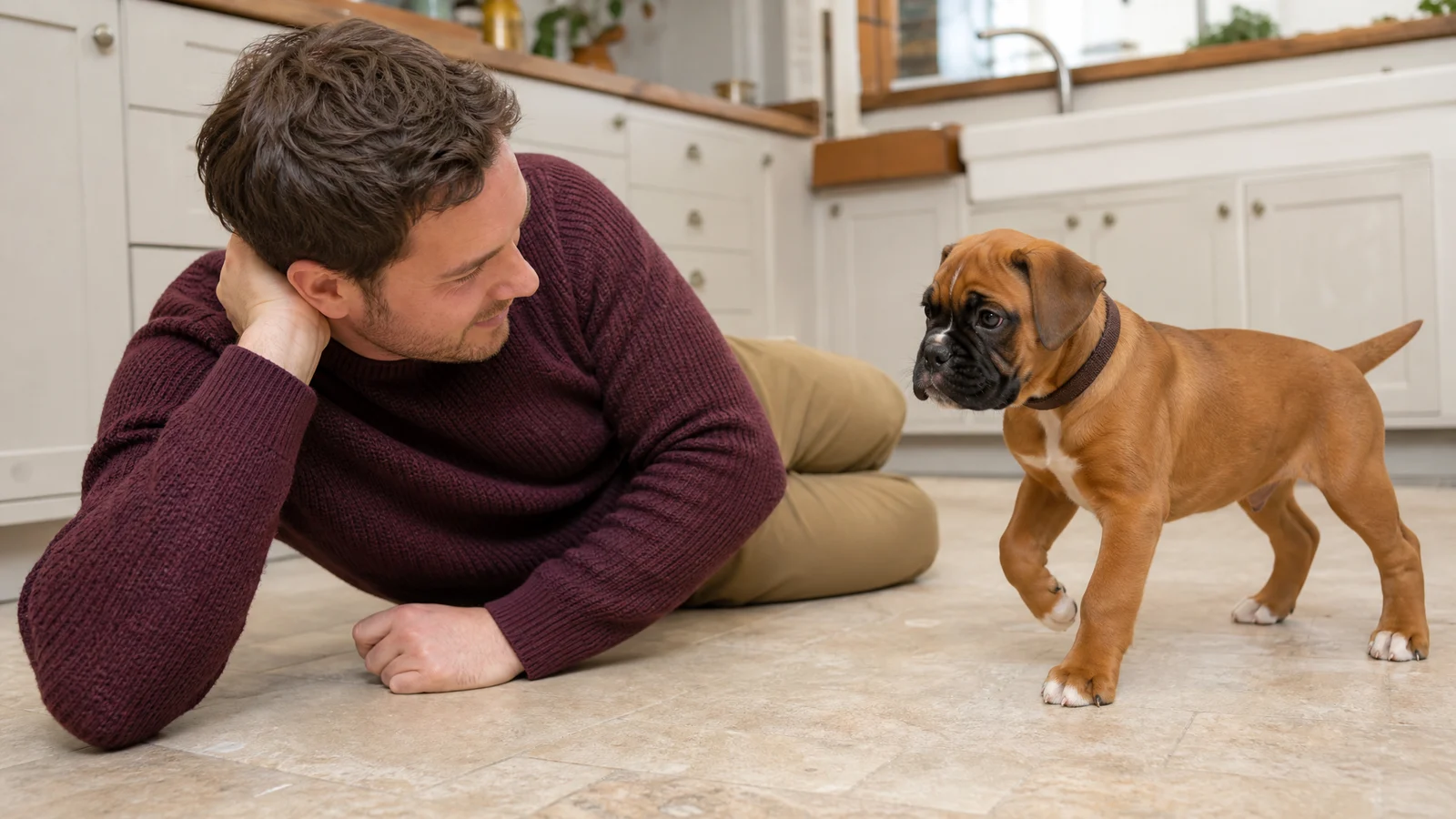
Your eight-week-old Boxer puppy launches at your ankles the moment you walk in, bounces off the couch cushions, and carries on as though you haven't said a word. You ask for a sit, then say their name, and nothing registers. It feels like defiance, but it is ordinary puppy exuberance. They simply haven't learned yet that your words predict good things.
We have trained Boxers for many years and specialize in their behavior, and the habits you set in the first weeks tend to be the ones you live with. Handled well, that bounce becomes enthusiasm you can steer. Handled badly, it becomes a jumping, mouthy adolescent.
Below, we cover the first skill to teach, name games and gentle handling, a home routine with daily pacing, choosing a puppy class, and the early trouble spots of jumping, mouthing and chewing.
Your First Puppy Training Goal
Two terms come first. A cue is a word or signal that tells your puppy which behavior will earn a reward. A marker word is a short, crisp sound, for example "yes", said at the exact moment your puppy gets it right and followed by a treat. Together they let you tell a fast, bouncing puppy precisely what paid off.
Your first goal is small on purpose: a puppy who turns toward you when they hear their name, and a handful of simple cues such as sit and come to you. Boxers are highly intelligent and excellent problem solvers, but they can become bored with repetition and have a mind of their own.
That combination means a puppy will happily work out how to earn a treat, then wander off the moment the exercise turns dull. Short, varied, cheerful lessons suit this breed far better than drilling one cue many times in a row.
Skip anything ambitious for now. Heel work, long stays and tricks can wait. A puppy who reliably looks at you when you speak has the foundation for everything else.
The choice: start with name response, then add sit and a recall to you, and nothing more until those feel easy. A small foundation gives the puppy a clear way to succeed.
Boxer Name Games and Handling
These two activities are the best starting exercises because neither needs the puppy to be calm or skilled. Both build the same idea: good things happen around you, and being close to your hands is pleasant. Each fits easily into a few spare moments during the day.
Name Games
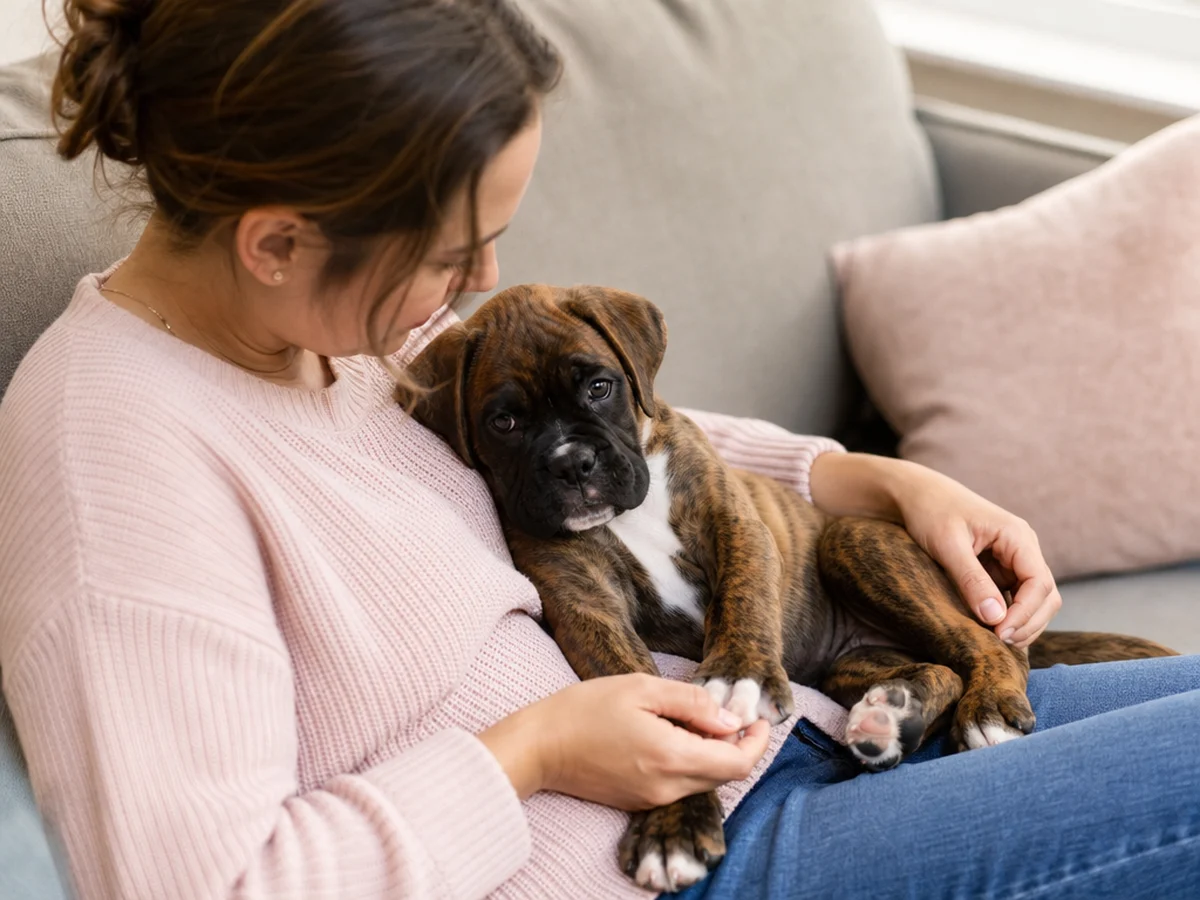
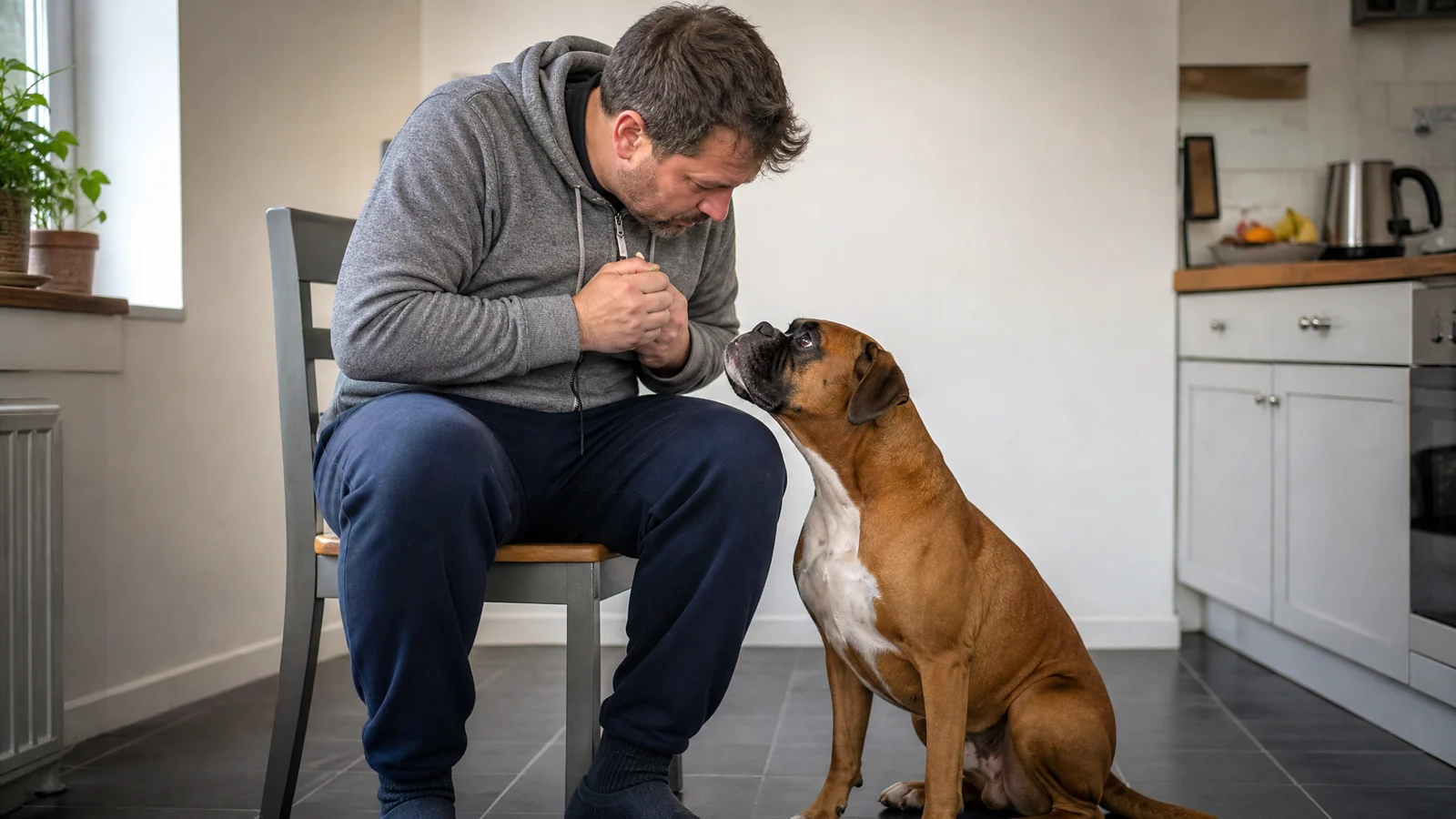
Think of your puppy's name as a bank account. Every time you say it and follow with a treat, you make a deposit. If you say it only when you are annoyed or want them to stop something, you withdraw. Use a bright voice for the name, and when your puppy turns, mark with "yes" and reward. Do this when they are a few feet away, then across the room, then while they are mildly distracted by a toy.
Never call the name and then do something unpleasant, like ending play or going into the crate, without a treat first. Keep the account full.
Gentle Handling
Boxers are sturdy and often wriggly, and a puppy who has never been handled becomes a difficult adult to groom, towel off or examine. Begin with on the chest or shoulder, since the face, the paws and the space above the head are places most dogs resist, and many object when a hand reaches down over them. Touch once, give a treat, and stop. Over the first days, add a slow stroke along the back, then a lifted paw for a moment, then a look at the ears.
The same approach prepares your puppy for the vet. Many dogs who had a bad early experience develop a lasting fear of the clinic, so arrive early, go slowly, let your puppy meet the staff and carry treats. Regular veterinary checkups are part of caring for a Boxer at every age, so make the clinic a place that pays.
Keeping Sessions Very Short
Stop each session after a few repetitions, while your puppy is still interested. A puppy who leaves wanting more will come back eagerly, and a puppy who is pushed until they wander off learns that training is something to escape.
The choice: keep name games and handling to tiny bursts spread through the day, and finish every one on a success. Stop while your puppy is still eager to return.
Setting Up the Puppy Training Routine
A routine is the quietest form of training. When meals, potty trips, play and naps happen in a predictable order, your puppy stops guessing, and a Boxer who isn't guessing is less likely to invent entertainment such as chewing a table leg. Predictability also tells you when to expect a burst of energy, so you can use it instead of being surprised by it.
A first-week plan can be simple. This is a template to adapt, not a fixed timetable.
- In the first days, feed at set times, carry your puppy outside after they wake, after meals and after play, and reward every potty in the right spot.
- Choose one resting place, such as a pen or crate with a comfortable bed, and offer treats and a chew there so it becomes a place your puppy chooses to go.
- Midweek, begin one name game and one handling exercise at a regular point in the day, such as before meals, so the treats are already expected.
- Decide the greeting rule now. Everyone in the house rewards a puppy who keeps all four paws on the floor and ignores a puppy who jumps up.
- By the end of the first week, add a short settle period after play, with a chew, so your puppy learns that winding down follows winding up.
The greeting rule matters especially for this breed. Boxers spend a good deal of time jumping and leaping about, and as young dogs they constantly need reminders to stay down. If one family member lets the puppy leap up and another doesn't, the puppy learns that jumping sometimes works, and sometimes is all it takes to keep a habit alive.
The choice: build the routine around meals, potty trips, rest and one shared greeting rule before adding anything else. Predictability makes the household easier for a new puppy to read.
Pacing a Boxer Puppy's Day
Boxers rate high on both energy and playfulness, which makes pacing a skill you need to learn. A young puppy cannot regulate themselves. They play hard, become overtired, and then show it as wilder behavior, not as sleepiness. The mouthier, zoomier version of your puppy at dusk is often the one who needed a nap an hour earlier.
Alternate three kinds of time through the day: a short training session, a burst of play, and real rest. After each active stretch, guide your puppy to their resting place with a chew.
Training sessions count as work, because thinking tires a puppy as much as running does, so do not stack several in a row. If your puppy stops responding, begins grabbing at your clothes or turns frantic, treat it as a signal that they are tired or over-excited and not as a lack of effort.
Because Boxers are intelligent, a puppy who is under-stimulated finds their own work. A few minutes of sniffing in the yard, a food puzzle or a simple new game gives them an outlet without wearing out their growing joints. Keep physical games gentle and varied, and let them stop when they choose.
The choice: plan the day in short cycles of activity and rest, and put your puppy down for a nap before they start to unravel. Good rest prevents tired behavior from becoming a daily pattern.
Choosing a Puppy Training Class
Early socialization and puppy training classes are vital in channeling this breed's energy and exuberance in a positive way, and the Boxer's playful nature makes good early lessons especially valuable. Socialization simply means giving your puppy safe, pleasant experiences with people, dogs, sounds and places while they are young enough to take them in stride. Our guide to Boxer socialization and puppy class covers this in more depth.
Look for a class that uses treats, toys and praise, keeps groups small, separates puppies by size or play style, and lets you watch before you sign up. Check that the instructor interrupts rough play calmly and gives puppies time away from the group. A good class lets a shy or overexcited puppy sit out, without pressure.
Temperament and Class Fit
The Boxer is vigilant but not a nervous breed, so a well-run class should suit a confident puppy. Boxers are also not always tolerant of other dogs of the same sex, so treat all play with other dogs as supervised play and step in early when it gets too rough. A puppy who seems unusually fearful deserves a slower introduction and your veterinarian's input.
If you have small children or a frail adult at home, plan the puppy's greetings with care. A powerful, bouncy puppy can overwhelm them, yet the breed is fundamentally playful and patient with children, so supervised, calm introductions work well.
The choice: enroll in a reward-based class with small groups once your veterinarian says your puppy is ready, and treat every social outing as training. Calm observation counts even when no greeting happens.
Early Boxer Puppy Training Problems
Three problems appear in nearly every Boxer household within the first weeks: jumping, mouthing and chewing. All three come from the same source, which is an energetic puppy exploring the world with their mouth and body. The fix for each is the same pattern: give the puppy something better to do, reward it, and manage the environment so the unwanted habit has little chance to pay off.
Jumping
Jumping is how a puppy greets, and it grows more annoying with every pound. Reward four paws on the floor, even for a moment, with a treat low to the ground. If your puppy jumps, turn away calmly, wait for the paws to land and then reward. Everyone must do the same, or the puppy learns to jump on the person who allows it.
Mouthing
Puppies explore with their mouths, and Boxers play roughly. If teeth touch skin, end the game, rise to your feet and pause briefly, then offer a toy and rejoin the game when your puppy is calmer. Our article on teaching soft mouths goes through this in detail.
Chewing
Chewing is mostly a management task. Keep shoes, cords and remote controls out of reach, and keep a few appropriate chews available. When your puppy picks up the wrong object, swap it for a chew, and praise them as they take it.
The choice: reward the behavior you want, manage the environment, and treat all three problems as one lesson in redirecting energy. Consistent answers help the puppy learn what works instead.
Long-Term Boxer Training Outlook
Expect a steady process of maturing and not a quick fix. Over the coming months, your puppy's focus will lengthen, the name response will hold in more distracting places, and the bounce will gradually become something you can direct. Boxers stay playful for years, so do not expect the energy to disappear. What changes is how well your dog can set it aside when you ask.
Along the way, expect reminders. Adolescence brings a wave of testing, with old habits like jumping reappearing for a while, and a dog who has been reliable may suddenly seem to forget everything. That is normal, and the answer is to return to short, rewarding practice, not to start over. Our Boxer training timeline lays out what changes at every stage.
The routines you set in the first weeks, the rewarded greetings, the regular naps and the habit of checking in with you, are what carry a Boxer through those awkward months. Keep them going, keep sessions short and varied, and keep visiting the veterinarian. The calmer, steadier adult you want is built from the small, consistent habits you start with this puppy today.
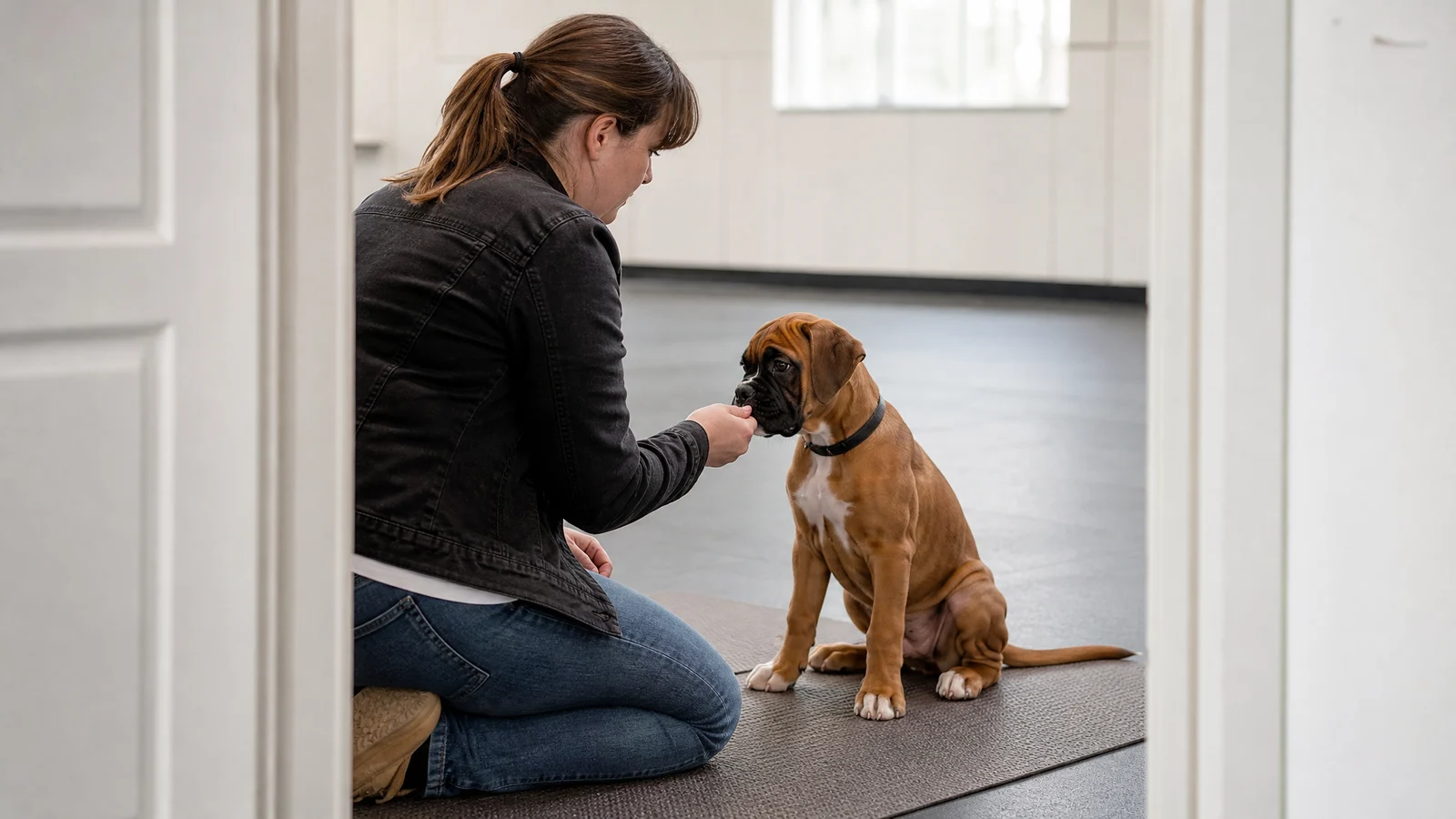 Puppy trainingTraining a Boxer Puppy: Why Socialization and Puppy Class Matter
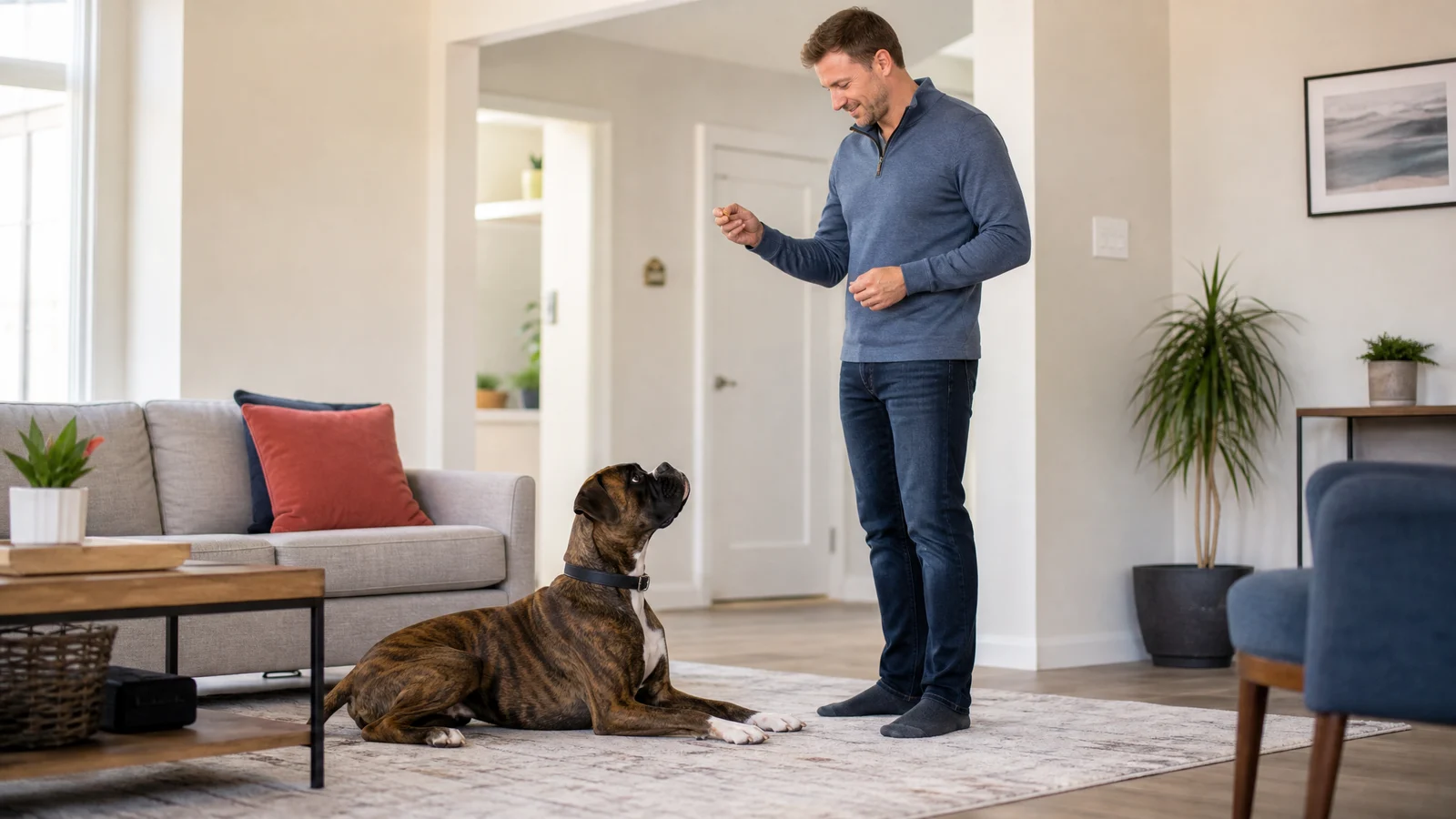 Training basicsBoxer Obedience Training With Rewards: Sit, Down, Stay, Come
 Training basicsHow to Teach a Boxer to Focus on You
